1. Introduction: The Architecture of “Structural Tenderness”
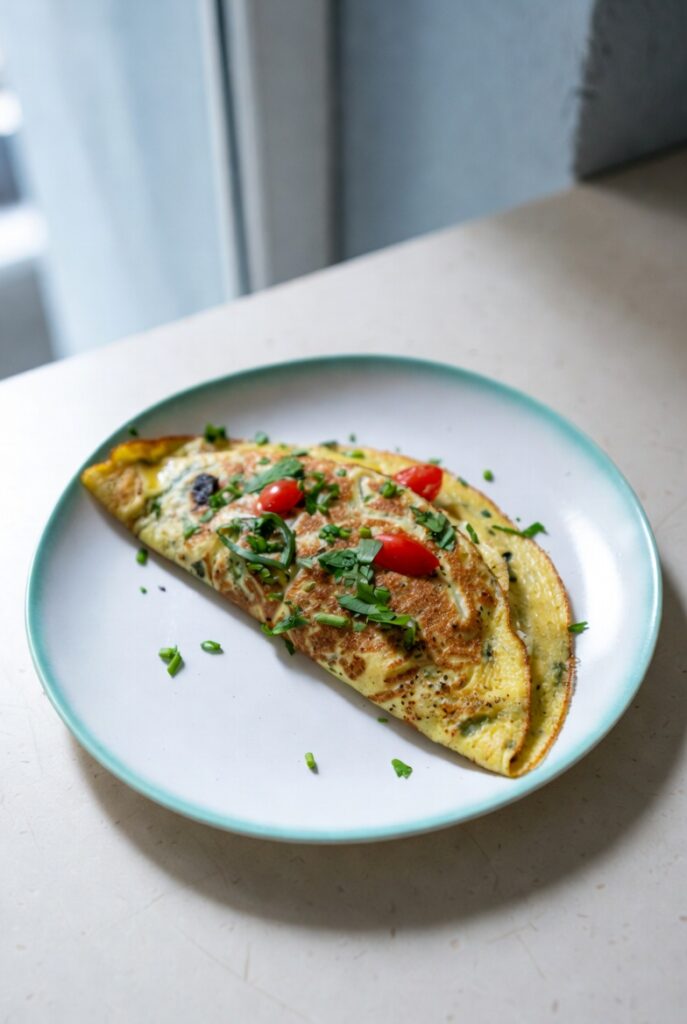
In the global hierarchy of culinary technique, the Omelet represents the ultimate “Zero-Margin” skill test. Unlike scrambled eggs, which allow for a degree of textural irregularity, the perfect omelet is an exercise in “Protein Lamination.” Whether you aim for the classic French style (smooth, pale, and almond-shaped) or the American style (fluffy, golden, and folded), the objective remains constant: a perfectly coagulated exterior that encases a creamy, “soft-set” interior.
This document serves as the “Operational Manifesto” for the dish. We move beyond the rudimentary “flip-and-fold” logic and examine the mechanics of “The Kinetic Agitation Phase.” By managing the heat-to-motion ratio, we create a result that is “Silk-Tender” and structurally sound. For the weekend gourmet or the breakfast minimalist, this is the “Platinum Standard” of culinary utility.
2. The Science of “Lecithin-Bound Emulsification”
To master the Perfect Omelet, one must understand the behavior of Egg Protein Denaturation.
- The Agitation Variable: Whisking isn’t just about mixing; it’s about “Shear Force.” Vigorous whisking breaks the long-chain proteins and introduces micro-air bubbles. When these bubbles are heated, they expand, creating the “Leavening” effect that makes the omelet feel light rather than rubbery.
- The Salt-Timing Paradox: Adding salt to raw eggs 15 minutes before cooking (the “Pre-Brine”) actually helps the proteins retain moisture. Salt acts as a “Buffer,” preventing the proteins from bonding too tightly and squeezing out water (weeping).
- The Thermal Threshold: Eggs begin to solidify at 63°C (145°F). A perfect omelet is a race against time to set the structure before the proteins over-tighten and become tough.
3. The Blueprint Overview: Technical Specifications
- Cuisine Type: French / American Breakfast
- Difficulty Level: Medium (Requires “Kinetic Coordination”)
- Total Preparation Time: 5 Minutes
- Total Cooking Time: 3 Minutes
- Total Time: 8 Minutes
- Dietary Classifications: High-Protein, Keto-Friendly, Gluten-Free.
- Yield: 1 Omelet
4. Equipment and Tools: The Essentials of “Glide-Dynamics”
- 8-Inch Non-Stick Skillet: The Non-Negotiable Tool. The sloped sides (the flare) are essential for the final “Slide-and-Fold” maneuver.
- Heat-Resistant Silicone Spatula: For a “Clean-Sweep” across the pan surface without scratching the coating.
- Stainless Steel Whisk: To achieve a “High-Velocity” aeration.
- Small Bowl: For the precise “Egg-Slurry” synthesis.
5. Ingredients Section: Sourcing for “Chromatographic” Purity
In a dish with only two primary ingredients, the “Lipid-Quality” dictates the final “Sensory Resolution.”
The “Protein Matrix”
- Large Eggs: 2 or 3 units. (Room temperature is preferred for faster “Set-Time”).
- Fine Sea Salt: A pinch.
- White Pepper: A pinch. (Used in classic French cooking to maintain “Visual Purity,” avoiding black specks).
The “Lipid-Inclusion”
- Unsalted Butter: 1 tbsp. (High-quality European butter provides more “Lipid-Depth”).
The “Center-Load” (Optional)
- Soft Herbs: Chives, parsley, or tarragon.
- Grated Gruyère or Sharp Cheddar: 2 tbsp.
- Sautéed Mushrooms or Spinach: (Must be pre-cooked and drained of all moisture).
6. The “Kinetic Agitation” Protocol: Mastering the Set
The difference between a “Flat-Egg” and an “Omelet” lies in the first 60 seconds of heat exposure.
- The Thermal-Shock: Melt butter until it foams but does not brown. Pour in the eggs.
- The Shake-and-Stir: Simultaneously shake the pan back and forth while stirring the eggs in a tight, circular motion with the spatula. This creates “Small Curds” (similar to a fine scramble) that will eventually form the creamy interior.
- The Smoothing Phase: Once the eggs are 70% set, stop stirring. Use the spatula to smooth the eggs into a flat, even disk across the pan.
7. Step-by-Step Instructions: The Master Execution
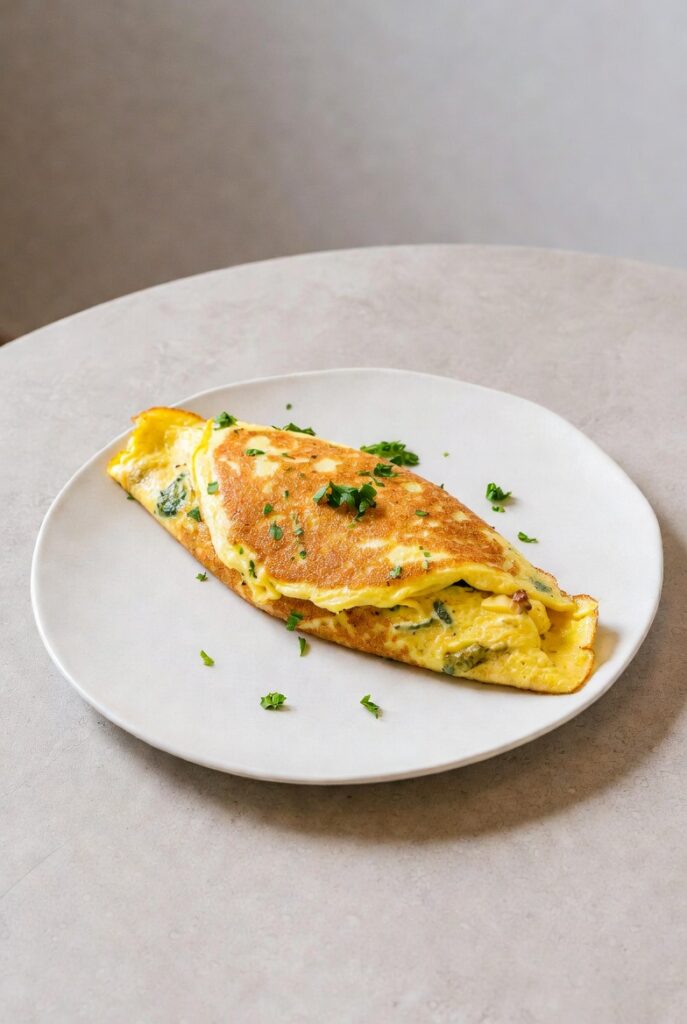
Step 1: The “Homogeneous Synthesis”
Whisk the eggs, salt, and pepper in a bowl until no streaks of white remain. The mixture should be a uniform, pale gold.
Step 2: The “Butter-Calibration”
Heat the skillet over medium-high heat. Add the butter. Once the foam subsides and the butter is “Sizzling-Quiet,” the thermal mass is ready.
Step 3: The “Agitation” Phase
Follow the Kinetic Agitation Protocol (Section 6). Work quickly. The goal is to create as much surface area as possible for the creamy curds to set.
Step 4: The “Filling-Deposit”
When the surface is still slightly wet (the baveuse state), add your cheese or herbs in a line across the center.
Step 5: The “Slide-and-Roll” Maneuver
Tilt the pan away from you. Use the spatula to fold the edge closest to the handle over the center. Slide the omelet to the far edge of the pan.
Step 6: The “Inverted-Plate” Landing
Hold your plate in one hand and the pan in the other. Invert the pan over the plate so the omelet rolls onto itself, landing seam-side down.
8. Satiety and the “Amino-Lipid” Arc
The Homemade Omelet provides a “High-Resolution Satiety” profile:
- The Bioavailability Factor: Egg protein has a “Biological Value” of 100, meaning the body absorbs and utilizes the amino acids with maximum efficiency.
- The Lipid-Stabilizer: The butter and yolk fats slow down digestion, providing a steady release of energy without a “Glucose-Crash.”
- The Cognitive Boost: Rich in Choline, an omelet acts as a “Neurological Fuel,” supporting focus and brain health throughout the morning.
9. Modular Customization: The “Flavor Pivots”
- The “Parisian” Draft: Fill with Brie cheese and fines herbes (parsley, chives, tarragon, and chervil).
- The “Denver-Utility” Shift: Add sautéed ham, onions, and green bell peppers for a “High-Fiber” American resolution.
- The “Umami-Bomb”: Incorporate white truffle oil and sautéed shiitake mushrooms.
10. Frequently Asked Questions (FAQ)
Q: Why is my omelet “Browning”? A: Browning is a sign of “Excessive Thermal Velocity.” Your heat is too high. A classic omelet should be a uniform, pale yellow. Lower the heat and move the eggs faster.
Q: Can I use a stainless steel pan? A: Technically affirmative, but difficult. Unless the pan is perfectly seasoned (the “Leidenfrost” state), the eggs will bond to the metal. For “Zero-Friction” results, stick to non-stick.
Q: My omelet broke during the fold. Why? A: This usually happens if the eggs are “Over-Coagulated.” If the eggs are too dry, they lose their “Elastic-Tension” and will snap instead of fold. Keep the center “Wet” before folding.
11. Nutritional Information
(Based on a 3-egg omelet with butter)
| Nutrient | Amount |
| Calories | 310 kcal |
| Protein | 18g |
| Total Fat | 24g |
| Net Carbs | 1g |
| Choline | 430mg |
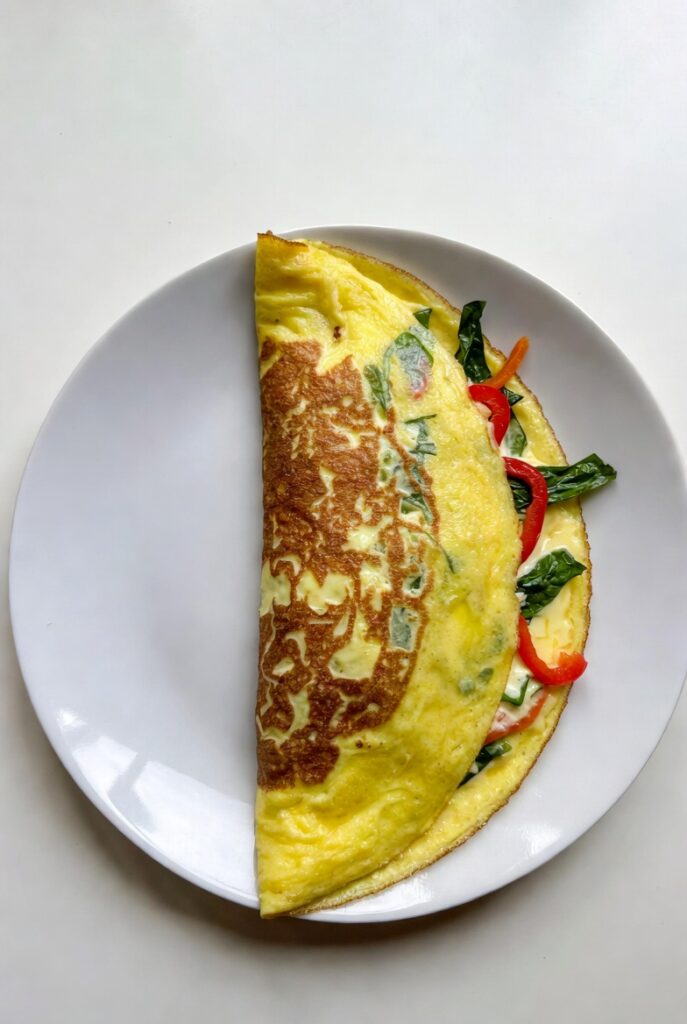
12. Conclusion: The Master Draft of Culinary Precision
The Lamination Protocol is more than a recipe; it is a “Vessel for Intentional Synergy.” It proves that “Gourmet Results” are achieved through the mastery of “Kinetic Agitation” and “Thermal Timing.” By respecting the “Shake-and-Stir” and the “Slide-and-Roll,” you are delivering a breakfast that is visually “Elegant-and-Smooth,” nutritionally superior, and sensorially perfect.