Spring is more than just a change in the weather; it is a fundamental shift in the culinary calendar. As we transition away from the heavy, starch-based, and root-vegetable-dense dishes of winter, the kitchen pivots toward “Hydroponic Brightness” and “Snap-Textured” greens. A professional Spring Salad is not merely a collection of vegetables tossed into a bowl; it is a structural balancing act between moisture, acidity, and crispness. To master these dishes, one must respect the “Life-Cycle” of the green—from the soil to the salad spinner.
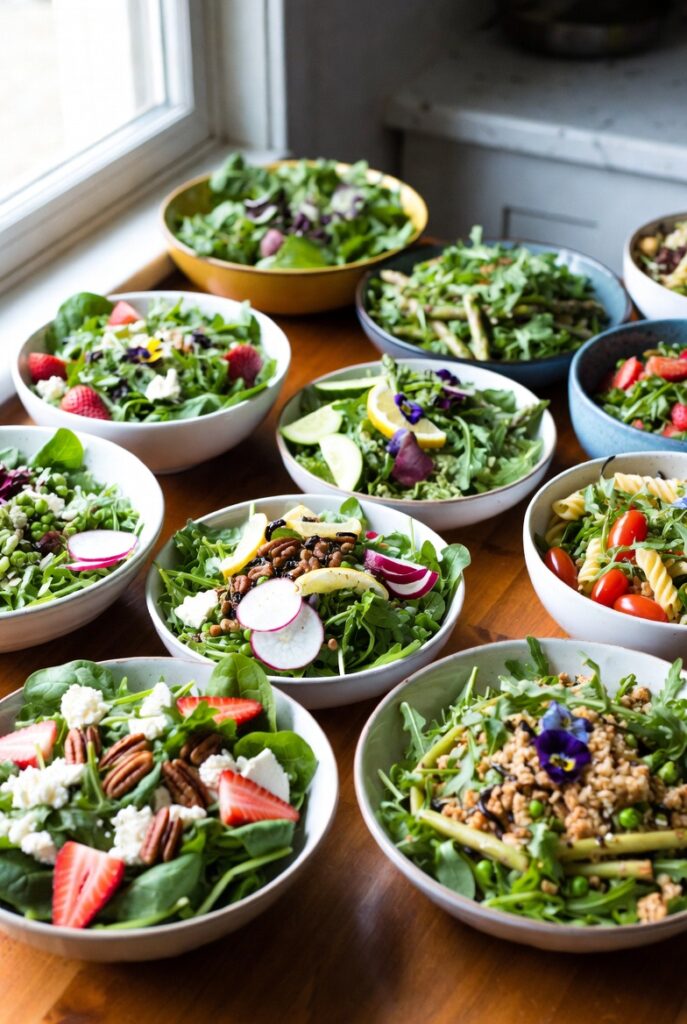
Below are 12 master protocols for the ultimate spring salad experience, designed to showcase the season’s peak yields.
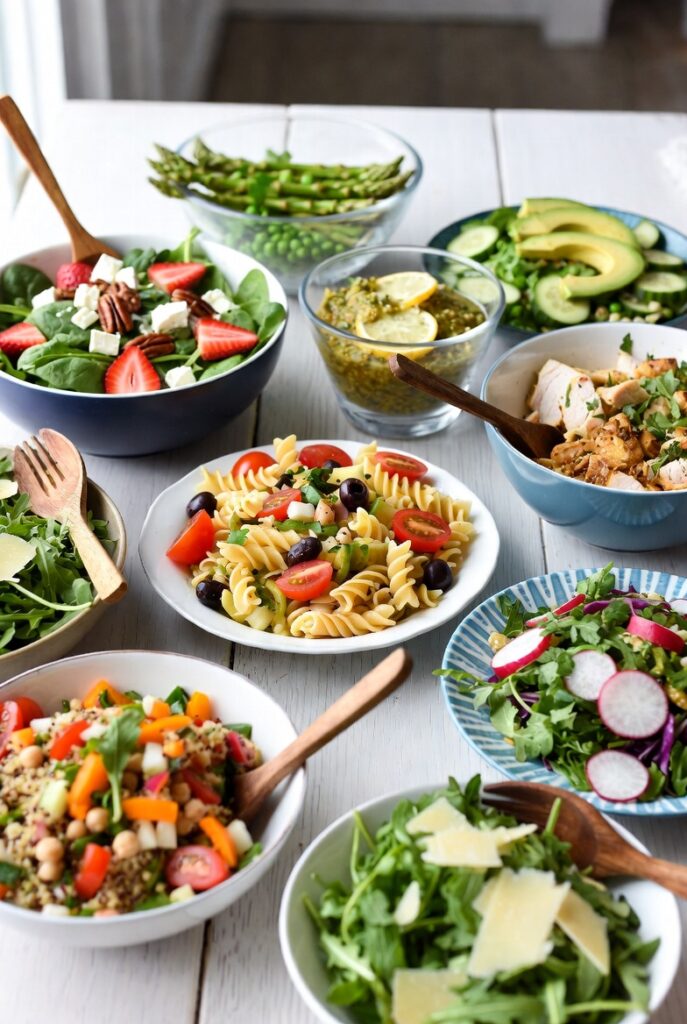
1. Strawberry Spinach Salad: The “Acid-Sugar Balance”
- The Profile: A study in balancing the natural glucose of stone fruits with the tannin-rich bite of dark leafy greens.
- Ingredients: 6 cups baby spinach, 1 cup sliced fresh strawberries, 1/4 cup crumbled goat cheese, 1/4 cup toasted pecans, balsamic reduction.
- The Method: The key is to avoid “wilting through over-handling.” Toss the spinach lightly in a thin, olive-oil-heavy vinaigrette first. Only after the leaves are dressed should you gently fold in the strawberries and goat cheese. This maintains the structural integrity of the berries and prevents the cheese from becoming a muddy paste on the spinach leaves.
2. Spring Mix with Lemon Vinaigrette: The “Minimalist-Standard”
- The Profile: A clean, emulsified, and bright palate cleanser.
- Ingredients: 4 cups spring mix (including mache and arugula), 3 tbsp extra virgin olive oil, 1 tbsp fresh lemon juice, 1 tsp freshly grated lemon zest, sea salt, white pepper.
- The Method: The secret is the “Zest-Integration.” Rub the lemon zest into the salt with the back of a spoon before whisking in the oil and juice. This mechanical action ruptures the zest’s oil glands, releasing essential aromatics that would otherwise stay trapped in the peel.
3. Asparagus and Pea Spring Salad: “Chlorophyll-Retention”
- The Profile: A study in temperature control and color preservation.
- Ingredients: 1 bunch blanched asparagus (cut into 1-inch pieces), 1 cup blanched peas, 1/4 cup shaved Parmigiano-Reggiano, lemon-herb oil (parsley-infused).
- The Method: Use the “Blanch-and-Shock” technique. Boil your asparagus and peas for exactly 60 seconds. Remove them with a spider strainer and immediately plunge them into an ice-water bath. This stops the enzymatic breakdown of chlorophyll, locking in that vibrant, neon-green color that defines a professional-grade salad.
4. Avocado Cucumber Salad: “High-Moisture Stabilization”
- The Profile: A cooling, creamy side that requires moisture-management.
- Ingredients: 2 English cucumbers (mandoline-sliced), 1 ripe avocado (cubed), lime juice, cilantro, red onion, a pinch of chili flake.
- The Method: Cucumbers are 95% water. To prevent a “Soggy-Bottom” salad, spread the sliced cucumbers on a clean kitchen towel and sprinkle with salt. Let them sit for 10 minutes, then blot the beads of moisture that surface. This process (“degorging”) firms up the cucumber, ensuring a crisp bite even after it hits the dressing.
5. Spring Pasta Salad: “Ribbon-Vegetable Integration”
- The Profile: An aesthetic and textural fusion of starch and garden yields.
- Ingredients: 2 cups rotini (al dente), 1 cup shaved zucchini ribbons, 1 cup blanched peas, 2 tbsp chopped fresh mint, 3 tbsp olive oil, 1 tbsp white wine vinegar.
- The Method: Always dress the pasta while it is still slightly warm. Starch expands and is more porous at higher temperatures, allowing the herb-infused oil to penetrate the structure of the pasta, ensuring the flavor is in the noodle, not just on it.
6. Radish and Herb Spring Salad: “Peppery-Aromatic Density”
- The Profile: A bold, spicy salad for the daring palate.
- Ingredients: 1 bunch radishes (mandoline-sliced), 1/2 cup mixed herbs (dill, parsley, mint), lemon-honey dressing, sunflower seeds.
- The Method: Herbs should constitute at least 30% of the total salad volume. Using a mandoline to slice radishes to “integration-thickness” allows them to blend with the herbs, making every mouthful a perfect ratio of spicy radish and cooling herb.
7. Lemon Parmesan Arugula Salad: “Bitter-Salty Equilibrium”
- The Profile: Sophistication through contrast.
- Ingredients: 4 cups baby arugula, 1/2 cup shaved Parmigiano-Reggiano, freshly squeezed lemon juice, high-polyphenol olive oil, cracked black pepper.
- The Method: Arugula’s natural peppery bitterness is the perfect foil for the aged, nutty saltiness of the cheese. The key here is the “Peppercorn-Finish.” Add your cracked pepper at the very end to maximize the volatile piperine oils that stimulate the palate.
8. Spring Chickpea Salad: “Fiber-Forward Utility”
- The Profile: A hardy, satiating salad that improves with time.
- Ingredients: 1 can chickpeas (rinsed and patted dry), 1 diced red bell pepper, 1/4 cup chopped flat-leaf parsley, 1 tsp ground cumin, lime juice.
- The Method: Unlike leafy salads, this one requires time. Let the salad marinate for 20 minutes before serving. Chickpeas are dense; they need a “soak-period” to absorb the lime and cumin profile fully.
9. Honey Mustard Chicken Spring Salad: “Warm-Cold Contrast”
- The Profile: A balanced meal featuring temperature and textural variance.
- Ingredients: 2 grilled chicken breasts (sliced), 4 cups mixed greens, honey-mustard vinaigrette, sunflower seeds, sliced scallions.
- The Method: Use your honey-mustard vinaigrette as a marinade for the chicken for 30 minutes before grilling. This creates a caramelized char on the chicken that echoes the flavors of the final dressing.
10. Fresh Garden Spring Salad: “Seasonal Variety-Anchor”
- The Profile: A celebration of the entire garden yield.
- Ingredients: Mixed lettuces (radicchio, butter lettuce, frisée), halved cherry tomatoes, sliced scallions, snap peas.
- The Method: The secret is “Varietal-Contrasting.” Pair the soft, buttery texture of butter lettuce with the aggressive, snap-crunch of the peas. This provides an engaging mouthfeel that prevents the “Boredom-Factor.”
11. Spring Quinoa Salad: “Flavor-Sponge Architecture”
- The Profile: A grain-based salad that retains its integrity in the fridge.
- Ingredients: 1 cup cooked quinoa, 1/2 cup snap peas, lemon zest, 1/4 cup crumbled feta cheese, chopped chives.
- The Method: Fluff the quinoa with a fork after cooking to separate the grains, then fold in the snap peas while the quinoa is still slightly warm. This allows the snap peas to “blanch” slightly in the ambient heat of the quinoa.
12. Green Goddess Spring Salad 🥗🌿: “Velvet-Gloss Emulsion”
- The Profile: A luxurious, herbaceous feast.
- Ingredients: Mixed tender greens, Green Goddess dressing (Greek yogurt base, avocado, basil, chives, lemon juice).
- The Method: Because the dressing is a thick emulsion, avoid “tossing” in a way that bruises the greens. Use a flat spatula to “fold” the dressing into the leaves, coating them in a velvet-like layer without collapsing their structure.
The Master Bakery Checklist for Salad Success
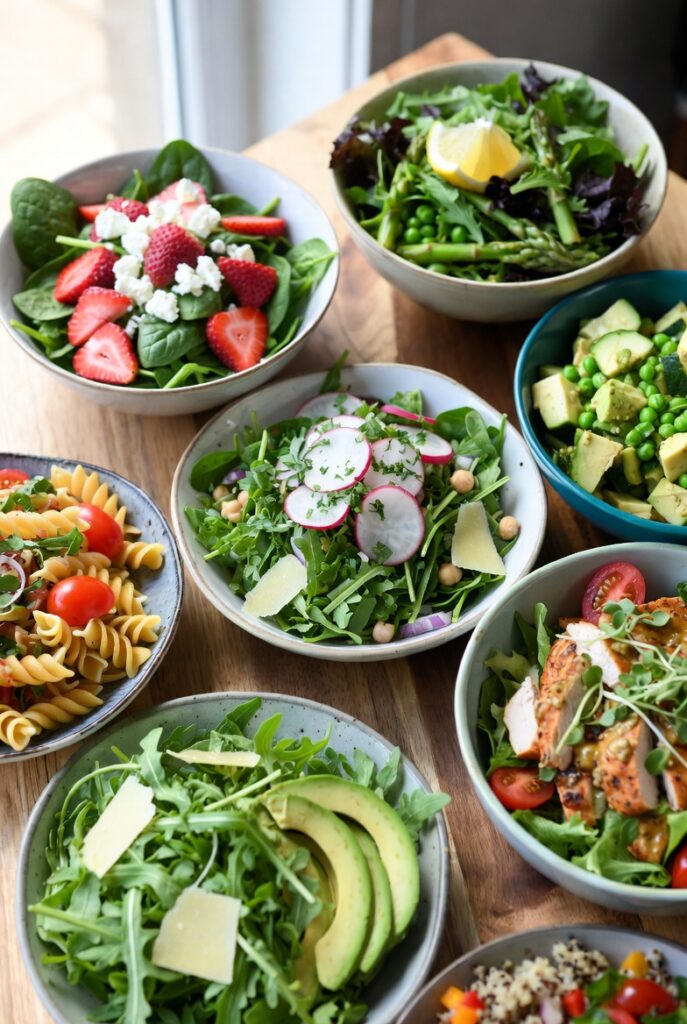
- The “Bone-Dry” Standard: Use a professional-grade salad spinner. If there is water on your leaves, the dressing will slide right off, resulting in a pool of diluted, watery liquid at the bottom of the bowl.
- The “Last-Second” Dress: Delicate spring greens like pea shoots and micro-greens possess high water content and thin cell walls. They will wilt within 120 seconds of coming into contact with salt or acid. Dress only at the table.
- The “Temperature-Contrast”: Store your serving plates in the refrigerator for 20 minutes before assembly. A cold plate keeps your greens crisp and vibrant, mimicking the high-end service found in elite restaurants.