Master the art of Savory Breakfast Egg Muffins. High-protein, customizable, and perfect for busy mornings. Learn the secret to fluffy, non-stick eggs!
1. Introduction
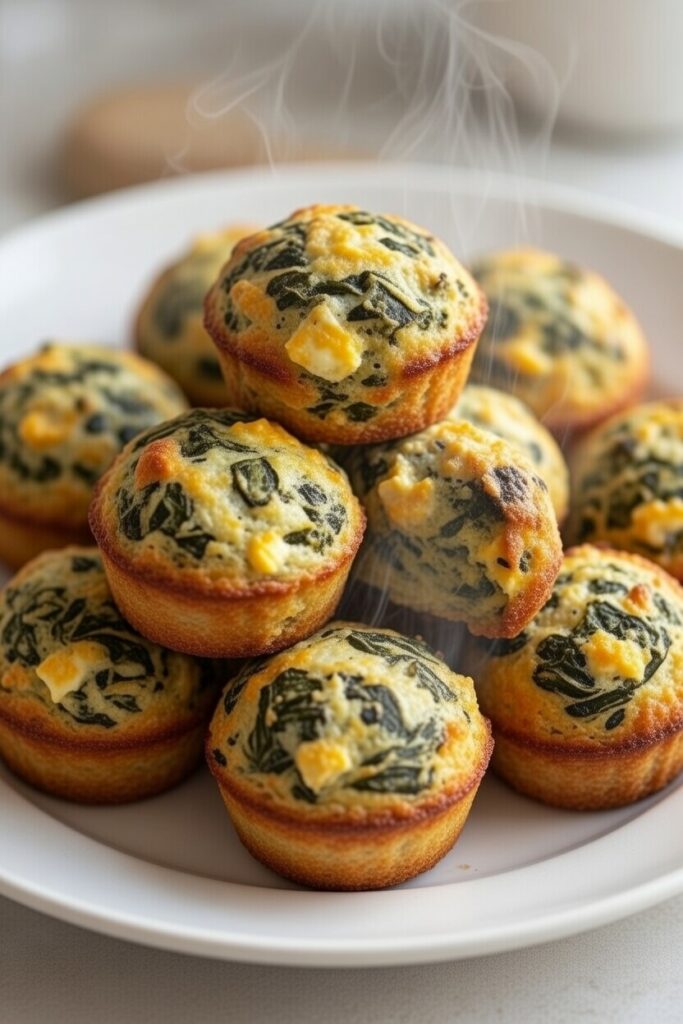
The morning hours are often a battlefield, but the culinary world has reclaimed the start of the day with the Savory Breakfast Egg Muffins. These Savory Breakfast Egg Muffins are protein-packed gems that trace their lineage back to the classic Italian frittata. The significance of these Savory Breakfast Egg Muffins lies in their democratic nature; they are the ultimate “clean-out-the-fridge” meal.
Often referred to as “Frittata Muffins” or “Egg Cups,” these protein-packed gems trace their lineage back to the classic Italian frittata and the French quiche. By removing the crust and shrinking the portion into a muffin tin, we’ve created a dish that fits perfectly into the palm of a hand or a child’s lunchbox.
The significance of the egg muffin lies in its democratic nature. It is the ultimate “clean-out-the-fridge” recipe. Whether you have a handful of wilting spinach, a stray slice of bacon, or the end of a block of sharp cheddar, the egg muffin provides a savory, custard-like architecture to house those ingredients. It is a dish that honors the tradition of the farmhouse breakfast—where nothing is wasted—while serving the needs of the modern, health-conscious professional.
2. Recipe Overview
- Cuisine Type: Modern American / Mediterranean Fusion
- Difficulty Level: Easy
- Prep Time: 15 minutes
- Cook Time: 20–25 minutes
- Total Time: 40 minutes
- Dietary Classifications: Gluten-Free, Low-Carb, Keto-friendly, Vegetarian-adaptable.
3. Equipment and Tools
Success in egg cookery depends on your surfaces. For the best Savory Breakfast Egg Muffins, use a silicone muffin pan to allow the eggs to pop out effortlessly. A large mixing bowl with a spout also makes filling the tin for your Savory Breakfast Egg Muffins significantly cleaner and faster.
- Standard 12-Cup Muffin Tin: A non-stick version is preferred. For best results, use a Silicone Muffin Pan, which allows the eggs to pop out effortlessly without the need for paper liners.
- Large Mixing Bowl with Spout: A bowl with a pouring lip (like a large glass measuring cup) makes filling the muffin tins significantly cleaner.
- Whisk or Immersion Blender: To incorporate air into the eggs, ensuring a fluffy rather than rubbery texture.
- Fine-Diced Knife: A sharp paring knife for uniform vegetable pieces.
- Measuring Tools: Standard imperial/metric cups and spoons.
- Special Note: If using a metal tin, you will need high-quality non-stick cooking spray or parchment liners.
4. Serving Suggestions
These muffins are surprisingly sophisticated when plated correctly.
- The “Café” Plate: Serve two muffins alongside a pile of lightly dressed arugula and a slice of toasted sourdough.
- Garnish Ideas: A dollop of crema Mexicana, a dash of hot sauce (Sriracha or Cholula), or a sprinkle of microgreens.
- Complementary Sides: Fresh berries, sliced avocado, or a small bowl of Greek yogurt.
- Beverage Pairings: * Morning: A bright, acidic Colombian roast coffee or a sparkling Mimosa.
- Brunch: An iced Matcha latte or a spicy Bloody Mary.
5. Nutritional Information
(Per 2-muffin serving)
| Nutrient | Amount |
| Calories | 180 kcal |
| Protein | 14g |
| Total Fat | 12g |
| Carbohydrates | 3g |
| Fiber | 1g |
| Sodium | 320mg |
Potential Health Benefits:
- Choline Rich: Eggs are one of the best sources of choline, which is vital for brain health and focus.
- Metabolic Boost: The high protein content increases the thermic effect of food (TEF), helping you burn more calories during digestion.
6. Storage and Reheating
Egg muffins are the “Gold Standard” for meal prep because they retain their moisture remarkably well.
- Refrigeration: Once completely cooled, store in an airtight container for up to 5 days.
- Freezing: Wrap individual muffins in plastic wrap, then place in a freezer bag for up to 2 months.
- Reheating: * Microwave: 30–45 seconds on high (wrap in a damp paper towel to maintain moisture).
- Air Fryer: 3 minutes at 300°F (150°C) for a slightly crispy exterior.
7. Expert Tips and Variations
Professional Chef Tips
- The “No-Deflate” Secret: For professional-looking Savory Breakfast Egg Muffins, add a pinch of baking powder to your egg mixture. This helps the Savory Breakfast Egg Muffins maintain their height even after they cool down. Also, remember to sauté watery vegetables first so your Savory Breakfast Egg Muffins don’t turn out soggy.
- Sauté First: Never put raw watery vegetables (like mushrooms or zucchini) directly into the egg. Sauté them first to cook off the moisture, or your muffins will be soggy.
Creative Variations
- The Mediterranean: Sun-dried tomatoes, feta cheese, and kalamata olives.
- The Western: Diced ham, green bell peppers, and yellow onions.
- The Garden: Kale, goat cheese, and roasted red peppers.
8. Ingredients Section
The Base
- Large Eggs: 10–12 units (Source pasture-raised for deep orange yolks).
- Whole Milk or Heavy Cream: 1/4 cup (60ml) for a silky texture.
- Baking Powder: 1/2 tsp.
The Savory Mix-ins
- Cooked Protein: 1 cup (150g) of crumbled sausage, bacon, or diced ham.
- Vegetables: 1.5 cups (approx. 200g) total of spinach, diced peppers, and onions.
- Cheese: 1 cup (100g) shredded Gruyère, Sharp Cheddar, or Mozzarella.
Seasonings
- Sea Salt: 1/2 tsp.
- Black Pepper: 1/4 tsp.
- Garlic Powder: 1/2 tsp.
- Smoked Paprika: A pinch for color and depth.
9. Step-by-Step Instructions
- Preheat and Prep: Set your oven to 350°F (175°C). Grease your muffin tin thoroughly, even if it claims to be non-stick.
- Sauté Veggies: In a small skillet, cook your onions and peppers for 4 minutes until soft. Stir in spinach at the last second just to wilt it. Drain any excess liquid.
- The Egg Slurry: In your large bowl, whisk the eggs, milk, baking powder, and spices. Whisk for at least 60 seconds to incorporate air.
- Distribute Solids: Place a spoonful of protein and vegetables into each muffin cup. Top with a pinch of cheese.
- The Pour: Carefully pour the egg mixture over the solids until each cup is about 3/4 full. Do not fill to the brim, as eggs expand.
- The Bake: Place on the center rack. Bake for 20–23 minutes.
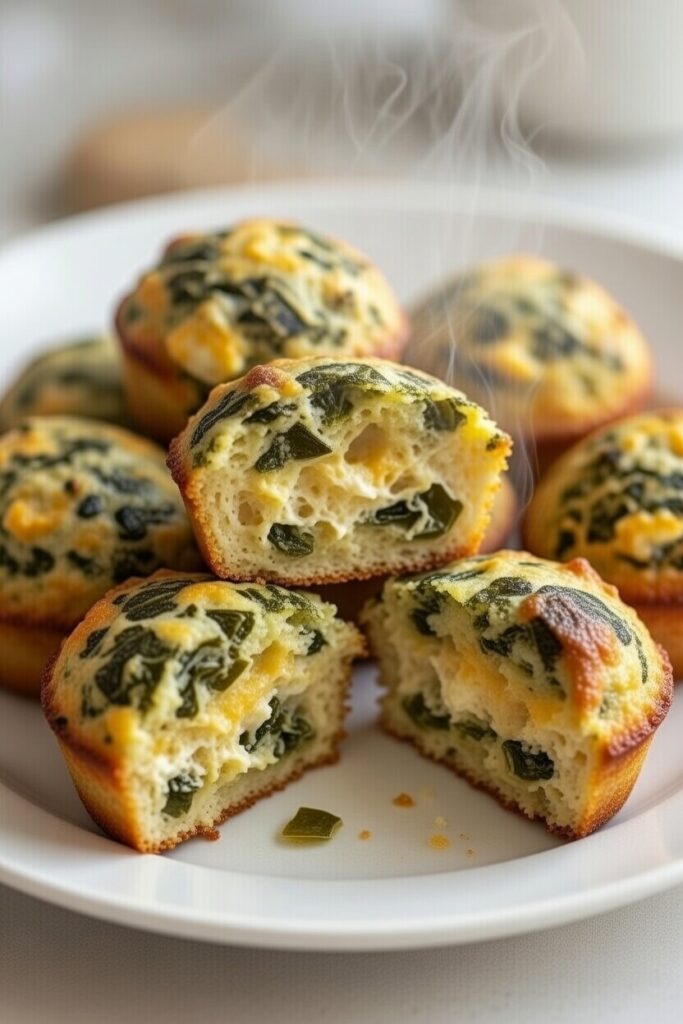
- The Visual Cue: The muffins are done when the centers are set (not jiggly) and the tops are slightly golden.
- The Rest: This is the most important step. Let them sit in the pan for 5 minutes. They will pull away from the edges naturally, making them easy to remove.
10. Frequently Asked Questions (FAQ)
Q: Why did my egg muffins turn out watery?
A: This is usually caused by raw vegetables (like spinach or mushrooms) releasing moisture during the bake. Always sauté and drain your veggies first!
Q: Can I make these with egg whites only?
A: Yes. Use 2 cups of liquid egg whites. Note that they will be slightly leaner and may require more seasoning for flavor.
Q: Why do they sink in the middle after cooling?
A: Eggs naturally puff up due to steam and then settle. To minimize this, don’t over-whisk at high speeds (which adds too much air) and use the baking powder tip mentioned in Section 7.
Q: How do I stop them from sticking to paper liners?
A: Egg proteins love to bond with paper. If you must use liners, use parchment liners or spray the inside of the paper liners with oil.
Q: Can I add grains like quinoa to these?
A: Absolutely! Adding 1/2 cup of cooked quinoa to the mix adds a lovely “bite” and extra fiber.