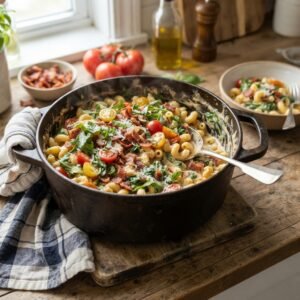
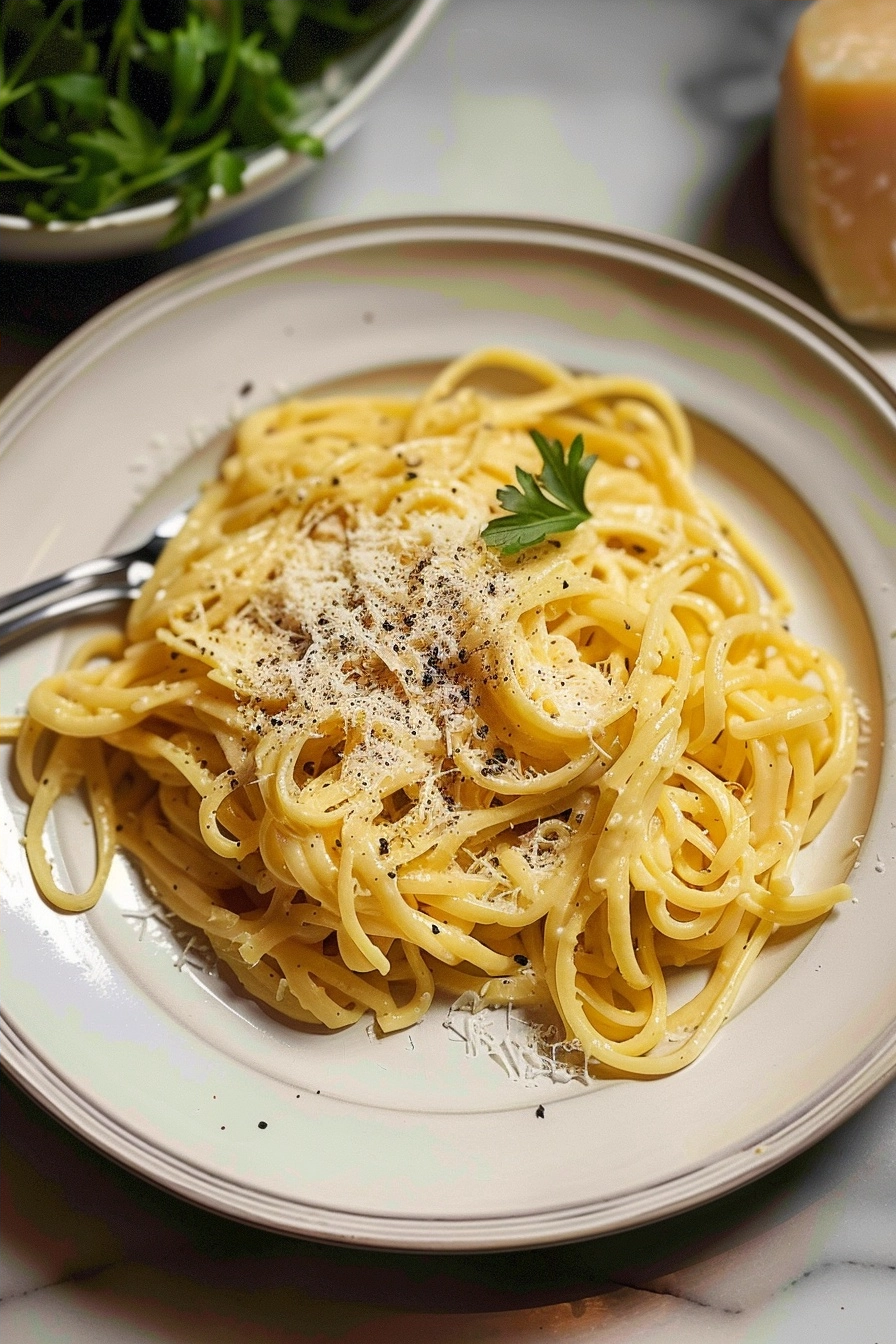
10-Minute Cacio e Pepe is a classic Roman pasta dish that relies on the emulsification of Pecorino Romano cheese and starchy pasta water to create a silky, peppery sauce. This authentic meal requires minimal ingredients and minimal time, making it the perfect solution for busy weeknights when you want restaurant-quality comfort food at home without any meat or alcohol additives.
| Category | Details |
|---|---|
| Prep Time | 2 minutes |
| Cook Time | 8 minutes |
| Total Time | 10 minutes |
| Servings | 2 servings |
| Difficulty | Easy |
| Cuisine | Italian |
Why This Recipe Works
This recipe works because it focuses on the fundamental chemistry of pasta water starch bonding with finely grated cheese. Many people struggle with clumping, but by tempering the cheese with a small amount of room-temperature water before adding the boiling pasta water, you guarantee a smooth, creamy texture every single time.
My experience in the kitchen has taught me that the quality of your black pepper is just as important as the quality of the cheese. Toasting the freshly cracked pepper in a dry pan unlocks aromatic oils that elevate the dish far beyond simple seasoning. This method ensures every bite is balanced, spicy, and deeply savory.
Ingredients
| Ingredient | Quantity | Notes |
|---|---|---|
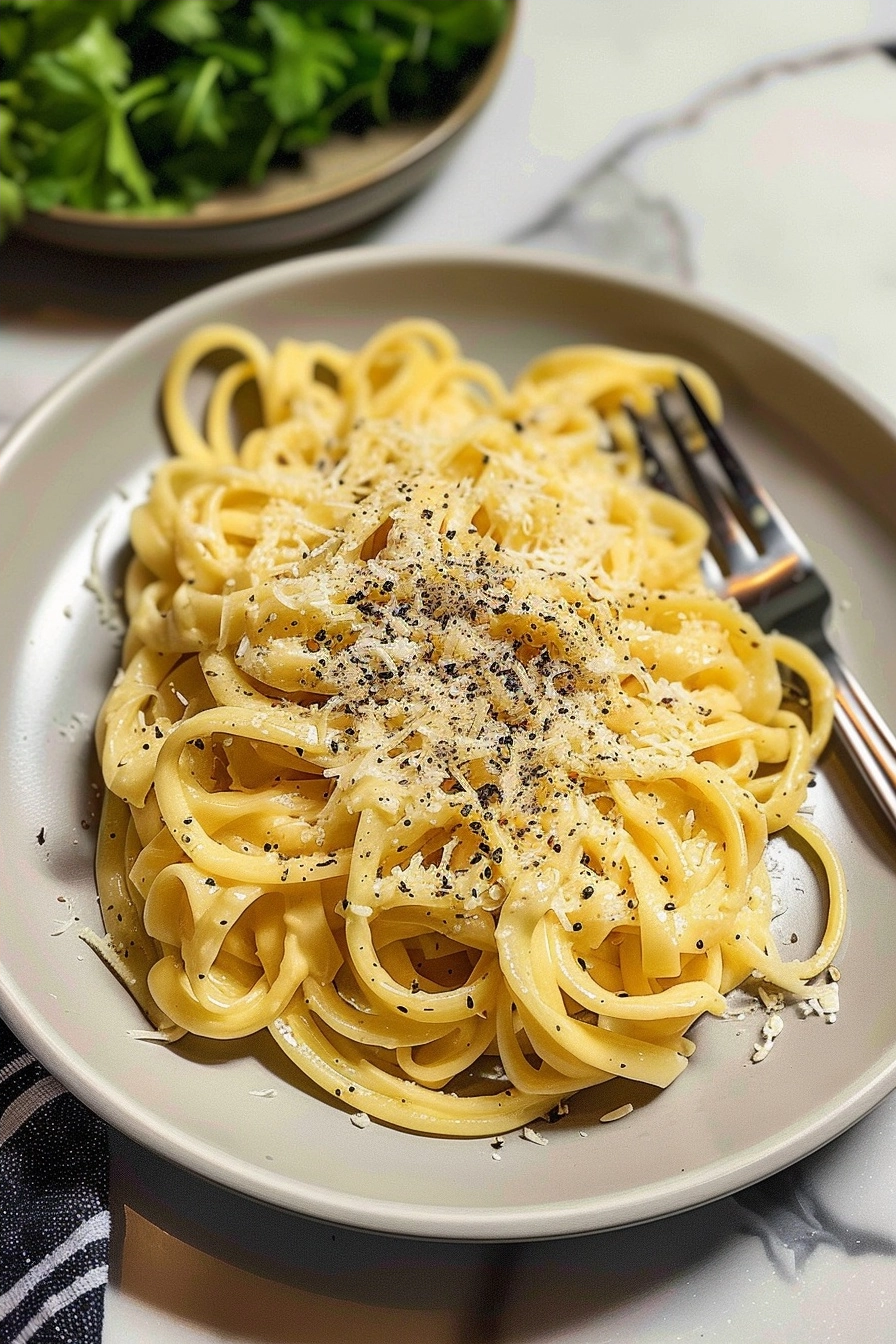
| Spaghetti | 12 oz | Use bronze-cut pasta for better starch release |
| Pecorino Romano | 1 cup | Must be finely grated for proper melting |
| Black Pepper | 2 tsp | Freshly cracked is non-negotiable for flavor |
| Pasta Water | 1 cup | Reserve this before draining the noodles |
Step-by-Step Instructions
Boiling the Pasta
- Boil a large pot of lightly salted water.
- Cook 12 ounces of spaghetti until it reaches a firm al dente texture.
- Reserve 1 cup of the starchy pasta water just before draining the noodles.
Creating the Sauce
- Toast 2 teaspoons of freshly cracked black pepper in a dry skillet over medium heat for one minute.
- Whisk 1 cup of finely grated Pecorino Romano with a splash of cool water in a bowl until it forms a thick paste.
- Add the drained spaghetti to the skillet with the toasted pepper.
- Pour in half the reserved pasta water and stir vigorously to coat the strands.
- Remove the pan from the heat and stir in the cheese paste until a creamy sauce forms.
Chef Tips for Perfect Results
- Use only Pecorino Romano, as its saltiness and sharpness are essential for the traditional flavor profile.
- Grate your cheese using a microplane or the finest setting on a box grater to ensure it melts instantly.
- Always remove the skillet from the heat before adding the cheese mixture to prevent the proteins from seizing into rubbery clumps.
- Toast your whole peppercorns in a pan before cracking them for maximum aromatic intensity.
- Work quickly once the pasta is drained because the starch-based emulsion requires heat to maintain its silky consistency.
Common Mistakes to Avoid
The most common mistake is using pre-grated cheese from a bag, which contains anti-caking agents that prevent the cheese from melting into a smooth sauce. Always buy a block of cheese and grate it fresh. Another error is oversalting the water; since the cheese is naturally very salty, use less salt than you would for a standard tomato sauce.
Many cooks also fail to reserve enough pasta water, which is the only binding agent in the dish. If your sauce looks dry or stringy, you likely need more starchy water to loosen the emulsion. Finally, do not add the cheese while the pan is still over high heat, as this causes the dairy to separate into oily chunks rather than a creamy coating.
Variations and Substitutions
| Ingredient | Substitution | Impact on Flavor |
|---|---|---|
| Spaghetti | Bucatini | Adds a chewy center and sauce-catching hollow core |
| Pecorino Romano | Parmigiano Reggiano | Creates a milder, slightly nuttier sauce profile |
| Black Pepper | Pink Peppercorns | Provides a floral, fruity heat instead of sharp spice |
Serving Suggestions and Pairings
Serve this dish immediately on pre-warmed plates to keep the sauce from setting too quickly. It pairs exceptionally well with a crisp arugula salad dressed in lemon vinaigrette to cut through the richness of the cheese. For a complete meal, add a side of roasted garlic-rubbed crostini or charred asparagus spears.
Storage and Reheating
| Method | Duration | Instructions |
|---|---|---|
| Refrigerator | 2 days | Store in an airtight container |
| Reheating | Stovetop | Add 2 tablespoons of water and stir over low heat until creamy |
Nutritional Information
| Nutrient | Amount per Serving |
|---|---|
| Calories | 480 |
| Protein | 18g |
| Fat | 14g |
| Carbohydrates | 72g |
| Fiber | 3g |
| Sodium | 750mg |
Approximate values.
Frequently Asked Questions
Can I use pre-grated cheese for this recipe?
Pre-grated cheese is not recommended because it contains anti-caking additives that prevent the cheese from emulsifying properly. You must use freshly grated Pecorino Romano for a smooth, authentic result.
How do I stop the cheese from clumping?
The cheese clumps when it is added to a pan that is too hot or when it lacks enough starch-filled water. Temper your cheese with a small amount of cool water first to create a paste before adding it to the warm pasta.
Is there a substitute for pasta water?
Pasta water provides the necessary starch to bind the cheese and oil into a creamy sauce, so there is no direct substitute. If you accidentally discard it, use a small amount of boiling water mixed with a pinch of cornstarch as an emergency backup.
Can I make this dish ahead of time?
Cacio e Pepe is best served immediately after preparation to maintain the ideal sauce texture. If you must prepare it in advance, it will lose its creamy consistency and is difficult to reheat properly.
Why does the sauce separate into oil?
The sauce separates when the cheese is exposed to direct, high heat, which causes the fats to melt out of the protein structures. Always remove your skillet from the burner completely before incorporating the cheese to ensure the emulsion remains stable.
Conclusion
Mastering this simple pasta dish proves that you do not need complicated techniques or long lists of ingredients to enjoy a gourmet experience. By focusing on the temperature control and the quality of your cheese, you can create a restaurant-style meal in just ten minutes. Embrace the bold, peppery heat and creamy texture of this traditional Roman staple in your own kitchen today. With practice, this 10-minute Cacio e Pepe will surely become your favorite go-to recipe for delicious, authentic, and fast results.
Print10-Minute Cacio e Pepe
Experience the authentic taste of Rome with this classic Cacio e Pepe recipe. This elegant pasta dish relies on the perfect emulsification of sharp Pecorino Romano cheese and starchy pasta water to create a silky, peppery sauce. By toasting freshly cracked black pepper and tempering your cheese into a smooth paste, you can achieve restaurant-quality results in just 10 minutes. It is the ultimate comforting, meat-free, and alcohol-free meal for busy weeknights.
- Prep Time: 2
- Cook Time: 8
- Total Time: 10
- Yield: 2 servings
- Category: Dinner
- Method: Boiling and Pan-Sautéing
- Cuisine: Italian
- Diet: Vegetarian
Ingredients
12 oz spaghetti (preferably bronze-cut)
1 cup Pecorino Romano cheese, finely grated
2 tsp black pepper, freshly cracked
1 cup reserved starchy pasta water
Splash of cool water
Instructions
Boil a large pot of lightly salted water and cook spaghetti until al dente.
Reserve 1 cup of the starchy pasta water just before draining the noodles.
Toast the cracked black pepper in a dry skillet over medium heat for one minute until fragrant.
In a small bowl, whisk the finely grated Pecorino Romano with a splash of cool water until it forms a thick, smooth paste.
Add the drained spaghetti to the skillet with the toasted pepper.
Pour in half of the reserved pasta water and stir vigorously to coat the pasta strands.
Remove the pan from the heat and stir in the cheese paste continuously until a smooth, creamy sauce forms.
Notes
Ensure the cheese is finely grated so it melts evenly without clumping. The secret to the sauce is removing the pan from the heat before adding the cheese paste to prevent the cheese from curdling or becoming stringy. Use bronze-cut pasta if possible, as the extra surface starch is essential for a thick, glossy emulsion.