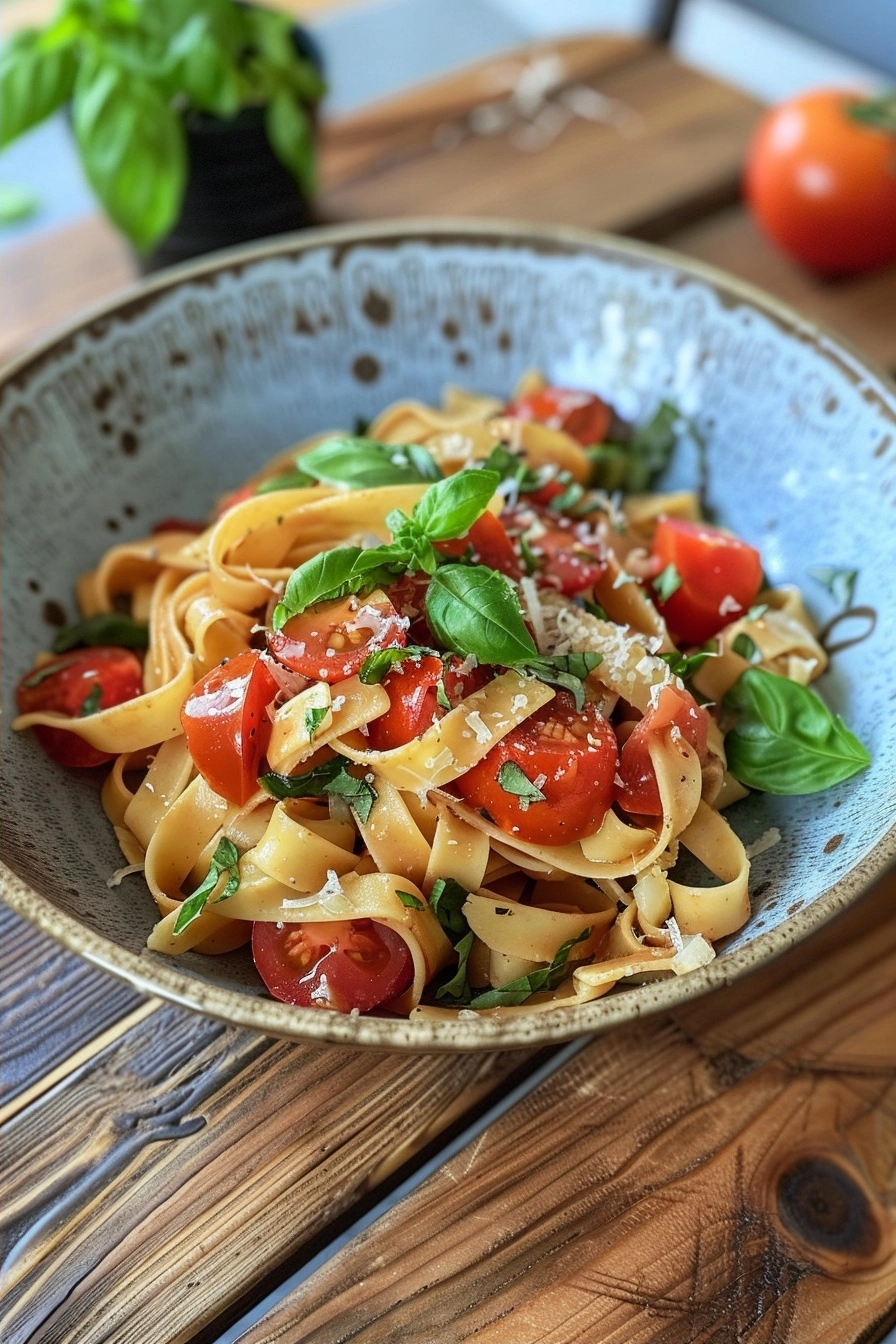
No-cook tomato basil pasta provides a vibrant, healthy meal solution by macerating fresh ingredients together while your pasta boils. This dish relies on the residual heat of freshly drained pasta to create a light, silky sauce without requiring time over a hot stove. You achieve deep flavor through simple, high-quality pantry staples and seasonal produce working in harmony.
Recipe Overview
| Metric | Details |
|---|---|
| Prep Time | 15 minutes |
| Cook Time | 10 minutes |
| Total Time | 25 minutes |
| Servings | 4 servings |
| Difficulty | Easy |
| Cuisine | Italian-Inspired |
Why This Recipe Works
This recipe works because the natural acidity and sweetness of tomatoes release their juices when combined with salt and olive oil. By allowing the mixture to sit while the pasta cooks, you create a complex, emulsified sauce that coats every strand without heavy cream or butter. The heat of the pasta gently softens the raw garlic and herbs, releasing essential oils without cooking out their fresh, pungent qualities.
My personal experience with this dish proves that simplicity creates the best outcomes for weeknight dinners. Relying on high-quality olive oil and fresh basil ensures that every bite remains clean, bright, and deeply satisfying. This method saves significant energy and cleaning time, making it the perfect quick dinner solution for busy households.
Ingredients
| Ingredient | Quantity | Notes |
|---|---|---|
| Pasta | 12 oz | Use spaghetti or linguine for best texture |
| Tomatoes | 2 cups | Cherry or grape tomatoes, halved |
| Garlic | 3 cloves | Minced finely or microplaned |
| Olive Oil | 1/3 cup | Use extra virgin olive oil |
| Fresh Basil | 1 cup | Tear leaves by hand |
| Parmesan | 1/2 cup | Freshly grated |
| Salt | To taste | Sea salt preferred |
| Pepper | 1/2 tsp | Freshly cracked black pepper |
Step-by-Step Instructions
Preparing the Base
- Combine halved tomatoes, minced garlic, olive oil, salt, and pepper in a large mixing bowl.
- Tear the fresh basil leaves into the bowl to prevent bruising from metal knives.
- Stir the mixture gently and allow it to macerate at room temperature for at least 15 minutes.
Cooking and Combining
- Boil a large pot of salted water and cook your chosen pasta according to package instructions for al dente.
- Drain the pasta thoroughly, but reserve about 1/4 cup of the starchy pasta cooking water.
- Add the hot, drained pasta directly into the bowl with the tomato mixture.
- Toss the pasta vigorously to emulsify the oil and tomato juices into a creamy sauce.
- Add the reserved pasta water if the mixture appears too dry during the tossing process.
- Fold in the grated Parmesan cheese and serve immediately.
Chef Tips for Perfect Results
- Use high-quality extra virgin olive oil because it serves as the foundation of your sauce emulsion.
- Salt your tomatoes early to draw out their moisture, which creates the essential liquid base for the sauce.
- Tear your basil leaves rather than chopping them to maintain their vibrant green color and intense aromatic profile.
- Drain your pasta well so that the tomato juices cling to the starch rather than becoming diluted in excess water.
- Add the Parmesan at the very end to ensure it melts into the warm sauce without clumping into stiff pockets.
Common Mistakes to Avoid
Using mealy or out-of-season tomatoes prevents the release of necessary juices, resulting in a dry and flavorless dish. Always choose ripe, firm cherry tomatoes for the best acidity balance. Another mistake involves using pre-grated cheese which contains anti-caking agents that ruin the smooth texture of the sauce; stick to freshly grated Parmesan. If you find your pasta is bland, you likely did not salt your pasta water enough, which is your only chance to season the actual noodles. Fix this by ensuring the water tastes like the ocean before adding your pasta.
Variations and Substitutions
| Ingredient | Substitution | Impact on Flavor |
|---|---|---|
| Basil | Fresh Arugula | Adds a peppery, spicy note |
| Parmesan | Pecorino Romano | Provides a sharper, saltier kick |
| Tomatoes | Sun-dried tomatoes | Creates a much deeper, sweeter profile |
| Pasta | Chickpea pasta | Increases protein and dietary fiber content |
Serving Suggestions and Pairings
Serve this no-cook tomato basil pasta alongside a crisp garden salad or roasted zucchini for a balanced meal. It pairs beautifully with garlic bread topped with fresh herbs, making it ideal for casual dinner parties or quick solo lunches. Keep the presentation simple by finishing each bowl with an extra drizzle of cold-pressed olive oil and a few whole basil leaves for a restaurant-quality look.
Storage and Reheating
| Method | Duration | Instructions |
|---|---|---|
| Refrigerator | 2 days | Store in an airtight glass container |
| Reheating | 1 minute | Microwave on low heat or toss briefly in a warm pan |
Nutritional Information
Approximate values per serving:
| Nutrient | Amount |
|---|---|
| Calories | 380 kcal |
| Protein | 12g |
| Fat | 15g |
| Carbohydrates | 48g |
| Fiber | 3g |
| Sugar | 4g |
Frequently Asked Questions
Can I use dried basil if fresh is unavailable?
Dried basil is not an effective substitute for this recipe because it lacks the necessary moisture and fresh aromatic oils. You should seek fresh herbs to ensure the sauce retains its signature vibrant, garden-fresh flavor profile.
How do I make this pasta gluten-free?
You can make this pasta gluten-free by substituting your favorite brown rice or quinoa-based pasta. These alternatives hold up well under the tomato sauce and provide a nutritious, fiber-rich dining experience.
Why is my sauce watery?
Your sauce becomes watery if you use tomatoes with too much pulp or fail to drain the pasta sufficiently. To fix this, use a slotted spoon to transfer pasta or ensure you drain the pasta well before adding it to the bowl.
Can I prepare the tomato base ahead of time?
You can prepare the tomato and garlic base up to four hours before cooking, but keep it at room temperature to allow the flavors to meld. Do not add the basil until the last moment to ensure the leaves remain bright and fresh.
Does this dish need additional protein?
This dish works perfectly with grilled chicken, chickpeas, or white beans added during the final tossing phase. These additions turn a light starter into a robust main course without compromising the integrity of the sauce.
Creating no-cook tomato basil pasta is a masterclass in allowing simple ingredients to shine through minimal interference. By mastering the emulsification of oil and tomato juices, you transform basic pantry items into a sophisticated and efficient weeknight meal. Enjoy the bright, herbaceous notes that only fresh ingredients can provide in this classic dish. Keep this recipe in your rotation for nights when you crave quality without the lengthy kitchen cleanup, and savor every bite of the garden-inspired goodness you have created.
PrintNo-Cook Tomato Basil Pasta
This vibrant and healthy Italian-inspired pasta dish relies on the residual heat of freshly cooked noodles to create a silky, emulsified sauce. By macerating fresh cherry tomatoes, garlic, extra virgin olive oil, and aromatic basil, you achieve a deep, complex flavor without needing a hot stove. It is the perfect, time-saving solution for busy weeknights, delivering a clean and satisfying meal using high-quality pantry staples.
- Prep Time: 15
- Cook Time: 10
- Total Time: 25
- Yield: 4 servings
- Category: Dinner
- Method: Boiling and Macerating
- Cuisine: Italian-Inspired
- Diet: Vegetarian
Ingredients
12 oz spaghetti or linguine
2 cups cherry or grape tomatoes, halved
3 cloves garlic, minced
1/3 cup extra virgin olive oil
1 cup fresh basil leaves, torn
1/2 cup Parmesan cheese, freshly grated
Sea salt to taste
1/2 tsp freshly cracked black pepper
Instructions
Combine halved tomatoes, minced garlic, olive oil, salt, and pepper in a large mixing bowl.
Tear the fresh basil leaves by hand and add them to the tomato mixture.
Stir gently and let the mixture macerate at room temperature for at least 15 minutes.
Boil a large pot of salted water and cook the pasta according to package instructions until al dente.
Drain the pasta thoroughly, keeping a splash of pasta water, and add it immediately to the mixing bowl with the tomato sauce.
Toss the hot pasta with the raw tomato base so the residual heat releases the basil oils and emulsifies the olive oil.
Stir in the grated Parmesan cheese and serve immediately.
Notes
Use the best quality extra virgin olive oil you have, as it is the foundation of the sauce. Reserve a small amount of starchy pasta water if the sauce appears too dry when combining. Ensure you tear the basil by hand rather than cutting with a metal knife to prevent bruising the leaves.