1. Introduction: The Soul of the Bowl
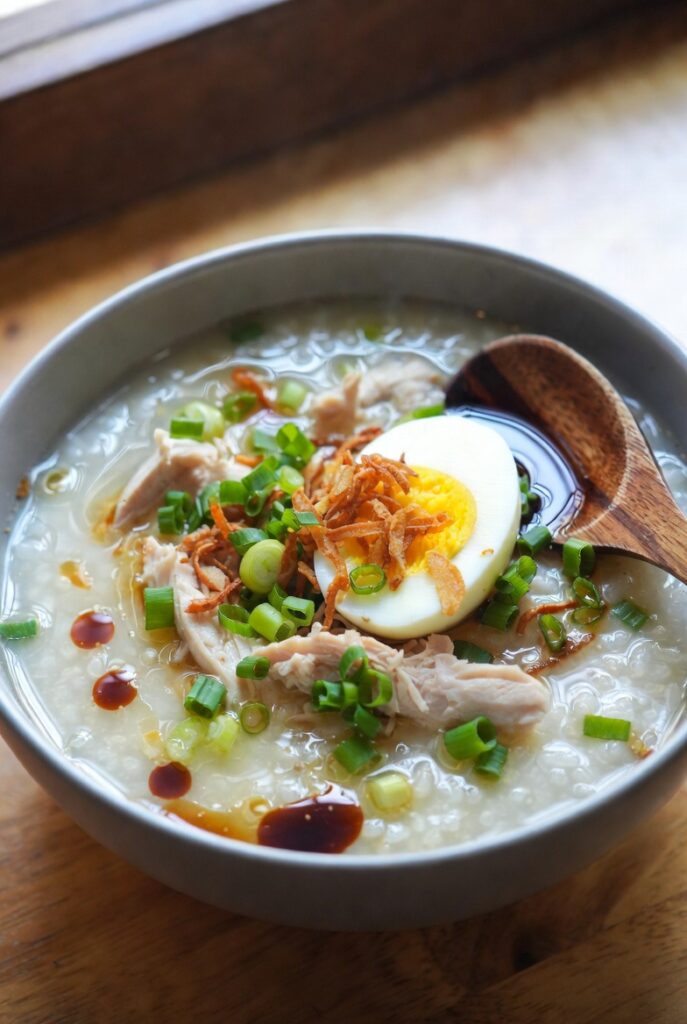
In the quiet, early hours of the morning, across busy city streets in Hong Kong, quiet villages in Vietnam, and bustling markets in Thailand, there is a singular, shared sensory experience: the rising steam from a communal pot of Savory Congee (Rice Porridge). Often referred to as “Jook” in Cantonese, “Bubur” in Indonesian, or “Cháo” in Vietnamese, this dish is the ultimate global comfort food. It represents a culinary alchemy where humble grains of rice are broken down by water, heat, and time into a silky, ivory cream that warms the body from the inside out.
What makes Savory Congee (Rice Porridge) a perennial favorite isn’t just its simplicity; it’s the versatility. In a world of complex, high-stress recipes, Savory Congee (Rice Porridge) is a blank canvas—a soothing “reset button” for the digestive system. It is a dish that honors the “Cucina Povera” (kitchen of the poor) philosophy of Asian households, where a small handful of rice is transformed into a large, nourishing meal. Whether you are recovering from a cold, fueling a rainy morning, or seeking a late-night savory snack, Savory Congee (Rice Porridge) is a testament to the power of slow-simmered patience.
2. The Cultural Significance of Rice Porridge
To understand Savory Congee (Rice Porridge), one must understand its place in the home. It is rarely just “breakfast.” In many cultures, it is the first solid food a baby eats and the last meal served to the elderly. It is “healing food.”
Historically, Savory Congee (Rice Porridge) allowed families to stretch a meager rice supply during times of harvest failure. By increasing the water-to-grain ratio, a single cup of rice could feed a family of six. Over centuries, this necessity birthed a preference for the texture. Today, even in times of plenty, the craving for the velvet-smooth consistency of a well-made Savory Congee (Rice Porridge) remains a cornerstone of Asian identity.
3. Savory Congee (Rice Porridge) Recipe Overview
- Cuisine Type: East Asian / Pan-Asian Comfort Food
- Difficulty Level: Easy (Requires patience more than technical skill)
- Total Preparation Time: 5 Minutes (plus optional soaking)
- Total Cooking Time: 60–90 Minutes (Stovetop)
- Dietary Classifications: Gluten-Free, Dairy-Free, and easily Vegan-adaptable.
- Yield: Serves 4 large bowls.
4. Equipment and Tools: The Science of the Simmer
The success of your Savory Congee (Rice Porridge) depends on deep, even heat management. Because rice starches become incredibly sticky as they break down, the wrong pan can lead to a burnt layer at the bottom that ruins the delicate aroma.
- Heavy-Bottomed Stockpot or Dutch Oven: A heavy base (like enameled cast iron or tri-ply stainless steel) is the best vessel for Savory Congee (Rice Porridge). It distributes heat evenly, preventing “hot spots” where the rice might catch and scorch.
- Fine-Mesh Strainer: Essential for rinsing the rice. Rinsing removes excess surface starch that can make the porridge “gummy” rather than “creamy.”
- The Wooden Spoon: The tool of the traditionalist. Constant, gentle stirring during the final stages of Savory Congee (Rice Porridge) helps the rice grains rub against each other, releasing the starches into the liquid.
- The Instant Pot / Pressure Cooker: While the stovetop is traditional, modern cooks often use pressure to force the rice grains to burst in under 30 minutes, creating a very consistent Savory Congee (Rice Porridge) texture.
5. Ingredients Section: Sourcing for Excellence
To make the best Savory Congee (Rice Porridge), you must choose ingredients that contribute to the final emulsion.
The Rice (The Foundation)
Jasmine rice is the gold standard for Savory Congee (Rice Porridge). It has a high enough starch content to create a thick body but retains a subtle floral aroma.
- Expert Variation: Many chefs use a 90/10 split—90% Jasmine rice and 10% Glutinous (sticky) rice. This adds an extra layer of “silk” to the final Savory Congee (Rice Porridge).
The Liquid (The Flavor Engine)
While water is traditional and produces a clean, white porridge, using a high-quality chicken bone broth or a dashi made from kombu and dried shiitake mushrooms will elevate your Savory Congee (Rice Porridge) to restaurant levels.
The Aromatics
- Ginger: Should be sliced into thick coins and smashed with the side of a knife to release the juice.
- White Pepper: Unlike black pepper, white pepper provides a “floral heat” that resonates through the porridge without adding dark specks.
6. The Science of the “Bloom”: Why It Works
Why does Savory Congee (Rice Porridge) become creamy without any cream? The answer lies in the rice grain’s structure. Rice contains two starches: Amylose and Amylopectin.
As the rice simmers in a high-liquid environment, the heat causes the starch granules to swell and eventually burst—a process known as “blooming.” In a Savory Congee (Rice Porridge), we are intentionally overcooking the rice to the point of structural collapse. By stirring, we encourage the amylopectin to leach into the water, creating a natural thick emulsion.
7. Step-by-Step: How to Cook Savory Congee (Rice Porridge)
Step 1: The Rinse and Soak
Rinse 1 cup of rice under cold water until the cloudiness subsides. If you have time, soak the grains for 30 minutes. This ensures that the core of the grain hydrates, leading to a more uniform Savory Congee (Rice Porridge).
Step 2: The Precise Ratio
For a “Medium” thickness, use a 1:8 ratio.
- 1 cup rice
- 8 cups liquid (Broth or Water)
Step 3: The Initial Boil
Place your pot over high heat. Bring the liquid to a rolling boil. Do not cover it yet.
Step 4: The Infusion
Add your ginger slices and a teaspoon of salt. Once the water is boiling, add the rice. Stir once to ensure no grains are sticking to the floor of the pot.
Step 5: The Long Simmer
Turn the heat down to the lowest possible setting. You want a “lazy bubble”—where the surface just barely ripples. Cover the pot, but leave the lid slightly ajar (use a wooden spoon to prop it open if necessary). This prevents the Savory Congee (Rice Porridge) from boiling over.
Step 6: The Agitation
Every 15 minutes, stir the pot. This isn’t just to prevent burning; it’s to help the grains break down. After 60 minutes, the rice grains should look like tiny white flowers.
Step 7: The Final Whisk
If you want that ultra-velvety texture found in high-end shops, take a whisk or a heavy spoon and beat the Savory Congee (Rice Porridge) vigorously for 60 seconds. This final burst of energy emulsifies the remaining starches.
8. Expert Tips and Variations
The “Freeze” Hack (For the Busy Cook)
If you don’t have 90 minutes, wash your rice and place it in a freezer bag while still wet. Freeze it overnight. The water inside the rice expands as it turns to ice, creating microscopic fractures in the grain. When you drop frozen rice into boiling water, it bursts almost instantly, giving you a perfect Savory Congee (Rice Porridge) in just 20 minutes.
The “Dry Scallop” Depth
In Cantonese kitchens, a single dried scallop (conpoy) is often added to the pot. As it simmers, it shreds into fine salty threads, giving the Savory Congee (Rice Porridge) a deep, oceanic umami that is incomparable.
Protein Integration
- Chicken: Add thinly sliced breast or thigh in the last 10 minutes.
- Pork: Small, seasoned meatballs can be dropped into the simmering Savory Congee (Rice Porridge).
- Vegan: Cubed silken tofu added at the very end provides a soft, protein-rich contrast.
9. Serving Suggestions and Plating
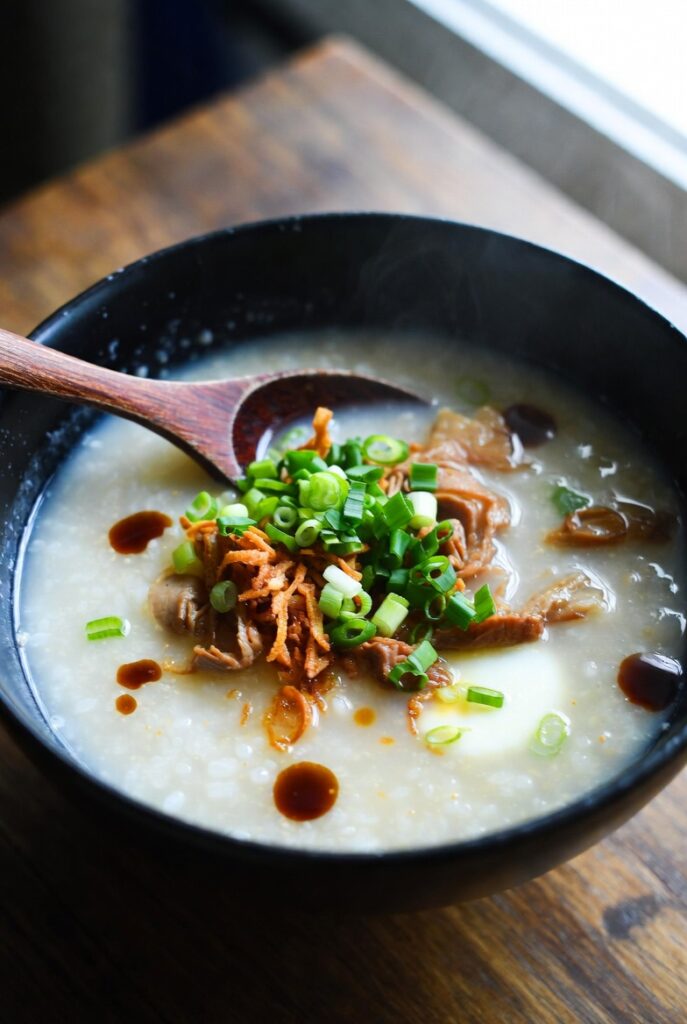
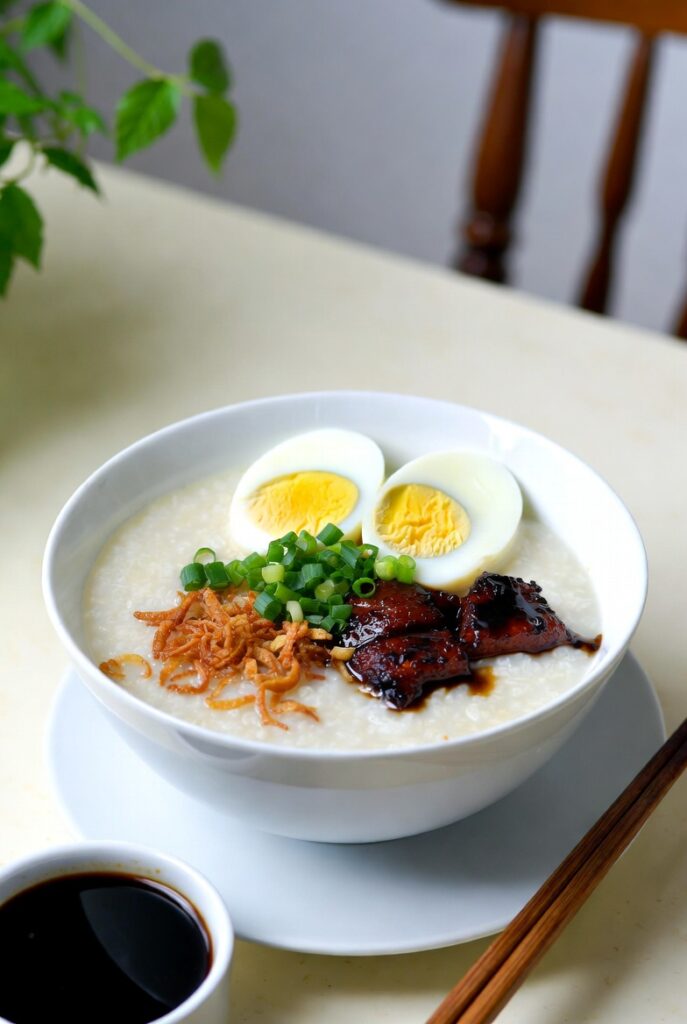
Savory Congee (Rice Porridge) is as much about the toppings as it is about the base.
The “Aromatic” Layer
Thinly sliced scallions (green parts only) and fresh cilantro leaves.
The “Crunch” Layer
- You-Tiao: These Chinese fried dough sticks are the traditional “dipper.”
- Fried Shallots: Adds a toasted, sweet onion flavor.
- Peanuts: Fried or roasted peanuts add a necessary bite to the soft porridge.
The “Condiment” Layer
- Sesame Oil: A few drops on the surface.
- Soy Sauce: Use “Light” soy sauce to preserve the pale color of the Savory Congee (Rice Porridge).
- Chili Oil: For those who want a spicy start to their day.
10. Storage and Reheating: Making It Last
Savory Congee (Rice Porridge) is a meal-prepper’s dream, but it behaves differently than other leftovers. As it sits in the fridge, the rice continues to absorb the liquid, turning the porridge into a thick, solid mass.
- Refrigeration: Stays fresh in an airtight glass container for up to 4 days.
- Reheating: Do not just microwave it as-is. Place the cold Savory Congee (Rice Porridge) in a saucepan, add 1/4 cup of water or broth, and whisk over medium heat until it returns to its silky, fluid state.
11. Frequently Asked Questions (FAQ)
Why is my congee watery?
This usually means the rice grains haven’t “burst” yet. Simmer it for another 15 minutes with the lid off and give it a vigorous stir.
Can I make Savory Congee (Rice Porridge) with leftover cooked rice?
Yes! However, since the rice has already been cooked and cooled, it won’t release as much starch. You may need to blend a small portion of the porridge to achieve that signature Savory Congee (Rice Porridge) creaminess.
Is it healthy?
Absolutely. It is hydrating, low in fat (depending on toppings), and incredibly gentle on the stomach. It is the go-to meal for anyone suffering from digestive upset.
12. Nutritional Information
(Per 1.5 cup serving – Base made with water)
| Nutrient | Amount |
| Calories | 210 kcal |
| Protein | 4g |
| Total Fat | 1.5g |
| Fiber | 1g |
| Vitamin B6 | 10% DV |
| Iron | 4% DV |