1. Introduction: The Plant-Based Revolution of a Deli Classic
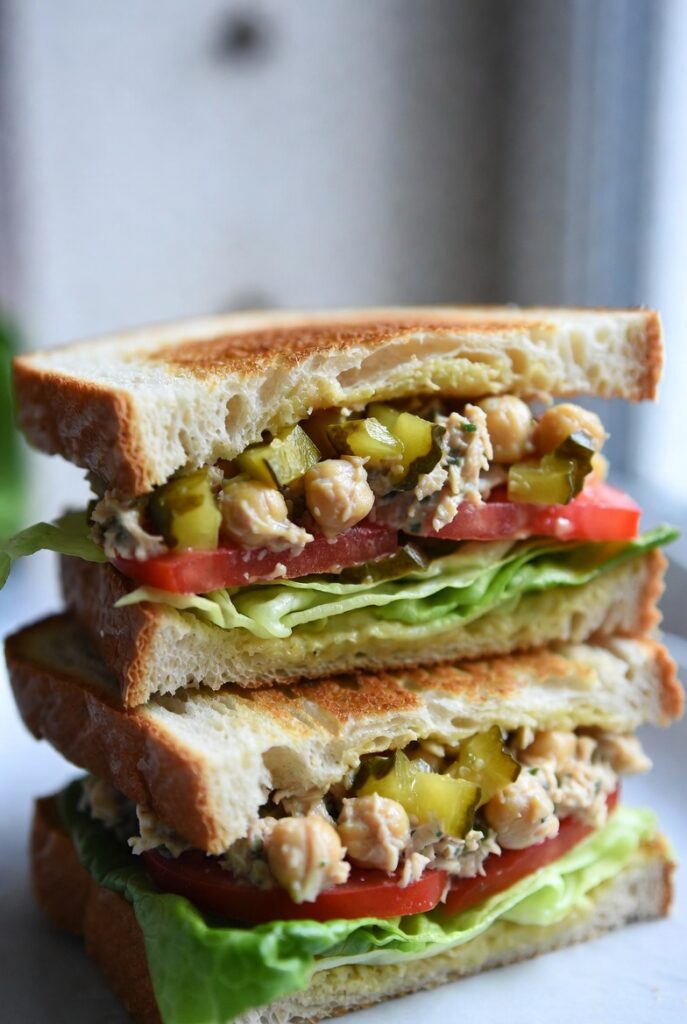
In the evolving world of modern nutrition, few dishes demonstrate the power of culinary ingenuity as effectively as the Chickpea “Tuna” Salad Sandwiches. For decades, the tuna salad sandwich was the undisputed king of the quick lunch—a reliable, protein-packed staple found in every lunchbox and deli counter across the country. However, as global tastes shift toward sustainability and plant-forward eating, a new contender has emerged. By utilizing the humble garbanzo bean, we can recreate the flaky texture and savory depth of the original, resulting in a meal that is heart-healthy, mercury-free, and incredibly satisfying.
The magic of the Chickpea “Tuna” Salad Sandwiches lies in its ability to trick the palate through texture and seasoning. It is a “functional feast” that bridges the gap between traditional comfort food and modern wellness goals. Whether you are a lifelong vegan, a “flexitarian” looking to reduce your environmental footprint, or simply a food lover seeking a high-fiber alternative to processed meats, these sandwiches offer a sophisticated solution. This isn’t just a substitute; it is an upgrade that honors the nostalgia of the classic deli sandwich while providing a clean, vibrant energy boost that lasts all afternoon.
2. The Anatomy of the Chickpea: Why It Works
To understand the success of Chickpea “Tuna” Salad Sandwiches, one must look at the structural biology of the chickpea. Unlike other legumes that turn to mush when mashed, the chickpea (Cicer arietinum) possesses a firm, starchy exterior and a creamy interior. When partially crushed, it creates a “flaked” consistency that mimics the fibers of canned tuna with startling accuracy.
From a nutritional perspective, choosing Chickpea “Tuna” Salad Sandwiches over the traditional version provides a massive influx of dietary fiber and complex carbohydrates. While tuna is a lean protein, it lacks the gut-health benefits and steady glucose release provided by legumes. Furthermore, by using chickpeas, you eliminate concerns regarding heavy metal bioaccumulation (mercury) and overfishing. This is a dish that feeds the body’s need for protein while supporting the microbiome—a true win-win for the modern, conscious eater.
3. Recipe Overview
- Cuisine Type: Plant-Based / American Deli Fusion
- Difficulty Level: Very Easy (No-cook recipe)
- Total Preparation Time: 20 Minutes
- Total Cooking Time: 0 Minutes
- Total Time: 20 Minutes
- Dietary Classifications: Vegan, Vegetarian, High-Fiber, Dairy-Free.
- Yield: Serves 4 (Makes 4 large sandwiches)
4. Equipment and Tools: The Precision of the Mash
While Chickpea “Tuna” Salad Sandwiches require no heat, the texture is entirely dependent on how you handle the legumes.
- Large Mixing Bowl: You need enough room to toss the ingredients without spilling.
- Potato Masher or Sturdy Fork: This is the most critical tool. You want to “crush,” not “puree.” A food processor can be used, but it risks turning your Chickpea “Tuna” Salad Sandwiches into hummus if pulsed for even a second too long.
- Fine-Mesh Strainer: Essential for rinsing the chickpeas. The liquid in the can (aquafaba) has a strong flavor that should be washed away to ensure a clean taste.
- Sharp Chef’s Knife: For dicing the celery and red onions into tiny, uniform cubes that provide the classic “crunch.”
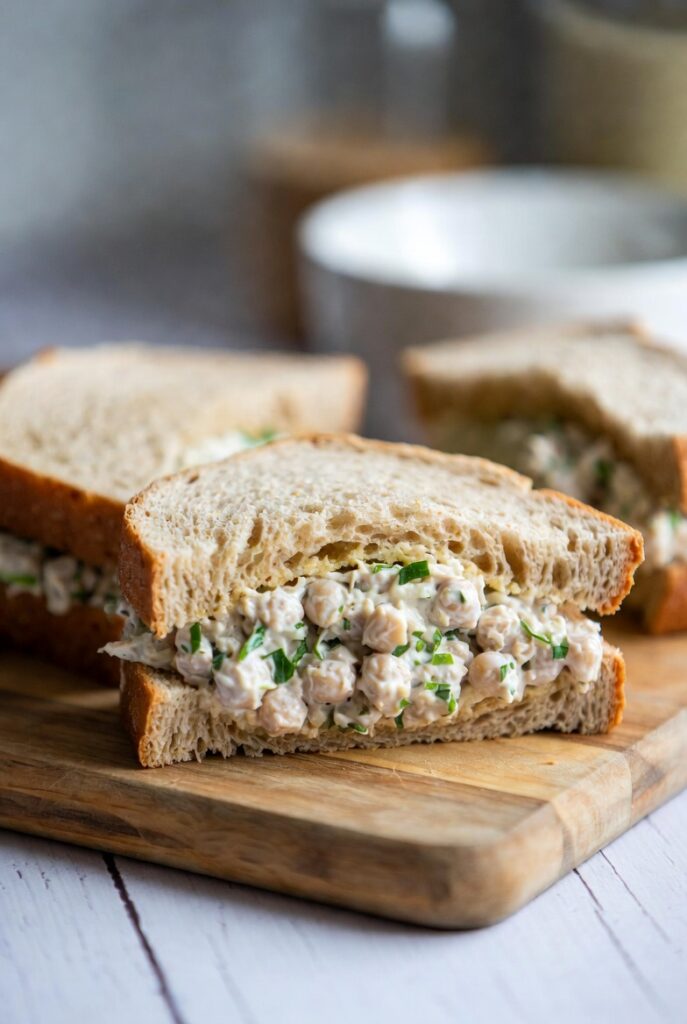
5. Ingredients Section: Sourcing for Excellence
The flavor profile of Chickpea “Tuna” Salad Sandwiches is built on layers of brine, crunch, and creaminess.
The Protein Base
- Chickpeas (Garbanzo Beans): Two 15-oz cans. Look for organic, “no salt added” varieties to maintain control over the sodium content of your Chickpea “Tuna” Salad Sandwiches.
The “Sea” Flavor (The Secret Ingredients)
To make Chickpea “Tuna” Salad Sandwiches taste authentic, we use ingredients that evoke the ocean:
- Nori Flakes or Dulce: Finely crumbled seaweed adds a subtle “fishy” iodine note.
- Capers: These little brine-bombs provide the salty tang associated with canned fish.
The Creamy Binder
- Vegan Mayonnaise: Provides the traditional richness. For a lighter version of Chickpea “Tuna” Salad Sandwiches, you can use half mayo and half plain unsweetened soy yogurt or mashed avocado.
- Dijon Mustard: For a sophisticated, sharp finish.
The Texture Mix-ins
- Celery: Finely diced for that iconic snap.
- Red Onion: Adds a sharp, colorful bite.
- Dill Pickles: Provides acidity and a vinegary punch.
- Fresh Dill: The herb that ties the entire flavor profile together.
6. The Science of the “Deli Texture”
The biggest mistake people make with Chickpea “Tuna” Salad Sandwiches is over-mashing. In a professional deli, the salad has distinct chunks and a “toothy” bite.
When preparing your Chickpea “Tuna” Salad Sandwiches, aim to mash only about 70% of the chickpeas. Leave the remaining 30% whole or halved. This creates a multi-dimensional mouthfeel that keeps the sandwich interesting. The mashed portion binds with the mayo to create a creamy spread, while the whole portions provide the structural integrity needed to hold up between two slices of bread.
7. Step-by-Step Instructions
Step 1: Drain and Rinse
Open your cans of chickpeas and pour them into a fine-mesh strainer. Rinse thoroughly under cold water until the bubbles disappear. Shake off as much excess water as possible; a wet chickpea will result in a soggy Chickpea “Tuna” Salad Sandwiches experience.
Step 2: The Strategic Mash
Transfer the chickpeas to a large mixing bowl. Using a potato masher, press down firmly. Rotate the bowl and repeat until most beans are broken but not obliterated.
Step 3: Dicing with Precision
Finely dice your celery, red onion, and pickles. The smaller the dice, the better they will distribute throughout the Chickpea “Tuna” Salad Sandwiches. Add them to the bowl along with the capers and crumbled nori.
Step 4: The Dressing Integration
Add 1/3 cup of vegan mayo, 1 tablespoon of Dijon mustard, and a squeeze of fresh lemon juice. Fold the mixture gently with a spatula.
The Pro Move: Add a pinch of “Kala Namak” (Himalayan Black Salt). Its high sulfur content adds a savory, almost egg-like depth that mimics the richness of real tuna.
Step 5: The Herbaceous Finish
Fold in a generous amount of fresh chopped dill. Season with black pepper to taste. (You likely won’t need salt if you used capers and pickles).
Step 6: Resting
Let the mixture sit in the refrigerator for at least 30 minutes. This is vital for Chickpea “Tuna” Salad Sandwiches; it allows the seaweed and spices to hydrate and permeate the chickpeas.
8. Expert Tips and Variations
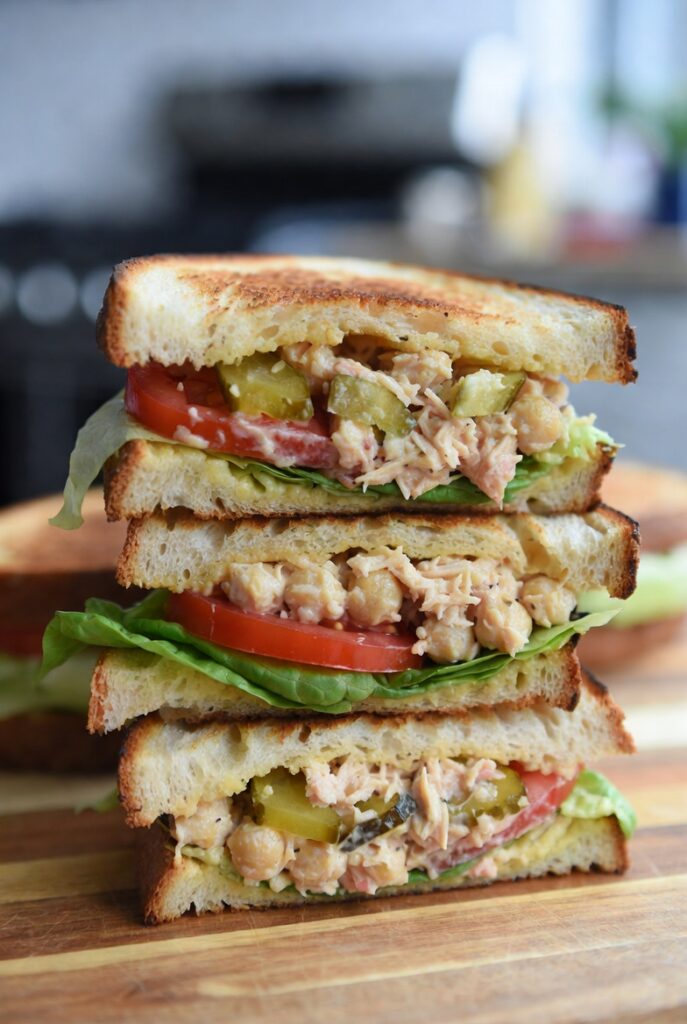
- The Bread Choice: A sturdy sourdough or a sprouted grain bread is best. These provide a rustic contrast to the soft filling of the Chickpea “Tuna” Salad Sandwiches.
- The “Tuna Melt” Variation: Place the chickpea mixture on an open-faced slice of bread, top with vegan cheddar, and broil for 3 minutes until bubbly.
- The Low-Carb Option: Serve the chickpea mixture inside hollowed-out bell peppers or large tomato cups instead of bread.
- Added Healthy Fats: Fold in 1/4 cup of hemp hearts for a boost of Omega-3s and a subtle nutty flavor.
9. Storage and Meal Prep
The Chickpea “Tuna” Salad Sandwiches filling is a meal-prepper’s dream because, unlike real fish, it doesn’t develop a strong “fishy” odor in the office fridge.
- Refrigeration: Store the filling in an airtight glass container for up to 5 days.
- Note on Moisture: Over time, the chickpeas may absorb some of the dressing. If your Chickpea “Tuna” Salad Sandwiches look dry on day three, simply stir in an extra teaspoon of mayo or a splash of pickle juice.
- Freezing: Do not freeze the salad. The mayonnaise and fresh vegetables will separate and turn watery upon thawing.
10. Frequently Asked Questions (FAQ)
Q: Does it actually taste like tuna?
A: With the addition of nori and lemon juice, the flavor profile is remarkably similar. However, the texture is slightly nuttier and less “oily” than traditional tuna.
Q: Can I use dried chickpeas?
A: Yes! You will need to soak and boil them until tender. 1 cup of dry chickpeas will yield enough for a full batch of Chickpea “Tuna” Salad Sandwiches.
Q: Is this kid-friendly?
A: Absolutely. It’s a great way to introduce legumes to children. If they are picky about “green bits,” you can omit the nori and use extra pickles instead.
11. Nutritional Information
(Per serving – Filling only)
| Nutrient | Amount |
| Calories | 285 kcal |
| Protein | 11g |
| Total Fat | 12g |
| Carbohydrates | 34g |
| Fiber | 10g |
| Iron | 15% DV |