1. Introduction: The Vertical Evolution of a Neapolitan Icon
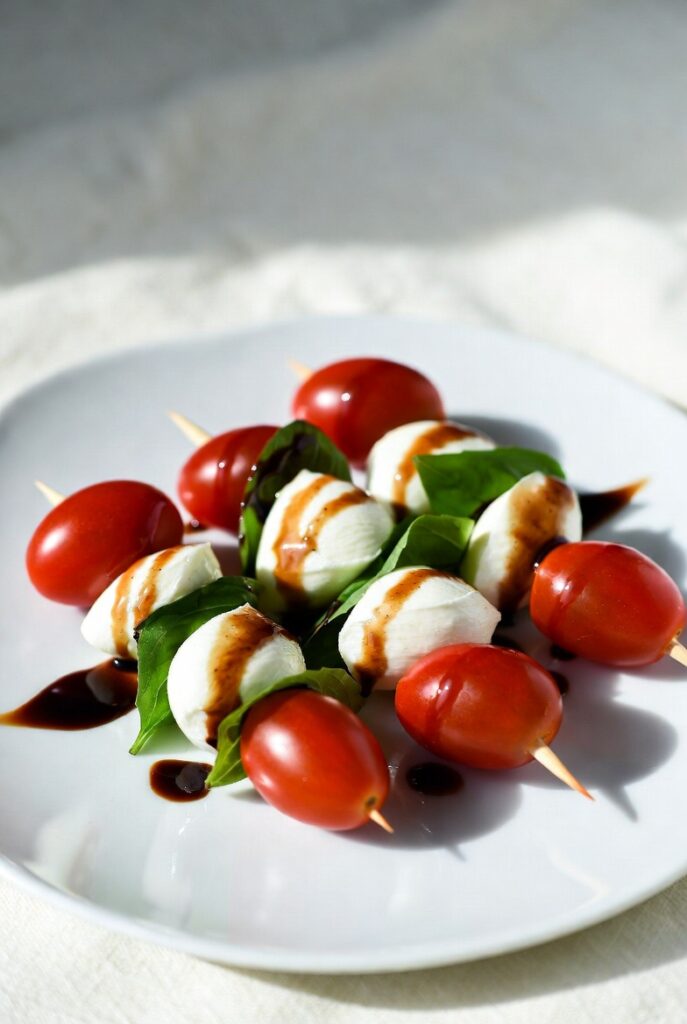
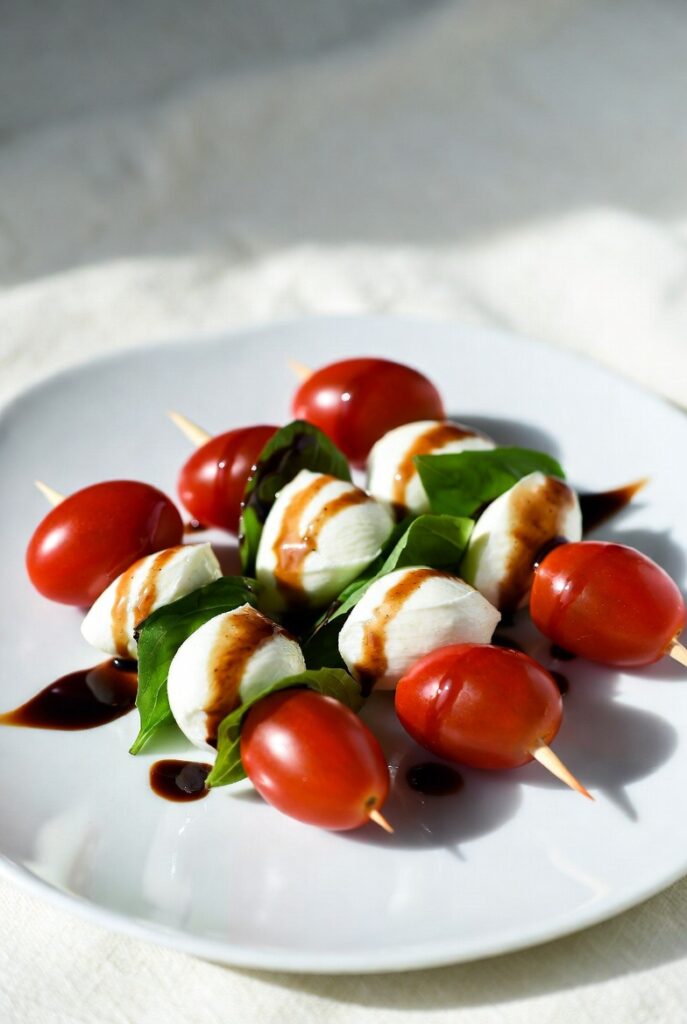
In the world of sophisticated entertaining and “clean” appetizers, the Caprese Skewers with Balsamic Glaze represent a brilliant structural evolution of the classic Insalata Caprese. Traditionally served as a plated salad to honor the colors of the Italian flag—green, white, and red—this modern adaptation transforms the experience into a portable, “one-bite” masterpiece. By deconstructing the elements and reassembling them on a bamboo skewer, the Caprese Skewers with Balsamic Glaze offer a mess-free, elegant solution for cocktail parties, summer picnics, or high-protein snacking.
The genius of the Caprese Skewers with Balsamic Glaze lies in its absolute reliance on ingredient purity. Because there is no cooking involved to mask imperfections, the dish forces a focus on the seasons: the explosive sweetness of a vine-ripened tomato, the creamy elasticity of fresh mozzarella, and the peppery aromatic lift of garden basil. When crowned with a syrupy, obsidian-dark balsamic reduction, these skewers achieve a perfect equilibrium of acidity and fat. For the host, it is a low-stress, high-impact assembly that provides a vibrant, Mediterranean flair to any spread without requiring a single minute of oven time.
2. The Science of the “Perfect Bite”: Ratio and Texture
To master the Caprese Skewers with Balsamic Glaze, one must respect the geometry of the ingredients. In a standard salad, you can vary the size of your cuts, but on a skewer, the ratio must be precise so that no single element overwhelms the palate. The goal is for the diameter of the cherry tomato to match the diameter of the ciliegine (cherry-sized mozzarella balls).
From a chemical perspective, the Caprese Skewers with Balsamic Glaze benefit from the interaction between the lycopene in the tomatoes and the healthy fats in the mozzarella and olive oil. Lycopene is a fat-soluble antioxidant, meaning its health benefits are significantly increased when consumed alongside a lipid source. Furthermore, the balsamic glaze isn’t just a garnish; its high sugar-to-acid ratio acts as a flavor bridge, linking the savory notes of the cheese to the natural sugars in the tomato. Every Caprese Skewers with Balsamic Glaze is essentially a micro-lesson in Italian flavor theory.
3. Recipe Overview
- Cuisine Type: Italian / Modern Antipasto
- Difficulty Level: Very Easy (Assembly focused)
- Total Preparation Time: 20 Minutes
- Total Cooking Time: 0 Minutes (Assuming store-bought glaze)
- Total Time: 20 Minutes
- Dietary Classifications: Vegetarian, Gluten-Free, Low-Carb, Keto-friendly.
- Yield: Makes 20–24 skewers.
4. Equipment and Tools: The Essentials of Presentation
Since the Caprese Skewers with Balsamic Glaze are a visual-first dish, your choice of tools will define the “luxury” feel of the final product.
- 4-inch Bamboo Skewers: Paddle-style skewers are superior as they provide a “handle” for guests and prevent the ingredients from spinning.
- Small Squeeze Bottle: Essential for applying the balsamic glaze in a controlled, professional zigzag rather than a messy pour.
- Fine-Mesh Strainer: To drain the mozzarella balls thoroughly. Excess brine is the enemy of a clean-looking Caprese Skewers with Balsamic Glaze.
- Large Serving Platter: A slate or white ceramic board provides the best color contrast for the red and green.
5. Ingredients Section: Sourcing for Excellence
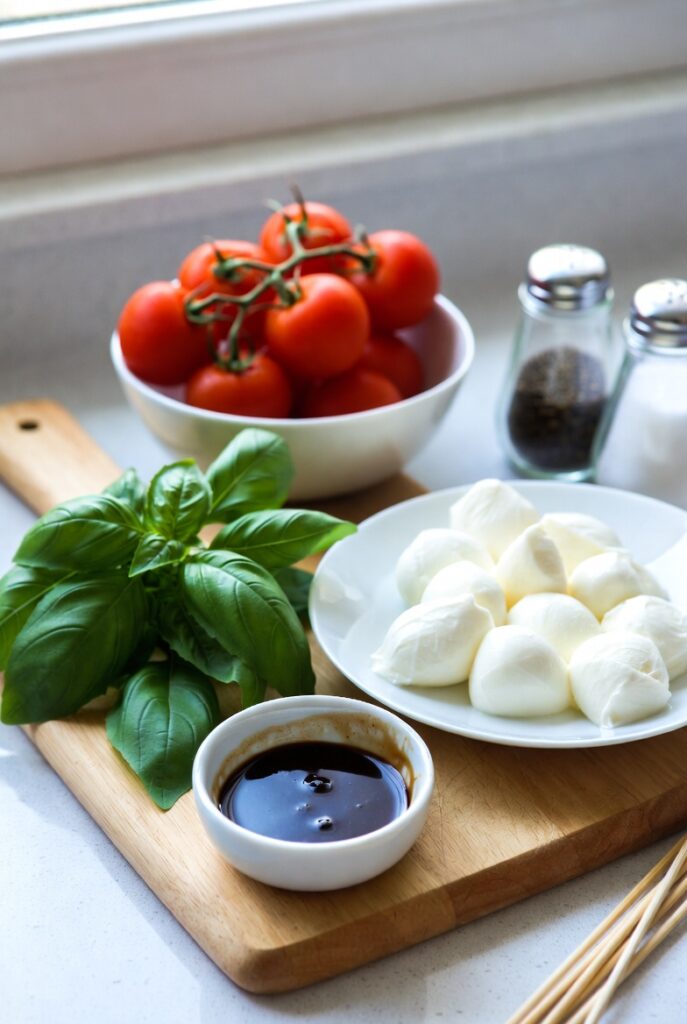
With a dish as simple as Caprese Skewers with Balsamic Glaze, the quality of the raw materials is your only variable for success.
The Red (The Acid)
- Grape or Cherry Tomatoes: Look for “Sugar Bomb” or heirloom varieties. They should be firm enough to skew without bursting but ripe enough to be sweet.
The White (The Fat)
- Fresh Mozzarella (Ciliegine or Bocconcini): Ensure it is “Fresh Mozzarella” stored in water, not the low-moisture block cheese used for pizza.
The Green (The Aroma)
- Large Fresh Basil Leaves: Look for deep green, unbruised leaves. If they are too large, they can be folded; if they are small, use two per skewer.
The Finish (The Umami)
- Balsamic Glaze: You can make this by reducing balsamic vinegar with a touch of honey, or buy a high-quality “Balsamic Crema.”
- Extra Virgin Olive Oil: Cold-pressed and peppery.
- Flaky Sea Salt (Maldon): For a final crystalline crunch on your Caprese Skewers with Balsamic Glaze.
6. The “Basil Fold” Technique
The most common mistake with Caprese Skewers with Balsamic Glaze is a messy, drooping herb. To ensure your skewers look like they came from a high-end catering kitchen, use the “Accordion Fold.”
Instead of just threading a flat leaf onto the stick, fold the basil leaf in half or thirds (like a small fan) before skewering it between the tomato and the cheese. This keeps the leaf upright, creates visual volume, and ensures that the aromatic oils are released the moment the guest bites into the Caprese Skewers with Balsamic Glaze. It also prevents the leaf from turning brown as quickly by minimizing its surface exposure to the air.
7. Step-by-Step Instructions: The Kitchen Blueprint
Step 1: The Drainage
Remove the mozzarella balls from their brine and place them in a strainer for 10 minutes. Pat them dry with a paper towel. This ensures the oil and glaze “stick” to the cheese rather than sliding off.
Step 2: The Tomato Prep
Wash and dry the cherry tomatoes. If some are significantly larger than the mozzarella, set them aside for a salad; uniformity is the goal for Caprese Skewers with Balsamic Glaze.
Step 3: The Assembly Order
Slide one tomato onto the skewer, pushing it about halfway down. Follow with an accordion-folded basil leaf, and finish with one mozzarella ball. The cheese acts as the “base” that allows the skewer to stand upright on a flat platter if desired.
Step 4: The Oil Infusion
Arrange the finished Caprese Skewers with Balsamic Glaze on your platter. Drizzle lightly with high-quality extra virgin olive oil. This prevents the cheese from drying out and adds a silky mouthfeel.
Step 5: The Glaze Artistry
Using your squeeze bottle, apply a thin, consistent drizzle of balsamic glaze across the entire platter of Caprese Skewers with Balsamic Glaze.
The Pro Move: Do not glaze until immediately before serving. The acid in the vinegar will eventually start to “cook” the basil and tomatoes, causing them to wilt.
Step 6: The Final Seasoning
Sprinkle a pinch of flaky sea salt and freshly cracked black pepper over the top. The salt pulls the juices out of the tomato, heightening the flavor of the entire Caprese Skewers with Balsamic Glaze.
8. Expert Tips and Variations
- The “Anti-Soggy” Rule: If you are prepping these for an outdoor event, keep the glaze on the side in a small dipping bowl to keep the Caprese Skewers with Balsamic Glaze looking pristine for hours.
- The “Antipasto” Upgrade: Add a folded slice of Genoa salami or a pitted Kalamata olive to the skewer for a saltier, more savory profile.
- Fruit Fusion: Replace the tomato with a cube of fresh watermelon or a slice of peach for a “Summer Fusion” version of Caprese Skewers with Balsamic Glaze.
9. Storage and Meal Prep
While best eaten fresh, Caprese Skewers with Balsamic Glaze can be prepped in advance with a few caveats.
- Refrigeration: You can assemble the tomato, basil, and cheese up to 4 hours in advance. Cover them with a damp paper towel and plastic wrap to keep the basil from oxidizing.
- The “Cold” Note: Do not serve them ice-cold. Take them out of the fridge 15 minutes before serving so the fats in the mozzarella can soften, which significantly improves the flavor.
- Freezing: Do not freeze. The cell walls of the tomato and the structure of the fresh mozzarella will collapse upon thawing.
10. Frequently Asked Questions (FAQ)
Q: Can I use regular balsamic vinegar?
A: Not for the drizzle. Regular vinegar is too thin and will run off the skewers, pooling at the bottom of the plate. You need the “glaze” or “reduction” for it to stay on the Caprese Skewers with Balsamic Glaze.
Q: My basil is turning black—what happened?
A: Basil is extremely sensitive to cold and bruising. Ensure your knife is very sharp if cutting it, and don’t store the finished skewers in the coldest part of your refrigerator.
Q: Is this Keto-friendly?
A: Yes, though be mindful of the balsamic glaze, which contains sugar. For a strict Keto Caprese Skewers with Balsamic Glaze, use a sugar-free glaze or stick to olive oil and herbs.
11. Nutritional Information
(Per 3-skewer serving)
| Nutrient | Amount |
| Calories | 145 kcal |
| Protein | 8g |
| Total Fat | 11g |
| Net Carbs | 3g |
| Fiber | 1g |
| Calcium | 15% DV |