1. Introduction
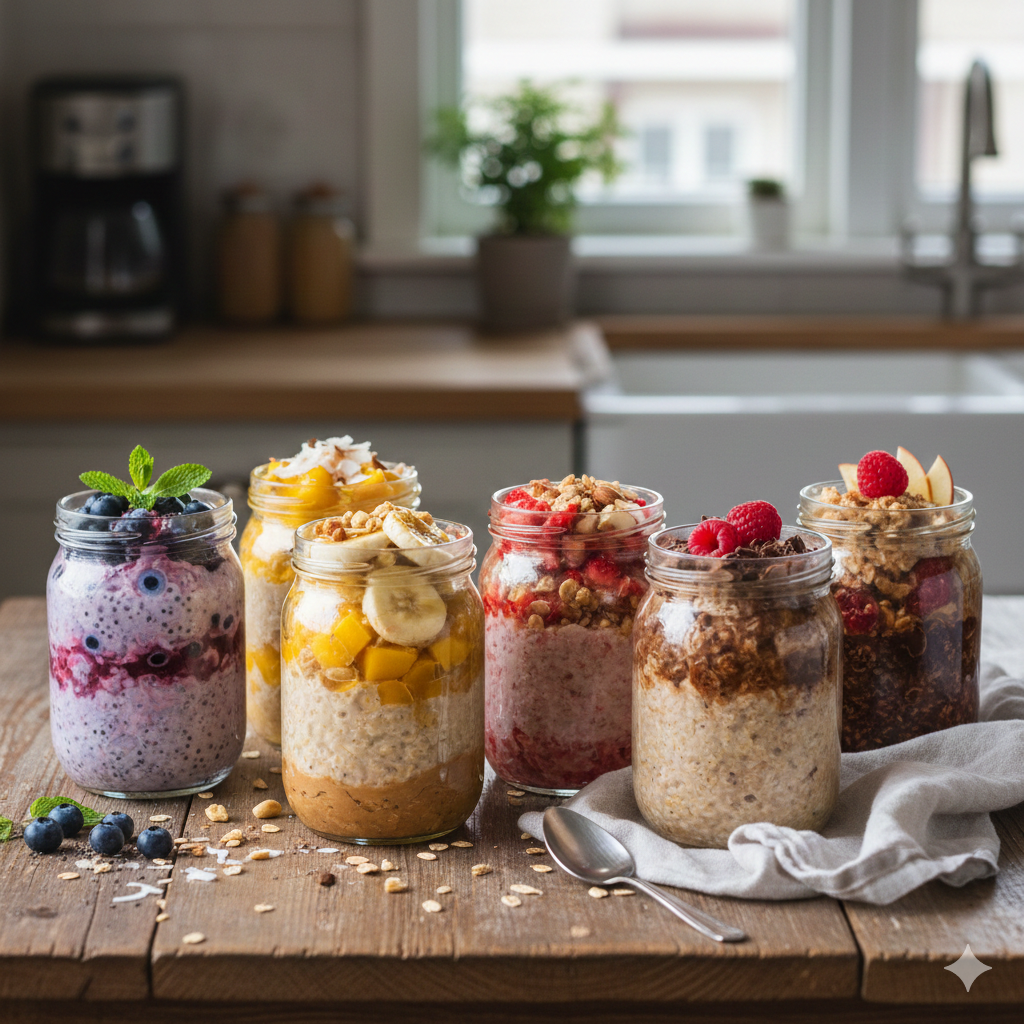
In the fast-paced rhythm of modern life, breakfast often becomes a casualty of the “snooze” button. We’ve all been there—stumbling into the kitchen, reaching for a sugary granola bar, or worse, skipping the meal entirely. Enter Overnight Oats: the humble, “set-it-and-forget-it” hero of the culinary world.
Originally inspired by Bircher muesli, developed by Swiss physician Maximilian Bircher-Benner in the late 19th century, this dish was designed as a healing therapy for patients. Today, it has evolved from a clinical health food into a global breakfast phenomenon. The magic lies in the chemistry; by soaking raw oats in liquid overnight, you break down the starches and reduce phytic acid, making them easier to digest while creating a creamy, pudding-like texture without ever turning on the stove.
The significance of this recipe is its accessibility. In an era where “superfoods” often come with a premium price tag, overnight oats remain steadfastly affordable. Whether you are a college student on a shoestring budget, a busy parent, or a fitness enthusiast, these oats offer a blank canvas for creativity, nutrition, and flavor.
2. Recipe Overview
- Cuisine Type: Modern International / Swiss-inspired
- Difficulty Level: Beginner
- Total Preparation Time: 5 minutes (Prep) + 6 hours (Minimum chilling time)
- Dietary Classifications: Vegetarian, Vegan-friendly, Gluten-Free (if using certified GF oats), High-Fiber.
3. Equipment and Tools
To achieve the perfect consistency, you don’t need fancy gadgets, but the right vessel matters.
- Glass Jars (12 oz or 16 oz): Wide-mouth Mason jars are the gold standard. They provide enough “shaking room” and are easy to eat out of.
- Measuring Cups and Spoons: For precise ratios of liquid to solid.
- Mixing Spoon or Spatula: To ensure no dry pockets of oats remain at the bottom.
- Volume Specifications: A 1:1 ratio of oats to liquid is the baseline.
- Note: If using plastic containers, ensure they are BPA-free and airtight to prevent the oats from absorbing “fridge smells.”
4. Serving Suggestions
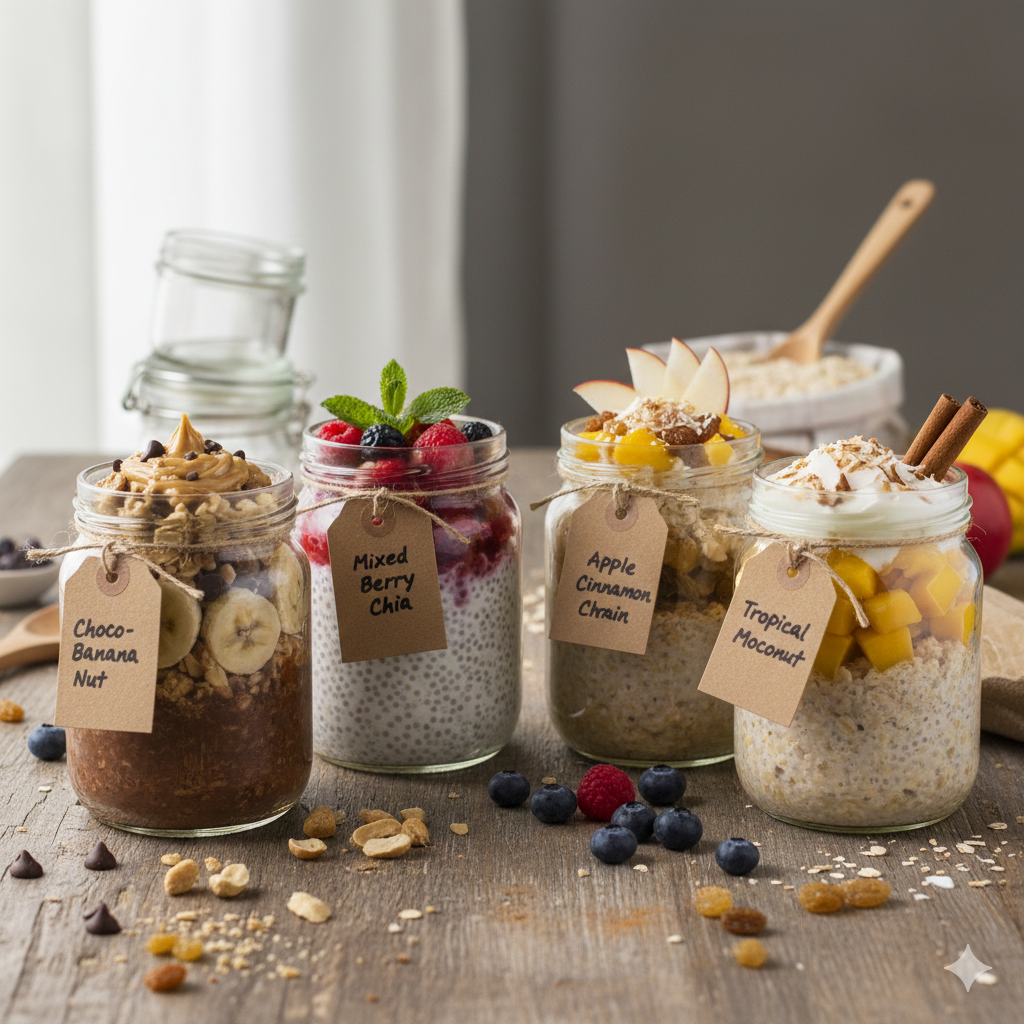
While you can eat these straight from the jar, a little presentation goes a long way.
- Plating: Transfer to a shallow bowl and create “lines” of toppings for a cafe-style look.
- Garnish: A sprig of mint, a dusting of cinnamon, or a drizzle of honey/maple syrup adds a professional touch.
- Pairings: Serve alongside a hot cup of black coffee or herbal tea. If you need extra protein, a side of hard-boiled eggs works perfectly.
5. Nutritional Information
(Per standard base serving – 1/2 cup oats + 1/2 cup milk)
- Calories: ~280 kcal
- Macronutrients:
- Carbohydrates: 45g (High in slow-release complex carbs)
- Protein: 10-12g (Depending on milk type)
- Fats: 6g (Healthy unsaturated fats)
- Health Benefits: High in Beta-Glucan, a soluble fiber known to lower cholesterol and improve heart health.
6. Storage and Reheating
- Refrigeration: Store in an airtight container for up to 5 days. They are at their peak texture on days 2 and 3.
- Freezing: Not recommended, as the texture of the oats can become grainy upon thawing.
- Reheating: Though traditionally eaten cold, you can microwave them for 45-60 seconds if you prefer a warm porridge. You may need to add a splash of extra milk after heating.
7. Expert Tips and Variations
Professional Tips
- The Salt Secret: Always add a tiny pinch of salt. It doesn’t make the oats salty; it enhances the sweetness and depth of the flavors.
- Texture Control: If you like “chewy” oats, use Steel Cut (soak for 12+ hours). For “creamy,” use Rolled Oats. Avoid Instant Oats as they turn to mush.
Variations
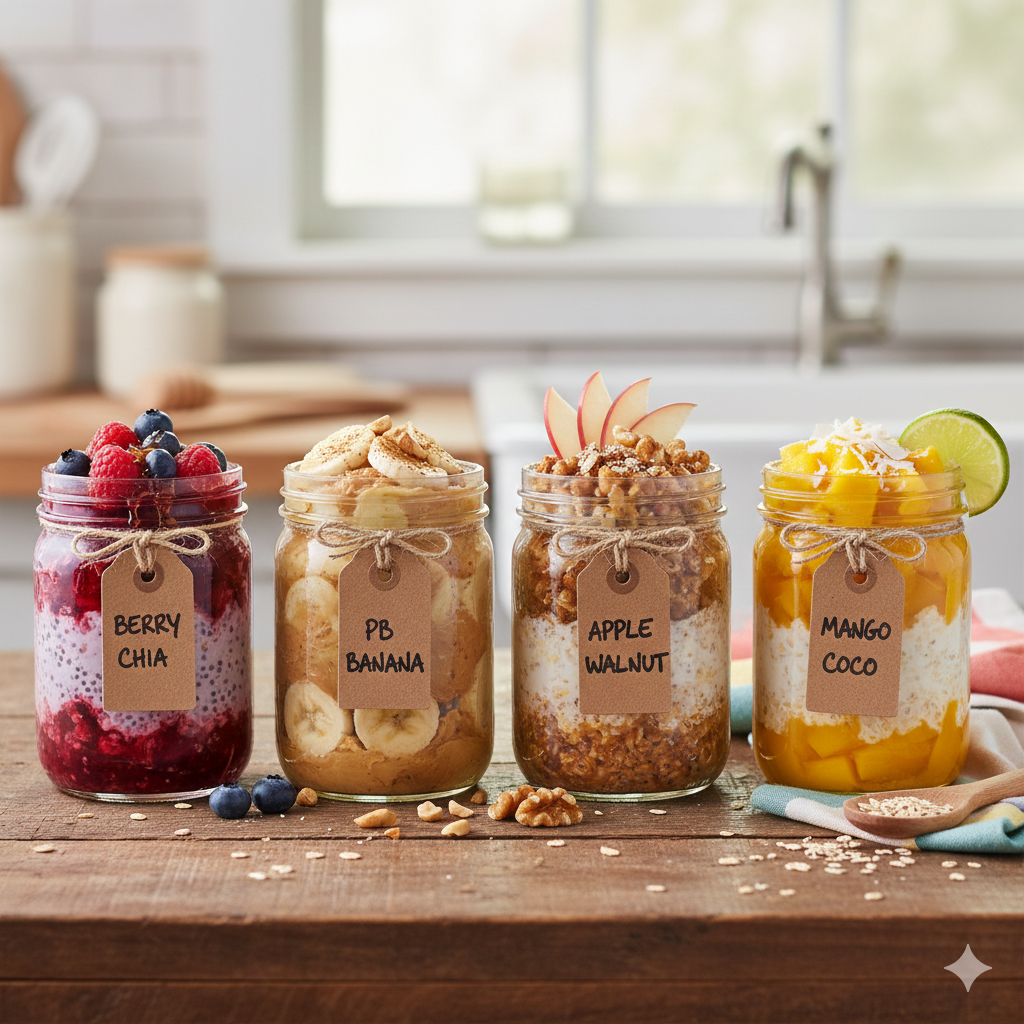
- Apple Pie: Grated apple, cinnamon, and walnuts.
- PB&J: A swirl of peanut butter and a spoonful of raspberry jam.
- Tropical: Coconut milk, diced mango, and shredded coconut.
- Chocolate Protein: 1 tsp cocoa powder and a scoop of chocolate protein powder.
- Berry Blast: Frozen blueberries (they thaw overnight and create a delicious “syrup”).
8. Ingredients Section
The Base (Single Serving)
- Old Fashioned Rolled Oats: 1/2 cup (approx. 45g / 1.6 oz)
- Milk of Choice: 1/2 cup (120ml) (Dairy, Almond, Oat, or Soy)
- Chia Seeds: 1 tablespoon (Adds creaminess and Omega-3s)
- Sweetener: 1-2 teaspoons (Maple syrup, honey, or agave)
- Pinch of Salt
Quality Recommendations
- Sourcing: Buy oats in bulk bins to save significantly on cost.
- Substitutions: Use Greek yogurt instead of some of the milk for a thicker, high-protein version.
9. Step-by-Step Instructions
- Combine Dry Ingredients: In your jar, add 1/2 cup of rolled oats, 1 tbsp chia seeds, and a pinch of salt. Shake or stir to distribute.
- Add Liquid and Sweetener: Pour in 1/2 cup of milk and your sweetener of choice.
- The First Stir: Stir vigorously. Ensure the chia seeds aren’t clumping together, as they tend to settle at the bottom.
- Seal and Chill: Tighten the lid and place in the refrigerator for at least 6 hours, preferably overnight.
- The Morning Check: In the morning, open the jar. If the oats have absorbed all the liquid and look too thick, stir in an extra splash of milk.
- Top and Serve: Add your fresh toppings (fruits, nuts, seeds) just before eating to maintain their texture.
10. Frequently Asked Questions (FAQ)
- Can I use Quick Oats? You can, but they will be very soft. It’s better for those who dislike the texture of traditional oats.
- Do I have to use Chia Seeds? No, but they act as a thickening agent. Without them, your oats might be a bit “soupy.”
- How long do they last? Safely, 5 days. They are the ultimate Sunday-night meal prep.
- Are they gluten-free? Oats are naturally GF, but often processed in facilities with wheat. Look for the “Certified Gluten-Free” label if you have Celiac disease.
- Can I use water instead of milk? Yes, but the result will be less creamy and flavorful.