1. Introduction: The Hydrophilic Superfood Revolution
In the search for a meal that offers effortless preparation and high-level nutritional density, Chia Seed Pudding with Mango and Coconut stands as a peak performer. This dish is far more than a simple breakfast; it is a structural marvel of plant-based culinary science. By utilizing the unique hydrophilic properties of the Salvia hispanica (chia) seed, we transform a liquid base into a decadent, custard-like texture without the need for heat, thickeners, or processed sugars.
The allure of Chia Seed Pudding with Mango and Coconut lies in its ability to transport the palate to a tropical landscape while providing a functional “time-release” energy source. The silky, coconut-infused pudding serves as a neutral, creamy stage for the explosive, sun-drenched sweetness of fresh mango. For the modern health-conscious individual, this assembly is a tactical victory—it offers a massive dose of Omega-3 fatty acids, antioxidants, and fiber in a package that feels like a gourmet dessert. It is the ultimate “low-friction” meal, requiring only five minutes of active labor to produce a week’s worth of high-performance breakfasts.
2. The Science of the “Gel”: Osmosis and Texture
To master the Chia Seed Pudding with Mango and Coconut, one must understand the mucilage of the chia seed. Each tiny seed can absorb up to 12 times its weight in liquid. When submerged in coconut milk, the outer layer of the seed forms a glycoprotein gel. This process isn’t just about texture; it’s about bio-availability. The “gelling” process makes the nutrients inside the seeds easier for the human digestive tract to access.
In the context of Chia Seed Pudding with Mango and Coconut, the ratio is the most critical technical factor. A “loose” pudding occurs when there is too much liquid, while a “brick-like” consistency is the result of over-packing the seeds. When executed with the correct $1:4$ ratio, the pudding achieves a perfect “suspension”—where the seeds are evenly distributed, creating a mouthfeel similar to tapioca but with significantly higher nutritional value. Furthermore, the medium-chain triglycerides (MCTs) found in the coconut milk work synergistically with the fiber in the seeds to stabilize blood sugar levels throughout the morning.
3. Recipe Overview
- Cuisine Type: Tropical / Modern Plant-Based
- Difficulty Level: Very Easy (No-cook assembly)
- Total Preparation Time: 5 Minutes
- Total Setting Time: 4 Hours (or Overnight)
- Dietary Classifications: Vegan, Paleo, Keto-friendly (if using low-carb sweetener), Gluten-Free.
- Yield: Makes 4 servings.
4. Equipment and Tools: The Essentials of Prep
Success with Chia Seed Pudding with Mango and Coconut depends on preventing the seeds from clumping at the bottom of the container.
- 16-oz Glass Mason Jars: Glass is non-reactive and allows you to see if any seeds are sticking to the bottom.
- Small Whisk or Milk Frother: A fork works, but a whisk ensures the seeds are fully aerated and separated in your Chia Seed Pudding with Mango and Coconut.
- Sharp Paring Knife: For dicing the mango into clean, uniform cubes that provide a professional finish.
- Large Mixing Pitcher: If you are prepping multiple servings of Chia Seed Pudding with Mango and Coconut at once.
5. Ingredients Section: Sourcing for Excellence
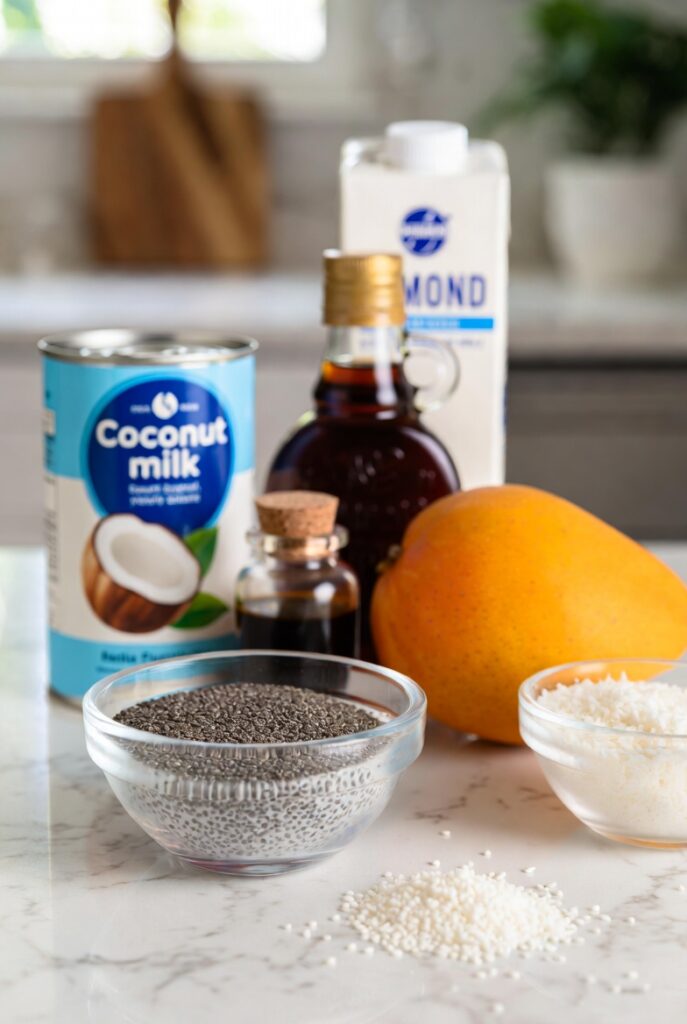
With a dish as simple as Chia Seed Pudding with Mango and Coconut, the quality of the coconut milk and the ripeness of the mango are the only variables for success.
The Suspension Base
- Black or White Chia Seeds: There is no nutritional difference, but white seeds offer a more “seamless” look in the white coconut milk.
- Full-Fat Canned Coconut Milk: For a rich, restaurant-quality Chia Seed Pudding with Mango and Coconut, use the canned variety. For a lighter version, use refrigerated coconut milk from a carton.
The Sweetener & Aromatics
- Pure Maple Syrup or Agave: A liquid sweetener integrates better than granulated sugar.
- Vanilla Bean Paste: Provides those tiny black flecks and a deeper aroma than standard extract.
The Tropical Crown
- Fresh Ataulfo (Honey) Mangoes: These are less fibrous and more buttery than other varieties, making them the perfect partner for your Chia Seed Pudding with Mango and Coconut.
- Toasted Coconut Flakes: For the essential tertiary crunch.
6. The “Double Whisk” Strategy
The most common failure in Chia Seed Pudding with Mango and Coconut is the “Chia Block”—a solid mass of seeds at the bottom of the jar. To prevent this, you must use the “Double Whisk” method.
Whisk the seeds and liquid vigorously for 60 seconds, then let the jar sit on the counter for 5 to 10 minutes. During this time, the seeds will begin to absorb liquid. Whisk them a second time to break up any early-stage clumps before placing them in the refrigerator. This technical step ensures that your Chia Seed Pudding with Mango and Coconut has a uniform, velvety consistency from top to bottom.
7. Step-by-Step Instructions: The Tropical Blueprint
Step 1: The Base Emulsion
In a large jar or pitcher, combine 2 cups of coconut milk, 1/2 cup of chia seeds, 2 tablespoons of maple syrup, and 1 teaspoon of vanilla bean paste.
Step 2: The Initial Whisk
Whisk vigorously until the seeds are swirling freely. Do not be alarmed if the mixture looks very watery at this stage; the “magic” of the Chia Seed Pudding with Mango and Coconut takes time.
Step 3: The Resting Phase
Wait 10 minutes. You will notice the mixture starting to thicken slightly. Perform the second whisk, ensuring you scrape the bottom corners of the container.
Step 4: The Cold Set
Seal the jars and place them in the refrigerator for at least 4 hours, though overnight is the gold standard for Chia Seed Pudding with Mango and Coconut.
Step 5: The Fruit Prep
Just before serving, peel and dice the mango.
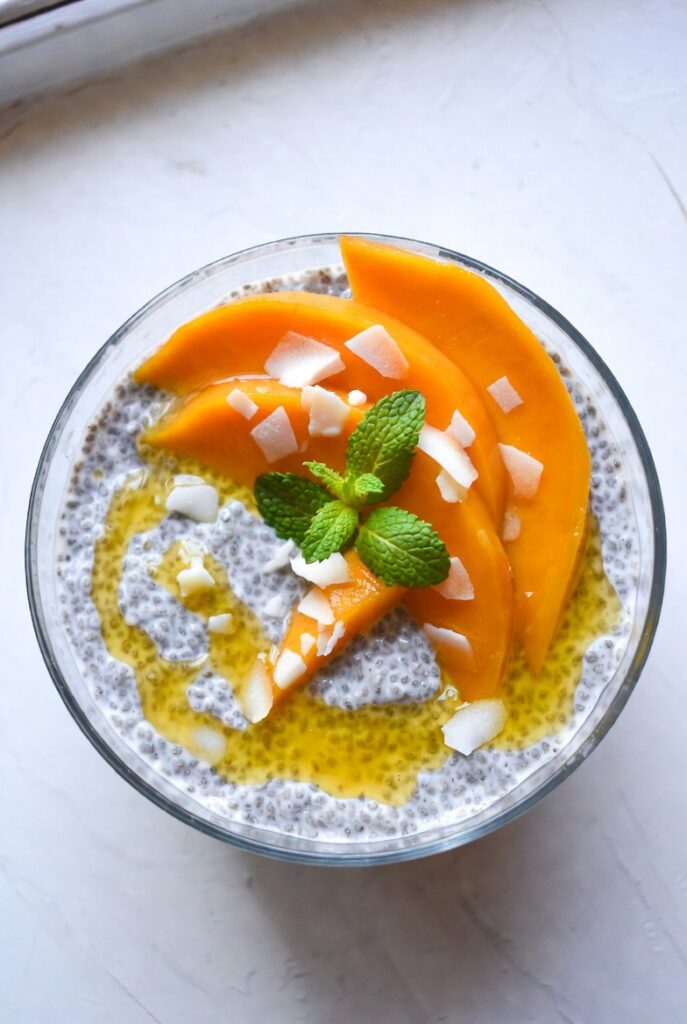
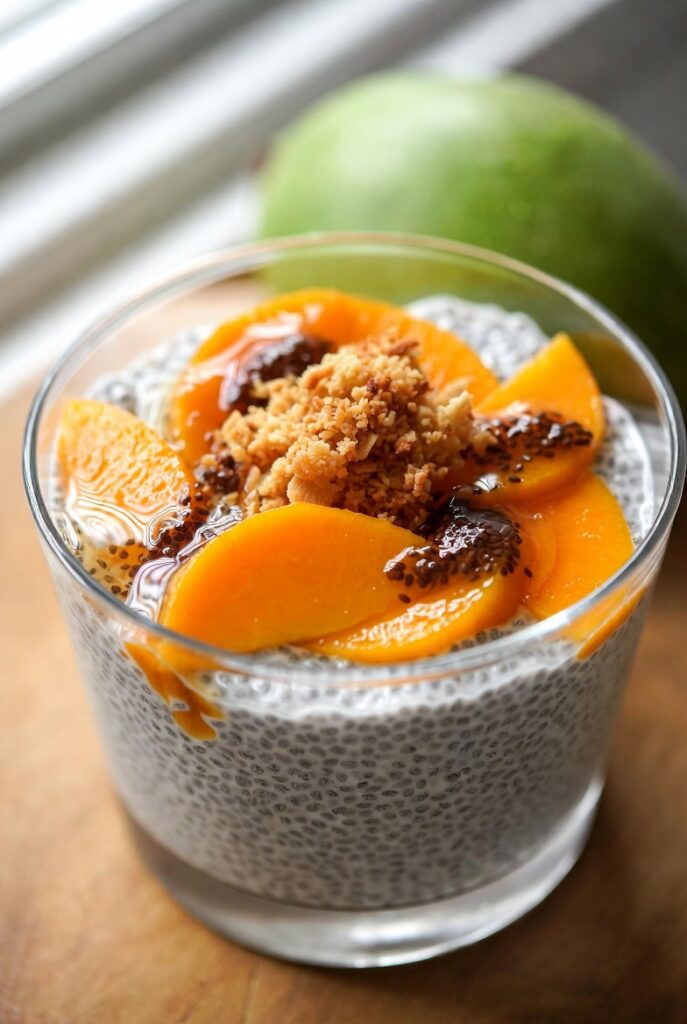
The Pro Move: Puree half of the mango into a smooth coulis and layer it in the bottom of the jar for a “sunset effect” in your Chia Seed Pudding with Mango and Coconut.
Step 6: The Signature Garnish
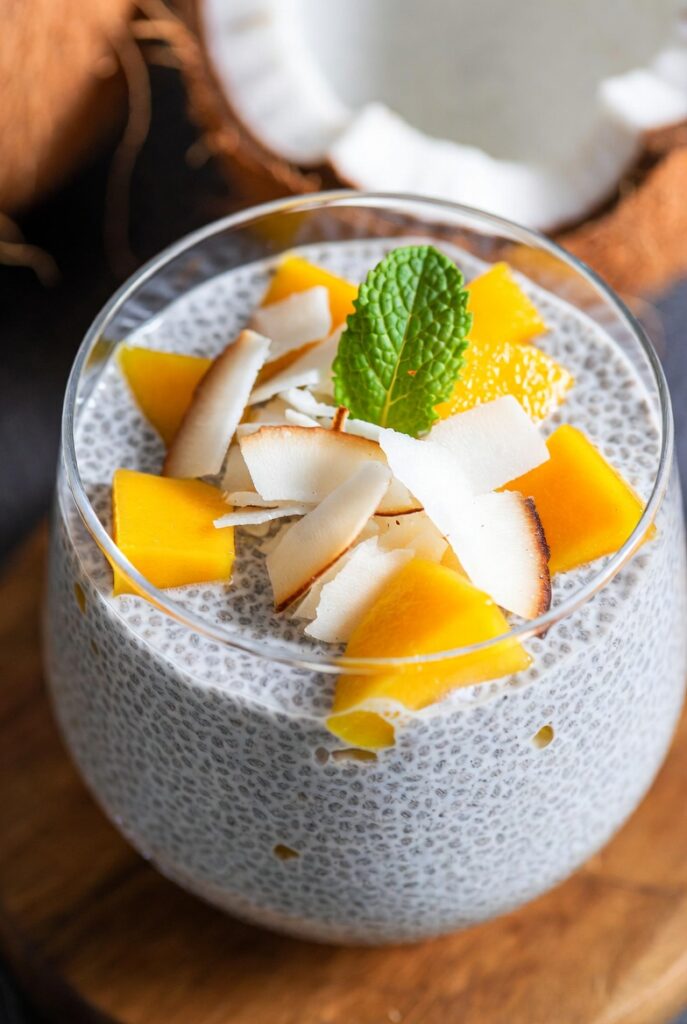
Top the chilled pudding with the diced mango, a handful of toasted coconut flakes, and a sprig of fresh mint for a pop of color and aromatics.
8. Expert Tips and Variations
- The “Keto” Pivot: Replace the maple syrup with 3–5 drops of liquid monk fruit or stevia to make your Chia Seed Pudding with Mango and Coconut ultra-low carb.
- Layering Logic: If you are meal prepping, wait to add the fresh mango until you are ready to eat. This prevents the fruit juices from watering down the pudding.
- Variations: * The “Golden” Pudding: Add a 1/2 teaspoon of turmeric and a pinch of black pepper for an anti-inflammatory boost.
- The “Zesty” Finish: Add lime zest into the coconut milk to cut through the richness of the fats.
9. Storage and Meal Prep
Chia Seed Pudding with Mango and Coconut is the undisputed king of meal prep.
- Refrigeration: The pudding base will stay fresh and delicious in the fridge for up to 5 days.
- The “Thickening” Note: If the pudding is too thick on day three, simply stir in a splash of almond or coconut milk to loosen the texture.
- Portability: These are perfect for “grab-and-go” situations. Use smaller 8-oz jars for perfect single-serving portions of your Chia Seed Pudding with Mango and Coconut.
10. Frequently Asked Questions (FAQ)
Q: Can I use frozen mango?
A: Yes, but let it thaw slightly first. The texture won’t be as “snappy” as fresh, but the flavor will still be excellent for a quick Chia Seed Pudding with Mango and Coconut.
Q: Do I have to use coconut milk?
A: No, you can use almond, soy, or oat milk. However, the coconut milk provides the traditional tropical flavor profile and the creamiest results.
Q: Is chia pudding good for weight loss?
A: Yes. The high fiber content keeps you full for longer, which can help prevent snacking between meals.
11. Nutritional Information
(Per 1-cup serving)
| Nutrient | Amount |
| Calories | 320 kcal |
| Protein | 6g |
| Total Fat | 22g |
| Carbohydrates | 24g |
| Fiber | 11g |
| Omega-3s | 4,900mg |