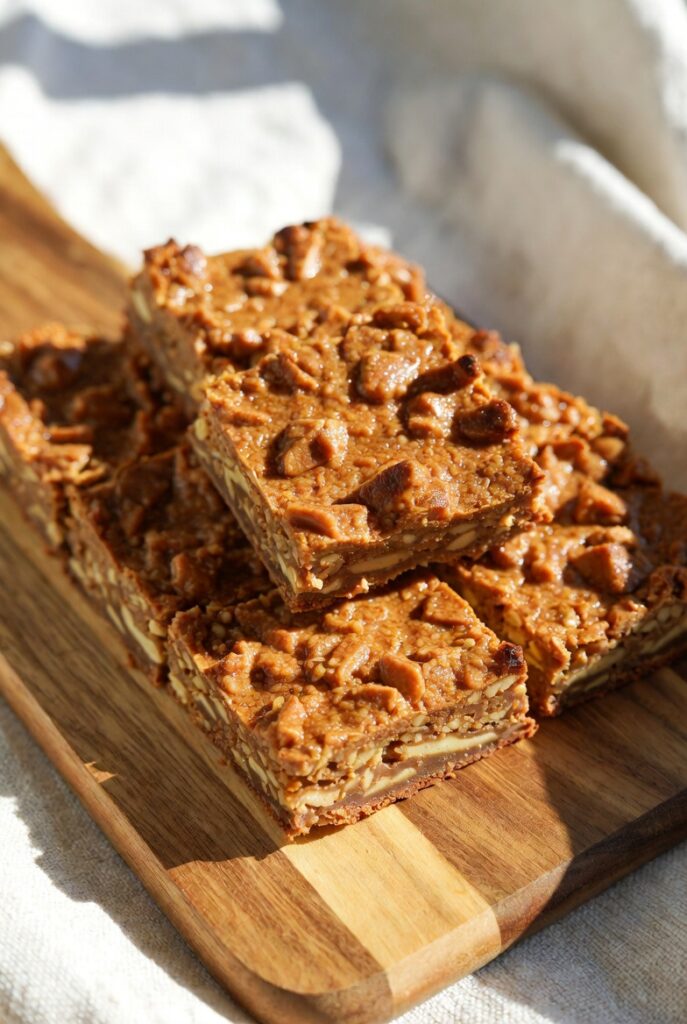
1. Introduction: The High-Efficiency Morning Paradigm
In the meticulous construction of a high-performance routine, the morning meal is often the most volatile variable. The “No-Bake Peanut Butter Breakfast Bars” represent a tactical triumph over the chaos of early-hour logistics. This is not merely a snack or a simple granola bar substitute; it is a strategically engineered, nutrient-dense “Kinetic Blueprint” designed to provide steady-state energy for the body’s most demanding windows. By bypassing the thermal degradation that occurs during baking, these bars retain the enzymatic integrity of their raw components, offering a fresher, more bio-available fuel source than their store-bought counterparts.
The allure of the No-Bake Peanut Butter Breakfast Bars lies in their structural elegance. They solve the paradox of the “grab-and-go” breakfast: how to achieve extreme convenience without sacrificing nutritional complexity. These bars utilize the adhesive properties of natural fats and unrefined sugars to create a dense, satisfying texture that defies the crumbly, dry nature of traditional baked goods. For the modern professional, athlete, or student, this recipe offers a “zero-friction” solution—requiring no oven time, minimal cleanup, and providing a foundational balance of proteins, complex carbohydrates, and healthy monounsaturated fats.
Beyond the immediate caloric utility, the No-Bake Peanut Butter Breakfast Bars serve as a metabolic anchor. They are designed to prevent the mid-morning insulin crash often triggered by refined cereals and pastries. By focusing on whole-grain oats and raw nut butters, this “Signature Assembly” ensures that glucose is released into the bloodstream with surgical precision, supporting sustained cognitive focus and physical stamina until the next fueling window.
2. The Science of Cold Bonding: Texture and Satiety
To master the No-Bake Peanut Butter Breakfast Bars, one must understand the molecular physics of cold bonding. In traditional baking, heat is used to create a “crumb” through the expansion of gases and the coagulation of proteins. In a no-bake setting, we rely on the viscous properties of lipids (fats) and the hygroscopic nature of fiber.
The secret to a professional-grade No-Bake Peanut Butter Breakfast Bars experience is the “Tackiness Ratio.” Natural peanut butter contains oils that, when chilled, solidify into a semi-crystalline structure. When these oils are mixed with the soluble fiber (beta-glucan) found in rolled oats, they create a biological polymer that is incredibly stable at room temperature but melts perfectly on the palate.
From a nutritional standpoint, the absence of heat is a deliberate choice. High-temperature baking can oxidize the delicate Omega-6 fatty acids found in nuts and seeds. By keeping the ingredients in their raw or minimally processed state, the No-Bake Peanut Butter Breakfast Bars preserve the antioxidants and Vitamin E that are critical for reducing systemic inflammation. This is high-level culinary engineering where the “missing” step—the oven—is actually the key to the dish’s functional success.
3. Recipe Overview: The Kinetic Blueprint
- Cuisine Type: Modern Functional / Energy Dense
- Difficulty Level: Very Easy (Zero heat required)
- Total Preparation Time: 15 Minutes
- Total Setting Time: 2 Hours (Minimum refrigeration)
- Dietary Classifications: Vegetarian, Vegan-friendly, Gluten-Free (use certified oats), High-Fiber.
- Yield: Makes 12 large, high-density bars.
4. Equipment and Tools: The Essentials of Compression
The structural success of your No-Bake Peanut Butter Breakfast Bars depends on the force of compression and the temperature of the setting environment.
- 8×8 inch Square Baking Pan: The standard vessel for achieving the ideal thickness. A larger pan will result in “wafers” that lack the structural integrity to be eaten with one hand.
- Parchment Paper: Mandatory. Without a parchment “sling,” the adhesive nature of the peanut butter will make removal impossible.
- Large Heavy-Bottomed Mixing Bowl: To allow for the vigorous mechanical mixing required to incorporate the dry oats into the viscous nut butter.
- Heavy-Bottomed Glass or Offset Spatula: Essential for the “Compression Phase.” The tighter the bars are packed, the less likely they are to crumble during consumption.
- A High-Quality Chef’s Knife: For achieving clean, geometric edges that prevent the No-Bake Peanut Butter Breakfast Bars from fraying at the borders.
5. Ingredients Section: Sourcing for Stability
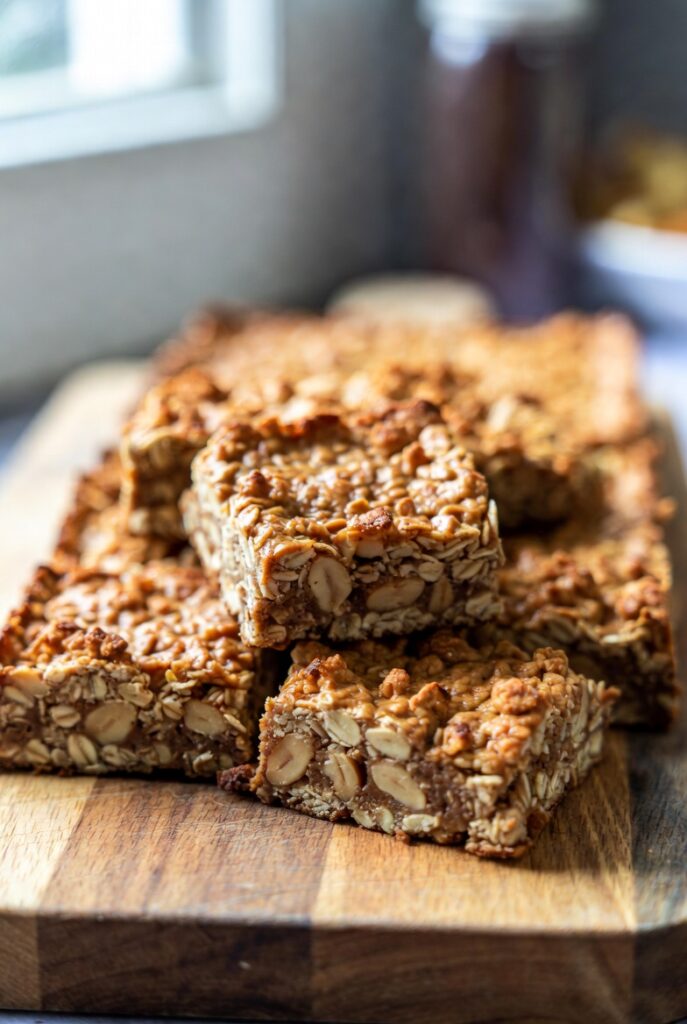
In a “No-Bake” environment, every ingredient is a load-bearing component. There is no chemical rising to hide inferior sourcing.
The Adhesive Base
- Natural Creamy Peanut Butter: Must be the “drippy” variety (peanuts and salt only). The lack of stabilizers and hydrogenated oils is what allows the No-Bake Peanut Butter Breakfast Bars to set properly in the fridge.
- Pure Grade A Maple Syrup or Honey: These act as the “liquid cement.” Honey provides a stronger bond, while maple syrup offers a lower glycemic alternative.
The Structural Fiber
- Old-Fashioned Rolled Oats: Do not use “Instant” or “Steel Cut.” Rolled oats provide the specific surface area needed to absorb the moisture of the nut butter without becoming mushy.
- Ground Flaxseeds or Salba Chia Seeds: These provide the “micro-webbing” that holds the smaller particles together.
The Flavor & Energy Multipliers
- Hemp Hearts: For an earthy, nutty flavor and a boost of complete plant protein.
- Dark Chocolate Chips (70% Cacao+): Provides a sharp, bitter-sweet contrast to the richness of the peanut butter.
- Sea Salt & Cinnamon: Salt highlights the peanut profile, while cinnamon helps improve insulin sensitivity—a vital addition to any No-Bake Peanut Butter Breakfast Bars.
6. The “Compression Protocol”: Ensuring Structural Integrity
The most common failure in No-Bake Peanut Butter Breakfast Bars is “Crumb-Fail”—where the bar falls apart the moment it is removed from the pan. This is almost always a result of insufficient compression.
To achieve a “Master Draft” bar, you must use the “Double-Weight” technique. After spreading the mixture into the parchment-lined pan, place a second sheet of parchment on top. Then, take a heavy, flat-bottomed object (like a second baking pan or a heavy glass) and press down with your full body weight. You are aiming to remove all “air pockets” within the oat matrix. This density is what allows the No-Bake Peanut Butter Breakfast Bars to withstand the movement of a commute or the interior of a gym bag.
7. Deep Dive: The Role of Magnesium and Potassium
Why is peanut butter the cornerstone of this recipe? Beyond its role as a binder, it is a nutritional powerhouse for the nervous system. No-Bake Peanut Butter Breakfast Bars are exceptionally high in Magnesium, a mineral that is involved in over 300 biochemical reactions in the human body, including protein synthesis and muscle/nerve function.
By combining peanut butter with oats, you are creating a synergistic mineral profile. The oats provide the Manganese needed for bone formation, while the peanut butter provides the Potassium needed to balance sodium levels. For the individual who experiences morning muscle tightness or “brain fog,” the No-Bake Peanut Butter Breakfast Bars act as a re-mineralization tool, restoring the electrolyte balance that is often depleted during the overnight fast.
8. Step-by-Step Instructions: The Master Blueprint
Step 1: The Liquid Emulsion
In your large mixing bowl, combine 1 cup of natural peanut butter and 1/2 cup of maple syrup. If your peanut butter is cold from the fridge, you may need to microwave the mixture for 20 seconds to achieve the “flow state” necessary for integration. Stir in your vanilla and sea salt until smooth.
Step 2: The Dry Integration
Add 2.5 cups of rolled oats, 1/4 cup of ground flaxseeds, and 1 teaspoon of cinnamon. Use a heavy spatula to fold the mixture. It will be difficult to stir toward the end—this is a sign that the “Tackiness Ratio” is correct for your No-Bake Peanut Butter Breakfast Bars.
Step 3: The Tertiary Toppings
Fold in the dark chocolate chips and hemp hearts. By adding these last, you ensure they don’t melt (if the base was slightly warmed) and stay distributed throughout the bars.
Step 4: The Parchment Sling
Line your 8×8 pan with parchment paper, leaving an inch of overhang on the sides. This “sling” is what allows you to lift the bars out cleanly for slicing.
Step 5: The Compression Phase
Transfer the mixture to the pan. Using the “Double-Weight” technique, press the mixture firmly into the corners and flatten the surface until it is level. The success of your No-Bake Peanut Butter Breakfast Bars depends on this pressure.
Step 6: The Cold Tempering
Place the pan in the refrigerator for at least 2 hours. For the best structural results, an overnight set is recommended. The cold allows the peanut butter oils to solidify, locking the oats into a permanent grid.
Step 7: The Geometric Slice
Lift the bars out of the pan using the parchment overhang. Use a sharp, non-serrated knife to cut the block into 12 uniform bars.
9. Flavor Variations: The Modular Framework
The No-Bake Peanut Butter Breakfast Bars are a modular framework, meaning the “extras” can be swapped to suit your specific dietary goals.
- The “Power-Up” Bar: Add 2 scoops of vanilla whey or pea protein powder. You may need to add an extra 2 tablespoons of almond milk to keep the mixture from becoming too dry.
- The “Omega-3” Extreme: Swap the chocolate chips for walnuts and dried blueberries. This creates a “Brain-Food” version of the No-Bake Peanut Butter Breakfast Bars.
- The “Almond-Joy” Pivot: Use almond butter instead of peanut butter and add 1/2 cup of shredded coconut.
- The “Anti-Inflammatory” Bar: Add 1 tablespoon of chia seeds and 1/2 teaspoon of ground turmeric with a crack of black pepper.
10. Satiety and the “Second Meal Effect”
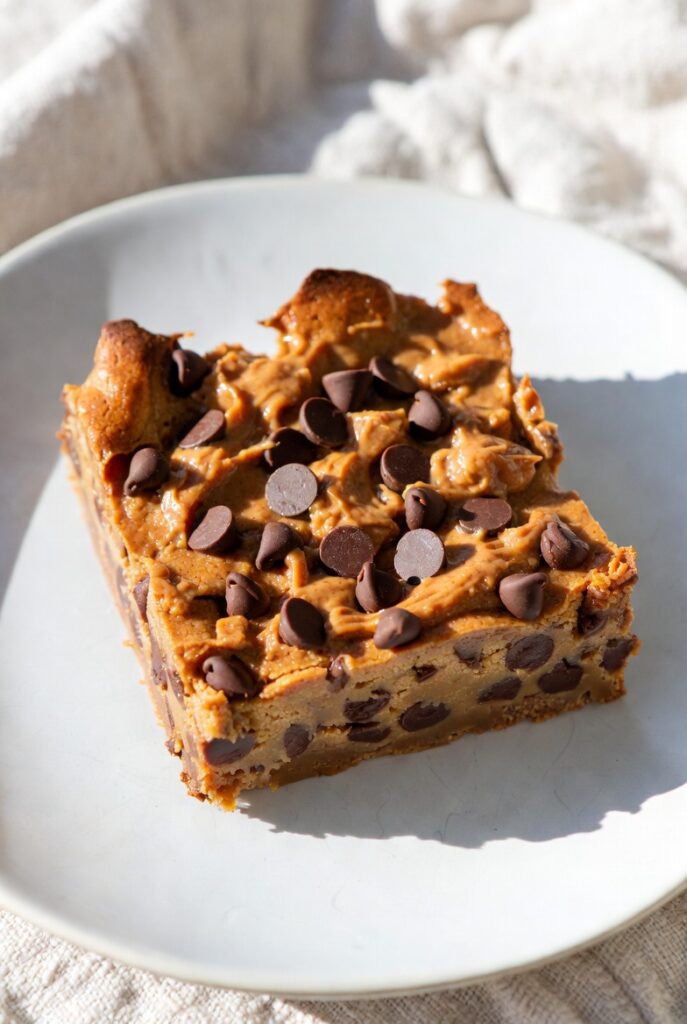
The high fiber and protein content of the No-Bake Peanut Butter Breakfast Bars triggers what nutritionists call the “Second Meal Effect.” Because the oats and peanut butter are digested so slowly, they actually help regulate your blood sugar response to the next meal you eat (lunch).
This makes the No-Bake Peanut Butter Breakfast Bars a strategic choice for weight management. By starting the day with this specific combination of macronutrients, you are less likely to experience the “ghrelin surge” (hunger hormone) in the early afternoon. It is a meal that works for you long after the final bite has been consumed.
11. Storage and Portability Logistics
Because these bars rely on cold-solidified fats for their structure, their storage logistics are specific.
- Refrigeration: The No-Bake Peanut Butter Breakfast Bars should be stored in an airtight container in the fridge. They will maintain their peak texture for up to 14 days.
- Freezing: For long-term “Time Arbitrage,” these bars can be frozen for up to 3 months. Wrap them individually in parchment paper and place them in a freezer bag. They can be eaten directly from the freezer for a “fudge-like” consistency.
- Room Temperature: If you take a bar to go, it will hold its shape for 3–4 hours at room temperature. In extreme heat, the peanut butter may soften, making the bar more “flexible,” but the flavor will remain intact.
12. Frequently Asked Questions (FAQ)
Q: My bars are too crumbly—what happened?
A: This is usually due to using “dry” peanut butter from the bottom of the jar. To fix your No-Bake Peanut Butter Breakfast Bars, ensure you are using a well-stirred, oily peanut butter, and don’t skip the compression step.
Q: Can I use quick oats?
A: You can, but the bars will have a much softer, more “dough-like” texture. Old-fashioned rolled oats are superior for that classic “granola bar” snap.
Q: Are these bars Keto-friendly?
A: Not in their current form. To make a Keto version, swap the oats for a mix of hemp hearts, sunflower seeds, and crushed walnuts, and use a sugar-free syrup (allulose or monk fruit).
Q: Why do I need flaxseeds?
A: Flaxseeds act as a “vegan egg.” When they come into contact with the moisture in the syrup, they form a gel that helps bind the oats together, preventing your No-Bake Peanut Butter Breakfast Bars from falling apart.
13. Nutritional Information
(Per serving – 1 Bar)
| Nutrient | Amount |
| Calories | 240 kcal |
| Protein | 8g |
| Total Fat | 14g |
| Net Carbs | 18g |
| Fiber | 5g |
| Magnesium | 20% DV |