1. Introduction: The Industrial Efficiency of the Sizzling Pan
In the hierarchy of weeknight culinary solutions, Sheet Pan Fajitas stand as a monument to “High-Velocity Productivity.” Traditionally, fajitas require the intense, focused heat of a cast-iron skillet and a constant manual “toss” to achieve the perfect sear. However, the sheet pan adaptation transforms this labor-intensive process into a “Hands-Off System.” By utilizing a single roasting plane, we synchronize the cooking of proteins and vegetables, allowing the oven’s convective heat to do the work of a line cook.
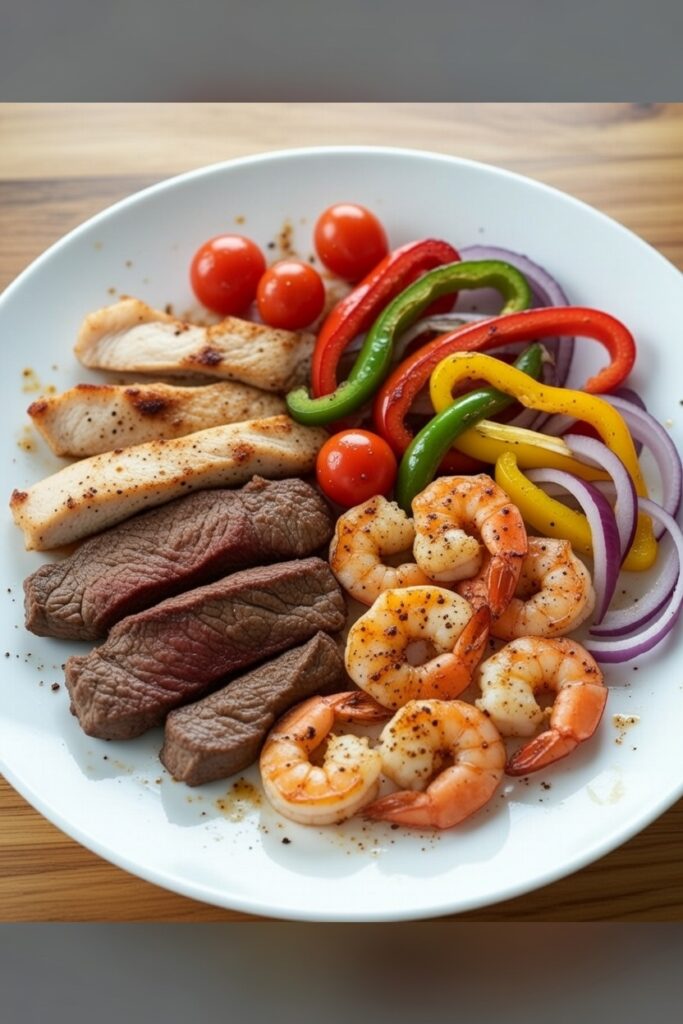
The brilliance of Sheet Pan Fajitas (Chicken, Steak, or Shrimp) lies in its versatility. This recipe is a modular framework—a “Signature Assembly” that can be adjusted based on your protein requirements and metabolic goals. Whether you are seeking the lean muscle-building properties of chicken, the iron-dense profile of steak, or the rapid-cooking convenience of shrimp, the sheet pan provides a consistent result. For the modern professional, this is the ultimate “zero-friction” dinner: ten minutes of prep, twenty minutes of roasting, and virtually no cleanup.
Beyond the convenience, Sheet Pan Fajitas represent a victory for clean eating. By roasting rather than frying, we reduce the need for excessive oils while intensifying the natural sugars in the bell peppers and onions. It is a meal that provides a massive dose of Vitamin C and high-quality protein in a format that feels like a festive “cheat meal” but functions like a high-performance fuel source.
2. The Science of the “Tri-Protein” Thermal Gap
To master Sheet Pan Fajitas (Chicken, Steak, or Shrimp), one must understand the “Thermal Gap”—the differing rates at which proteins reach their safe and optimal internal temperatures. A piece of steak requires intense heat for a short duration to remain tender, while chicken necessitates a longer window to ensure safety. Shrimp, the most delicate of the three, can turn from succulent to rubbery in a matter of 120 seconds.
The secret to a professional-grade Sheet Pan Fajitas experience is “Staggered Entry” or “Specific Micronization.”
- For Chicken: Cut into thin $1/2$-inch strips to ensure they cook at the same rate as the peppers.
- For Steak: Use a “High-Heat Flash” method, slicing against the grain and placing the pan on the highest oven rack.
- For Shrimp: The “Delayed Addition”—roasting the vegetables for 15 minutes before adding the shrimp for the final 5–8 minutes.
By managing these thermal windows, you ensure that every component of your Sheet Pan Fajitas reaches its peak texture simultaneously.
3. Recipe Overview: The Master Blueprint
- Cuisine Type: Modern Tex-Mex / Functional Efficiency
- Difficulty Level: Very Easy (Modular assembly)
- Total Preparation Time: 15 Minutes
- Total Cooking Time: 18–25 Minutes (Depending on protein)
- Total Time: 40 Minutes
- Dietary Classifications: Paleo, Keto-friendly (if served as a bowl), Gluten-Free, High-Protein.
- Yield: Serves 4
4. Equipment and Tools: The Essentials of Conductive Heat
The structural success of your Sheet Pan Fajitas depends on the airflow and the gauge of your pan.
- Heavy-Duty 18×13 inch Rimmed Sheet Pan: A thick pan prevents warping and ensures that the juices from the vegetables don’t spill into the bottom of your oven.
- Large Mixing Bowl: For the “Emulsion Coat”—crucial for ensuring the spices adhere to the protein and vegetables.
- High-Heat Silicone Tongs: For tossing the ingredients halfway through the roast without scratching the pan surface.
- Precision Knife: For the “Uniform Slice”—ensuring all peppers and onions are the same width for even caramelization.
5. Ingredients Section: The Modular Framework
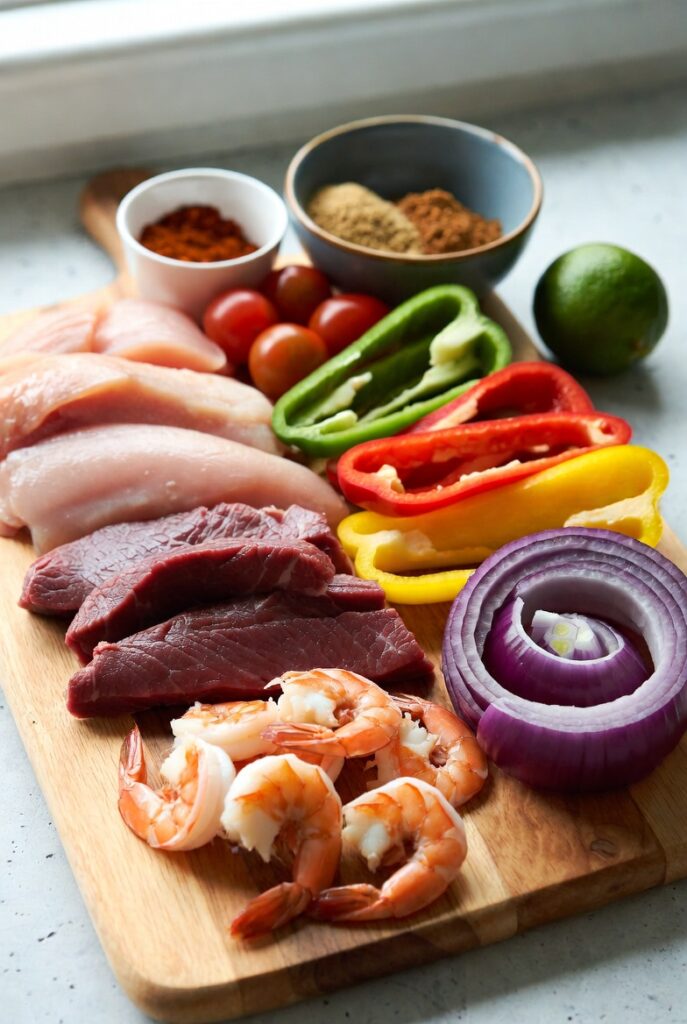
The integrity of Sheet Pan Fajitas is built upon the “Aromatic Trinity” and your choice of anchor protein.
The Protein Anchors (Choose One)
- Chicken: 1.5 lbs Boneless Skinless Breasts, sliced into thin strips.
- Steak: 1.5 lbs Flank or Skirt Steak, sliced thin against the grain.
- Shrimp: 1.5 lbs Jumbo Shrimp, peeled and deveined (tail on for aesthetics).
The Aromatic Trinity
- Bell Peppers: A tri-color mix (Red, Yellow, Green) for a full spectrum of antioxidants and Vitamin C.
- Red Onion: Sliced into $1/4$-inch wedges; these become “jammy” and sweet when roasted.
The Spice Emulsion
- Extra Virgin Olive Oil or Avocado Oil: Avocado oil is preferred for its high smoke point ($500^\circ F$).
- Fajita Seasoning: A blend of chili powder, cumin, garlic powder, onion powder, and smoked paprika.
- Fresh Lime Juice: To be applied after roasting to preserve the Vitamin C and brighten the fats.
6. The “Crowding” Trap: Roasting vs. Steaming
The most common failure in Sheet Pan Fajitas is a lack of “char.” If the vegetables are piled on top of each other, they release steam. This moisture gets trapped between the layers, resulting in “boiled” peppers and gray meat.
To achieve a “Master Draft” finish, you must respect the “Surface Area Rule.” Use your largest sheet pan and spread the ingredients in a single, even layer. If the pan looks 100% covered, you have too much food for one pan. Use two pans instead. This allows the dry heat of the oven to evaporate the surface moisture rapidly, leading to the “Sizzling Effect” that defines a world-class fajita. This evaporation is what concentrates the flavors, making your Sheet Pan Fajitas (Chicken, Steak, or Shrimp) taste exponentially better.
7. Deep Dive: Capsaicin and Thermogenesis
Why are Sheet Pan Fajitas such an effective tool for metabolic health? It centers on the use of chili powder and peppers. These ingredients contain Capsaicin, a compound known for its “Thermogenic” properties. Capsaicin can slightly increase the body’s metabolic rate and promote fat oxidation.
By pairing the heat of the spices with the high protein content of the chicken or steak, you are creating a “High-Satiety” meal that actively supports calorie burning. Furthermore, the high fiber content of the bell peppers in your Sheet Pan Fajitas ensures that the energy from the meal is released slowly, preventing the “insulin spike” associated with high-carb dinners. It is a meal that works for your body long after the dinner table has been cleared.
8. Step-by-Step Instructions: The Master Blueprint
Step 1: The Thermal Prep
Preheat your oven to $425^\circ F$ (220°C). For Steak, move the oven rack to the top third of the oven.
Step 2: The Micronization
Slice your peppers, onions, and chosen protein into uniform $1/2$-inch strips. For Sheet Pan Fajitas with Shrimp, leave the shrimp whole but ensure they are patted dry with a paper towel.
Step 3: The Emulsion Coat
In a large bowl, whisk 3 tablespoons of oil with 2 tablespoons of fajita seasoning and a pinch of salt. Toss the meat and vegetables in the bowl until every surface is glistening.
Step 4: The Strategic Spread
Spread the mixture onto the sheet pan. Ensure the meat is not “clumped” together.
- Chicken/Steak: Roast for 18–22 minutes, tossing halfway through.
- Shrimp: Roast vegetables for 12 minutes, then add shrimp and roast for an additional 6–8 minutes until opaque.
Step 5: The “High-Note” Finish
Immediately upon removing from the oven, squeeze fresh lime juice over the entire pan. This “acid shock” cuts through the roasted oils and wakes up the spices in your Sheet Pan Fajitas.
Step 6: The Signature Assembly
Serve directly from the pan with warm tortillas, fresh cilantro, and sliced avocado.
9. Expert Tips and Variations
- The “Char” Hack: For a true restaurant-style “sizzle,” turn on the broiler for the last 2 minutes of cooking. This will create those desirable black “char marks” on the edges of the peppers.
- The “Low-Carb” Pivot: Serve your Sheet Pan Fajitas in large Romaine lettuce leaves or over a bed of cauliflower rice to keep the meal Keto-compliant.
- Variations: * The “Portobello” Veggie: Swap the meat for sliced Portobello mushrooms for a meaty, vegetarian alternative.
- The “Surf and Turf”: Use half steak and half shrimp, remembering to add the shrimp halfway through.
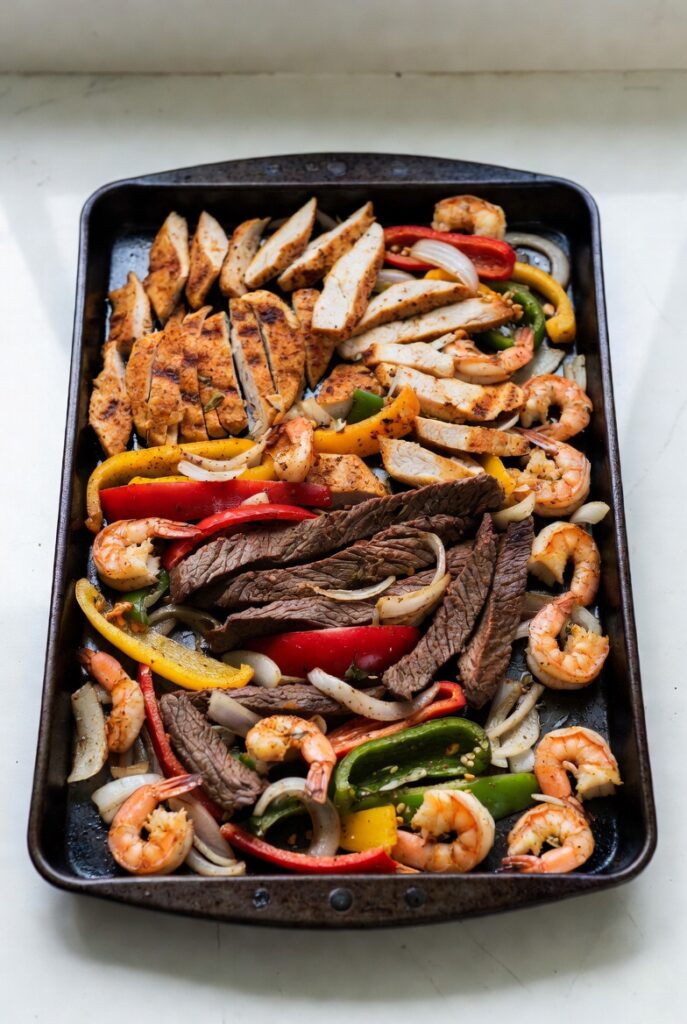
10. Storage and Meal Prep Efficiency
Sheet Pan Fajitas (Chicken, Steak, or Shrimp) are a cornerstone of the meal-prep lifestyle.
- Refrigeration: Store the roasted mix in airtight containers for up to 4 days.
- The Reheat: Avoid the microwave if possible; it will make the peppers soggy. Reheat in a dry skillet or air fryer for 3 minutes to restore the “sear.”
- The “Fajita Salad”: Cold leftovers are exceptional when served over mixed greens with a chipotle-lime dressing.
11. Frequently Asked Questions (FAQ)
Q: Can I use frozen peppers?
A: No. Frozen peppers release too much water and will “steam” the protein. For the best Sheet Pan Fajitas, fresh peppers are mandatory for the correct texture.
Q: Which steak is best?
A: Flank steak is the easiest to slice and provides a great lean-to-flavor ratio. Skirt steak is more traditional but can be tougher if not sliced correctly against the grain.
Q: How do I keep the tortillas warm?
A: Wrap a stack of tortillas in foil and place them in the oven for the last 5 minutes of the fajita roasting time.
12. Nutritional Information
(Per serving – based on Chicken)
| Nutrient | Amount |
| Calories | 310 kcal |
| Protein | 34g |
| Total Fat | 12g |
| Net Carbs | 14g |
| Fiber | 5g |
| Vitamin A | 45% DV |