1. Introduction: The Geometry of Mediterranean Efficiency
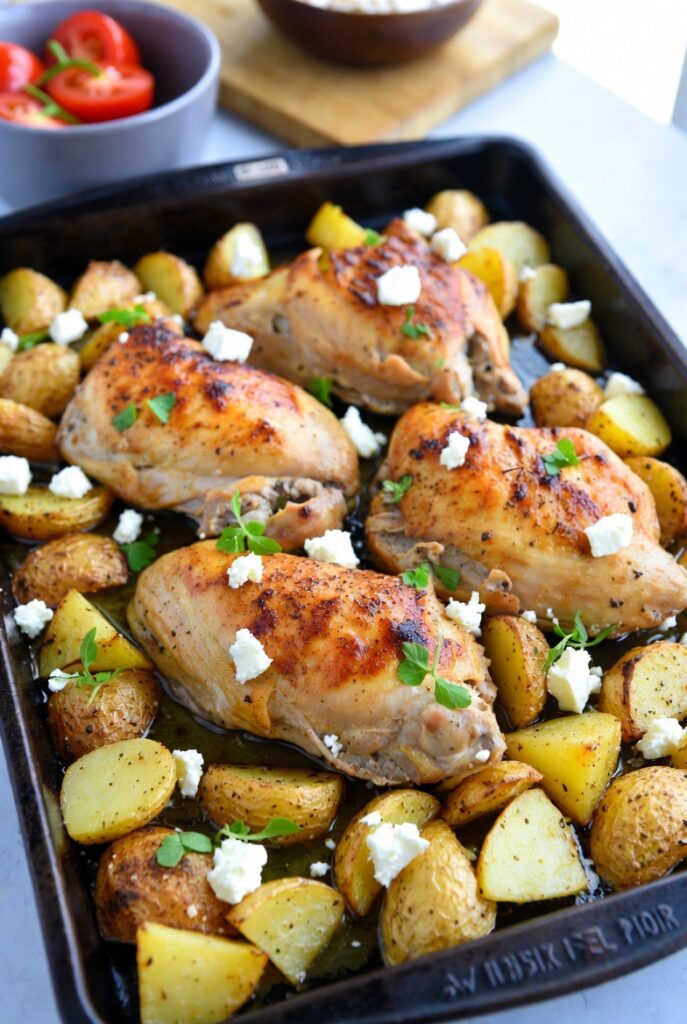
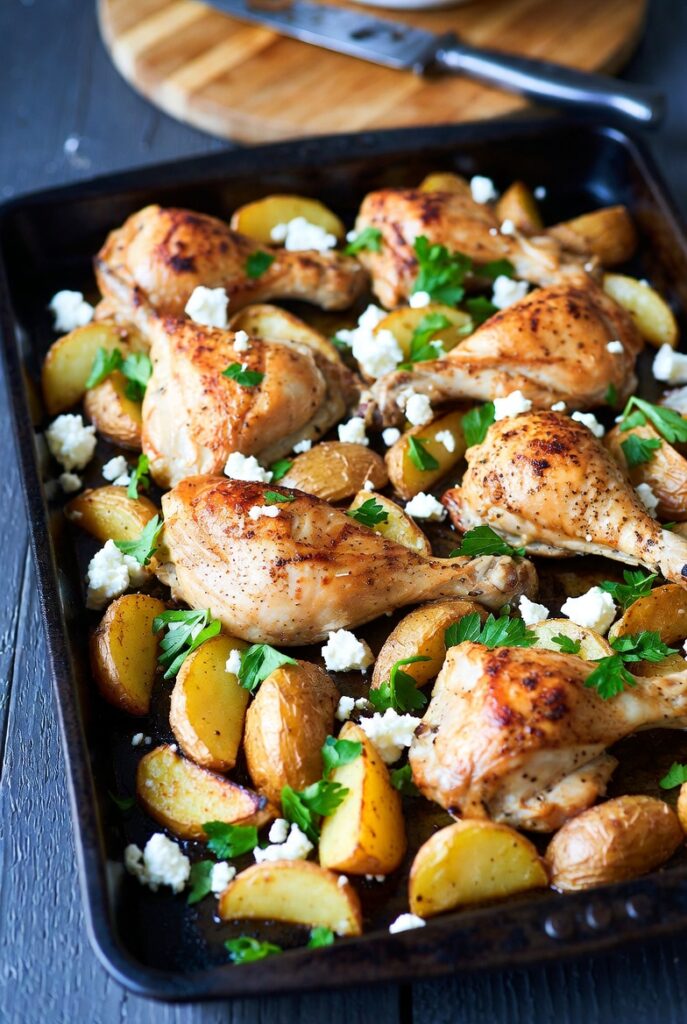
In the pursuit of “High-Velocity” nutrition, the Sheet Pan Greek Chicken and Potatoes with Feta stands as the definitive “Signature Assembly.” This dish represents a masterful application of “One-Plane Roasting,” a method that utilizes a single sheet pan to synchronize the varying thermal requirements of poultry, starch, and vegetables. By bypassing the logistical complexity of multiple pots, we achieve a harmonious “Flavor Fusion” where the lemon-oregano lipids from the chicken infuse directly into the potatoes as they crisp.
The brilliance of this dish lies in its “Textural Spectrum.” It delivers the “Maillard Crunch” of roasted Yukon Golds, the succulent tenderness of citrus-marinated chicken, and the creamy, “Brined-High-Note” of warm feta cheese. For the modern professional, this is the ultimate “Zero-Friction” gourmet meal—requiring only fifteen minutes of mechanical preparation and delivering a nutritionally balanced, high-protein profile that supports metabolic stability. It is a meal that respects the ancient traditions of the Aegean while meeting the demands of a high-performance lifestyle.
2. The Science of “Lipid-Citrus Emulsification”
To master Sheet Pan Greek Chicken and Potatoes, one must understand the chemical interaction of the marinade. The combination of extra virgin olive oil (a monounsaturated lipid) and lemon juice (a citric acid) acts as a “Biological Tenderizer.” The acid denatures the surface proteins of the chicken, allowing the herbal aromatics—specifically the carvacrol found in dried oregano—to penetrate deeper into the muscle fibers.
The secret to a professional-grade result is the “Starch Pre-Calibration.” Potatoes have a higher thermal density than chicken. To ensure they reach “Peak Crisp” at the exact moment the chicken reaches a safe internal temperature of 74°C (165°F), we utilize a “High-Surface-Area” cut. By dicing the potatoes into $2cm$ cubes, we increase the contact points with the hot metal of the pan, facilitating rapid moisture evaporation and starch gelatinization.
Furthermore, the addition of feta cheese during the final stages of roasting is a “Phase-Change Strategy.” Unlike melting cheeses (like mozzarella), feta’s high acid content allows it to soften and char without losing its structural integrity, providing a concentrated “Umami-Salty” finish that defines the Hellenic palate.
3. Recipe Overview: The Master Blueprint
- Cuisine Type: Modern Greek / Mediterranean Performance
- Difficulty Level: Very Easy (Synchronized roasting)
- Total Preparation Time: 15 Minutes
- Total Cooking Time: 25–30 Minutes
- Total Time: 45 Minutes
- Dietary Classifications: High-Protein, Gluten-Free, Mediterranean-Diet Approved.
- Yield: Serves 4
4. Equipment and Tools: The Essentials of Airflow
The structural success of your meal depends on the convective power of your oven and the conductivity of your roasting surface.
- Heavy-Duty 18×13 inch Rimmed Sheet Pan: Aluminum is preferred for its rapid heat transfer, which is essential for potato crisping.
- Large Mixing Bowl: For the “Initial Emulsion”—ensuring the chicken and potatoes are uniformly coated in the marinade.
- Instant-Read Digital Thermometer: The only way to guarantee “Succulence” without overcooking the lean poultry.
- Parchment Paper (Optional): While it aids in cleanup, roasting directly on the metal pan often yields a superior “Maillard Crust” on the potatoes.
5. Ingredients Section: Sourcing for Vibrancy
In a dish with minimal processing, the “Molecular Integrity” of the raw materials determines the “Output Excellence.”
The Protein & Starch Anchor
- Chicken Thighs (Boneless, Skin-on preferred): 1.5 lbs. Thighs are “Thermally Resilient” and contain more flavor-carrying lipids than breasts.
- Yukon Gold Potatoes: 1.5 lbs. Their medium-starch content allows for a creamy interior and a crispy exterior.
The Mediterranean Matrix
- Red Onion: 1 large, cut into wedges. These become “jammy” and sweet during the roast.
- Bell Peppers: 2 (Red and Yellow), sliced into thick strips.
- Kalamata Olives: 1/2 cup, pitted. These provide “Brined Depth.”
The “Aromatic Emulsion”
- Extra Virgin Olive Oil: 1/4 cup.
- Fresh Lemon Juice: 2 tablespoons.
- Dried Oregano: 2 teaspoons. (Dried is superior to fresh for high-heat roasting as it doesn’t burn).
- Garlic: 4 cloves, minced.
- Feta Cheese: 1/2 cup, crumbled.
6. The “Single-Layer” Rule: Avoiding the Steam Trap
The most common failure in Sheet Pan Greek Chicken and Potatoes is the “Overcrowded Pan.” If the ingredients are piled on top of each other, the moisture released by the chicken and vegetables will create a “Steam Envelope.” Instead of roasting, the food will “Boil,” resulting in flaccid potatoes and pale chicken.
To achieve a “Master Draft” finish, follow the “15% White Space” rule. You should be able to see the bottom of the pan between the pieces of food. This allows the hot air to circulate $360^\circ$, driving off moisture and creating the “Crispy-Gold” texture. If your pan is too small, utilize two pans. This technical adjustment is the difference between a mediocre dinner and a restaurant-quality roast.
7. Deep Dive: The Antioxidant Synergy of Oregano and Olive Oil
Why is this meal considered a “Longevity Standard”? It centers on the Antioxidant Capacity of the marinade. Dried oregano is one of the most concentrated sources of antioxidants in the plant kingdom. When combined with the polyphenols in extra virgin olive oil, these compounds protect the chicken’s fats from oxidizing under the high heat of the oven.
This synergy not only preserves the flavor but ensures that you are consuming “Healthy Lipids” that support cardiovascular health. Furthermore, the Vitamin C from the roasted peppers and lemon juice increases the absorption of the iron found in the chicken. This is “Biological Optimization”—using ancient ingredient pairings to maximize nutrient bioavailability.
8. Step-by-Step Instructions: The Master Blueprint
Step 1: Thermal Calibration
Preheat your oven to 200°C (400°F). This temperature is the “Sweet Spot” for rendering chicken fat while simultaneously browning the potatoes.
Step 2: The Emulsion Mix
In your large mixing bowl, whisk together the olive oil, lemon juice, oregano, garlic, salt, and pepper.
Step 3: The Matrix Coating
Add the chicken, cubed potatoes, onions, and peppers to the bowl. Toss vigorously until every surface is “Glazed” with the marinade.
Step 4: The Strategic Spread
Pour the contents onto the sheet pan. Arrange the chicken skin-side up and ensure the potatoes are touching the metal surface of the pan.
Step 5: The High-Heat Roast
Place the pan in the oven and roast for 25–30 minutes.
The Pro Move: At the 15-minute mark, use a spatula to flip the potatoes and onions to ensure “Global Browning.”
Step 6: The Feta and Olive Finish
Remove the pan from the oven. Sprinkle the Kalamata olives and crumbled feta over the hot ingredients. Return to the oven for 5 minutes. You want the feta to be soft and slightly charred around the edges.
Step 7: The Aesthetic Garnish
Finish with a fresh squeeze of lemon juice and a handful of chopped parsley to “Brighten” the heavy fats. Let the chicken rest for 5 minutes before serving to ensure the juices redistribute.
9. Satiety and the “Glucose Curve”
The Sheet Pan Greek Chicken and Potatoes is designed to provide “Steady-State Satiety.” By pairing the starch of the potatoes with the high protein of the chicken and the healthy fats of the olive oil and feta, you are creating a “Metabolic Buffer.”
This combination slows down the digestion of the carbohydrates, preventing a sharp insulin spike. This results in a “Flattened Glucose Curve,” providing you with several hours of mental clarity and physical energy without the “Post-Meal Slump” associated with high-carb pasta or bread-heavy meals. It is “Efficiency Fuel” for the high-performance individual.
10. Storage and the “Second-Day” Profile
- Refrigeration: Store in airtight glass containers for up to 3 days.
- The Reheat: To maintain the “Crispy-Gold” texture, avoid the microwave. Reheat in an air fryer or oven at 175°C (350°F) for 8 minutes.
- The “Salad” Pivot: Leftover chicken and potatoes are exceptional when served cold over a bed of fresh romaine lettuce with a dollop of Tzatziki.
11. Frequently Asked Questions (FAQ)
Q: Can I use chicken breasts?
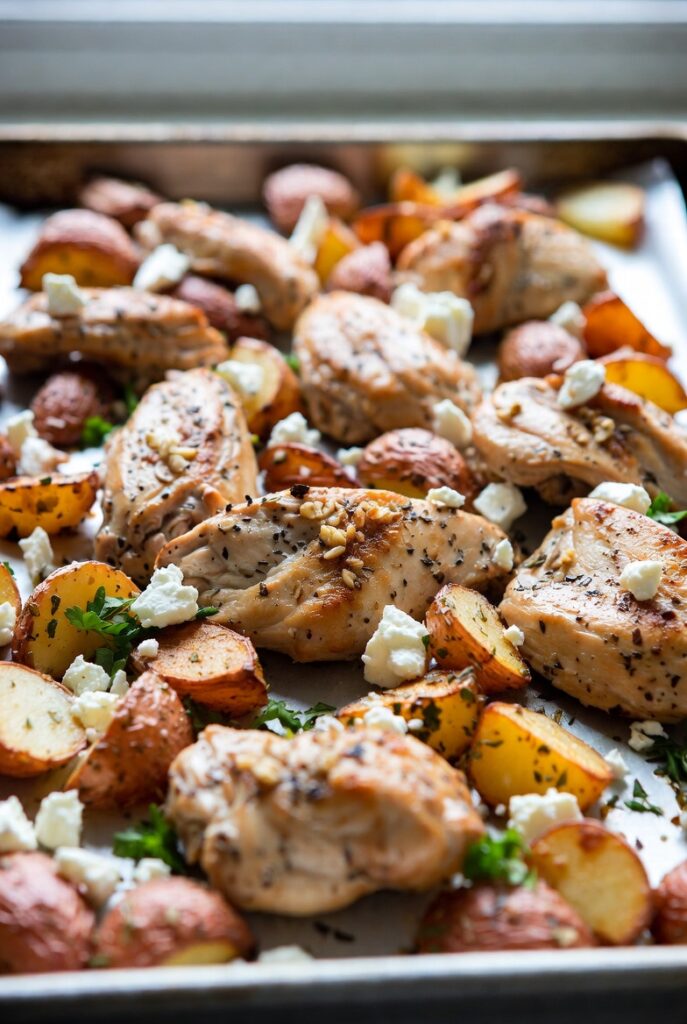
A: You can, but they are leaner and cook faster. If using breasts, cut them into large chunks and reduce the cooking time by 5–7 minutes to prevent them from becoming “fibrous.”
Q: Why are my potatoes still hard?
A: You likely cut them too large or overcrowded the pan. Ensure the potatoes are $2cm$ cubes and have plenty of “Airflow” around them.
Q: Should I use fresh oregano?
A: For roasting, dried is actually superior as the flavor is more concentrated and it doesn’t burn as easily. Save the fresh herbs for the final garnish.
12. Nutritional Information
(Per serving – approx. 1/4 of the pan)
| Nutrient | Amount |
| Calories | 420 kcal |
| Protein | 32g |
| Total Fat | 22g |
| Net Carbs | 24g |
| Fiber | 4g |
| Vitamin C | 80% DV |
13. Summary: The Master Draft of Geometric Cooking
The Sheet Pan Greek Chicken and Potatoes with Feta is more than a recipe; it is a system for high-impact, low-friction dining. It proves that you can achieve a sophisticated, restaurant-quality meal using a single piece of equipment and fifteen minutes of active effort. By mastering the “Single-Layer Rule” and the “Starch Pre-Calibration,” you are unlocking a new dimension of culinary efficiency.