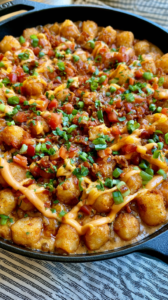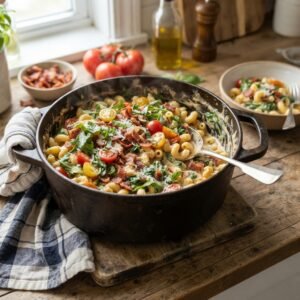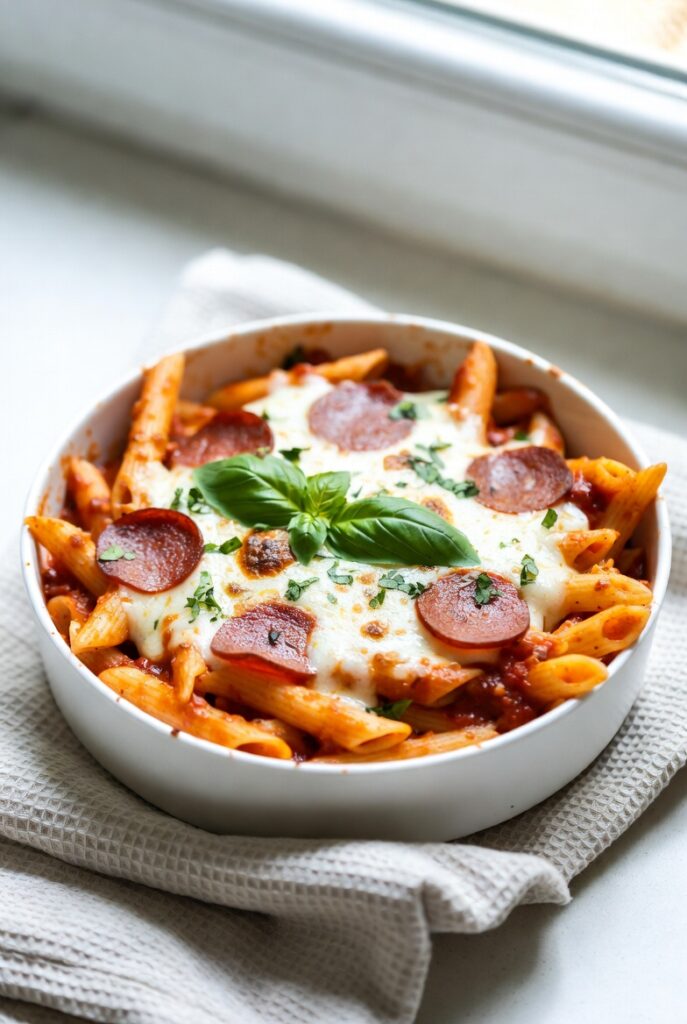
1. Introduction: The Convergence of Two Culinary Titans
In the vast ecosystem of modern home cooking, two entities reign supreme over the weeknight landscape: the Italian-American pizza and the comforting bowl of pasta. Traditionally, these exist in separate operational spheres—one requiring the fermentation of dough and the precision of a high-heat oven, the other requiring the boiling and draining of starch in multiple vessels. The One-Pot “Pizza” Pasta is a strategic “Structural Convergence.” It is a masterwork of “Culinary Arbitrage,” taking the flavor profiles that define a world-class pepperoni pizza—the spicy, cured lipids, the acidic brightness of tomato, and the elastic pull of mozzarella—and re-engineering them into a high-efficiency, single-vessel format.
The brilliance of this dish lies in its “Mechanical Streamlining.” By utilizing the “Absorption Method,” we eliminate the need for a colander, a secondary pot for sauce, and the general “Logistical Friction” of a multi-stage meal. This is a “Signature Draft” for the high-performance individual who demands “Peak Flavor Density” but refuses to compromise on time or cleanup efficiency. For the modern family or the busy professional, this is the ultimate “High-Utility” dinner: a meal that satisfies the primal craving for pizza while delivering the sustained energy of a complex carbohydrate matrix. It is a dish that respects your metabolic needs while honoring the psychological comfort of the classic “Pizza Night.”
2. The Science of “Starch Emulsification”
To master the One-Pot “Pizza” Pasta, one must first abandon the traditional method of boiling pasta in a vast ocean of salted water. In a “One-Pot” system, we utilize the “Starch-Binding Principle.” As the dry pasta simmers directly in the tomato-based liquid, it releases $amylose$ and $amylopectin$ starches. In a traditional setup, these starches are washed down the drain. In our system, they are captured and used as a “Biological Thickener.”
This starch interacts with the acidic tomatoes and the rendered fats from the pepperoni to create a silk-like emulsion that “clings” to the pasta. This results in a superior “Mouthfeel” that separate-pot cooking simply cannot replicate. Furthermore, the pasta absorbs the “Pizza DNA” from the inside out. Instead of the pasta being a neutral carrier for a sauce, every individual noodle becomes a concentrated vessel of garlic, oregano, and pepperoni essence. This is “Flavor Integration” at the molecular level, ensuring that the final output is significantly more potent than the sum of its parts.
3. Recipe Overview: The Master Blueprint
- Cuisine Type: Italian-American Fusion / Performance Comfort
- Difficulty Level: Very Easy (Assembly and Simmer)
- Total Preparation Time: 10 Minutes
- Total Cooking Time: 20 Minutes
- Total Time: 30 Minutes
- Dietary Classifications: High-Protein, High-Satiety, Kid-Friendly.
- Yield: Serves 4 to 6
4. Equipment and Tools: The Essentials of Thermal Consistency
The success of your One-Pot “Pizza” Pasta depends on a vessel that can maintain a steady simmer without localized “Hot Spots” that could scorch the starch at the bottom.
- 5-Quart Enameled Cast Iron Dutch Oven or Heavy-Bottomed Pot: The “Heavyweight Standard.” The thickness of the base is critical for preventing the pasta from sticking as the liquid reduces and thickens.
- Wooden Flat-Edge Spatula: Essential for the “Scrape and Stir” technique. As the starches release, you need a flat edge to keep the bottom of the pot clear.
- Microplane or Fine Grater: For the “Alpine Finish” of fresh Parmesan.
- Kitchen Scale or Liquid Measuring Cup: Precision in the “Liquid-to-Starch Ratio” is the difference between a pasta soup and a perfect pasta glaze.
5. Ingredients Section: Sourcing for Umami Impact
In a dish that moves at “High Velocity,” the integrity of your aromatics and the “Cure” of your meats determine the depth of the final profile.
The Protein & Lipid Core
- Italian Sausage (Mild or Hot): 1 lb. This provides the “Savory Foundation.” Removing the casings allows the meat to crumble and integrate into every bite.
- Pepperoni: 4 oz. Use “Cup-and-Char” mini pepperoni for the best texture and visual appeal. The pepperoni provides the “Spicy Lipid” profile.
The Aromatic & Liquid Matrix
- Garlic: 4 cloves, minced. The “Aromatic Catalyst.”
- Tomato Paste: 2 tablespoons. This provides “Concentrated Umami” and helps deepen the color of the sauce.
- Marinara Sauce: 24 oz (1 jar). Choose a sauce with low added sugar to maintain “Acidity Control.”
- Beef or Chicken Broth: 2 to 3 cups. This is the “Solvent” that cooks the pasta.
The Starch & Cheese Infrastructure
- Short Pasta (Rotini or Penne): 1 lb (16 oz). Ridged pasta (rigate) is the “Standard” because the ridges trap the pizza-emulsion.
- Mozzarella Cheese: 2 cups, freshly shredded. High-moisture mozzarella provides the classic “Pizza Stretch.”
- Fresh Basil: For a “Vibrant High-Note” garnish.
6. The “Pepperoni Rendering” Phase: Building the Flavor Foundation
The most common mistake in One-Pot “Pizza” Pasta is adding the meats at the same time as the liquid. To achieve a “Master Draft” finish, you must utilize the “Sauté Sequence.”
Start by browning the Italian sausage until it is fully rendered. Then, add the pepperoni. As the pepperoni heats, it releases its signature orange oil—this is “Liquid Gold.” This oil is infused with paprika, garlic, and salt. By sautéing your garlic and tomato paste in this rendered fat before adding the broth, you are “blooming” the aromatics. This ensures the “Pizza Profile” is hard-coded into the base of the sauce, rather than just floating on top at the end.
7. Deep Dive: Lycopene and the Bioavailability of Umami
Why is this dish a functional health choice? It centers on the Lycopene found in the tomato matrix. Tomatoes are the primary source of this powerful antioxidant, which supports cardiovascular health and skin integrity.
Crucially, lycopene is “Heat-Stable” and “Fat-Soluble.” In this one-pot system, the tomatoes are simmered in the presence of the fats from the sausage and pepperoni. This significantly increases the bioavailability of the lycopene—your body can absorb it much more efficiently than it could from raw tomatoes. Furthermore, the combination of cooked tomatoes and aged cheeses creates a “Synergistic Umami” effect. The $glutamates$ in the tomatoes pair with the $nucleotides$ in the meat to trigger a powerful satiety signal in the brain, making this a “High-Efficiency” meal for hunger management.
8. Step-by-Step Instructions: The Master Blueprint
Step 1: The Protein Render
Place your Dutch oven over medium-high heat. Add the Italian sausage (casings removed) and cook, breaking it apart with your spatula, until browned (about 5–7 minutes).
Step 2: The Pepperoni Bloom
Add the pepperoni slices to the pot. Stir for 2 minutes until they begin to curl and release their aromatic orange oils.
Step 3: The Aromatic Sauté
Add the minced garlic and tomato paste. Stir constantly for 60 seconds. You are looking for the tomato paste to turn a shade darker (caramelization) and for the garlic to become intensely fragrant.
Step 4: The Liquid Submersion
Pour in the marinara sauce and 2 cups of the broth. Stir to scrape up any browned bits (the fond) from the bottom of the pot. Bring the mixture to a gentle boil.
Step 5: The Starch Integration
Add the dry pasta. Ensure the pasta is mostly submerged in the liquid. If it looks too dry, add the remaining 1/2 to 1 cup of broth. The liquid should just cover the noodles.
Step 6: The Absorption Simmer
Reduce the heat to medium-low. Cover and simmer for 10 to 12 minutes.
The Pro Move: Stir the pot every 3 minutes. Because the liquid is thick with tomato and starch, the pasta can easily settle at the bottom and scorch. Stirring ensures an even “Thermal Distribution.”
Step 7: The Cheese Emulsion
Once the pasta is al dente and the liquid has reduced to a thick, creamy sauce, turn off the heat. Stir in half of the mozzarella and the Parmesan. The residual heat will melt the cheese into the “Starch Matrix.”
Step 8: The “Pizza Top” Finish
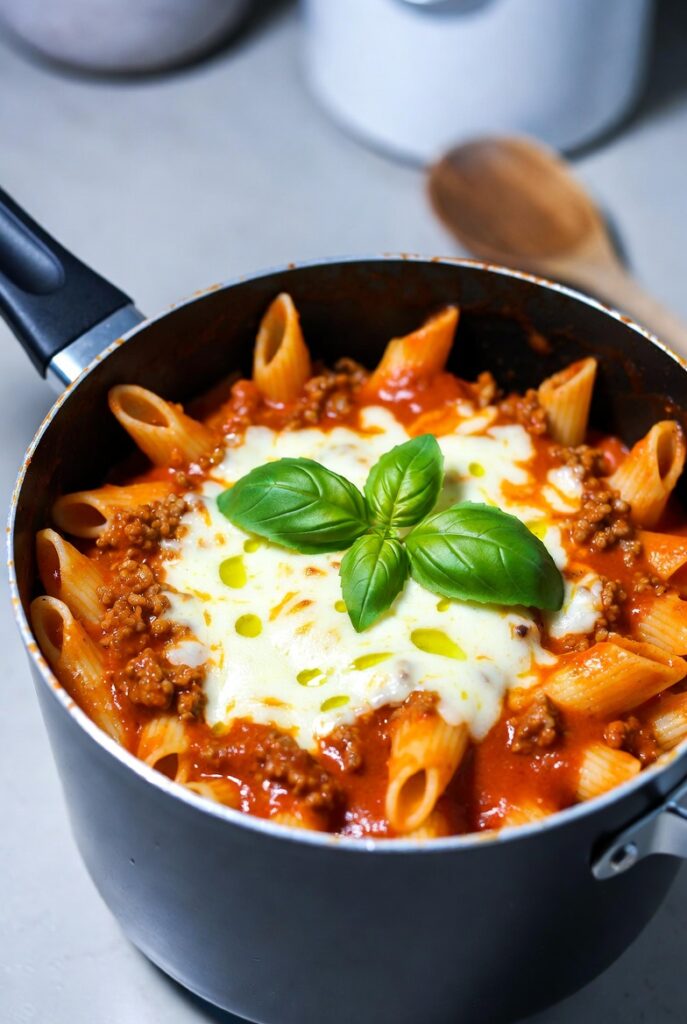
Sprinkle the remaining mozzarella over the top. Cover the pot for 2 minutes to allow the cheese to melt into a “Blanket.” Alternatively, place the pot under the broiler for 2 minutes for a charred, bubbly “Pizza Crust” finish. Garnish with fresh basil.
9. Modular Variations: Customizing the “Toppings”
The One-Pot “Pizza” Pasta is a flexible “Flavor Template.” You can adapt it to match your favorite pizza style:
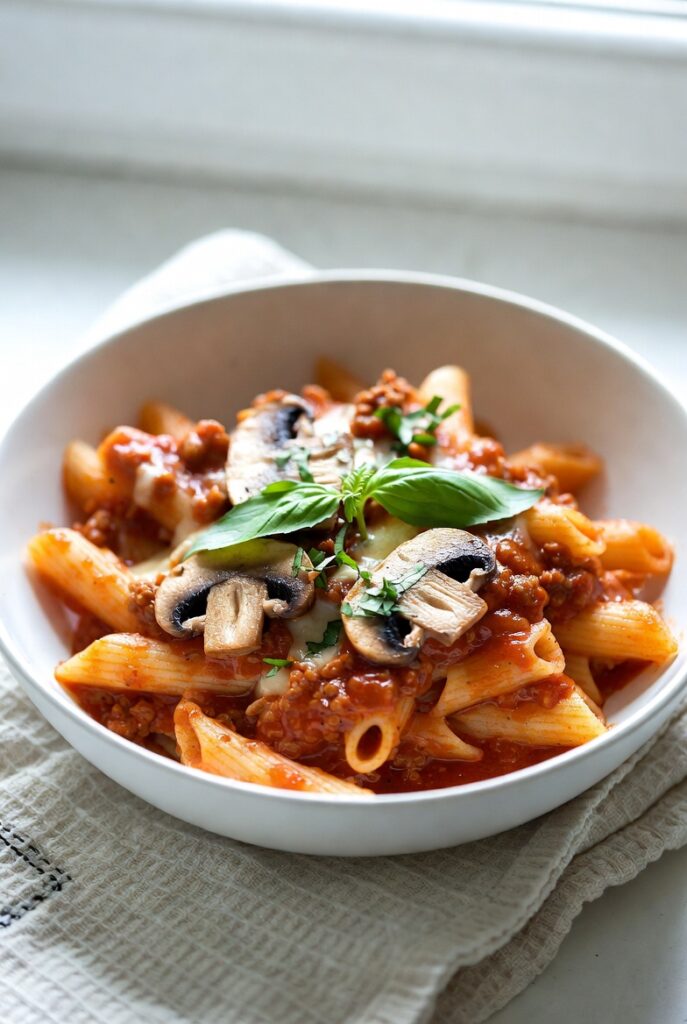
- The “Supreme” Shift: Sauté diced green bell peppers, onions, and sliced mushrooms along with the sausage in Step 1.
- The “Hawaiian” Pivot: Add diced ham and pineapple chunks during the last 5 minutes of simmering for a “Sweet-and-Salty” contrast.
- The “Veggie” Standard: Replace the meat with roasted red peppers, artichoke hearts, and black olives. Use vegetable broth to maintain a “Plant-Based” profile.
- The “White Pizza” Twist: Use a garlic-cream sauce base instead of marinara and increase the Ricotta and Mozzarella for a “Bianca” version.
10. Satiety and the “Glucose Buffer”
This dish is engineered for “Sustained Energy.” By pairing the carbohydrates of the pasta with the high protein and fats of the sausage and cheese, you are creating a “Metabolic Buffer.”
This combination slows down the gastric emptying process, preventing the rapid blood-sugar spike (and subsequent “crash”) often associated with plain pasta dishes. This results in a “Flattened Glucose Curve,” providing you with stable physical and mental energy for several hours post-consumption. It is a “High-Satiety” meal that prevents the “Hidden Hunger” that often leads to late-night snacking.
11. Storage and Reheating: The Starch Recovery
Like any one-pot pasta, the noodles will continue to absorb liquid as they sit in the refrigerator.
- Refrigeration: Store in airtight containers for up to 4 days.
- The Reheat: To return the pasta to its original “Vibrant Viscosity,” add 2 tablespoons of water or broth before reheating. This “loosens” the starch emulsion.
- The “Pizza Casserole” Pivot: Leftover pizza pasta can be placed in a baking dish, topped with extra cheese, and baked at $175^\circ C$ (350°F) for a second-day “Pasta Bake” that is often better than the original.
12. Frequently Asked Questions (FAQ)
Q: Can I use whole wheat pasta?
A: Yes, but whole wheat pasta requires more liquid and a longer simmer time (approx. 15 minutes). Increase the broth by 1/2 cup to account for the higher fiber absorption.
Q: Why is my pasta sticky?
A: This usually means you didn’t stir enough or the heat was too high. The starches need to be distributed through the sauce, not allowed to settle at the bottom.
Q: Can I make this in an Instant Pot?
A: Absolutely. Use the “Sauté” function for the meats/aromatics, then add liquid and pasta. Pressure cook on “High” for 5 minutes with a “Quick Release.”
13. Nutritional Information
(Per serving – approx. 1.5 cups)
| Nutrient | Amount |
| Calories | 520 kcal |
| Protein | 24g |
| Total Fat | 26g |
| Net Carbs | 48g |
| Fiber | 4g |
| Lycopene | High |