1. Introduction: The Architecture of Plant-Based Resilience
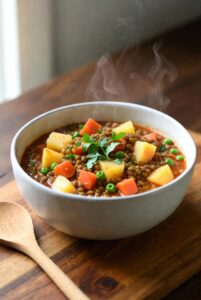
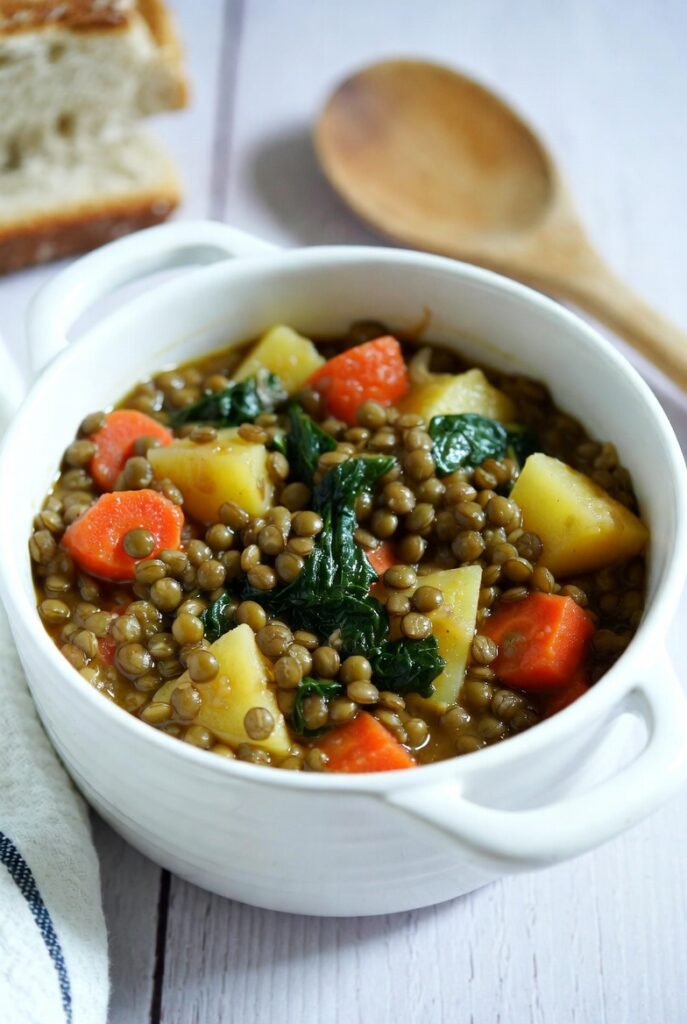
In the landscape of sustainable nutrition, the One-Pot Lentil and Vegetable Stew represents the “Platinum Standard” of culinary efficiency. This is a dish defined by “Nutritional Density”—the strategic concentration of protein, fiber, and complex carbohydrates into a single, thermally stable vessel. While many plant-based meals are criticized for a lack of “structural depth,” this stew utilizes the “Pulse Matrix” to create a thick, savory base that rivals the satiety of any meat-centric braise.
The brilliance of this dish lies in its “Temporal Development.” As the lentils simmer, they undergo a “Structural Collapse,” releasing natural starches that act as a “Biological Thickener” for the broth. For the high-performance individual, this is the ultimate “Batch-Cooking Engine”: it is low-friction, utilizes high-shelf-life staples, and its flavor profile actually improves over a 48-hour refrigeration period. It is a meal that respects your metabolic health while providing the “Steady-State Energy” required for a demanding mental or physical lifestyle.
2. The Science of “Pulse Hydration” and Umami Extraction
To master the One-Pot Lentil and Vegetable Stew, one must understand the behavior of the lentil. Lentils are rich in Amylose starch and Polyphenols. Unlike beans, they do not require a pre-soak, but they do require “Precise Thermal Sequencing.” If you introduce an acid (like tomatoes or lemon juice) too early in the cooking process, the lentil’s skin will remain tough—a phenomenon known as “Acidic Interference.”
The secret to a professional-grade result is the “Mirepoix Maillard” phase. By intensely sautéing the aromatics (onions, carrots, celery) before adding the liquid, you develop a foundation of “Maillard reaction” products. This creates a deep umami profile that is further bolstered by the addition of smoked paprika or cumin.
Furthermore, we utilize a “Zonal Simmer.” The firmer root vegetables are added early to provide structural base notes, while delicate greens are folded in at the finish to preserve their “Chlorophyll Vibrancy.” This ensures that the stew remains a “Living Meal” rather than a homogeneous mush.
3. Recipe Overview: The Master Blueprint
- Cuisine Type: Modern Mediterranean / Global Plant-Based
- Difficulty Level: Very Easy (Simmer-focused)
- Total Preparation Time: 15 Minutes
- Total Cooking Time: 35 Minutes
- Total Time: 50 Minutes
- Dietary Classifications: Vegan, Gluten-Free, High-Fiber, Low-Glycemic.
- Yield: Serves 6 (Ideal for meal prep)
4. Equipment and Tools: The Essentials of Thermal Mass
The structural success of your stew depends on consistent, gentle heat distribution.
- 5-Quart Heavy-Bottom Dutch Oven: Cast iron or heavy stainless steel is the “Standard.” It prevents the lentils at the bottom from scorching during the long simmer.
- Chef’s Knife: For “Uniform Dicing.” Consistent vegetable sizes ensure that everything reaches the “Peak Texture” simultaneously.
- Wooden Flat-Edge Spatula: Essential for scraping the “Fond” (the browned bits) after the sauté phase.
- Ladle: For measuring the “Ratio of Solid to Liquid.”
5. Ingredients Section: Sourcing for Bioavailability
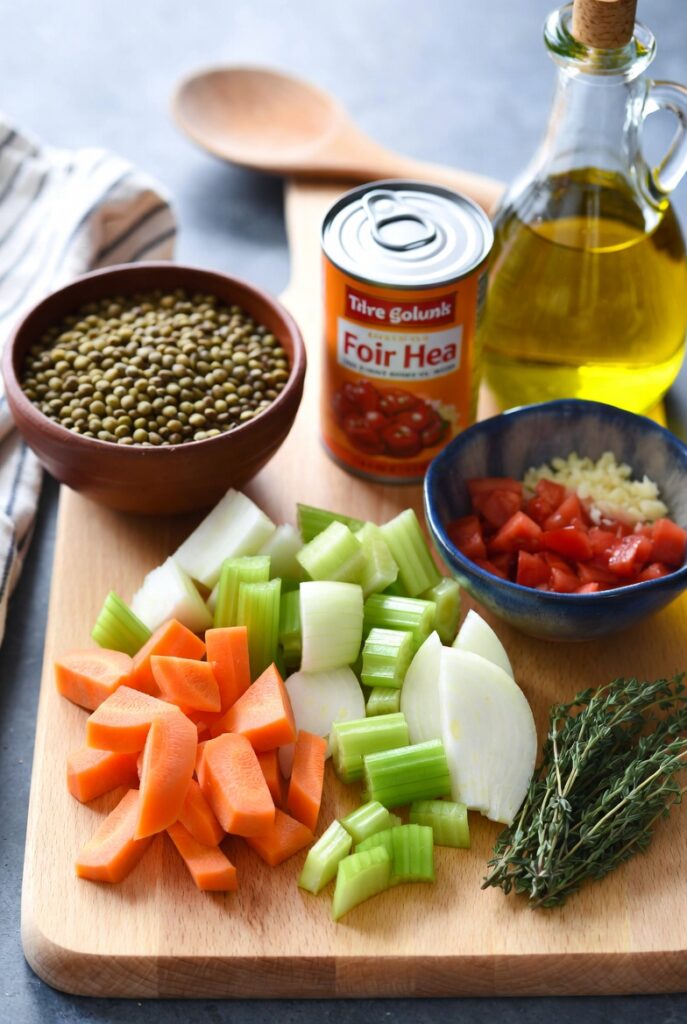
In a plant-based assembly, the “Quality of the Pulse” and the “Freshness of the Aromatics” dictate the final outcome.
The Protein Anchor
- Dried French Green (Puy) or Brown Lentils: 1.5 cups. These varieties maintain their “Structural Integrity” better than red lentils, which dissolve into a purée.
The Aromatic Matrix
- The Trinity (Mirepoix): 1 large onion, 2 carrots, 2 stalks of celery. This is the “Chemical Base” of the flavor profile.
- Garlic: 4 cloves, minced.
- Root Vegetables: 2 medium Yukon Gold potatoes, cubed. These provide the “Creamy Starch” that binds the stew.
The Liquid & Spice Fortification
- Vegetable Broth: 6 cups. Low-sodium is preferred to control the final mineral balance.
- Crushed Tomatoes: 1 can (14 oz). Added after the lentils have softened.
- Smoked Paprika & Ground Cumin: 1 teaspoon each. These provide the “Woody Depth” that mimics slow-roasted meat.
- Fresh Kale or Spinach: 2 cups, packed.
6. The “Acid Timing” Rule: Avoiding the Tough Skin Trap
The most common failure in One-Pot Lentil and Vegetable Stew is the “Crunchy Lentil.” As mentioned, lentils are sensitive to pH levels. If you add the crushed tomatoes or a splash of vinegar at the beginning, the acid bonds with the lentil’s pectin, making the skins nearly indestructible.
To achieve a “Master Draft” finish, follow the “70% Rule.” Allow the lentils to cook in the broth until they are 70% soft (approx. 20 minutes) before introducing the tomatoes or lemon juice. This technical adjustment ensures a “Meltingly Tender” result every time.
7. Deep Dive: Fiber as a “Metabolic Buffer”
Why is this stew considered “Functional Fuel”? It centers on the Fiber-to-Protein Ratio of lentils. A single serving provides nearly 15g of dietary fiber. This fiber acts as a “Metabolic Buffer,” slowing the absorption of glucose into the bloodstream.
This results in a “Flattened Glucose Curve,” preventing the energy crashes associated with high-carb meals. Furthermore, lentils are a significant source of Non-Heme Iron and Folate. When paired with the Vitamin C from the tomatoes and kale, the iron’s bioavailability is increased by up to 400%. This is “Nutritional Synergy”—using the chemistry of ingredients to maximize the body’s absorption of essential minerals.
8. Step-by-Step Instructions: The Master Blueprint
Step 1: The Aromatic Foundation
Heat 2 tablespoons of olive oil in your Dutch oven over medium heat. Add the onion, carrot, and celery. Sauté for 8–10 minutes until the onions are translucent and the carrots are slightly softened.
Step 2: The Spice Bloom
Add the garlic, smoked paprika, and cumin. Stir for 60 seconds. This “blooms” the fat-soluble compounds in the spices, intensifying their flavor.
Step 3: The Pulse & Root Addition
Add the lentils and the cubed potatoes. Stir to coat them in the aromatic oil.
Step 4: The Simmer Phase
Pour in the vegetable broth. Bring to a boil, then immediately reduce to a low simmer. Cover and cook for 20–25 minutes.
Step 5: The Acid & Texture Finish
Once the lentils are tender, stir in the crushed tomatoes and the kale. Simmer uncovered for another 10 minutes. This allows the stew to thicken and the kale to wilt.
Step 6: The “Brightening” Garnish
Turn off the heat. Stir in the juice of half a lemon and a handful of fresh parsley. The acid from the lemon “wakes up” the earthy flavors of the lentils.
9. Satiety and the “Umami-Loop”
The One-Pot Lentil and Vegetable Stew utilizes “Mushroom or Tomato Glutamates” to trigger the brain’s satiety centers. Even without meat, the combination of cooked tomatoes and legumes creates a “Full-Spectrum Umami” profile. This sends a signal of “Protein Abundance” to the brain, leading to psychological satisfaction and preventing late-night snacking.
10. Storage and the “Evolution of Flavor”
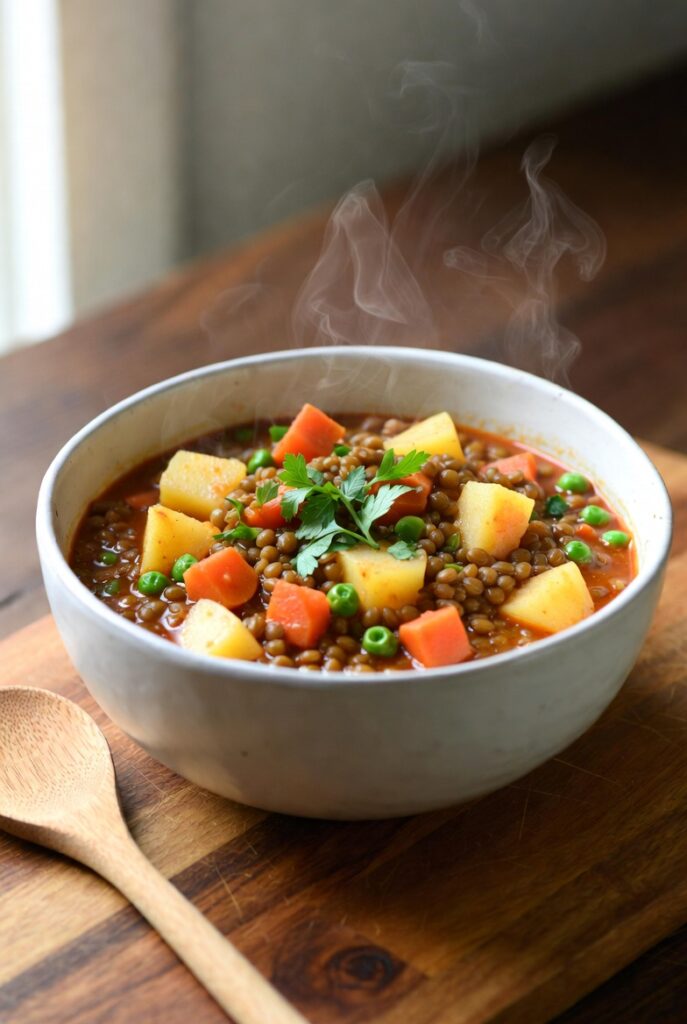
This stew is a “Living Assembly.”
- Refrigeration: Store in glass containers for up to 5 days.
- The “Thickening” Effect: Lentils continue to absorb liquid as they cool. When reheating, add 1/4 cup of water or broth to return the stew to its original “Vibrant Viscosity.”
- Freezing: This dish freezes exceptionally well for up to 3 months.
11. Frequently Asked Questions (FAQ)
Q: Can I use red lentils?
A: Red lentils will disintegrate, turning the stew into a thick dal. For a chunky, rustic stew, stick with Green or Brown lentils.
Q: Do I need to soak the lentils?
A: No. Unlike larger beans, lentils hydrate quickly. Simply rinse them to remove any dust or debris.
Q: Can I make this in a slow cooker?
A: Yes. Combine all ingredients (except the greens and lemon) and cook on “Low” for 7–8 hours.
12. Nutritional Information
(Per serving – approx. 2 cups)
| Nutrient | Amount |
| Calories | 310 kcal |
| Protein | 18g |
| Total Fat | 5g |
| Net Carbs | 38g |
| Fiber | 15g |
| Iron | 30% DV |
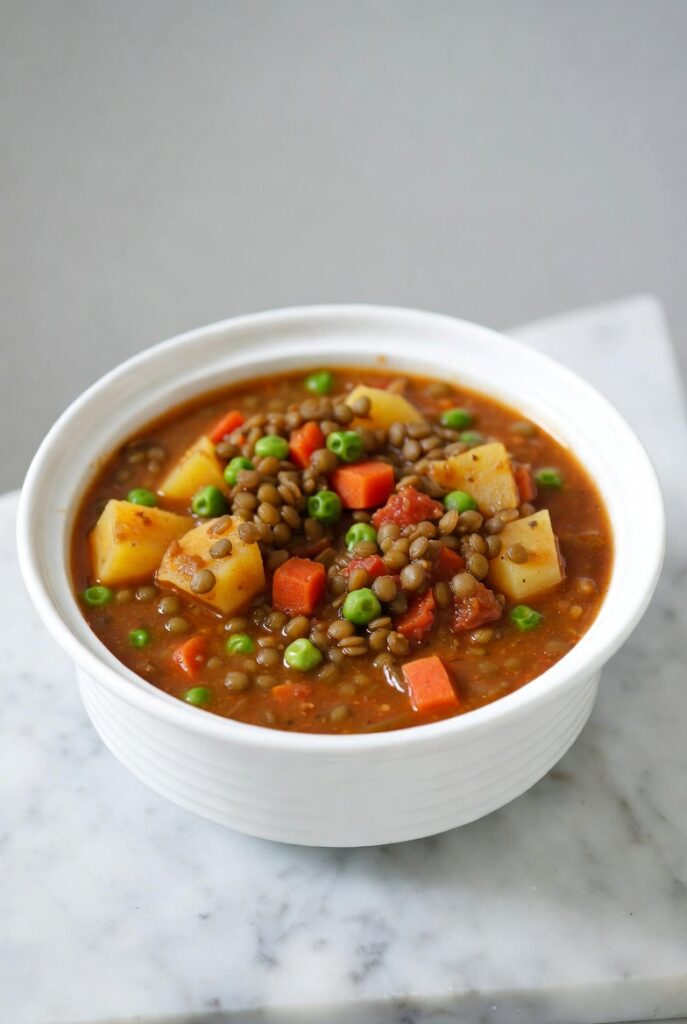
13. Summary: The Master Draft of Plant-Based Utility
The One-Pot Lentil and Vegetable Stew is more than a meal; it is a tactical tool for long-term health. It proves that simplicity is the ultimate sophistication. By mastering the “Acid Timing” and the “Mirepoix Maillard,” you are creating a dish that is biologically optimized and sensory-rich.