1. Introduction: The Industrial Minimalism of the Sheet Pan
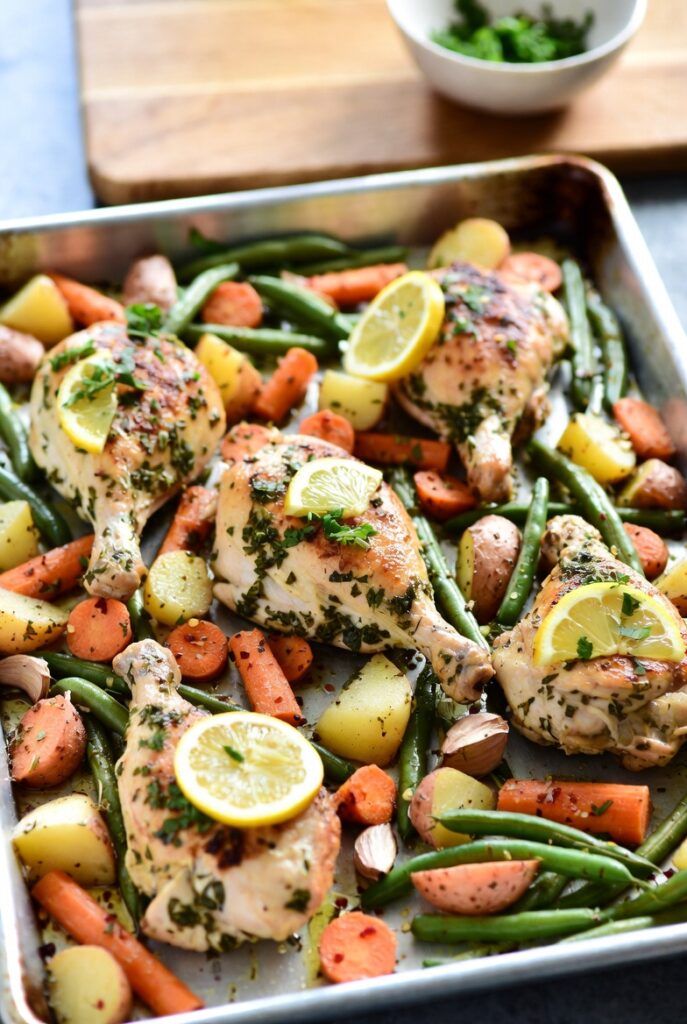
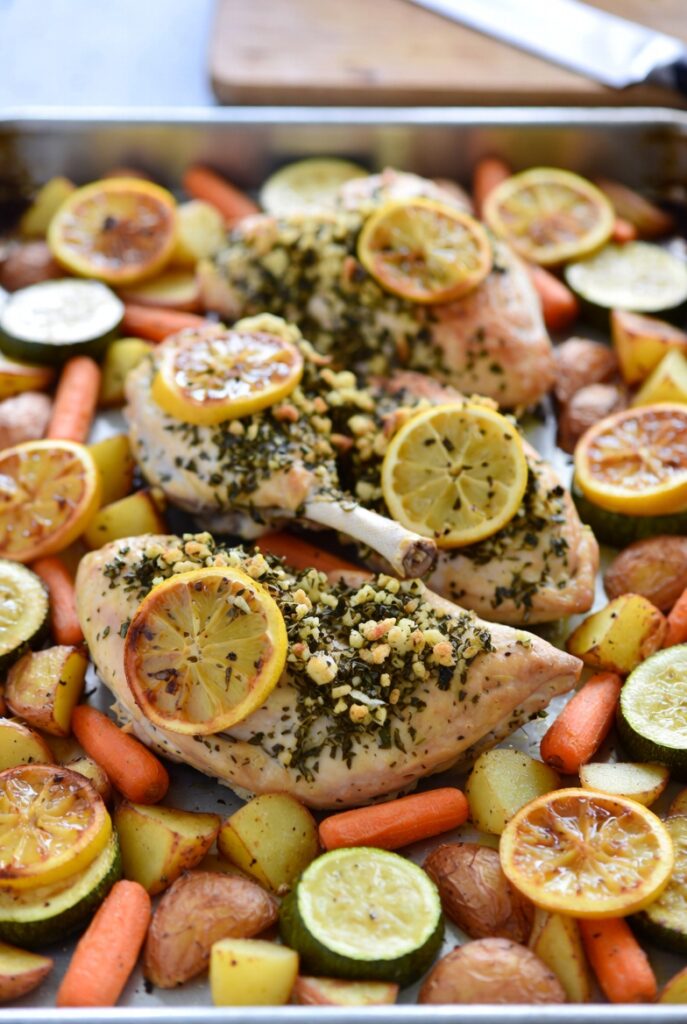
In the pursuit of high-performance culinary habits, the Sheet Pan Lemon Herb Chicken and Veggies stands as the definitive solution to the “Dinner Complexity” problem. This dish is a masterclass in “Single-Surface Engineering”—the process of utilizing a single roasting plane to execute a complete, nutritionally balanced meal. By combining a high-quality lean protein with high-fiber cruciferous and root vegetables, this assembly provides a comprehensive micronutrient profile with a “zero-friction” cleanup.
The brilliance of Sheet Pan Lemon Herb Chicken and Veggies lies in its utilization of conductive and convective heat. Instead of managing multiple pots and pans with varying thermal requirements, we use the sheet pan to synchronize the roasting times of disparate ingredients. For the modern professional, this is a tactical victory: it requires only ten minutes of active labor to produce a gourmet-level dinner that supports metabolic health and sustained satiety. It is the ultimate “low-maintenance” meal for those who refuse to compromise on the quality of their evening fuel.
2. The Science of the “Synchronized Roast”
To master Sheet Pan Lemon Herb Chicken and Veggies, one must understand the physics of surface area and moisture. The primary challenge of sheet pan cooking is the “Thermal Gap”—the difference in time required to cook a dense protein (chicken) versus fibrous vegetables (broccoli or peppers).
The secret to a professional-grade Sheet Pan Lemon Herb Chicken and Veggies is “Micronization.” By cutting the denser vegetables (like potatoes or carrots) into smaller, uniform pieces and leaving the chicken in larger, consistent fillets, we equalize their cooking windows. Furthermore, the lemon acts as a chemical tenderizer; the citric acid breaks down the exterior collagen of the chicken, allowing the herb-infused oils to penetrate deeper into the muscle fibers. This results in a “Maillard Reaction” (browning) on the exterior while maintaining a succulent, moisture-rich interior.
3. Recipe Overview: The Master Blueprint
- Cuisine Type: Modern Mediterranean / Clean Eating
- Difficulty Level: Very Easy (Chopping and tossing)
- Total Preparation Time: 15 Minutes
- Total Cooking Time: 25 Minutes
- Total Time: 40 Minutes
- Dietary Classifications: Paleo, Keto-friendly (if omitting potatoes), Gluten-Free, High-Protein.
- Yield: Serves 4 (Ideal for high-volume meal prep)
4. Equipment and Tools: The Essentials of Conductive Heat
The success of your Sheet Pan Lemon Herb Chicken and Veggies depends on the thickness of your metal and the airflow of your oven.
- Heavy-Duty Half-Sheet Pan (18×13 inch): Thinner pans will warp under high heat, leading to uneven oil distribution and “scorched spots.”
- Parchment Paper or Silicone Mat: To prevent the natural sugars in the vegetables from “fusing” to the pan.
- Large Mixing Bowl: For the “Emulsion Toss”—ensuring every leaf and fiber is coated in oil before hitting the pan.
- Instant-Read Meat Thermometer: The only way to guarantee the chicken reaches exactly $165^\circ F$ (74°C) without becoming dry.
5. Ingredients Section: Sourcing for Aromatics
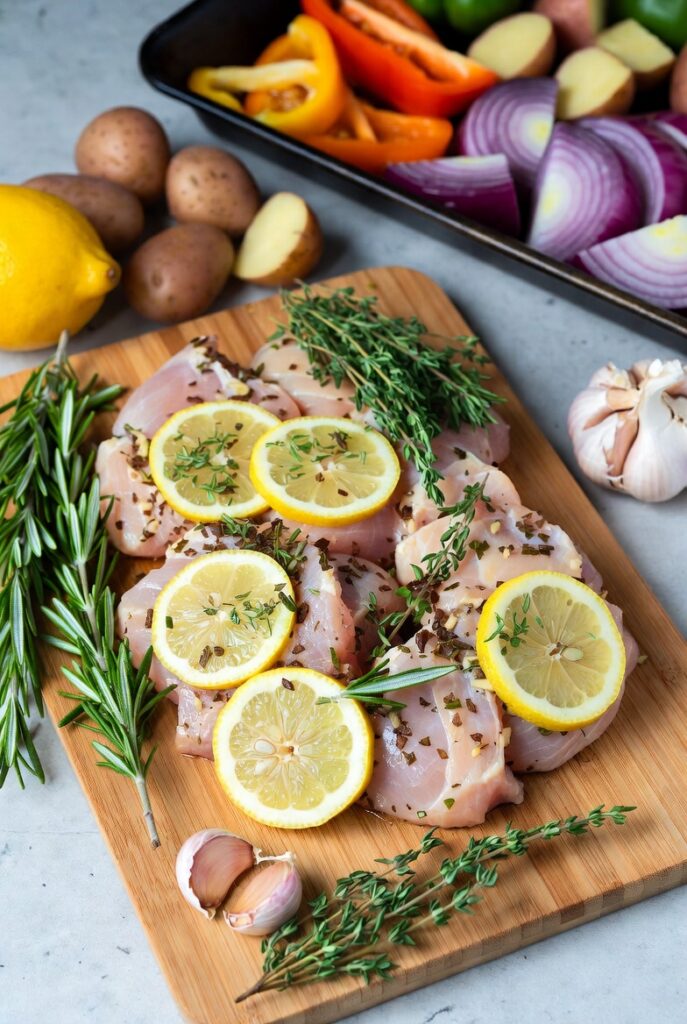
With a dish as exposed as Sheet Pan Lemon Herb Chicken and Veggies, the quality of your aromatics determines the depth of the flavor profile.
The Protein Anchor
- Boneless, Skinless Chicken Breasts or Thighs: Thighs are more “forgiving” in a sheet pan setting due to their higher fat content, whereas breasts offer the leanest protein profile.
The Vegetable Matrix
- Broccoli Florets & Red Bell Peppers: For high Vitamin C and antioxidant density.
- Baby Gold Potatoes: Their thin skins and waxy texture allow them to crisp up without peeling.
- Red Onion: Adds a localized “jammy” sweetness when roasted.
The Flavor Catalyst
- Fresh Rosemary and Thyme: Dried herbs often burn in the high heat of a sheet pan; fresh herbs release oils gradually.
- Fresh Lemon Juiced & Zested: The zest provides the “high notes” that juice alone cannot achieve.
- Extra Virgin Olive Oil: The “conveyor” of heat and flavor.
6. The “Spacing Rule”: Avoiding the Steam Trap
The most common failure in Sheet Pan Lemon Herb Chicken and Veggies is “Overcrowding.” If the ingredients are touching or layered, they will release moisture and “steam” each other rather than roasting. This results in gray chicken and mushy vegetables.
To achieve the “Master Draft” finish, you must leave visible “metal space” between the components. This allows the hot air to circulate $360^\circ$ around each piece, facilitating the evaporation of surface moisture. This evaporation is what creates the “char” on the broccoli and the “crisp” on the chicken. If you are cooking for more than four people, use two pans rather than crowding one.
7. Deep Dive: Citric Acid and Myofibrillar Protein
Why is the lemon so critical in Sheet Pan Lemon Herb Chicken and Veggies? Beyond the flavor, it performs a biological function. The low pH of lemon juice acts on the myofibrillar proteins in the chicken, causing them to denature slightly before they even hit the oven. This “pre-cook” softens the meat.
When the chicken is then subjected to the $400^\circ F$ (200°C) heat of the oven, the lemon-herb emulsion creates a protective barrier. This barrier slows the rate of moisture loss, ensuring that your Sheet Pan Lemon Herb Chicken and Veggies remains juicy. Simultaneously, the heat caramelizes the natural sugars in the lemon juice, adding a layer of “umami” that balances the earthy tones of the herbs.
8. Step-by-Step Instructions: The Master Blueprint
Step 1: The Thermal Prep
Preheat your oven to $400^\circ F$ (200°C). Place the sheet pan inside while it preheats. This “Pre-Heat” trick ensures that the vegetables start searing the moment they touch the pan.
Step 2: The Emulsion Toss
In a large bowl, whisk together 3 tablespoons of olive oil, the juice and zest of 1 lemon, 2 cloves of minced garlic, and your chopped fresh herbs.
Step 3: The Vegetable Prep
Add the diced potatoes, broccoli, and peppers to the bowl. Toss until glistening. Spread them onto the hot sheet pan, leaving room for the chicken in the center.
Step 4: The Protein Prep
Add the chicken pieces to the same bowl (utilizing the leftover oil and herbs). Coat thoroughly. Place the chicken onto the sheet pan between the vegetables.
Step 5: The Controlled Roast
Slide the pan into the oven. Roast for 20–25 minutes.
The Pro Move: Halfway through, use a spatula to toss the vegetables, but leave the chicken undisturbed to develop a golden crust.
Step 6: The Temperature Check
Use your thermometer to ensure the chicken has reached $165^\circ F$. Remove from the oven and let it rest on the pan for 5 minutes. This “Carryover Cooking” phase allows the juices to redistribute.
9. Expert Tips and Variations
- The “Keto” Swap: Replace the potatoes with cauliflower florets or radishes. Roasted radishes lose their “bite” and become surprisingly sweet and potato-like.
- The “Parchment” Warning: Never use wax paper in a $400^\circ F$ oven—it will smoke. Use professional-grade parchment or bake directly on the metal for maximum crispiness.
- Variations: * The “Mediterranean” Lift: Add kalamata olives and feta cheese for the last 5 minutes of roasting.
- The “Spicy” Standard: Add 1 teaspoon of red pepper flakes to the initial oil emulsion.
10. Storage and Meal Prep Efficiency
Sheet Pan Lemon Herb Chicken and Veggies is a cornerstone of the “Sunday Prep” ritual.
- Refrigeration: The meal will hold its integrity in airtight containers for up to 4 days.
- The Reheat: To avoid “rubbery” chicken, reheat in a toaster oven or air fryer at $350^\circ F$ (175°C) for 5 minutes rather than the microwave.
- The “Salad” Pivot: Cold leftovers are excellent when chopped and tossed over a bed of fresh arugula with a balsamic drizzle.
11. Frequently Asked Questions (FAQ)
Q: Can I use frozen vegetables?
A: It is not recommended. Frozen vegetables release a massive amount of water as they thaw, which will steam the chicken and prevent the Sheet Pan Lemon Herb Chicken and Veggies from developing any crispiness.
Q: My chicken is done but the potatoes are hard—what do I do?
A: This means your potatoes were cut too large. Next time, dice them into $1/2$-inch cubes. If it happens now, remove the chicken to a plate and put the potatoes back in for 10 minutes.
Q: Why do I need to zest the lemon?
A: The lemon zest contains the “essential oils” (limonene), which provide a much more powerful and aromatic citrus flavor than the juice alone.
12. Nutritional Information
(Per serving – approx. 1/4 of the pan)
| Nutrient | Amount |
| Calories | 340 kcal |
| Protein | 32g |
| Total Fat | 12g |
| Net Carbs | 22g |
| Fiber | 6g |
| Vitamin C | 120% DV |