1. Introduction: The Harmonic Convergence of Sweet and Savory
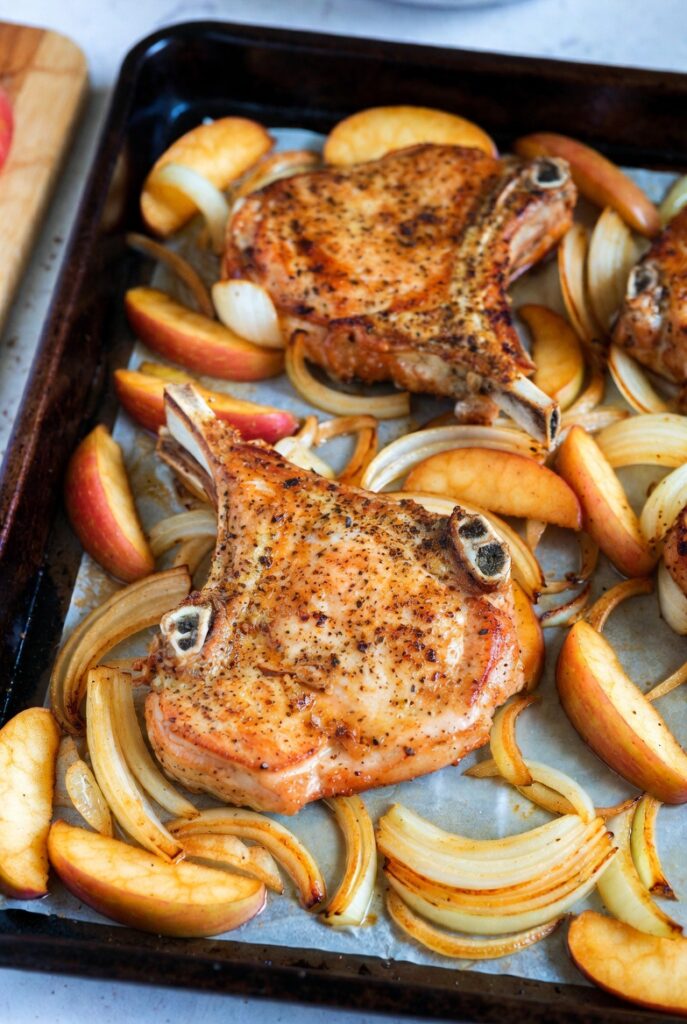
In the ecosystem of high-performance meal prep, the Sheet Pan Pork Chops with Apples and Onions represents a masterclass in “Seasonal Synergy.” This dish is a strategic “Signature Assembly” that leverages the classic culinary pairing of lean protein with orchard fruit, updated for the “Zero-Friction” efficiency of the modern kitchen. By utilizing a single roasting plane, we synchronize the searing of the pork with the caramelization of the apples and onions, allowing their juices to mingle into a natural glaze that requires no additional saucepans.
The brilliance of Sheet Pan Pork Chops with Apples and Onions lies in its “Glycemic Balance.” While the apples provide a natural, fiber-rich sweetness, the onions contribute a deep savory umami, and the pork delivers the high-quality amino acids necessary for muscle repair and satiety. For the modern professional, this is the ultimate “High-Velocity” dinner: ten minutes of mechanical preparation and twenty minutes of roasting. It is a meal that respects your metabolic health while providing the psychological comfort of a traditional “harvest-style” feast.
Beyond the immediate sensory appeal, this dish is a tactical victory for clean eating. By roasting rather than pan-frying, we reduce the need for excessive fats and minimize the production of smoke in the kitchen. It is a dish that proves that “Rustic” can be “Refined,” providing a repeatable standard of excellence that supports a high-functioning lifestyle.
2. The Science of the “Lipid-Sugar Emulsion”
To master Sheet Pan Pork Chops with Apples and Onions, one must understand the chemical interaction between the pork’s fats and the fruit’s sugars. As the pork chops roast, they release internal lipids. Simultaneously, the sliced apples undergo “Sucrose Dehydration,” releasing their sweet juices. When these two liquids meet on the hot surface of the sheet pan, they form a “Living Emulsion”—a natural pan sauce that seasons the onions and prevents the meat from drying out.
The secret to a professional-grade result is the “Cut-Width Strategy.” Pork chops are prone to overcooking, while apples require significant heat to soften. To achieve a “Master Draft” finish, we utilize Thick-Cut Bone-In Chops (at least 1 inch thick). The bone acts as a “Thermal Buffer,” slowing the rise of the internal temperature and ensuring the meat stays succulent while the apples and onions have enough time to reach peak caramelization.
Furthermore, the choice of apple is a technical decision. We utilize “Baking Apples” like Honeycrisp or Granny Smith, which possess a high level of Pectin. This structural carbohydrate allows the apple to maintain its shape under high heat, providing a textural contrast to the tender pork rather than turning into applesauce.
3. Recipe Overview: The Master Blueprint
- Cuisine Type: Modern Rustic / Functional Performance
- Difficulty Level: Very Easy (Synchronized roasting)
- Total Preparation Time: 15 Minutes
- Total Cooking Time: 20–25 Minutes
- Total Time: 40 Minutes
- Dietary Classifications: Paleo-friendly, Gluten-Free, High-Protein.
- Yield: Serves 4
4. Equipment and Tools: The Essentials of Conductive Heat
The structural success of your Sheet Pan Pork Chops with Apples and Onions depends on a pan that can facilitate rapid evaporation to prevent “steaming.”
- Heavy-Duty 18×13 inch Rimmed Sheet Pan: Essential for preventing the apple juices from spilling into your oven.
- Large Mixing Bowl: For the “Aromatic Toss”—ensuring every slice of onion and apple is coated in oil and herbs before hitting the pan.
- Instant-Read Thermometer: The only way to guarantee the pork reaches the target internal temperature of 63°C (145°F) without overshooting.
- Chef’s Knife: For uniform slicing of the onions and apples to ensure even cooking.
5. Ingredients Section: Sourcing for Depth
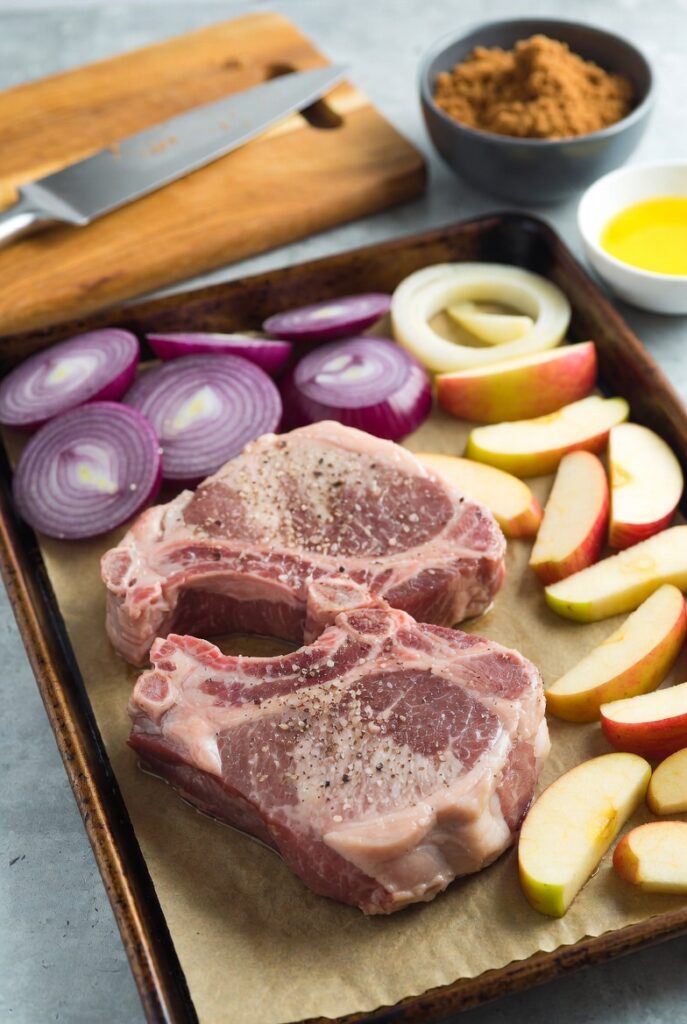
In a dish with so few components, the “Integrity” of the raw materials is the primary driver of flavor density.
The Protein Anchor
- Bone-In Pork Chops: 4 count (1-inch thick). Bone-in provides better flavor and moisture retention than boneless.
The Harvest Matrix
- Honeycrisp or Granny Smith Apples: 2 large, sliced into 1/2-inch wedges.
- Red Onion: 1 large, sliced into 1/2-inch wedges. Red onions provide a superior color profile and a “jammy” finish when roasted.
- Fresh Sage and Thyme: The “Autumnal Aromatics” that bridge the gap between the sweet fruit and the savory meat.
The Glaze Foundation
- Extra Virgin Olive Oil or Avocado Oil: 2 tablespoons.
- Dijon Mustard: 1 tablespoon (to be rubbed on the pork).
- Apple Cider Vinegar: 1 tablespoon (to brighten the pan juices at the finish).
6. The “Thermal Crowd” Rule: Avoiding Soggy Fruit
The most common failure in Sheet Pan Pork Chops with Apples and Onions is the “Juice Flood.” If the pan is too crowded, the moisture from the onions and apples cannot evaporate quickly enough. This results in “boiled” pork and “mushy” onions.
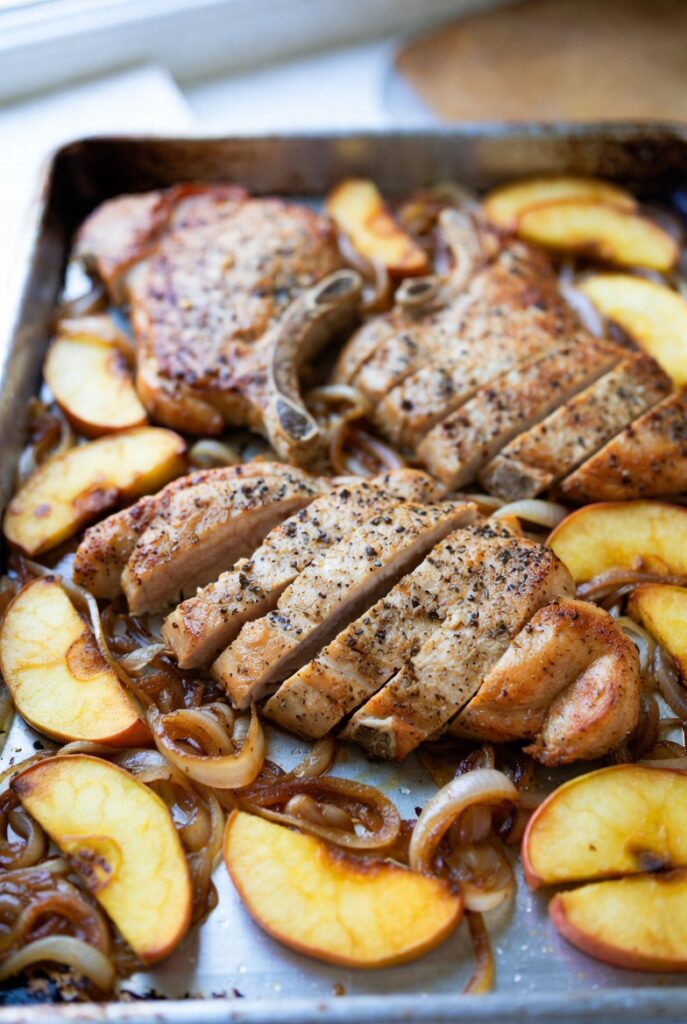
To achieve a “Master Draft” finish, you must utilize a “Zonal Layout.” Place the pork chops in the center of the pan and surround them with a single layer of apples and onions. This allows the heat to hit the fruit and vegetables from all sides, ensuring they “sear” against the metal. If the pan looks 100% covered, use a second pan. This technical adjustment ensures the “Crispy Edge” that defines a world-class sheet pan meal.
7. Deep Dive: Quercetin and Muscle Recovery
Why is this specific combination of pork, apples, and onions a functional powerhouse for recovery? It centers on the antioxidant Quercetin, found in high concentrations in both the skins of apples and in red onions.
Quercetin has been shown to improve aerobic performance and reduce inflammation in muscle tissue following intense physical exertion. When paired with the B-vitamins and Zinc found in the pork, this meal becomes a “Recovery Matrix.” It provides the building blocks for tissue repair while simultaneously dampening the oxidative stress caused by a demanding workday or an athletic training session. It is “High-Performance Fuel” disguised as a rustic dinner.
8. Step-by-Step Instructions: The Master Blueprint
Step 1: The Thermal Calibration
Preheat your oven to 200°C (400°F). This temperature is the “sweet spot” for rendering pork fat while caramelizing fruit sugars.
Step 2: The Aromatic Toss
In a large bowl, combine the sliced apples, red onions, 1 tablespoon of olive oil, fresh thyme, salt, and pepper. Toss until the slices are glistening.
Step 3: The Protein Prep
Pat the pork chops dry with a paper towel (this is critical for browning). Rub each side with a thin layer of Dijon mustard and season generously with salt, pepper, and chopped fresh sage.
Step 4: The Strategic Layout
Spread the apple and onion mixture onto the sheet pan, leaving four spaces for the meat. Nestling the pork chops directly onto the pan surface ensures a “Bottom-Sear.”
Step 5: The High-Heat Roast
Place the pan in the oven and roast for 18–22 minutes.
The Pro Move: Flip the pork chops halfway through. At the same time, give the apples and onions a quick toss to ensure they don’t stick.
Step 6: The Precision Check
Use your thermometer to check the pork. Remove from the oven when the internal temperature hits 60°C (140°F). The temperature will rise to the safe 63°C (145°F) during the rest.
Step 7: The Acid Brightener
While the pan is hot, drizzle the apple cider vinegar over the apples and onions. Use a spatula to scrape up the browned bits (the fond) and toss them with the fruit. Let the meat rest for 5 minutes before serving to allow the juices to redistribute.
9. Expert Tips and Variations
- The “Sweetener” Pivot: If your apples are particularly tart (like Granny Smith), drizzle 1 teaspoon of maple syrup over the fruit mixture before roasting for a “Glazed” finish.
- The “Crunch” Factor: Add 1/2 cup of halved pecans or walnuts to the pan during the last 5 minutes of roasting for an added dose of healthy fats and a textural “pop.”
- Variations: * The “Bacon” Standard: Add two slices of chopped raw bacon to the apple/onion mix for an extra layer of smoky “Lipid Depth.”
- The “Sweet Potato” Shift: Add 1-inch cubes of sweet potato for a higher-carb version, but start the potatoes 10 minutes before adding the pork and apples.
10. Storage and “The Cold-Salad” Rebirth
Sheet Pan Pork Chops with Apples and Onions is a resilient meal-prep option that maintains its integrity well.
- Refrigeration: Store in airtight glass containers for up to 3 days.
- The Reheat: To avoid drying out the pork, reheat in a $175^\circ C$ ($350^\circ F$) oven or an air fryer for 5 minutes.
- The “Salad” Strategy: Leftover cold pork, apples, and onions are exceptional when sliced thin and served over a bed of arugula with a simple vinaigrette. The peppery greens provide a perfect foil to the roasted sweetness.
11. Frequently Asked Questions (FAQ)
Q: Can I use boneless pork chops? A: Yes, but you must reduce the cooking time by 4–5 minutes. Boneless chops lack the “Thermal Buffer” of the bone and can turn from perfect to dry very quickly.
Q: Should I peel the apples? A: No. The skin provides the majority of the fiber and antioxidants, and it helps the apple wedge maintain its structure during the roast.
Q: My pork is white and boring. What happened? A: You likely didn’t pat the meat dry, or you overcrowded the pan. Moisture is the enemy of the sear. Ensure there is “white space” on your pan for air to circulate.
12. Nutritional Information
(Per serving – approx. 1 chop + 1 cup fruit/veg mix)
| Nutrient | Amount |
| Calories | 340 kcal |
| Protein | 28g |
| Total Fat | 14g |
| Net Carbs | 22g |
| Fiber | 5g |
| Vitamin C | 25% DV |