1. Introduction: The Strategic Fusion of Heat and Bromelain
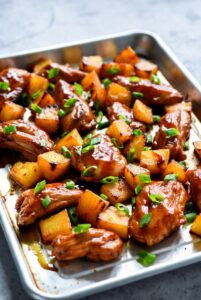
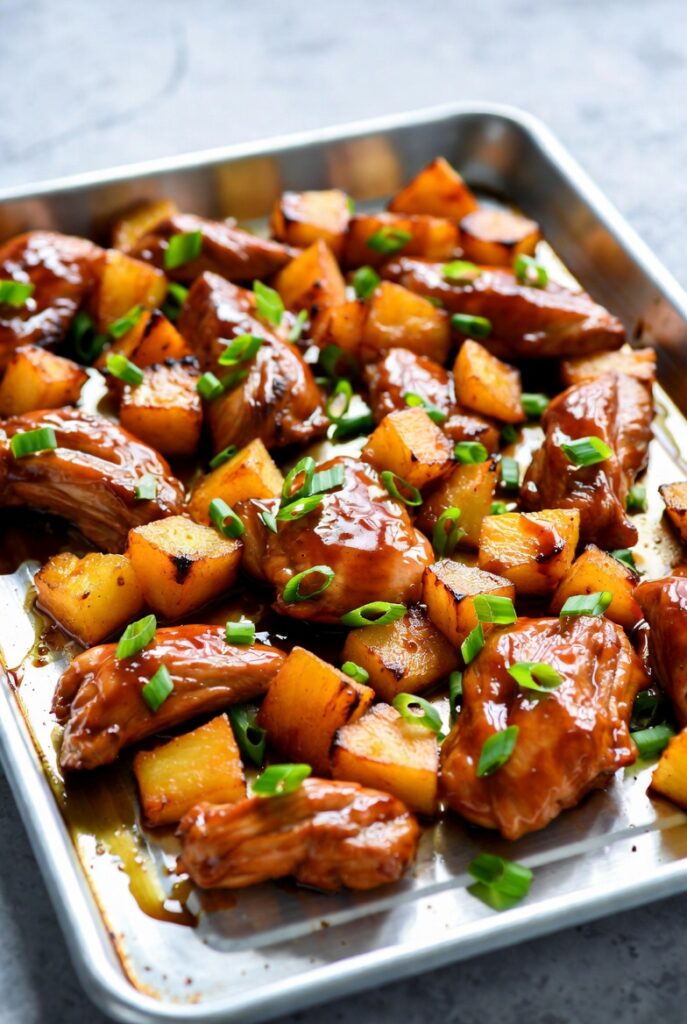
In the high-velocity world of “Batch-Cooking,” the Sheet Pan Teriyaki Chicken and Pineapple stands as a tactical masterpiece of “Enzymatic Flavoring.” This dish represents a “Signature Assembly” that leverages the chemical interaction between tropical acids and poultry proteins, all executed on a single roasting plane. By synchronizing the caramelization of the pineapple with the searing of the chicken, we achieve a “Zero-Friction” dinner that bridges the gap between Asian-inspired takeout and functional meal prep.
The brilliance of this dish lies in its “Metabolic Utility.” It provides a high-protein, micronutrient-dense profile that satisfies the craving for “Sweet-and-Savory” without the processed additives found in commercial alternatives. For the modern professional or high-performance individual, this is the ultimate “Efficiency Pivot”: fifteen minutes of mechanical preparation followed by twenty minutes of synchronized roasting. It is a meal that respects your time while providing the “Palate Density” of a multi-stage culinary production.
2. The Science of the “Bromelain Tenderizer”
To master Sheet Pan Teriyaki Chicken and Pineapple, one must understand the biological power of the pineapple. Fresh pineapple contains Bromelain, a proteolytic enzyme that breaks down protein chains. When used in a marinade, bromelain acts as a “Biological Tenderizer,” softening the muscle fibers of the chicken.
However, the secret to a professional-grade result is “Thermal Control.” While bromelain is effective, leaving chicken in fresh pineapple juice for too long can lead to a “mushy” texture. To achieve a “Master Draft” finish, we utilize a “High-Heat Flash-Roast” strategy. By roasting at $200^\circ C$ ($400^\circ F$), we trigger the Maillard Reaction on the chicken surface while simultaneously inducing “Sugar Polymerization” in the pineapple. This creates a charred, candy-like exterior on the fruit that provides a critical textural contrast to the succulent meat.
3. Recipe Overview: The Master Blueprint
- Cuisine Type: Modern Asian-Fusion / Performance Prep
- Difficulty Level: Very Easy (Synchronized roasting)
- Total Preparation Time: 15 Minutes
- Total Cooking Time: 20 Minutes
- Total Time: 35 Minutes
- Dietary Classifications: High-Protein, Dairy-Free, Gluten-Free (when using Tamari).
- Yield: Serves 4
4. Equipment and Tools: The Essentials of Conductive Heat
The success of your Sheet Pan Teriyaki Chicken and Pineapple depends on the conductive efficiency of your pan.
- Heavy-Duty 18×13 inch Rimmed Sheet Pan: Aluminum is the “Platinum Standard” here because it facilitates the rapid evaporation of moisture, ensuring the chicken sears rather than steams.
- Large Mixing Bowl: For the “Initial Glaze”—ensuring every piece of fruit and poultry is coated in the teriyaki matrix.
- Chef’s Knife: For “Uniform Cubing.” Consistent sizing of the chicken and pineapple is mandatory for synchronized cooking times.
- Parchment Paper or Silicone Mat: Optional, but recommended to prevent the high-sugar teriyaki glaze from bonding to the pan.
5. Ingredients Section: Sourcing for Nutrient Density
In a dish with a focused flavor profile, the “Molecular Quality” of the aromatics determines the final depth.
The Protein & Fruit Anchor
- Chicken Thighs (Boneless, Skinless): 1.5 lbs, cut into 1-inch chunks. Thighs provide the “Lipid Depth” necessary to withstand high-heat roasting without drying out.
- Fresh Pineapple: 2 cups, cubed. Fresh is superior to canned as it contains active bromelain and a more robust cellular structure.
The Teriyaki Matrix
- Soy Sauce or Tamari: 1/3 cup. The “Umami Foundation.”
- Honey or Maple Syrup: 2 tablespoons. For “Caramelization Potential.”
- Fresh Ginger & Garlic: 1 tablespoon each, minced. These are the “Aromatic High-Notes.”
- Rice Vinegar: 1 tablespoon. The “Acid Balance” that cuts through the sugar.
- Sesame Oil: 1 teaspoon. For “Nutty Lipid Depth.”
The Visual & Textural Finish
- Red Bell Pepper & Red Onion: 1 each, chopped into 1-inch pieces.
- Sesame Seeds & Sliced Green Onions: For the “High-Contrast” garnish.
6. The “Zonal Layout” Strategy
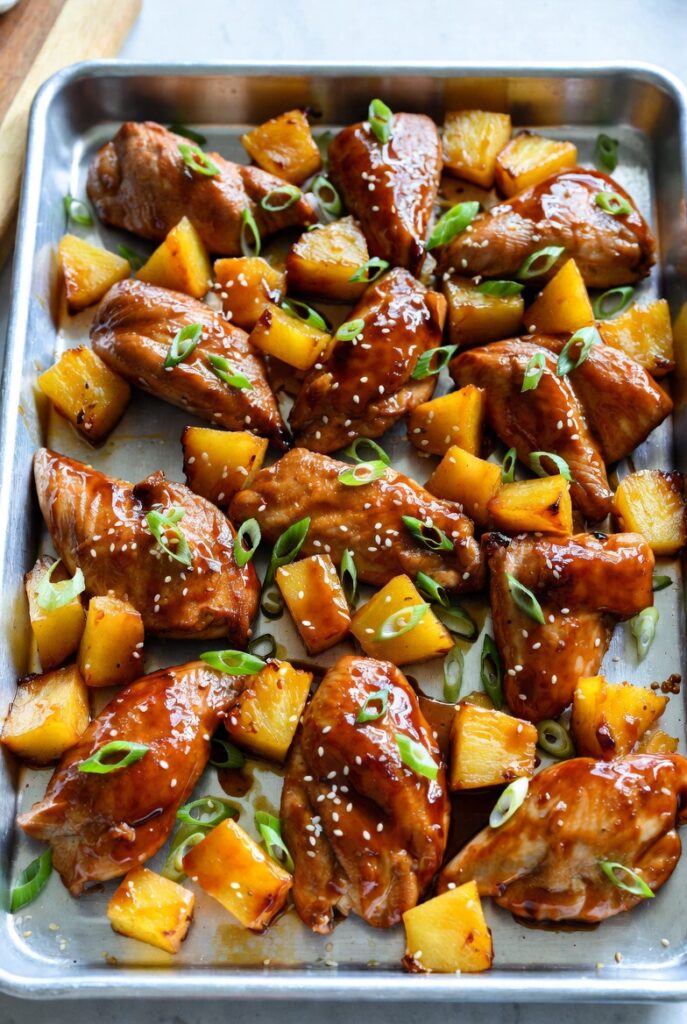
The most common failure in sheet pan cooking is “Moisture Flooding.” Pineapple releases a significant amount of juice when heated. If the pan is overcrowded, the chicken will boil in pineapple juice rather than roast.
To achieve a “Master Draft” finish, utilize a “Zonal Spread.” Place the chicken in the center of the pan where the heat is most consistent, and surround it with the pineapple and vegetables. This allows the juices to flow toward the edges and evaporate quickly, concentrating the flavors into a thick glaze. Ensure there is at least 15% “White Space” on the pan to allow for airflow. This is “Mechanical Optimization” for the oven environment.
7. Deep Dive: Manganese and Bone Health Synergy
Why is this specific combination a “Functional Powerhouse”? It centers on Manganese. A single serving of pineapple provides over 100% of your daily required intake of this trace mineral. Manganese is a critical co-factor for enzymes involved in bone formation and skin integrity.
When paired with the High-Quality Amino Acids in the chicken and the Vitamin C in the bell peppers, this meal becomes a “Structural Matrix.” It provides the building blocks for collagen synthesis and joint health. For the active individual, this is “Repair Fuel” disguised as a tropical feast. You are effectively “Engineering” your recovery through a balanced, nutrient-dense dinner.
8. Step-by-Step Instructions: The Master Blueprint
Step 1: Thermal Calibration
Preheat your oven to $200^\circ C$ ($400^\circ F$). Line your sheet pan with parchment paper to manage the sugar-based cleanup.
Step 2: The Glaze Emulsion
In a large bowl, whisk together the soy sauce, honey, ginger, garlic, vinegar, and sesame oil.
Step 3: The Matrix Toss
Add the chicken chunks, pineapple, peppers, and onions to the bowl. Toss vigorously until the teriyaki glaze has “Matrix-Bonded” with every surface.
Step 4: The Strategic Layout
Spread the mixture onto the sheet pan in a single, even layer. Ensure the chicken pieces are not touching each other to facilitate the Maillard reaction.
Step 5: The High-Heat Roast
Place the pan in the oven and roast for 18–22 minutes.
The Pro Move: At the 10-minute mark, use a spatula to toss the ingredients. This ensures the pineapple juices help glaze the chicken as they reduce.
Step 6: The Precision Check
The chicken is finished when it reaches an internal temperature of $74^\circ C$ ($165^\circ F$) and the pineapple edges are beginning to char.
Step 7: The Aesthetic Garnish
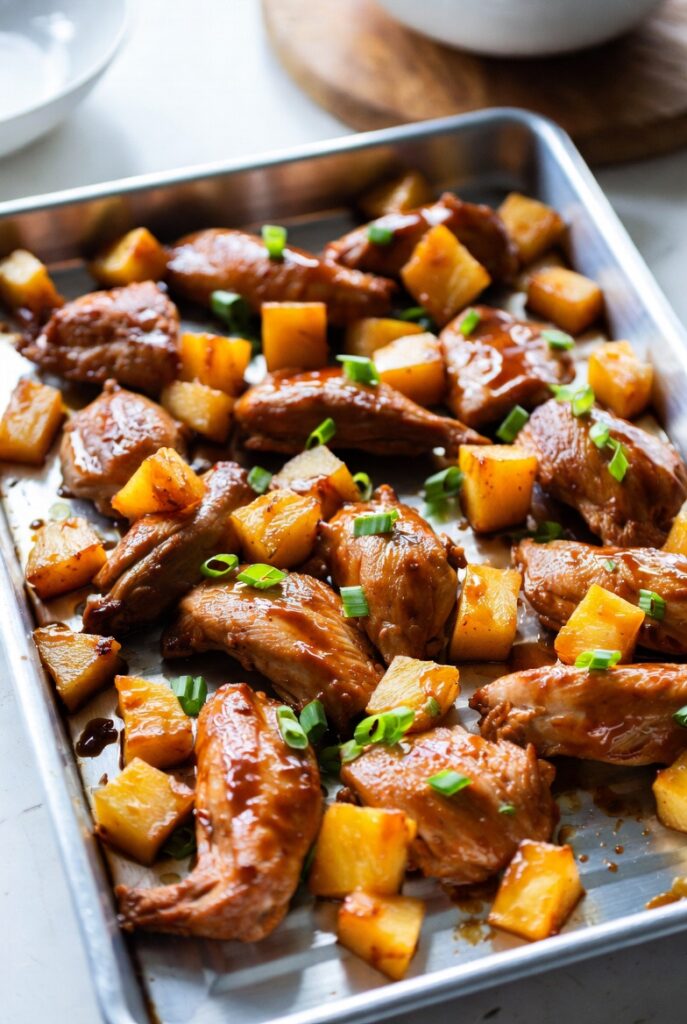
Remove from the oven and immediately sprinkle with sesame seeds and green onions. Let the pan rest for 3 minutes to allow the glaze to “set” before serving over steamed rice or quinoa.
9. Satiety and the “Sweet-Umami Loop”
The Sheet Pan Teriyaki Chicken and Pineapple is designed to satisfy the “Sweet-Umami Loop.” By combining the savory glutamates of the soy sauce with the natural fructose of the pineapple, you are triggering multiple satiety pathways in the brain. This prevents the “Hidden Hunger” that often leads to post-dinner sugar cravings. It is a “Self-Regulating” meal that provides psychological satisfaction alongside physical nourishment.
10. Storage and the “Office-Lunch” Rebirth
- Refrigeration: Store in airtight glass containers for up to 4 days.
- The Reheat: This dish is exceptionally resilient. Reheat in a microwave at 80% power or in a skillet for 3 minutes.
- The “Salad” Pivot: Leftovers are excellent served cold over a bed of shredded cabbage or kale for a “Teriyaki Slaw” experience.
11. Frequently Asked Questions (FAQ)
Q: Can I use chicken breasts?
A: Yes, but decrease the cooking time by 4 minutes. Breasts lack the “Lipid Buffer” of thighs and can become dry if over-roasted.
Q: Is canned pineapple acceptable?
A: In a pinch, yes. However, ensure it is packed in juice, not syrup, and drain it thoroughly. Note that canned pineapple is heat-treated, so you will lose the enzymatic benefits of bromelain.
Q: How do I make this spicy?
A: Add 1 teaspoon of Sriracha or red pepper flakes to the glaze emulsion in Step 2 for a “Heat-Sync” finish.
12. Nutritional Information
(Per serving – approx. 1.5 cups)
| Nutrient | Amount |
| Calories | 360 kcal |
| Protein | 28g |
| Total Fat | 12g |
| Net Carbs | 32g |
| Manganese | 100% DV |
13. Summary: The Master Draft of Tropical Utility
The Sheet Pan Teriyaki Chicken and Pineapple is more than a recipe; it is a system for high-impact dining. It proves that “Healthy” doesn’t have to be “Boring” and “Sophisticated” doesn’t have to be “Difficult.” By mastering the “Zonal Layout” and the “Bromelain Science,” you are delivering a meal that is biologically optimized and sensory-rich.