1. Introduction: The Refreshing Sophistication of the Spring Roll
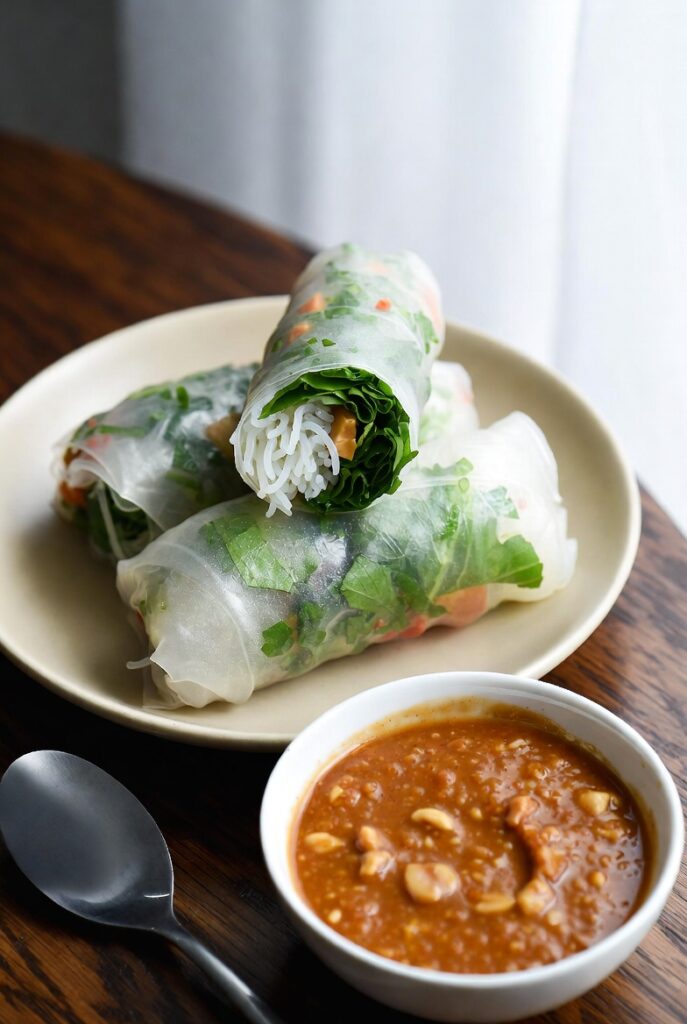
In the vast landscape of Southeast Asian cuisine, few dishes capture the essence of “freshness” as vividly as Vietnamese Fresh Spring Rolls with Peanut Sauce. Known natively as Gỏi Cuốn, these translucent gems are a masterclass in culinary transparency. Unlike their fried counterparts, Vietnamese Fresh Spring Rolls with Peanut Sauce are never subjected to heavy oils; instead, they rely on the raw, vibrant crunch of garden-fresh herbs and the delicate snap of chilled shrimp or pork.
The beauty of the Vietnamese Fresh Spring Rolls with Peanut Sauce lies in the meticulous balance of the five fundamental tastes: sour, bitter, sweet, spicy, and salty. Wrapped in a whisper-thin sheet of rice paper, each roll acts as a pressurized vessel of flavor, waiting to be dipped into a rich, velvety peanut emulsion. For the health-conscious gourmet, this dish is a revelation—a low-calorie, gluten-free, and nutrient-dense meal that provides a multi-sensory experience. It is the perfect “clean” dinner that feels like an indulgence, offering a cooling reprieve on a warm afternoon while delivering high-quality protein and complex carbohydrates.
2. The Science of Rice Paper: The Translucent Vessel
To truly master Vietnamese Fresh Spring Rolls with Peanut Sauce, one must understand the anatomy of the Bánh Tráng (rice paper). These discs are made from a steamed rice batter that is dried on bamboo mats, which gives them their iconic cross-hatch texture. The starch profile of rice paper is unique; it is dry and brittle until hydrated, at which point the amylopectin molecules swell, creating a flexible, slightly tacky membrane.
In the context of Vietnamese Fresh Spring Rolls with Peanut Sauce, the hydration process is the most critical technical step. Over-soaking leads to a structural collapse, while under-soaking results in a rubbery chew. When handled with precision, the rice paper becomes a window, showcasing the vibrant greens and pinks of the internal ingredients. This transparency is a hallmark of Vietnamese aesthetics, where the visual “honesty” of the food is just as important as the flavor profile of the Vietnamese Fresh Spring Rolls with Peanut Sauce.
3. Recipe Overview
- Cuisine Type: Vietnamese / Southeast Asian
- Difficulty Level: Moderate (Requires hand-eye coordination)
- Total Preparation Time: 40 Minutes
- Total Cooking Time: 10 Minutes (For shrimp/vermicelli)
- Total Time: 50 Minutes
- Dietary Classifications: Gluten-Free, Dairy-Free, Easily Vegan.
- Yield: Makes 8–10 large rolls.
4. Equipment and Tools: The Essentials of the Rolling Station
Success with Vietnamese Fresh Spring Rolls with Peanut Sauce depends on your workspace organization, often called mise en place.
- Large, Shallow Bowl: For dipping the rice paper. The water should be slightly warm—not hot—to ensure the Vietnamese Fresh Spring Rolls with Peanut Sauce remain workable.
- Large Wooden Cutting Board: Wood is superior to plastic for rolling, as it absorbs just enough moisture to prevent the rice paper from sticking and tearing.
- Small Saucepan: For whisking together the ingredients of your Vietnamese Fresh Spring Rolls with Peanut Sauce dipping accompaniment.
- Sharp Knife: For julienning vegetables into matchsticks of exactly the same length.
5. Ingredients Section: Sourcing for Excellence
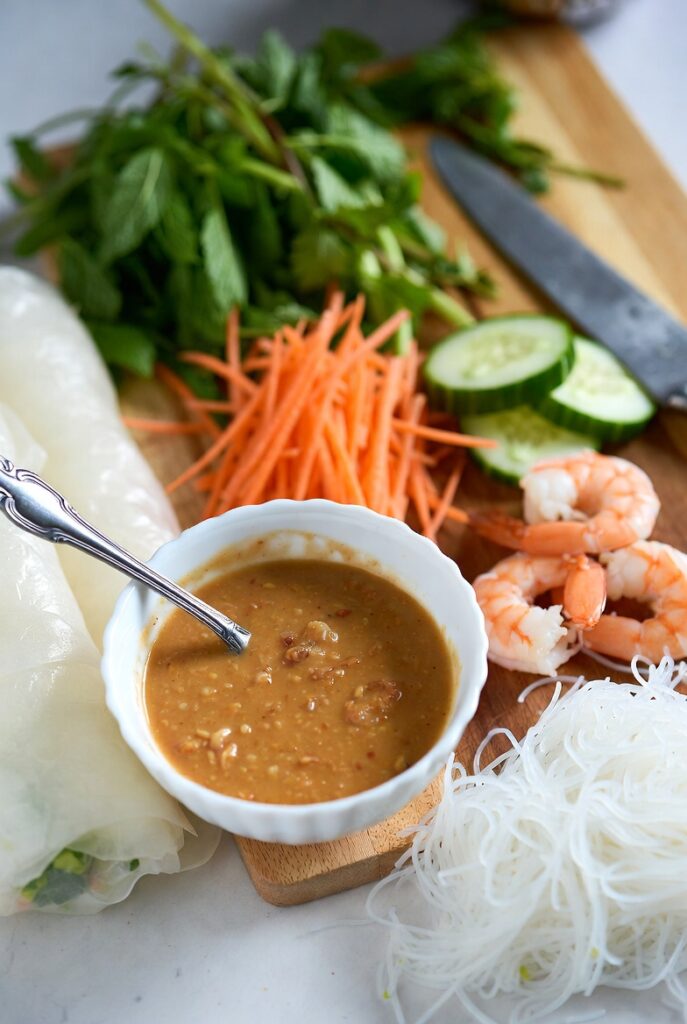
The simplicity of Vietnamese Fresh Spring Rolls with Peanut Sauce means there is nowhere for subpar ingredients to hide.
The Wrapper & Filler
- Rice Paper Discs: 22cm is the standard size for Vietnamese Fresh Spring Rolls with Peanut Sauce.
- Rice Vermicelli Noodles: These provide the “bulk” and a soft, neutral texture that absorbs the dipping sauce.
The Protein
- Shrimp: Large, deveined shrimp, boiled and halved lengthwise so they lay flat inside the Vietnamese Fresh Spring Rolls with Peanut Sauce.
- Tofu (Vegan Option): Pan-seared strips of extra-firm tofu marinated in soy and ginger.
The Aromatics (The Soul)
- Fresh Mint & Cilantro: These are not garnishes; they are primary ingredients.
- Thai Basil: Provides a subtle anise-like peppery note.
- Chives: Long strands used as a traditional visual garnish in Vietnamese Fresh Spring Rolls with Peanut Sauce.
6. The Peanut Sauce: The Essential Counterpoint
A Vietnamese Fresh Spring Rolls with Peanut Sauce experience is only as good as the dip. Traditional hoisin-peanut sauce is an emulsion of fermented soybean paste, creamy peanut butter, and acidity.
The secret to a professional-grade sauce for your Vietnamese Fresh Spring Rolls with Peanut Sauce is a touch of coconut milk or water to loosen the texture, and a dash of Sambal Oelek for a background heat that cuts through the richness of the peanuts. This sauce provides the savory, fatty “anchor” to the otherwise light and airy rolls.
7. Step-by-Step Instructions: The Signature Assembly
Step 1: Prep the Noodles and Shrimp
Boil the vermicelli for 3 minutes, then rinse in cold water to stop the cooking and prevent sticking. Boil the shrimp until pink, then slice them down the middle so you have two thin halves. This ensures your Vietnamese Fresh Spring Rolls with Peanut Sauce aren’t too bulky.
Step 2: Organize the Station
Line up your shrimp, noodles, herbs, and julienned cucumbers in the order they will be placed on the paper.
Step 3: Hydrating the Paper
Dip a sheet of rice paper into the warm water for only 5–7 seconds. It should still feel slightly firm as you lay it on the board; it will continue to soften as you add the ingredients for the Vietnamese Fresh Spring Rolls with Peanut Sauce.
Step 4: The Layering Logic
On the bottom third of the paper, place 2–3 shrimp halves (orange side down). Top with a small bundle of noodles, mint, and cucumber. Placing the shrimp first ensures they are the first thing visible through the paper of your Vietnamese Fresh Spring Rolls with Peanut Sauce.
Step 5: The Roll
Fold the bottom edge over the filling, then fold in both sides. Roll tightly away from you, keeping the tension firm to avoid air pockets.
The Pro Move: Halfway through rolling, tuck in two long strands of chives so they poke out of the end for that classic Vietnamese Fresh Spring Rolls with Peanut Sauce look.
Step 6: Crafting the Sauce
In a small pan, simmer hoisin sauce, peanut butter, minced garlic, and a splash of water. Whisk until smooth and top with crushed roasted peanuts.
8. Expert Tips and Variations
- The “Tear” Fix: If your rice paper tears, don’t panic. Simply dip another sheet and double-wrap the roll. It adds a bit more chew but saves the Vietnamese Fresh Spring Rolls with Peanut Sauce.
- Vegetable Variety: Add shredded red cabbage or julienned mango for a color pop and a sweet-tart contrast.
- The Vegan Swap: Replace shrimp with blanched asparagus or marinated tempeh to keep your Vietnamese Fresh Spring Rolls with Peanut Sauce completely plant-based.
9. Storage and Meal Prep
Because rice paper dries out quickly, Vietnamese Fresh Spring Rolls with Peanut Sauce are best enjoyed within 2 hours of assembly.
- Refrigeration: If you must store them, wrap each roll individually in plastic wrap to prevent them from sticking together and tearing.
- The Damp Towel Trick: Keep a damp paper towel over the plate of finished Vietnamese Fresh Spring Rolls with Peanut Sauce to maintain the humidity of the rice paper.
- Sauce Longevity: The peanut sauce can be made 5 days in advance and stored in an airtight jar.
10. Frequently Asked Questions (FAQ)
Q: Why is my rice paper gummy?
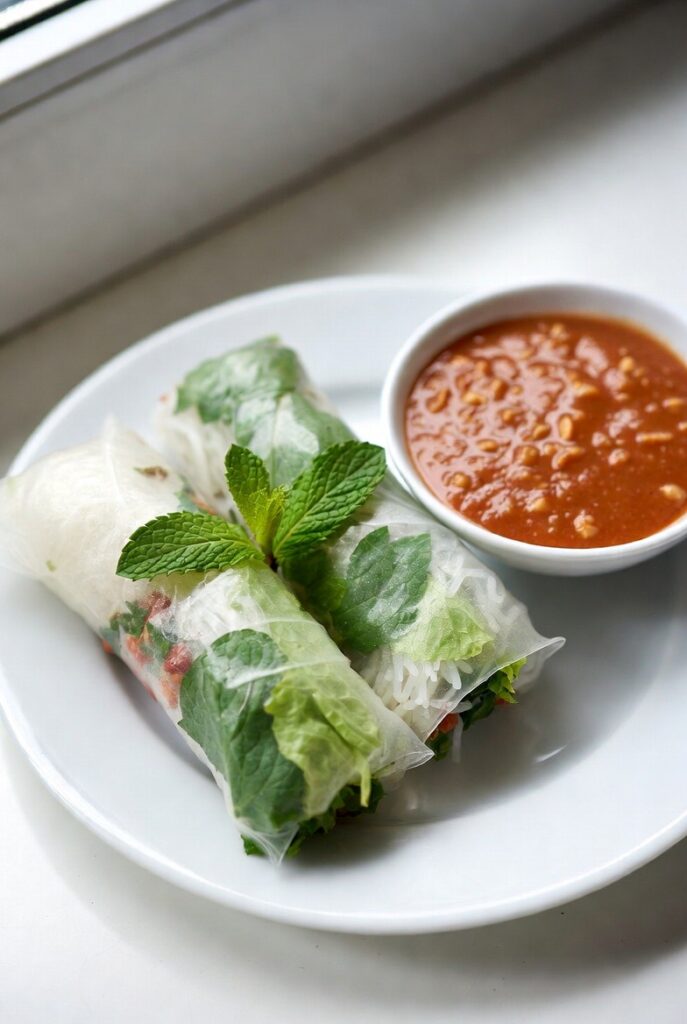
A: You likely soaked it for too long or used water that was too hot. Aim for “lukewarm” and a quick 5-second dip for the best Vietnamese Fresh Spring Rolls with Peanut Sauce texture.
Q: Can I use different noodles?
A: While vermicelli is traditional, you can use glass noodles (mung bean threads), though they are more slippery and harder to roll.
Q: Is this dish Keto-friendly?
A: No, rice paper and vermicelli are high in carbohydrates. For a low-carb version of Vietnamese Fresh Spring Rolls with Peanut Sauce, use large collard green or butter lettuce leaves.
11. Nutritional Information
(Per 2-roll serving with sauce)
| Nutrient | Amount |
| Calories | 310 kcal |
| Protein | 14g |
| Total Fat | 11g |
| Carbohydrates | 39g |
| Fiber | 4g |
| Sodium | 480mg |