1. Introduction: The Architecture of the “Nutrient-Dense Pivot”
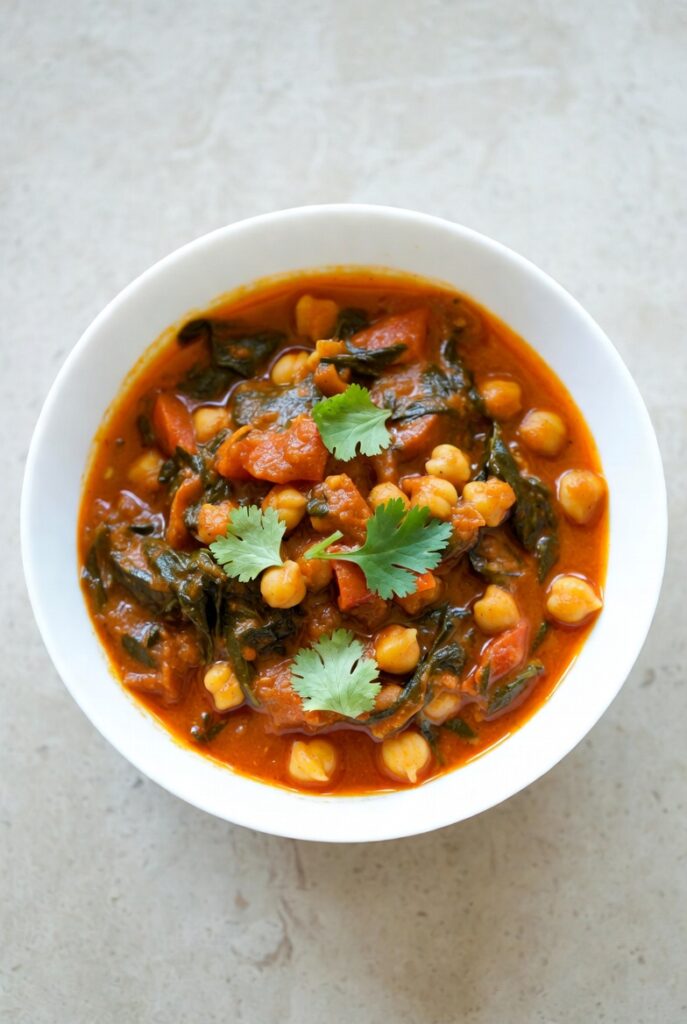
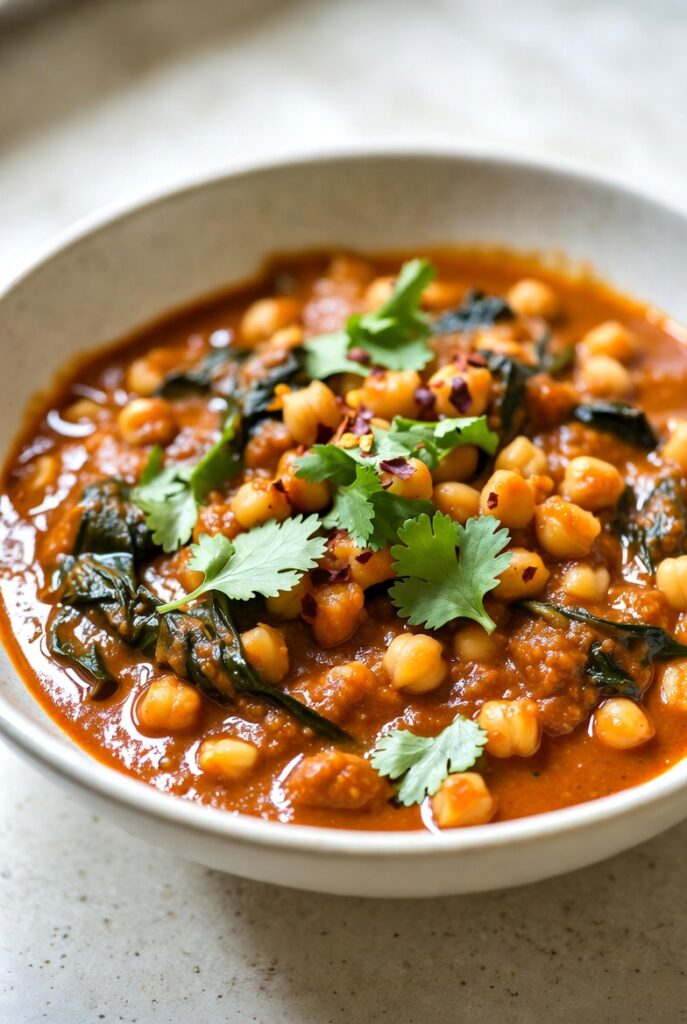
In the high-speed ecosystem of the modern kitchen, where time is a finite resource and nutritional density is a non-negotiable requirement, the Quick Chickpea and Spinach Curry represents the ultimate “Utility Pivot.” Often referred to in traditional circles as a variation of Chana Saag, this dish rejects the multi-hour simmering times of slow-cooked Indian stews in favor of “Aromatic Immediacy” and “Structural Simplicity.” This contemporary draft is a study in “Legume-Fiber Balance”—pairing the dense, earthy protein of chickpeas with the vibrant, mineral-rich “flash-wilt” of baby spinach. The brilliance of this dish lies in its “Zero-Friction” flow. By utilizing the time it takes for a pot of basmati rice to steam to construct a “Flash-Base” of aromatics and spices, we eliminate the need for a secondary prep phase. For the high-performance professional, the exhausted parent, or the athlete seeking rapid recovery fuel, this is the “Platinum Standard” of weeknight dining: it is high-fiber for digestive stability, rich in plant-based protein for muscle repair, and delivers a massive dose of Vitamin K and iron. It is a dish that understands that “Gourmet” is not a measure of time, but a measure of chemical precision.
2. The Science of the “Spiceline Bloom”
To master this 15-minute meal, one must look past the list of ingredients and understand the behavior of Fat-Soluble Aromatics. Many amateur cooks make the “Sequential Error” of adding dried spices directly into a liquid base (like tomato sauce or water). This creates a “Muddy” and “Grainy” flavor profile because the essential oils locked within spices like cumin, turmeric, and garam masala are hydrophobic—they do not dissolve in water.
The secret to a professional-grade result is “The Bloom.” When ground spices are introduced to a hot lipid (coconut oil, ghee, or avocado oil), their volatile compounds are released and stabilized. This creates a “Vibrant Top-Note” that permeates the entire dish. As the chickpeas are subsequently added, they act as “Structural Sponges,” absorbing the bloomed aromatics into their starchy cores. This ensures that every bite is “Aromatically Saturated” without requiring hours of reduction. This is the difference between a “Dull Stew” and a “High-Resolution Curry.”
3. Recipe Overview: The Master Blueprint
- Cuisine Type: Modern Indian Fusion / Performance Utility
- Difficulty Level: Very Easy (Precision timing focus)
- Total Preparation Time: 5 Minutes
- Total Cooking Time: 10 Minutes
- Total Time: 15 Minutes
- Dietary Classifications: Vegan, Gluten-Free, High-Fiber, Low-Glycemic.
- Yield: Serves 2 to 3
4. Equipment and Tools: The Essentials of “Flash-Conduction”
- 12-inch Deep Skillet or Sauté Pan: The wide surface area is essential for rapid moisture evaporation and providing the “Tossing Volume” required for four cups of spinach.
- Microplane: For achieving an “Aromatic Paste” of ginger and garlic in seconds, maximizing the surface area for the “Bloom Phase.”
- Silicone Spatula: For scraping the “Fond” (the browned bits) from the bottom of the pan to reclaim every molecule of umami.
5. Ingredients Section: Sourcing for Vibrancy
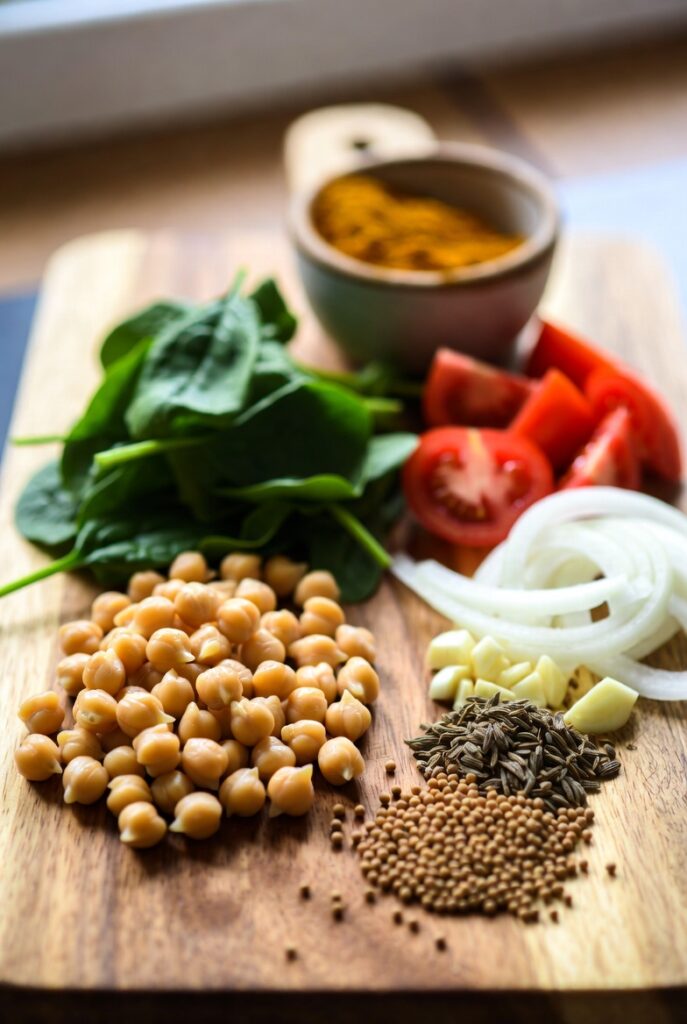
In a dish with minimal components, the “Integrity” of the legumes and the “Peak Freshness” of the greens determine the final quality.
The Starch Anchor
- Canned Chickpeas: 1 can (15 oz/400g). Chickpeas provide the “Fibrous Scaffold” and approximately 15g of plant-based protein. Rinsing them is critical to remove excess sodium and metallic “can-notes.”
The “Aromatic Lipid” Base
- Coconut Oil: 1 tbsp. High-quality fats provide the “Lipid Delivery Vehicle” for the spices. Coconut oil adds a “Tropical Depth” that complements the curry profile.
- Aromatics: 1 small yellow onion (finely diced), 3 cloves garlic (minced), 1 tbsp fresh ginger (grated).
- Spice Matrix: 1 tsp Cumin, 1 tsp Turmeric, 1 tsp Garam Masala, 1/2 tsp Chili Flakes (for the “Capsaicin Spark”).
The “Velvet” Finish
- Baby Spinach: 4–5 cups, fresh. Spinach is $90\%$ water, providing “Volumetric Fiber” without adding heavy calories.
- Coconut Milk (Full Fat): 1/2 cup. This provides the “Silky Mouthfeel” and helps stabilize the spice heat.
- Fresh Lime: 1/2 lime. The “Acidic High-Note” that brightens the earthy legumes.
6. The “Parallel-Cooking” Protocol
The most common failure in 15-minute meals is “Sequential Lag”—the habit of waiting for one ingredient to fully brown before prepping the next. To achieve a “Master Draft” finish, you must utilize the “Parallel-Cooking Protocol.”
The moment the onions hit the hot oil, your “Flavor Clock” begins. While the onions undergo their “Sugar-Browning” (Maillard reaction), you are microplaning your ginger and garlic. While the spices are blooming, you are rinsing your chickpeas. This ensures a continuous flow of “Thermal Activity,” resulting in a dish where the textures are tiered—the chickpeas remain firm, the onions are soft, and the spinach is “Jade-Green” rather than gray.
7. Deep Dive: Iron Absorption and the “Vitamin C Bridge”
Why is Quick Chickpea and Spinach Curry a strategic nutritional choice for the health-conscious? It centers on the Bioavailability of Non-Heme Iron. Plant-based iron (found in chickpeas and spinach) is naturally more difficult for the human body to absorb than the “Heme” iron found in red meat.
By finishing the dish with a squeeze of fresh Lime Juice (Vitamin C), you are initiating a “Chemical Bridge.” Vitamin C transforms the ferric iron into a more soluble ferrous form, allowing your body to absorb up to 300% more iron than if the dish were consumed without the acid. This is “Nutritional Engineering” disguised as a simple flavor enhancement—maximizing the health ROI (Return on Investment) of every leaf of spinach.
8. Step-by-Step Instructions: The Master Blueprint
Step 1: The Aromatic Foundation
Heat the coconut oil in your skillet over medium-high heat. Add the onion and a pinch of salt. Sauté for 3–4 minutes. We are looking for “Translucency,” not deep caramelization. Add the garlic and ginger for the final 60 seconds of this phase.
Step 2: The Spiceline Bloom
Add the cumin, turmeric, garam masala, and chili flakes. Stir constantly for 45 seconds. The oil should turn a “Vibrant, Earthy Orange.” This indicates the oils have successfully “Bloomed.”
Step 3: The Protein Infusion
Add the drained chickpeas. Toss for 2 minutes. We want the exterior of the chickpeas to “Toast” slightly in the spice-oil, which locks in the aromatics.
Step 4: The Velvet Emulsion
Pour in the coconut milk. Use your spatula to scrape the bottom of the pan to release the “Fond.” Bring to a light simmer for 2 minutes. The sauce will begin to thicken as the chickpea starches interact with the coconut lipids.
Step 5: The “Jade-Green” Finish
Add the 4–5 cups of baby spinach. It will look like an overwhelming amount of greens, but don’t panic. Use tongs to fold the greens into the hot sauce. Turn off the heat immediately. The residual thermal energy of the curry will “Flash-Wilt” the spinach in 30–45 seconds, preserving its Vitamin C content and color.
Step 6: The Final Polish
Squeeze the fresh lime juice over the pan. This provides the “Saline-Acidic balance” required to lift the earthy notes of the turmeric. Serve immediately over basmati rice or with warm whole-wheat naan.
9. Satiety and the “Glucose-Lipid” Buffer
This curry is engineered for “Stable Satiety.” Chickpeas are high in Resistant Starch, which acts as a prebiotic and provides a slow release of glucose into the bloodstream. By pairing these complex carbs with the healthy fats in coconut milk and the high-fiber volume of spinach, you are effectively slowing down the Gastric Emptying Process.
This creates a “Flattened Glucose Curve,” providing you with 3–4 hours of sustained mental energy without the “Carb Crash” or lethargy often associated with processed meals. It is “Clean Fuel” for a high-intensity life.
10. Modular Customization: The “Base” Options
The “Master Draft” is designed for 15-minute efficiency, but it is a highly flexible template:
- The “Protein” Fortification: Add a handful of cashews or hemp seeds during Step 5 for an “Amino Acid Boost” and textural crunch.
- The “Tomato” Pivot: Add 2 tbsp of tomato paste during Step 2 (The Bloom) for a “Rich Umami” depth and a thicker sauce.
- The “Sweet” Counterpoint: Stir in a small handful of golden raisins at the end to balance the chili flakes with “Fructose Brightness.”
11. Storage and Reheating: The “Starch-Settling” Problem
- Refrigeration: Store in an airtight glass container for up to 3 days.
- The Reheat: Legume-based curries tend to “tighten” in the fridge as the starches set. To restore the “Velvet Standard,” do not use the microwave on high power. Instead, reheat in a skillet with a splash of water or extra coconut milk to “re-loosen” the emulsion.
12. Frequently Asked Questions (FAQ)
Q: Can I use frozen spinach?
A: Affirmative. However, frozen spinach is much denser than fresh. Use approximately 1 cup of frozen, thawed, and squeezed spinach to replace the 5 cups of fresh. Note that you will lose the “Vibrant Green” aesthetic.
Q: Why is my curry bitter?
A: This usually happens if the spices are “scorched” during the Bloom Phase (Step 2). Ensure the heat is not at a “Screaming High” and keep the spices moving.
Q: Is coconut milk mandatory?
A: No. You can use Greek yogurt for a “Tangy, High-Protein” finish, or vegetable broth for a “Light, Low-Calorie” version. However, the coconut milk provides the best “Lipid Buffer” for the spice heat.
13. Nutritional Information
(Per serving – approx. 1.5 cups)
| Nutrient | Amount |
| Calories | 310 kcal |
| Protein | 12g |
| Total Fat | 14g |
| Net Carbs | 32g |
| Fiber | 9g |
| Vitamin K | 180% DV |
14. Summary: The Master Draft of High-Velocity Utility
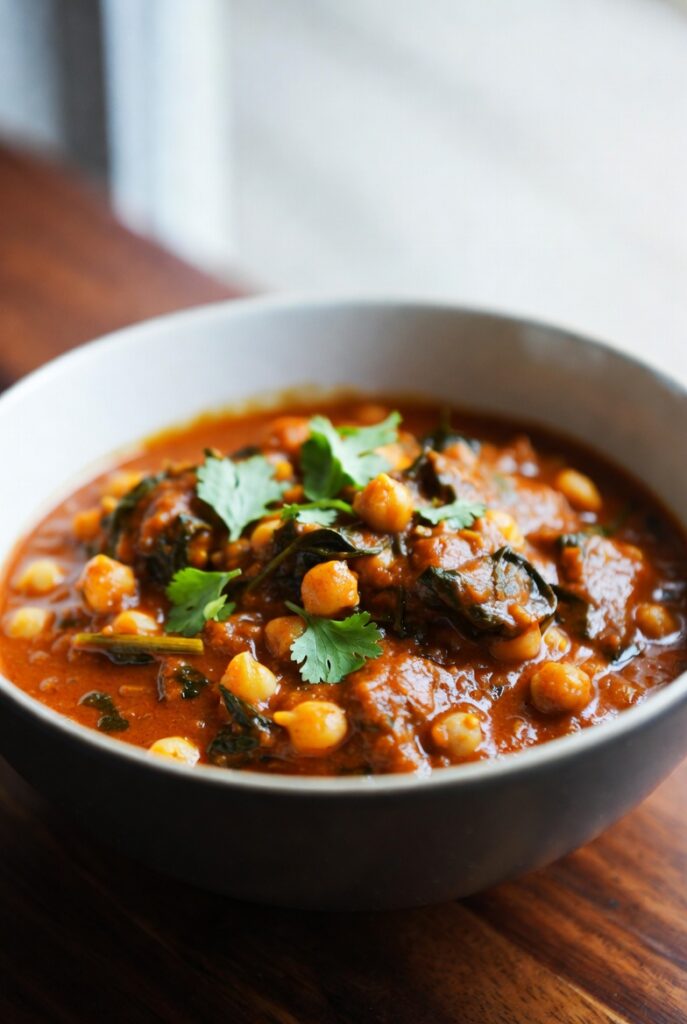
The Quick Chickpea and Spinach Curry is more than a recipe; it is a system for “Sensory Maximization through Efficiency.” It proves that “Healthy Eating” does not require a sacrifice of time or a litany of expensive, niche ingredients. By mastering the “Spiceline Bloom” and the “Parallel-Cooking Protocol,” you are unlocking a new dimension of kitchen capability.
It is a dish that honors the body’s need for micronutrients and the mind’s need for culinary satisfaction, all while respecting the constraints of a modern schedule. It is the ultimate fuel for a high-performance life, delivered in a “Jade-Green” and “Turmeric-Gold” package.