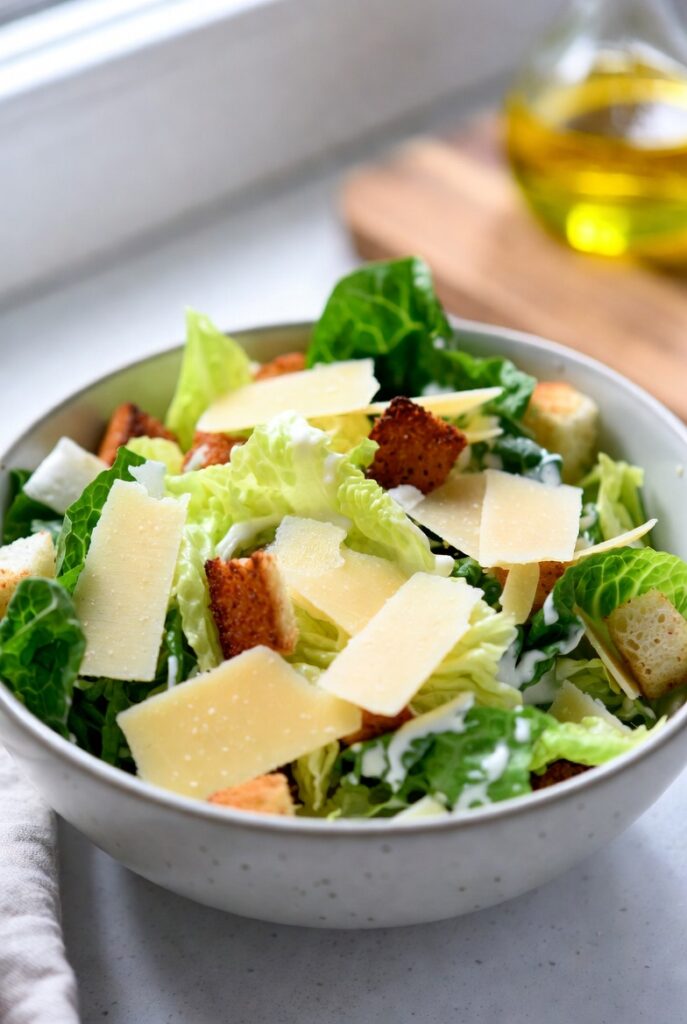
The Caesar salad occupies a unique place in the culinary world. It is simultaneously one of the most recognizable, beloved, and—frequently—disappointing dishes you can order at a restaurant. When prepared with care, using high-quality ingredients and the proper technique, it transcends the category of “side salad” to become a centerpiece of the meal. It is a harmonious balance of salty, creamy, crunchy, and bright flavors that satisfy the palate in a way few other salads can.
This guide is dedicated to the art of the perfect, authentic Caesar salad. We will move past the bottled dressings and the soggy, uninspired versions found in many kitchens, and instead explore how to craft a Caesar that is vibrant, deeply flavorful, and perfectly composed. Whether you are hosting a dinner party or simply craving the ultimate comfort meal, this guide will provide you with the tools and techniques to elevate the Caesar to its rightful place as a culinary masterpiece.
1. The History and Essence of the Caesar
The Caesar salad is a testament to the idea that simplicity, when executed with precision, creates excellence. Originating in the early 20th century—most famously attributed to Caesar Cardini in Tijuana, Mexico—the salad was born of a moment of necessity. Using whatever ingredients he had on hand, Cardini created a dish that prioritized freshness and boldness.
At its core, the Caesar is defined by a specific set of flavor pillars:
- The Funk: Derived from the salt-cured anchovy.
- The Tang: The sharp bite of fresh lemon and pungent garlic.
- The Umami: Provided by the aged, salty Parmigiano-Reggiano.
- The Creaminess: Traditionally, this comes from the emulsification of egg yolk and oil, not from heavy mayonnaise or cream additives.
- The Crunch: Ideally provided by freshly toasted, garlic-infused croutons and crisp, cold Romaine hearts.
When these elements are in balance, the result is a salad that feels luxurious despite its humble origins.
2. Choosing Your Ingredients: The Quality Gap
You cannot make a restaurant-quality Caesar salad with subpar ingredients. Because there are so few components, each one carries a heavy burden of flavor.
The Greens: Romaine Hearts
The backbone of the salad is Romaine hearts. You want the inner, paler leaves that are naturally crisper and more tender than the outer, darker green leaves. These inner leaves have a satisfying “snap” that holds up well against a rich dressing. Avoid using pre-bagged, shredded lettuce; it lacks the necessary texture and often has a metallic or stale quality.
The Anchovies
Do not skip the anchovies. Even if you consider yourself an “anchovy hater,” you must include them in the dressing. They don’t make the salad taste “fishy”; they provide the essential savory, umami-rich foundation that makes a Caesar taste like a Caesar. Look for high-quality anchovy fillets packed in olive oil rather than salt-packed ones, which require more prep time.
The Cheese: Parmigiano-Reggiano
This is not the time for pre-shredded parmesan in a shaker can. You need a wedge of authentic, aged Parmigiano-Reggiano. It should be firm, nutty, and slightly salty. When shaved or finely grated, it adds a complexity that binds the dressing to the leaves.
The Eggs
For the most authentic texture, raw or lightly coddled egg yolks are the emulsifier. If you are concerned about raw eggs, use high-quality, pasteurized eggs, or look for specific methods to gently heat the yolks to create a safe, thick custard base for your dressing.
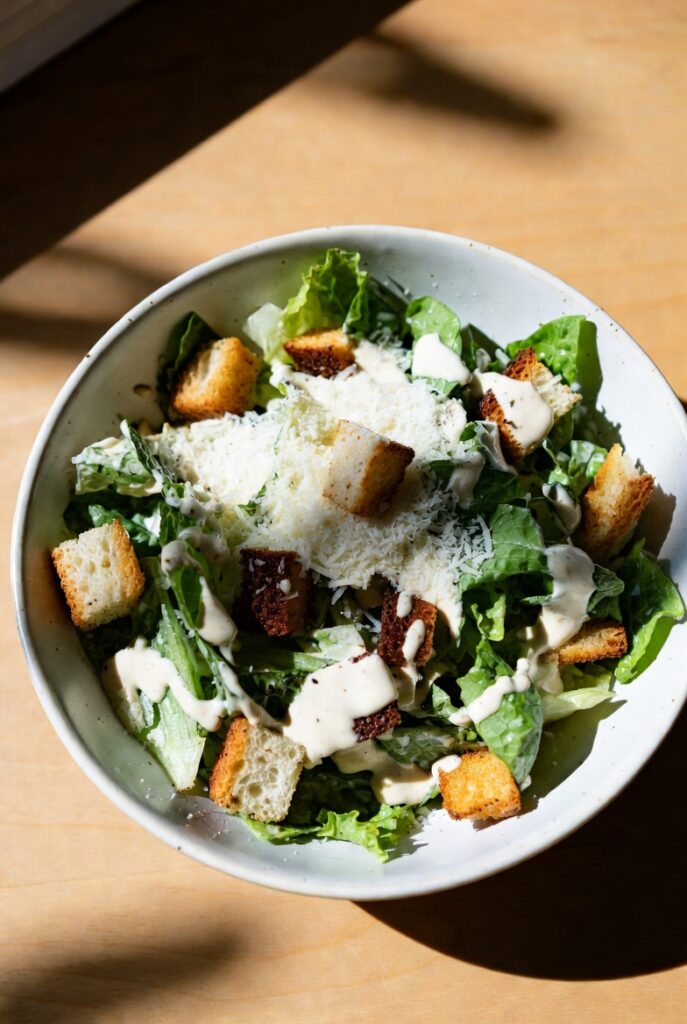
3. The Dressing: A Step-by-Step Approach
The dressing is the soul of the Caesar. The goal is a velvety, glossy coating that clings to the leaves without pooling at the bottom of the bowl.
Creating the Base
Start by mincing two cloves of garlic and four anchovy fillets. Using a knife, smear these into a smooth paste with a pinch of coarse sea salt. This paste is the flavor-concentrate of your dressing.
In a medium mixing bowl, combine your garlic-anchovy paste with one teaspoon of Dijon mustard and the juice of one large, fresh lemon. Whisk these ingredients together until they form a cohesive base.
Emulsification
Add two egg yolks to the bowl. Whisk vigorously for about 30 seconds until the mixture is uniform. Now, begin the most important step: adding the oil. You will need roughly 3/4 cup of a high-quality neutral oil (like grapeseed) or a very light olive oil.
Add the oil to the bowl literally drop by drop while whisking continuously. If you pour too quickly, the oil will separate, and you will have a broken sauce. As the emulsion takes hold and the mixture begins to thicken, you can increase the flow of oil to a very thin, steady stream.
Once the emulsion is thick, pale, and glossy, stir in 1/2 cup of finely grated Parmigiano-Reggiano and a generous amount of freshly cracked black pepper. Taste it—it should be sharp, salty, and incredibly savory. Adjust the lemon juice if it needs more brightness.
4. The Croutons: Beyond the Bag
Store-bought croutons are often rock-hard and overly seasoned with artificial flavors. Making your own takes less than ten minutes and transforms the salad.
Use a hearty loaf of sourdough or country bread. Tear the bread into bite-sized, rustic chunks rather than perfectly square cubes; the irregular edges create more surface area for browning and holding the dressing.
Toss the bread chunks in a generous amount of good olive oil, salt, and freshly cracked pepper. Spread them on a baking sheet and bake at 375°F (190°C) until they are golden brown and crisp on the outside, but still have a slight “chew” in the very center.
For an extra layer of flavor, toss the warm, freshly baked croutons in a little bit of minced garlic and parsley immediately after removing them from the oven.
5. Assembly: The Final Act
The biggest mistake people make with Caesar salad is “drowning” it. The goal is to coat the leaves, not to submerge them.
Place your washed, thoroughly dried, and torn Romaine hearts into a very large mixing bowl. Add a small amount of the dressing at a time. Using your hands or large tongs, toss the leaves gently, ensuring every single fold and crinkle of the lettuce is lightly coated.
Add the croutons and a handful of shaved Parmigiano-Reggiano. Toss one last time. Plate the salad immediately. A Caesar salad loses its magic within ten minutes of being dressed, as the acid in the lemon juice begins to wilt the delicate leaves. Serve it while the greens are still chilled and crisp.
6. Pairing and Variations
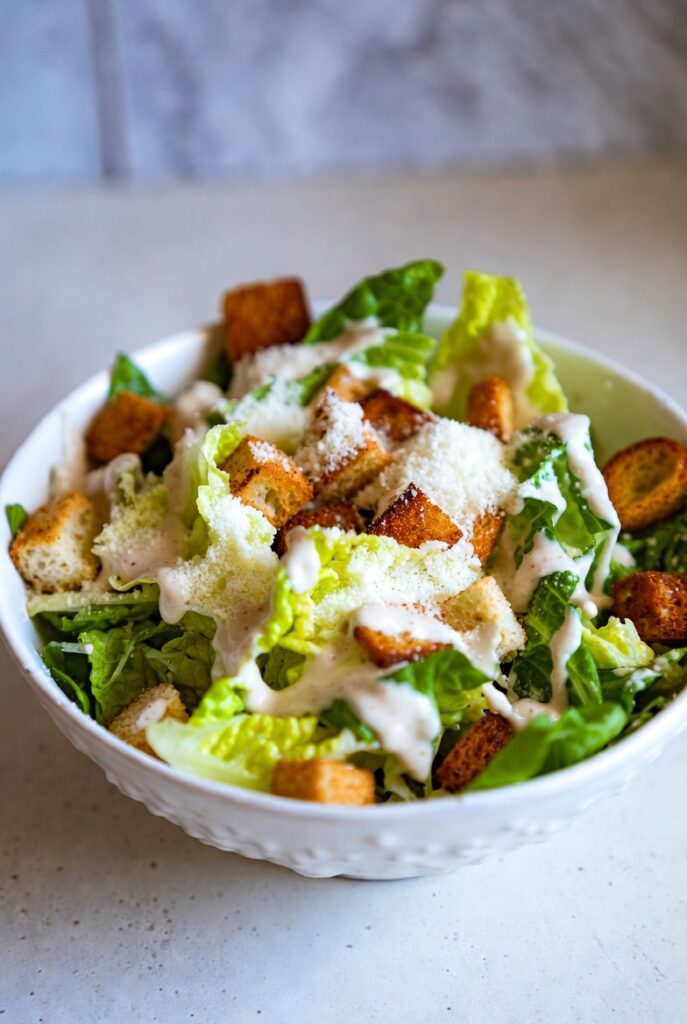
While the classic Caesar is a meal in itself, it also pairs beautifully with grilled proteins. A simple grilled chicken breast, a seared salmon fillet, or even grilled shrimp can turn a side salad into a robust main course.
If you want to experiment, you can add nuances:
- The Spicy Caesar: Add a dash of Worcestershire sauce or even a tiny amount of Calabrian chili paste to the dressing.
- The Grilled Caesar: Lightly grill the Romaine hearts for 30 seconds before dressing. The smokiness adds an incredible dimension to the flavor.
- The Seasonal Caesar: During the summer, add halved cherry tomatoes or shaved radishes for extra color and crunch.
7. Common Pitfalls to Avoid
Many home cooks struggle with Caesar salad because they attempt to rush the process. Here are a few tips to ensure success:
- Don’t skip the drying: Wet lettuce is the enemy. If your lettuce is damp, the oil-based dressing will slide right off, leaving you with watery leaves and a dressing-slicked bowl. Use a spinner.
- Temperature matters: Serve the salad on cold plates. If you have the time, put your salad bowls in the refrigerator for 20 minutes before plating. The contrast of cold greens and warm, fresh croutons is professional-level service.
- Taste as you go: Every lemon is different; some are more acidic than others. Every brand of Parmesan has a different salt level. Never finish your dressing without tasting it. If it feels “flat,” add a squeeze of lemon or a pinch more salt.
- Don’t over-dress: It is always easier to add more dressing than to fix a salad that is swimming in it. Start with less than you think you need.
8. Why the Caesar Stays Relevant
The reason the Caesar salad has remained a menu staple for nearly a century is that it hits the “craveable” markers of human taste buds perfectly. We are biologically wired to enjoy the combination of fat (the oil and yolks), salt (the anchovy and cheese), and acid (the lemon), all wrapped in a fresh, crunchy delivery system.
When you make a Caesar salad from scratch, you aren’t just making a side dish. You are honoring a culinary tradition. You are taking simple, raw ingredients and, through the act of emulsification and seasoning, creating something that is greater than the sum of its parts. It requires patience, yes, but the reward is a salad that feels like a celebration.
9. Conclusion
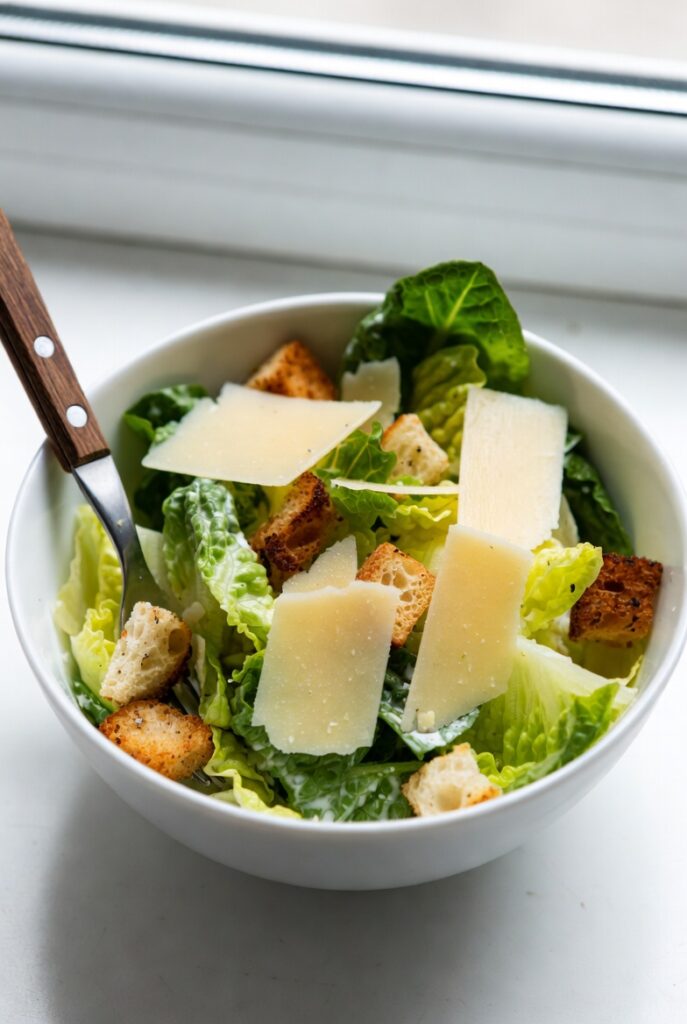
Making a Caesar salad from scratch is a rite of passage for any home cook. It forces you to pay attention to the details: the freshness of your lemon, the quality of your oil, and the temperature of your greens. Once you have tasted the difference that a house-made dressing and freshly toasted croutons make, you will find it nearly impossible to go back to the convenience of store-bought versions.
The Caesar is more than just a recipe; it is a ritual. It is the practice of taking a moment to build flavor, layer by layer, until you have something truly satisfying. Enjoy the process as much as the final result, and don’t hesitate to share the experience—because a Caesar salad, much like good conversation, is best when shared.