1. Introduction: The Architecture of “Geometric Crispness”
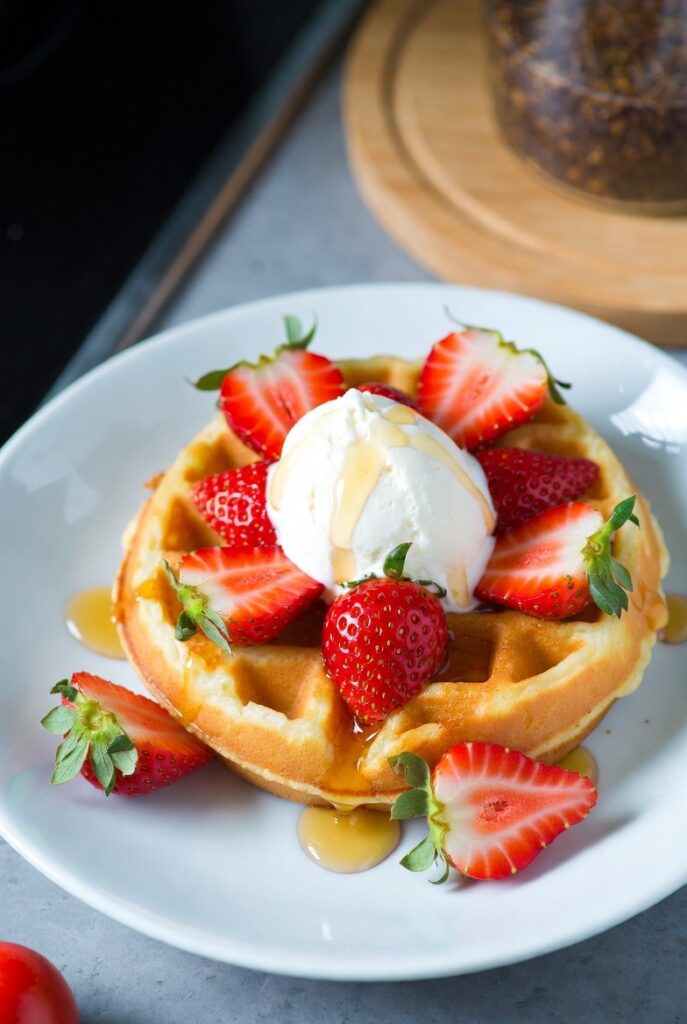
In the specialized taxonomy of breakfast engineering, the Homemade Waffle represents the peak of “Surface-Area Optimization.” Unlike a pancake, which is a two-dimensional heat-transfer exercise, the waffle utilizes a “Toroidal Lattice” (the grid) to maximize the contact point between the batter and the radiant heat of the iron. This creates a high ratio of “Structural-Crunch” to “Cloud-Soft” interior.
This document serves as the “Master Specification” for the dish. We move beyond the rudimentary “just-add-water” logic and enter the realm of “Dual-Action Aeration.” By utilizing both chemical leavening and mechanical whipped-protein techniques, we create a result that is “Vapor-Light” and “Glistening-Gold.” For the high-performance weekend host, this is the “Platinum Standard” of culinary utility.
2. The Science of “Thermal Crystallization”
To master the Best Homemade Waffle, one must understand the behavior of Starch Gelatinization and Lipid-Crisping.
- The Cornstarch Variable: Replacing a portion of the flour with cornstarch (an amylose-heavy starch) inhibits gluten development. This ensures that the waffle remains crisp for a longer duration, preventing the “Steam-Softening” that occurs as the waffle cools.
- The Buttermilk Synergy: The lactic acid in buttermilk reacts with baking soda to create an immediate release of $CO_2$. This “Chemical-Lift” provides the initial expansion within the iron’s chambers.
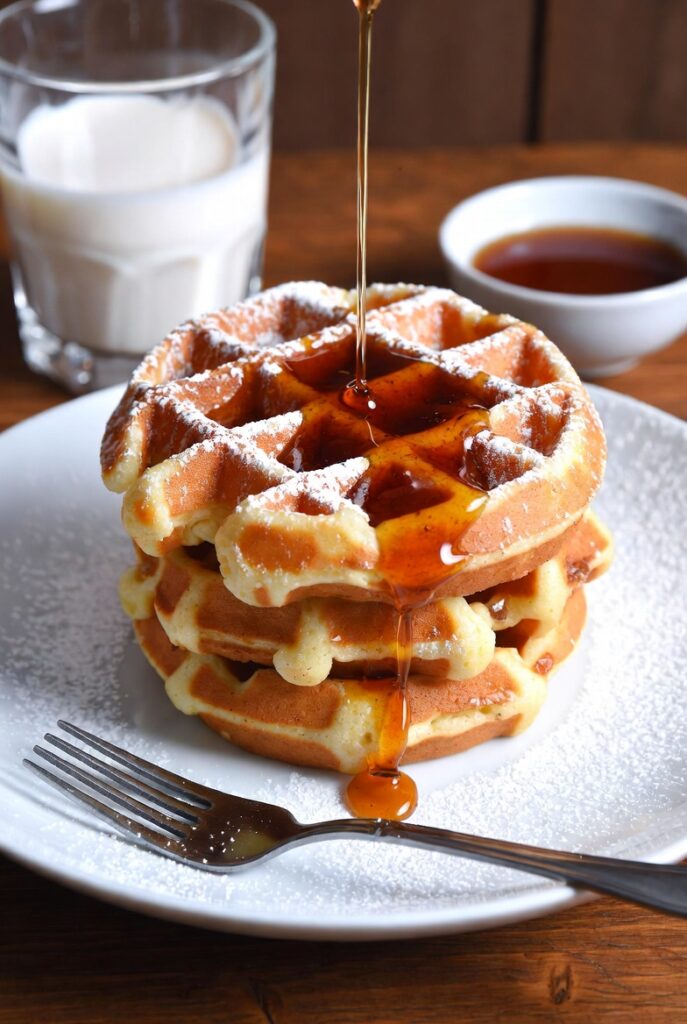
- The Lipid-Barrier: Melted butter doesn’t just provide flavor; it creates a “Hydrophobic Barrier” on the surface of the lattice, preventing the syrup from immediately soaking into the crumb and maintaining the “Structural-Crunch.”
3. The Blueprint Overview: Technical Specifications
- Cuisine Type: Modern American / Culinary Engineering
- Difficulty Level: Medium (Focus on “Protein Folding”)
- Total Preparation Time: 20 Minutes
- Total Cooking Time: 20 Minutes (Variable by Iron)
- Total Time: 40 Minutes
- Dietary Classifications: High-Carbohydrate, Vegetative-Comfort.
- Yield: 6–8 Large Belgian Waffles
4. Equipment and Tools: The Essentials of “Radiant Mass”
- High-Output Waffle Iron: A Belgian-style iron with deep pockets is preferred for maximum volume.
- Electric Hand Mixer: Mandatory for achieving “Stiff-Peak” egg white stability.
- Wire Cooling Rack: Critical. Never stack waffles on a plate; the steam will destroy the crispness.
- Two Large Mixing Bowls: To separate the “Starch Base” from the “Protein Foam.”
5. Ingredients Section: Sourcing for “High-Contrast” Resolution
The “Fat-to-Starch” ratio dictates the final “Sensory Resolution.”
The “Starch Scaffold” (Dry Mix)
- All-Purpose Flour: 1.5 cups (Sifted).
- Cornstarch: 1/2 cup (The “Crisp-Agent”).
- Granulated Sugar: 2 tbsp (Aids in the Maillard Reaction).
- Baking Powder: 1 tsp.
- Baking Soda: 1/2 tsp.
- Salt: 1/2 tsp.
The “Liquid-Emulsion” (Wet Mix)
- Buttermilk: 1.5 cups (Room temperature).
- Unsalted Butter: 1/2 cup (1 stick), melted and cooled.
- Large Eggs: 2 units (Separated).
- Vanilla Extract: 1 tsp.
6. The “Dual-Action” Protocol: Mastering the Volume
The primary failure point of a homemade waffle is “Doughy Density.” To achieve a “Master-Tier” result, you must utilize the “Phase-Separation Technique.”
- Phase 1 (The Base): Whisk the buttermilk, egg yolks, melted butter, and vanilla until smooth. Fold in the dry ingredients until just combined.
- Phase 2 (The Aeration): Whip the egg whites in a clean bowl until they reach “Stiff Peaks.” This creates a mechanical protein scaffold.
- Phase 3 (The Integration): Gently fold the egg whites into the base in two stages. The batter should look “Cloud-Like” and aerated.
7. Step-by-Step Instructions: The Master Execution
Step 1: The “Dry-Sift” Cycle
Sift the flour, cornstarch, sugar, leaveners, and salt. This removes lumps and ensures the cornstarch is evenly distributed through the starch scaffold.
Step 2: The “Emulsion Synthesis”
Follow the Dual-Action Protocol (Section 6). Do not over-mix Phase 1. Lumps in the batter are acceptable; over-mixing will result in a “Rubbery-Lattice” due to excessive gluten development.
Step 3: The “Thermal-Calibration”
Preheat your waffle iron to its highest setting. A hot iron is necessary to “Flash-Crystallize” the exterior starch before the interior dries out.
Step 4: The “Deployment”
Pour the batter into the center of the iron, spreading it slightly toward the edges. Close the lid immediately.
- The “Steam-Signal”: Watch the steam. When the steam stops escaping the sides of the iron, the internal moisture has evaporated sufficiently, and the waffle is likely done.
Step 5: The “Recovery” (Mandatory)
Remove the waffle and place it immediately on a Wire Cooling Rack. This allows air to circulate around the entire “Toroidal Lattice,” preventing the bottom from becoming soggy.
8. Satiety and the “Crunch-to-Crumb” Arc
Homemade Waffles provide a “High-Resolution Satiety” profile:
- The Volumetric Reward: The deep pockets hold more syrup and butter, increasing the “Flavor-Payload” per bite.
- The Structural-Satisfaction: The audible “Crunch” of the exterior provides a sensory feedback loop that signals satisfaction to the brain faster than soft textures.
- The Lipid-Anchor: The high butter content provides “Long-Form” energy that prevents a mid-morning sugar crash.
9. Frequently Asked Questions (FAQ)
Q: Why are my waffles soft?
A: You likely skipped the cornstarch or the Wire Cooling Rack. Stacking waffles creates a “Steam-Trap” that softens the starch lattice instantly.
Q: Can I make the batter ahead of time?
A: Technically negative. Once the egg whites are folded in, the air bubbles begin to collapse. For “Master-Tier” lift, the batter must be used within 20 minutes of synthesis.
Q: Can I use oil instead of butter?
A: Affirmative. Oil will technically make the waffle crispier, but you will lose the “Nutty-Aromatic” complexity of the butter. A 50/50 split is a viable “Hybrid-Draft.”
10. Conclusion: The Master Draft of Geometric Utility
The Lattice-Crunch Protocol is more than a recipe; it is a “Vessel for Intentional Synergy.” It proves that “Gourmet Results” can be achieved through the mastery of “Dual-Action Aeration” and “Starch Gelatinization.” By respecting the “Cornstarch Variable” and the “Recovery Method,” you are delivering a breakfast that is visually “Golden-and-Bold,” nutritionally dense, and sensorially perfect.