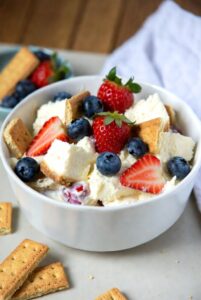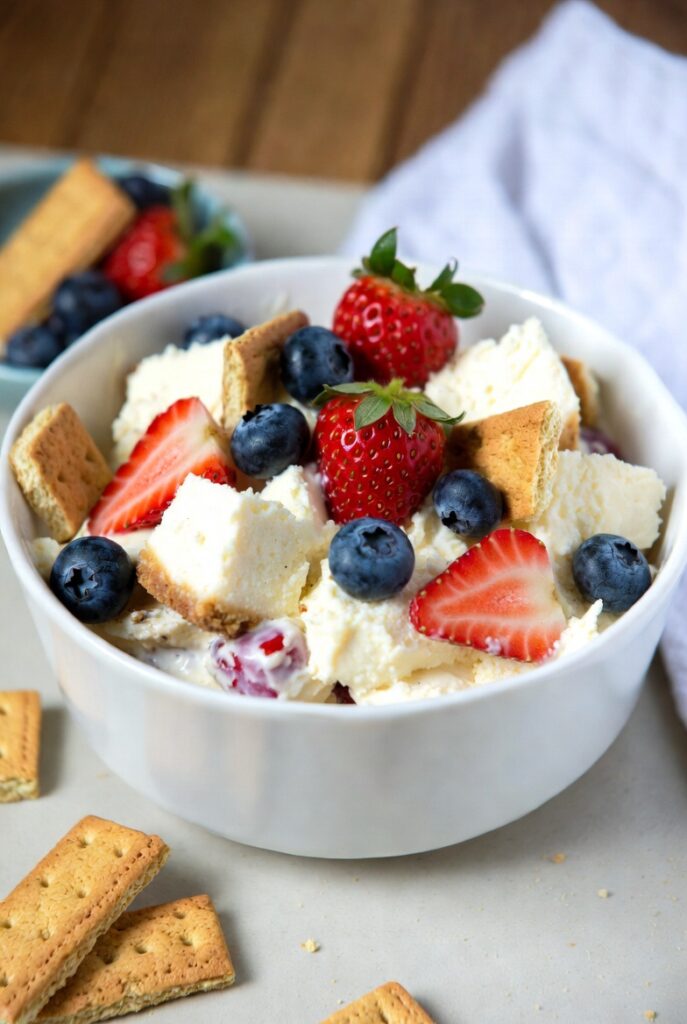
In the evolving landscape of modern confectionery, the Cheesecake Salad stands as a fascinating intersection of culinary logic. To the uninitiated, the term “salad” might seem a misnomer, yet in the taxonomy of dessert engineering, it represents a “Deconstructed-Emulsion Protocol.” We are effectively taking the constituent elements of a classic baked cheesecake—the tangy cream cheese, the sweet dairy, and the textural crunch—and reconfiguring them into a high-utility, bowl-based format that bypasses the need for structural baking.
This document serves as the “Technical Manifesto” for the Cheesecake Salad. We move beyond simple “mix-and-serve” logic and examine the mechanics of “Solute-Stable Aeration.” By balancing the lipid density of the cream cheese with the aqueous nature of fresh fruit, we create a dessert-salad that maintains its structural integrity without collapsing into a watery slurry. For the modern entertainer, this is the “Platinum Standard” of low-effort, high-impact confectionery.
1. The Science of “Solute-Stable Aeration”
To master the Cheesecake Salad, one must understand the behavior of Lipid-Based Suspensions. A standard cheesecake is held together by eggs and heat-coagulated proteins. A Cheesecake Salad, however, relies on the “Cold-Whip Stabilization” of dairy fats.
1.1 The Cream Cheese/Lipid Ratio
The foundation of a successful cheesecake salad is the “Emulsion-Base.” Cream cheese is a dense, acidic lipid. If introduced to high-water-content fruit (like strawberries or melon) without a stabilizer, the acidity will cause the fruit cells to rupture, leading to “Syneresis” (the separation of liquid from the fruit). We must stabilize the base with high-fat whipping cream and a sugar-buffer.
1.2 The “Hygroscopic-Buffer”
Fresh fruit releases water over time. To prevent this, we utilize a “Sugar-Coating Protocol.” By tossing the fruit in a light coating of powdered sugar or a dry pudding mix before folding it into the cream cheese mixture, we create an osmotic barrier that slows the leaching of fruit juices.
2. The Blueprint Overview: Technical Specifications
- Cuisine Type: Deconstructed American Dessert
- Difficulty Level: Low (Focus on “Texture-Alignment”)
- Total Preparation Time: 15 Minutes
- Total Cooling/Setting Time: 1 Hour (Optimal)
- Yield: 8–10 “Performance-Tier” Servings
- Dietary Classifications: High-Satiety, Indulgent, Refreshing.
3. Equipment and Tools: The Essentials of “Consistency Control”
- Stand Mixer with Whisk Attachment: Mandatory for achieving the “Maximum-Overrun” of the whipping cream.
- Silicone Spatula: For the “Gentle-Fold” integration of the fruit (prevents bruising).
- Digital Kitchen Scale: Vital for maintaining the precise ratio of solids to liquids.
- Large Mixing Bowl: Needs to be chilled to ensure the fat stays stable during the whipping process.
4. Ingredients Section: Sourcing for “Chromatographic” Brilliance
The “Fat-to-Fruit” ratio dictates the final “Sensory Resolution.”
4.1 The “Emulsion-Base”
- Full-Fat Cream Cheese: 450g (Room temperature—crucial for lump-free mixing).
- Heavy Whipping Cream (36%+ Fat): 250ml.
- Powdered Sugar (Sifted): 150g (The cornstarch in powdered sugar acts as a structural stabilizer).
- Vanilla Bean Paste: 2 tsp (Provides visual and aromatic depth).
- Sour Cream (Optional, for “Tang-Calibration”): 50g.
4.2 The “Textural-Payload”
- Fresh Fruit: 500g (Berries, grapes, or melon). Use firm-flesh fruit to maintain structural contrast.
- The “Crunch-Factor”: 100g (Crushed graham crackers, shortbread, or candied nuts).
- The “Aromatic-Finish”: Fresh mint or lemon zest.
5. The “Cold-Whip” Protocol: Mastering the Synthesis
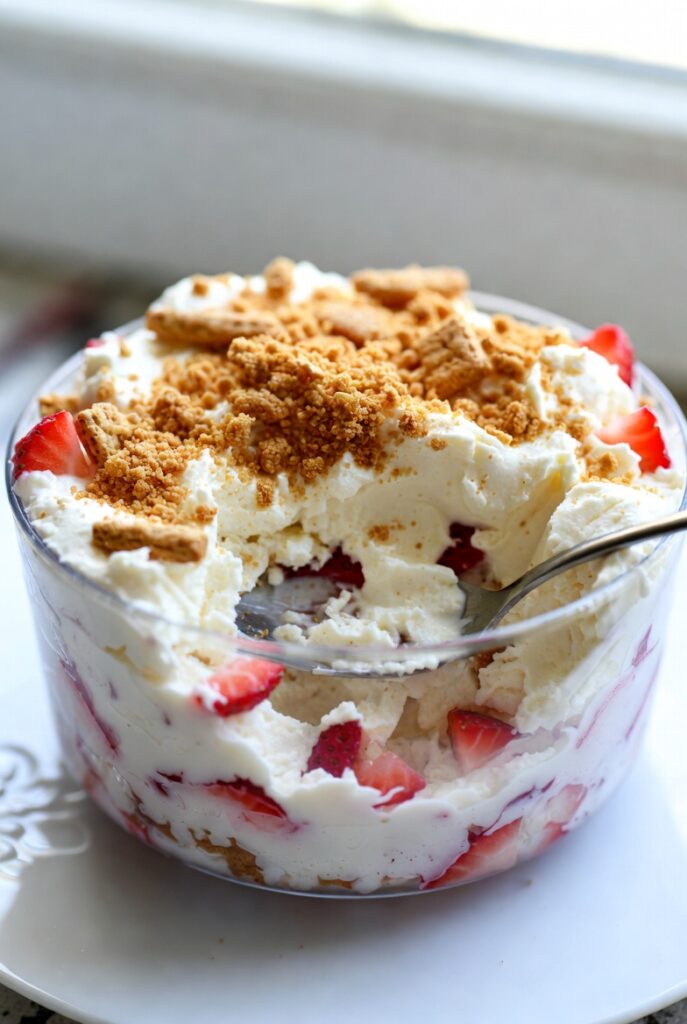
The primary failure point of a Cheesecake Salad is “Structural Collapse”—the mixture becomes runny or the fruit releases too much liquid. To achieve a “Master-Tier” result, utilize the “Incremental-Hydration Technique.”
Phase 1: The Lipid-Stabilization
Whip the heavy cream to “Stiff-Peak” consistency. This is the “Air-Scaffold” of your salad. Set aside. In a separate bowl, cream the room-temperature cream cheese and sugar until it reaches a “Velvet-Consistency” with no lumps.
Phase 2: The Emulsion-Synthesis
Fold the whipped cream into the cream cheese mixture in three stages. The first stage serves to “lighten” the dense cheese; the final two stages build the volume. This creates a stable “Mousse-Base.”
Phase 3: The “Solute-Integration”
The fruit and the crunch must be added at the last possible moment before serving. If you add the graham crackers or cookies too early, they will absorb moisture and become soggy.
6. Deep-Dive: Why the “Setting Phase” Changes Everything
Even without baking, this salad benefits from a “Cold-Crystallization Period.” Once assembled, refrigerate the base (without the crunch) for 30–60 minutes. This allows the milk fats in the cream cheese and whipping cream to undergo a minor phase transition, hardening slightly and giving the salad that “Classic-Cheesecake-Mouthfeel.”
7. Troubleshooting the Architecture: Common Failure Modes
- The salad is runny: You likely used a low-fat cream cheese or didn’t whip the cream sufficiently. Always use full-fat products for structural stability.
- The fruit is bleeding color: You didn’t dry the fruit thoroughly after washing. Water is the enemy of a Cheesecake Salad. Dry your berries on paper towels before assembly.
- The crunch is soft: You added the cookies too early. The “Crunch-Factor” should always be a “Top-Service” addition, not a “Pre-Mix” ingredient.
8. Advanced Customization: The “Flavor-Pivots”
- The “Black-Forest” Shift: Use cherries and dark chocolate shavings instead of mixed berries.
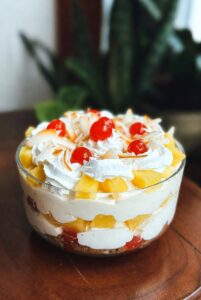
- The “Tropical-Resolution”: Swap the base sugar for coconut cream and use diced pineapple and mango.
- The “Spiced-Autumn” Utility: Fold in 1 tsp of pumpkin pie spice and use cinnamon graham crackers for the “Crunch-Factor.”
9. The Physiology of Satiety: Why this Dessert Works
The Cheesecake Salad provides a “Tier-1 Satiety” profile compared to simple fruit salads:
- The Lipid-Buffer: The fat content from the cream cheese and heavy cream slows gastric emptying, preventing the “Sugar-Spike” associated with pure fruit dishes.
- Volumetric Satisfaction: Because the base is aerated, you get a high-volume dessert for a lower caloric density than a baked cheesecake slice.
10. Storage and Thermal Recovery
- Shelf-Life: Ideally consumed within 4 hours of final assembly.
- Recovery: If the mixture softens, chill it for 20 minutes to re-stabilize the milk fats. Never attempt to freeze, as the thawing process will destroy the emulsion and leave you with separated dairy curds.
11. The “Visual Gravity” of Presentation
- The “Layered-Aesthetics”: Instead of a toss-and-mix, layer the fruit and the cheesecake mousse in a glass vessel. This creates a “Parfait-Effect” that is visually stunning.
- The “Garnish-Crown”: A final dusting of freshly grated nutmeg or a sprig of mint provides the “High-Contrast” visual finishing touch.
- The “Serving-Vehicle”: Serve with a side of extra graham cracker dippers to allow guests to customize their “Crunch-Ratio.”
12. Advanced “Laboratory” Notes for the Home Maker
The choice of fruit is not just about flavor; it is about “Structural-Resistance.” * High-Resistance: Grapes, apple chunks, blackberries.
- Low-Resistance: Raspberries (prone to crushing), watermelon (too high water content). If you want to use a high-water fruit, toss it in a small amount of cornstarch or clear jel to “lock” the surface moisture before mixing.
13. Conclusion: The Master Draft of Confectionery Utility
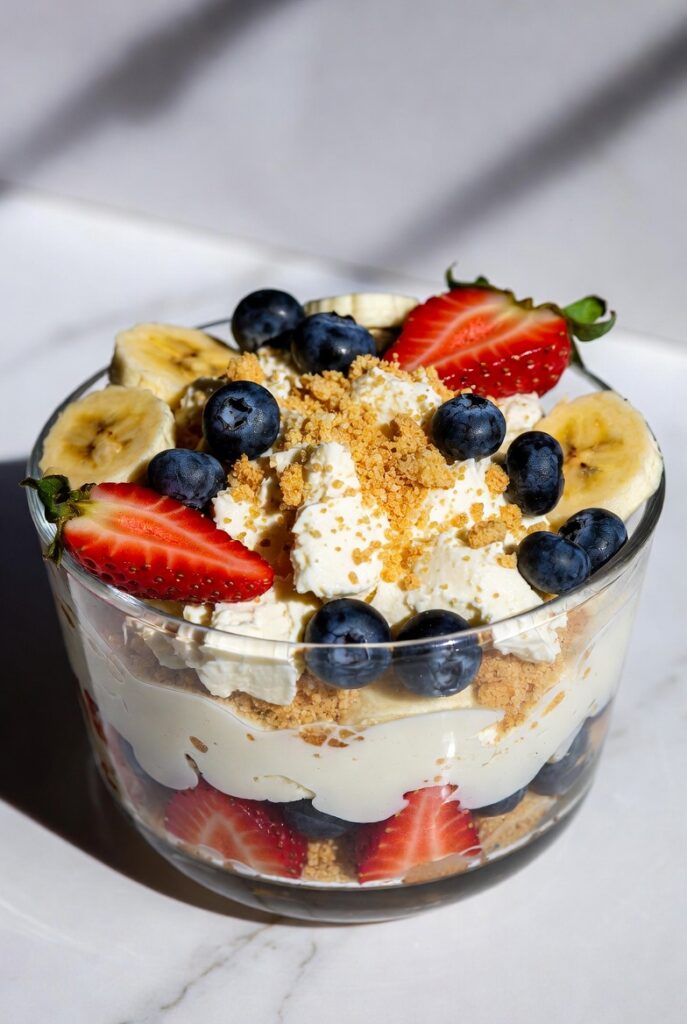
The Cheesecake Salad Protocol proves that sophisticated dessert engineering does not require a complex oven-based baking cycle. By mastering the “Cold-Whip Stabilization” and the “Hygroscopic-Buffer,” you are delivering a dessert that is visually “Stunning,” structurally complex, and sensorially perfect.
It is the ultimate “Comfort-Anchor”—a “Creamy-and-Crunchy” testament to the power of precise culinary logic. Whether you are catering a summer party or just seeking an indulgent weekend treat, this salad elevates simple ingredients into a gourmet-tier experience through simple but precise structural choices.