1. Introduction: The Architecture of the Messy Masterpiece
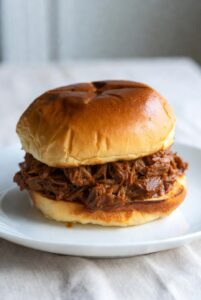
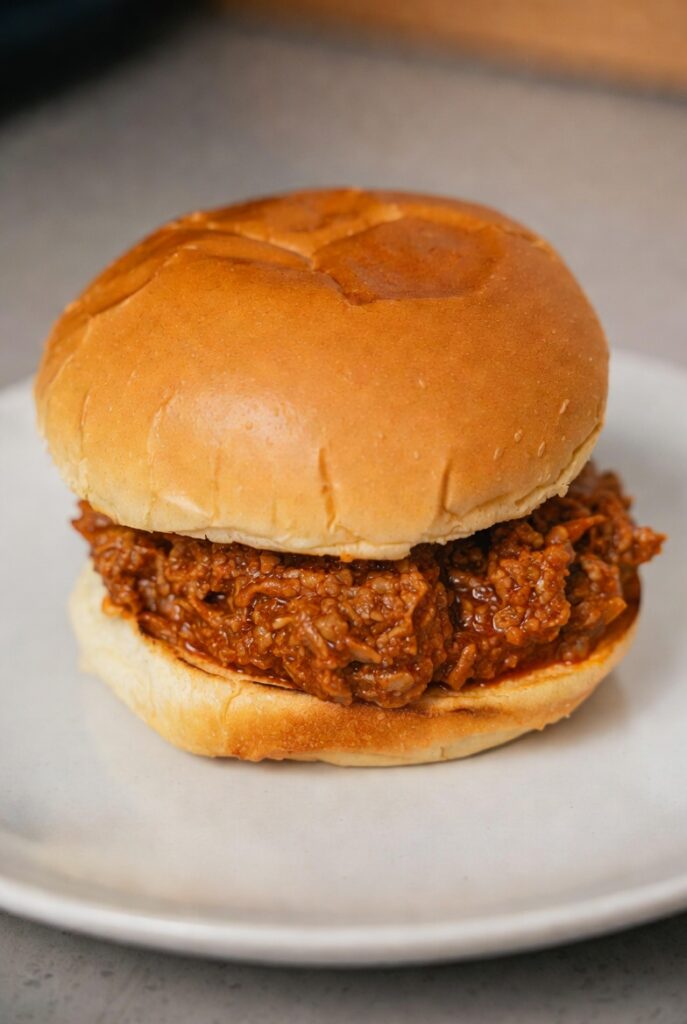
In the inventory of American comfort food, the Classic Sloppy Joe represents a masterful “Structural Paradox.” It is a dish that intentionally rejects the rigid, stacked geometry of the traditional hamburger in favor of a “High-Viscosity,” loose-meat matrix. Historically emerging in the early 20th century—with roots stretching from Sioux City, Iowa, to the “Key West” legends—the Sloppy Joe is a study in “Umami-Acid Equilibrium.”
The brilliance of this dish lies in the “Simmered Emulsion.” By combining ground beef with a high-sugar, high-acid tomato base and a “Finely Diced” aromatic trinity, we create a filling that is simultaneously savory, sweet, and tangy. For the modern host or the busy professional, the Sloppy Joe is the “Platinum Standard” of utility: it is a “One-Pot” operation that facilitates mass feeding with “Zero-Friction” assembly. It is a dish that respects the nostalgia of the school cafeteria while offering a “Gourmet Draft” that satisfies the adult palate through superior browning and spice layering.
2. The Science of the “Tomato-Lipid Bond”
To master the Classic Sloppy Joe, one must understand the behavior of the Maillard Reaction in a “Loose-Meat” format. Unlike a burger patty, which is seared as a single unit, Sloppy Joe beef is broken down into thousands of individual granules. This creates a massive increase in “Surface Area,” allowing for a more profound caramelization.
The second scientific pillar is the “Viscosity Management.” A common failure in Sloppy Joes is a “Watery Matrix” that compromises the structural integrity of the bun. The secret is the “Reduction Phase.” As the tomato sauce and beef broth simmer, the water evaporates, concentrating the sugars and natural pectins in the tomato paste. This creates a “Glistening Glaze” that acts as a biological glue, binding the beef together and preventing the “Leach-Through” effect that renders bread soggy.
3. Recipe Overview: The Master Blueprint
- Cuisine Type: Traditional Americana / Midwest Comfort
- Difficulty Level: Very Easy (Simmer-focused)
- Total Preparation Time: 15 Minutes
- Total Cooking Time: 25 Minutes
- Total Time: 40 Minutes
- Dietary Classifications: High-Protein, High-Iron. (Can be made GF with appropriate buns).
- Yield: Serves 6 to 8
4. Equipment and Tools: The Essentials of Evaporation
- 12-inch Deep Skillet or 5-Quart Dutch Oven: You need a wide surface area to facilitate rapid liquid reduction and to allow the meat to sear without “steaming.”
- Stiff Wooden Spoon or Meat Masher: Essential for the “Break-Down Phase”—ensuring the beef is crumbled into uniform, fine granules.
- Toaster or Griddle: For the mandatory “Bun Fortification” phase.
5. Ingredients Section: Sourcing for the “Sweet-Savory” Loop
In a dish defined by its sauce, the “Depth” of the tomato and the “Sharpness” of the acid determine the final quality.
The Protein Anchor
- Ground Beef (80/20 Lean-to-Fat Ratio): 2 lbs. The $20\%$ fat is critical; it carries the flavors of the chili powder and mustard.
- Yellow Onion & Green Bell Pepper: 1 each, “Micro-Diced.” These must be small enough to integrate into the meat matrix without creating “Large Structural Gaps.”
The “Flavor Engine” (The Sauce)
- Ketchup: 1.5 cups (The “Base Solvent”).
- Yellow Mustard: 2 tbsp (The “Acidic Spike”).
- Brown Sugar: 2 tbsp (For “Glucose Balance” and caramelization).
- Worcestershire Sauce: 1 tbsp (The “Umami Fortification”).
- Tomato Paste: 2 tbsp (For “Color Depth” and thickness).
- Chili Powder & Smoked Paprika: 1 tsp each (For the “Smoky Background Hum”).
The “Vessel”
- Brioche or Potato Buns: 8 large. These offer the “Compressible Density” required to hold a heavy, wet filling.
- Salted Butter: For toasting the buns.
6. The “Hard-Sear” Protocol
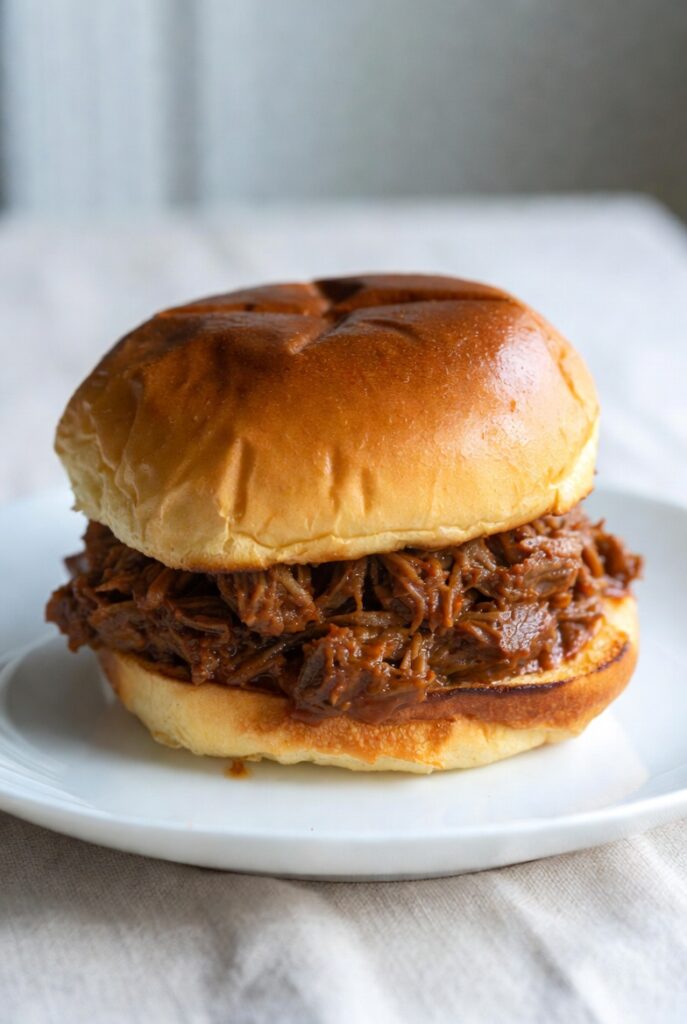
The most common failure in Sloppy Joes is “Gray Meat.” If you add the sauce before the meat is fully browned, you miss out on the complex flavors of caramelized protein.
To achieve a “Master Draft” result, follow the “Hard-Sear Protocol.” Add the beef to a “screaming-hot” skillet. Do not touch it for 3 minutes. Let a “Mahogany Crust” form on the bottom. Only then should you begin breaking it apart. This “Crust Integration” provides the savory backbone that prevents the sandwich from tasting like nothing but sweet ketchup.
7. Deep Dive: The Bioavailability of Lycopene
Why is the Classic Sloppy Joe more than just “Messy Comfort”? It centers on Lycopene Concentration. Tomatoes are the world’s primary source of lycopene, a powerful antioxidant linked to heart health and UV skin protection.
In a Sloppy Joe, the combination of Heat (simmering the sauce) and Lipids (the fat from the beef) creates the perfect “Delivery Vehicle.” Heat breaks down the tomato cell walls, and fats make the lycopene “Bioavailable.” Your body absorbs significantly more nutrients from a simmered Sloppy Joe sauce than it would from a raw tomato. It is “Nutritional Fortification” delivered in a nostalgic, high-flavor format.
8. Step-by-Step Instructions: The Master Blueprint
Step 1: The “Hard-Sear” Phase
Heat your skillet over medium-high heat. Add the ground beef. Season with salt and pepper. Let it sear undisturbed for 3 minutes, then use your wooden spoon to break it into very fine crumbles. Cook until no pink remains.
Step 2: The Lipid Drain (Optional)
If your beef has released excessive fat, drain all but 2 tablespoons. We want just enough “Lipid Carrier” to sauté the vegetables without making the final sandwich greasy.
Step 3: The Aromatic Integration
Add the micro-diced onions and green peppers. Sauté for 5 minutes until the onions are translucent and the peppers have softened into the meat matrix. Add the garlic in the final 60 seconds.
Step 4: The Sauce Construction
Stir in the tomato paste and cook for 2 minutes (this “toasts” the paste, removing the raw metallic taste). Add the ketchup, mustard, brown sugar, Worcestershire, chili powder, and paprika.
Step 5: The “Low-and-Slow” Reduction
Reduce heat to low. Add a 1/4 cup of water or beef broth if the mixture looks too dry. Simmer for 15–20 minutes. This allows the flavors to “Maturate” and the sauce to achieve a “Glistening Viscosity.”
Step 6: The Bun Fortification
While the meat simmers, butter the interior of your buns and toast them on a hot griddle until they are “Shatter-Crisp.” This is not optional. The toasted surface acts as a “Moisture Barrier,” preventing the sauce from soaking into the bread.
Step 7: The Assembly
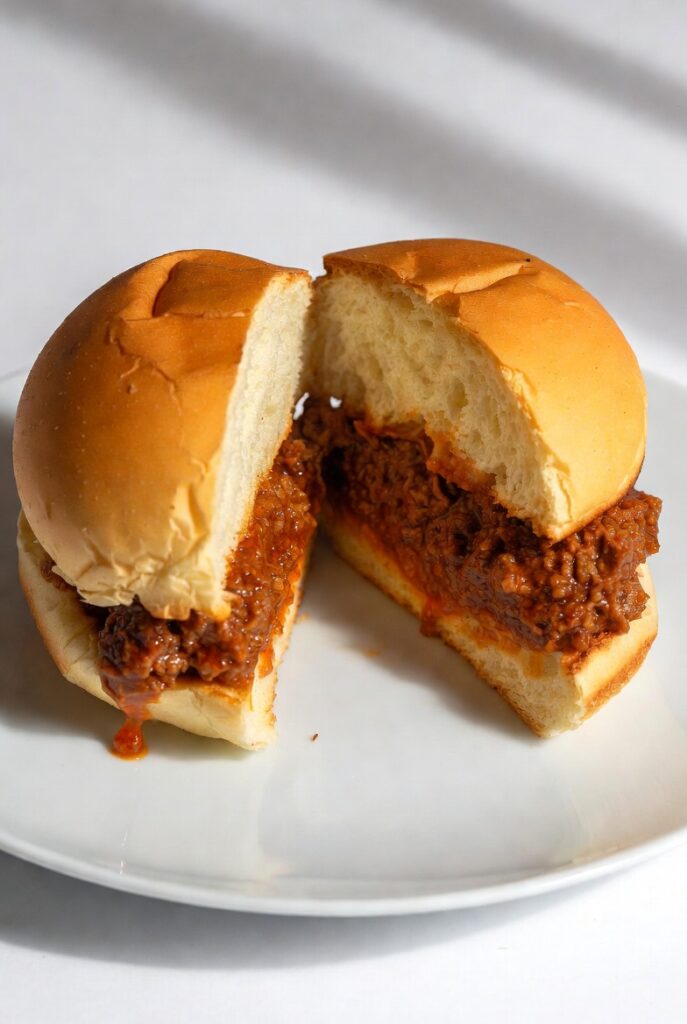
Heap a generous portion of the meat onto the bottom bun. The filling should be “Sloppy” but not “Running.” Top with the second bun and serve immediately.
9. Satiety and the “Zinc-Protein” Synergy
The Classic Sloppy Joe is a “High-Satiety” powerhouse. Beef is one of the most concentrated sources of Zinc and Vitamin B12, both essential for metabolic function and cognitive health. When combined with the high volume of the sauce, it triggers the “Stretch Receptors” in the stomach while the protein triggers the “Leptin Response” in the brain. This “Dual-Signal” satiety ensures that one sandwich is deeply satisfying, preventing the need for excessive snacking later.
10. Modular Variations: Customizing the “Joe”
- The “Inferno” Joe: Add 2 tbsp of canned chipotle in adobo or diced jalapeños for a “Thermogenic Kick.”
- The “Rachel” Joe: Use ground turkey and a splash of apple cider vinegar for a “Lighter Profile” that maintains the acidic spike.
- The “Plant-Based” Draft: Use brown lentils and finely chopped walnuts to mimic the “Grain” of the beef.
- The “Philly” Joe: Fold in sautéed mushrooms and top with a slice of melted provolone cheese.
11. Storage and “Sauce Maturation”
- Refrigeration: Sloppy Joe filling is a “Day Two Winner.” As it sits in the refrigerator, the spices continue to hydrate, and the sugars in the ketchup “Mellow.” It stores perfectly for up to 4 days.
- Freezing: This is an “Elite” freezer meal. Store in a gallon-sized freezer bag, pressed flat. It thaws and reheats in minutes, maintaining $95\%$ of its original “Structural Integrity.”
- The Reheat: Reheat on the stovetop with a splash of water to “re-loosen” the glaze.
12. Frequently Asked Questions (FAQ)
Q: Why is my Sloppy Joe too sweet? A: Ketchup brands vary in sugar content. If your sauce is too sweet, add a teaspoon of apple cider vinegar or a squeeze of lime juice. The “Acid” will neutralize the “Sweet.”
Q: Can I use a slow cooker? A: Yes, but you must brown the beef and sauté the vegetables in a skillet first. If you put raw beef in a slow cooker, you lose the Maillard flavor and end up with a “Boiled” texture.
Q: What is the best side dish? A: To balance the “Soft” texture of the Joe, serve with something “Crispy”—kettle chips, cole slaw, or pickled okra are the “Industry Standards.”
13. Nutritional Information
(Per serving – meat only, approx. 3/4 cup)
| Nutrient | Amount |
| Calories | 340 kcal |
| Protein | 24g |
| Total Fat | 18g |
| Net Carbs | 12g |
| Iron | 20% DV |
14. Summary: The Master Draft of American Comfort
The Classic Sloppy Joe is more than a sandwich; it is a “System of Satisfaction.” It proves that “Messy” does not mean “Unrefined.” By mastering the “Hard-Sear Protocol” and the “Bun Fortification,” you elevate a childhood staple into a “Gourmet Standard” meal. It is a high-iron, high-flavor, and high-utility solution for the modern kitchen.