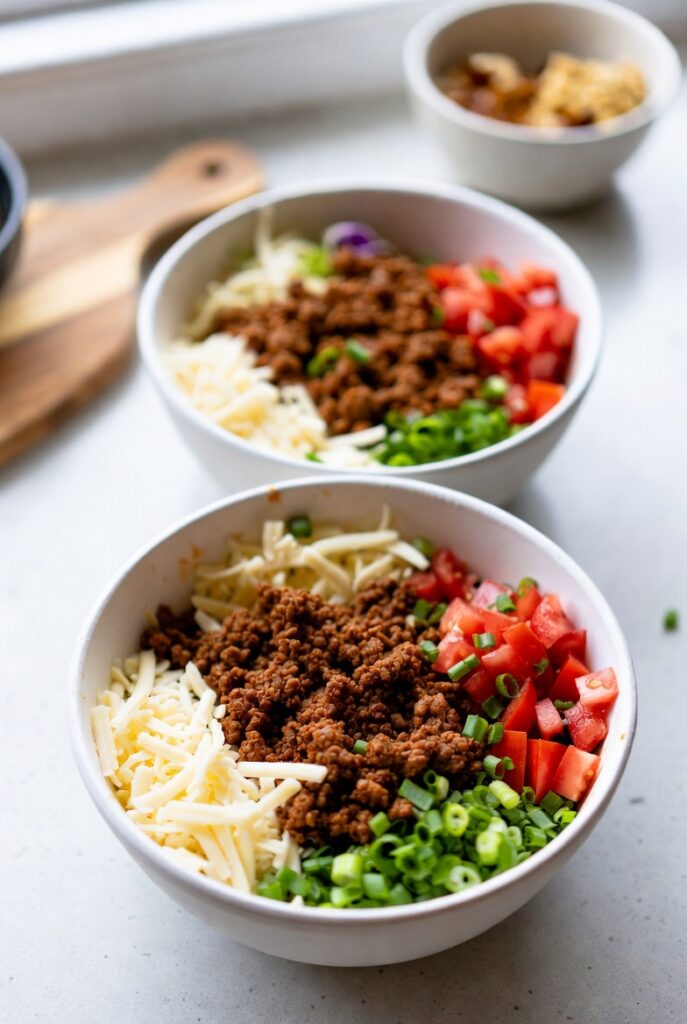
1. Introduction: The Death of the Tortilla and the Rise of the Bowl
In the modern landscape of “Performance Nutrition,” the Deconstructed Burrito Bowl represents much more than a trend—it is a strategic “Structural Pivot.” Traditionally, the burrito was designed for portability, a handheld delivery system for field workers and travelers. However, in the 21st century, the flour tortilla has become a “Nutritional Liability.” It adds a high-glycemic carbohydrate load, hides the vibrant textures of the internal ingredients, and creates a “Steam Envelope” that can turn fresh vegetables into a homogeneous mush.
By deconstructing the assembly into a bowl, we move from “Portable Utility” to “Modular Precision.” The bowl format allows for the transparent layering of high-fiber pulses, lean proteins, and healthy lipids. It eliminates the “Mechanical Friction” of rolling a burrito—a process prone to structural failure—and replaces it with a visually stunning, “Texture-Rich” experience. For the high-performance individual, the burrito bowl is the “Platinum Standard” of culinary efficiency. It respects your metabolic health while honoring the complex, high-umami flavor profiles of the Mexican-American kitchen.
2. The Science of the “Resistant Starch” Buffer
To master the Deconstructed Burrito Bowl, one must understand the biochemistry of its foundation: the starch. When we talk about rice in a burrito bowl, we are talking about more than just a “filler.” Rice is the primary energy source of the dish, but its impact on your blood sugar depends entirely on how it is prepared.
The secret to a professional-grade bowl is “Retrogradation.” When rice is cooked and then allowed to cool (a standard practice in meal prepping), the starch molecules reorganize into a crystalline structure known as Resistant Starch. As the name suggests, this starch “resists” digestion in the small intestine. Instead of being rapidly converted into glucose (sugar), it travels to the large intestine where it serves as a prebiotic, feeding the beneficial bacteria in your gut microbiome.
By utilizing cooled rice in your bowls, you are effectively “buffering” the meal. You receive the energy of the carbohydrate without the aggressive insulin spike. When this resistant starch is paired with the soluble fiber of black beans and the healthy monounsaturated fats of avocado, you create a “Metabolic Anchor.” This ensures that the energy from your lunch lasts for 5–6 hours of high-level cognitive work, rather than ending in a mid-afternoon “sugar crash.”
3. Recipe Overview: The Master Blueprint
- Cuisine Type: Modern Tex-Mex / Performance Nutrition
- Difficulty Level: Very Easy (Focus on component batching)
- Total Preparation Time: 20 Minutes
- Total Cooking Time: 25 Minutes
- Total Time: 45 Minutes
- Dietary Classifications: Gluten-Free, High-Protein, High-Fiber, Dairy-Free (Optional).
- Yield: Serves 4 (Optimized for a 4-day work week)
4. Equipment and Tools: The Essentials of “Component Batching”
The success of the Deconstructed Burrito Bowl lies in your ability to cook multiple components simultaneously without cross-contamination of textures.
- Heavy-Duty 18×13 inch Rimmed Sheet Pan: This is the “Engine Room” of the meal. It allows for the “Fajita-Style” roasting of the protein and vegetables in a single layer, facilitating the Maillard reaction.
- 5-Quart Saucepan with a Tight-Fitting Lid: To achieve the “Fluffy Standard” for the rice base. The lid is critical for trapping the steam necessary for even grain hydration.
- Glass Meal Prep Containers: Avoid plastic. Glass is chemically inert, meaning it won’t absorb the odors of cumin and garlic, and it provides a “Clean Heat” when placed in a microwave or oven.
- Fine-Mesh Sieve: For rinsing the rice and beans. Removing surface starch from the rice is the only way to prevent it from becoming a “clumped mass.”
5. Ingredients Section: Sourcing for Macro Balance
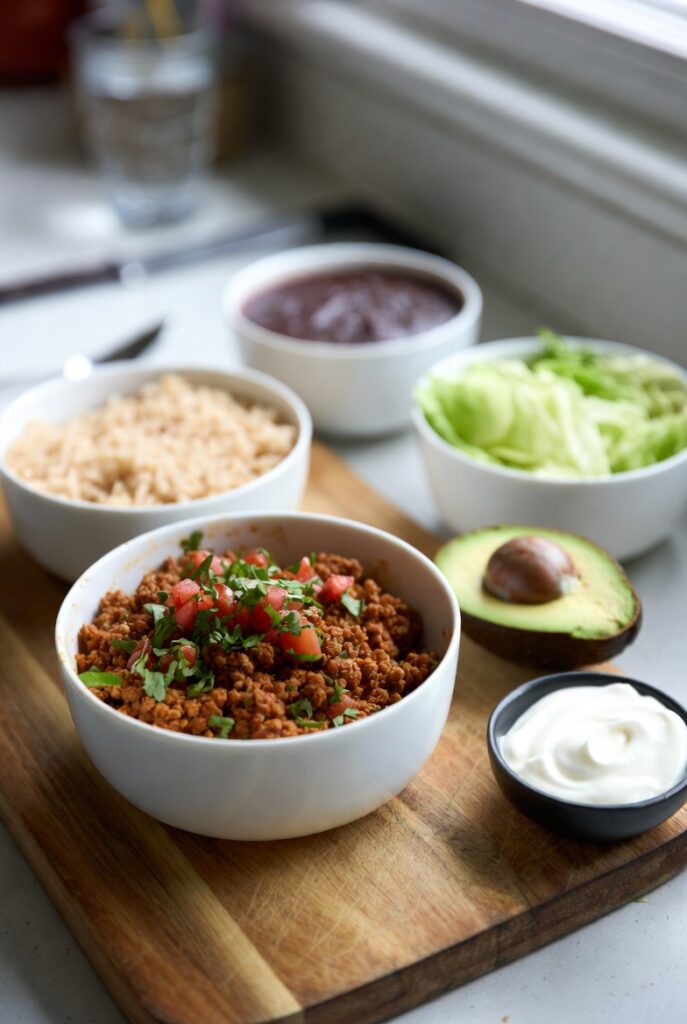
In a modular bowl, the “Quality of the Component” is the only variable. There is no tortilla to hide mediocre ingredients.
The Protein Anchor
- Chicken Thighs (Boneless, Skinless): 1.5 lbs. Thighs are “Thermally Resilient.” Unlike breasts, which become “fibrous” and dry upon reheating, thighs maintain their “Succulence” due to a higher concentration of slow-twitch muscle fibers and lipids.
- Black Beans: 1 can (15 oz). These provide the “Secondary Protein” and the primary fiber load.
The Starch Base
- Basmati or Jasmine Rice: 1 cup dry. These long-grain varieties have a lower glycemic index than short-grain rice and provide a superior “Grain Separation.”
- Fresh Cilantro & Lime: The “Aromatic High-Notes” that transform neutral starch into a culinary foundation.
The “Vibrant” Micronutrients
- The Fajita Trinity: 2 Bell Peppers (Red and Yellow) and 1 Red Onion. These provide the Anthocyanins and Vitamin C.
- Pico de Gallo: 1 cup. A raw “Acidic Catalyst” made of tomatoes, onions, and jalapeños.
- Avocado: 2 ripe. The “Lipid Delivery System” for fat-soluble vitamins.
- Sweet Corn: 1 cup. Provides a “Sugary Snap” that offsets the earthy beans.
6. The “Sheet-Pan Sear” Protocol
The most common failure in a home-cooked burrito bowl is “Textural Homogeneity”—when everything feels soft. To achieve a “Master Draft” finish, you must introduce “High-Heat Contrast.”
Instead of sautéing your chicken and peppers in a crowded pan on the stove, utilize your oven’s “Convective Power.” By roasting the sliced chicken and vegetables at 220°C (425°F) on a large sheet pan, you allow the moisture to evaporate rapidly. This facilitates the Maillard Reaction—the chemical reaction between amino acids and reducing sugars that gives browned food its distinctive “Charred” flavor. This “Smoky Edge” mimics the flavor of a professional grill and provides the necessary “Bite” to stand up against the soft rice and creamy avocado.
7. The “Cilantro-Lime Rice” Emulsion
Rice is often treated as an afterthought, but in a bowl, it is the “Flavor Carrier.” To achieve the “Restaurant Standard,” you must avoid “Wet Rice.”
After the rice has finished steaming, you must perform a “Fat-Acid Integration.” Stir in a tablespoon of extra virgin olive oil or butter before adding the lime juice and cilantro. The fat coats the individual grains, preventing the lime juice from soaking in and making the rice “mushy.” This creates a “Vibrant Viscosity” where the lime juice sits on the surface of the grain, hitting the tongue immediately, while the cilantro provides a fresh, herbal finish.
8. Deep Dive: The Bioavailability of Carotenoids
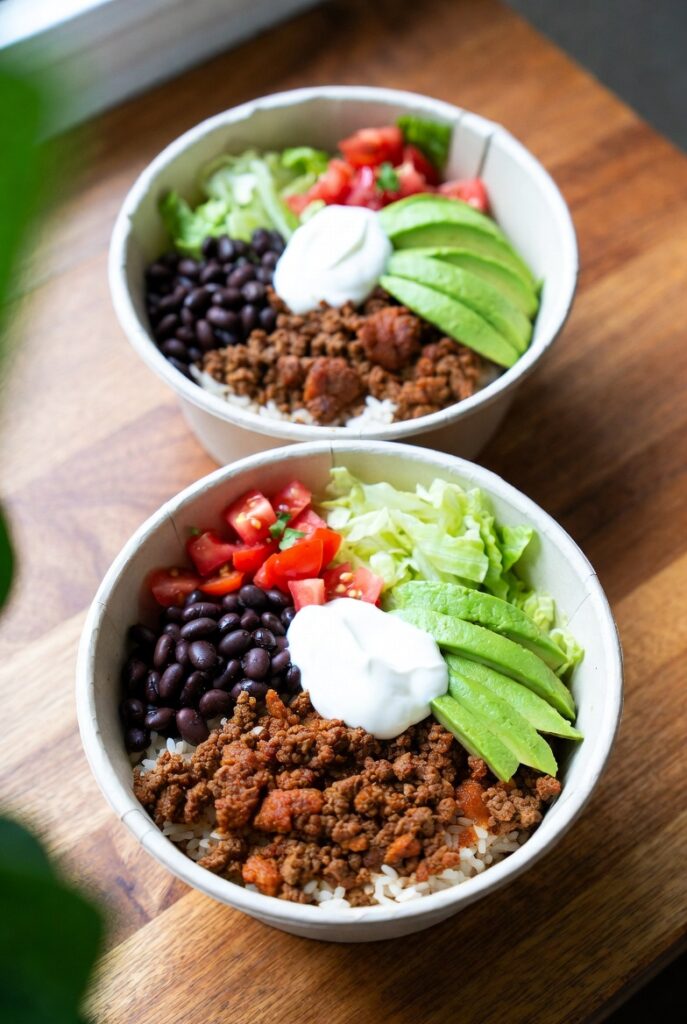
Why is the Deconstructed Burrito Bowl a strategic nutritional choice for the high-performance individual? It centers on Carotenoids like beta-carotene and lutein, found in the peppers, corn, and tomatoes. These compounds are essential for vision health and immune function.
However, carotenoids are Fat-Soluble. If you eat a bowl consisting only of rice, beans, and vegetables, your body will only absorb a fraction of these nutrients. The “Biological Key” to the bowl is the Avocado. The monounsaturated fats in the avocado act as a “Carrier Molecule,” allowing your digestive system to transport the carotenoids into your bloodstream. By including the avocado, you are effectively increasing the “Nutritional ROI” (Return on Investment) of every vegetable in the bowl. This is “Gastronomic Engineering” at its most effective.
9. Step-by-Step Instructions: The Master Blueprint
Step 1: Thermal Calibration & Prep
Preheat your oven to 220°C (425°F). Rinse 1 cup of Basmati rice in a fine-mesh sieve until the water runs clear. This removes the “Surface Starch” that causes clumping.
Step 2: The Rice Foundation
Add the rice to a saucepan with 1.75 cups of water and a pinch of salt. Bring to a boil, then reduce heat to the lowest setting, cover, and simmer for 15 minutes. Once done, remove from heat and let sit, covered, for 5 minutes.
Step 3: The Fajita Matrix
While the rice simmers, slice the chicken thighs, bell peppers, and red onion into uniform strips. Toss them directly on the sheet pan with 2 tablespoons of olive oil, 1 tablespoon of chili powder, 1 teaspoon of cumin, and a heavy pinch of salt.
Step 4: The High-Heat Roast
Spread the chicken and vegetables into a single layer (No overlapping!). Roast for 18–22 minutes. Halfway through, use a spatula to toss the ingredients to ensure “Global Charring.”
Step 5: The “Aromatic Infusion”
Uncover the rice. Add 1 tablespoon of olive oil, the juice of 1 lime, and 1/4 cup of finely chopped cilantro. Fluff with a fork until the grains are “Glistening and Separated.”
Step 6: The Bean Fortification
Rinse the black beans and warm them in a small pot or microwave with a dash of cumin and a spoonful of the chicken’s roasting juices.
Step 7: The Modular Assembly
In each of your four containers, layer the components:
- Base: Cilantro-Lime Rice.
- Fiber: Black Beans.
- Protein & Heat: Charred Chicken and Fajita Vegetables.
- Sweetness: Sweet Corn.
10. Satiety and the “Volume-to-Density” Ratio
The Deconstructed Burrito Bowl is a masterclass in “Volumetric Satiety.” Weight loss or weight management often fails because individuals feel “deprived” of volume. Because this bowl is packed with high-water-volume vegetables (peppers, onions, tomatoes), the physical volume of the meal is massive, yet the caloric density remains low.
This triggers the “Stretch Receptors” in the stomach, which send a signal to the hypothalamus (the brain’s hunger center) that the “Mechanical Requirement” for food has been met. Simultaneously, the high protein and healthy fats provide the “Chemical Satiety” signal. This “Dual-Signal” system ensures you feel physically full and psychologically satisfied, effectively ending the desire for “Boredom Snacking” after the meal.
11. Storage and the “Office Reheat” Logistics
If you are using these for meal prep, the “Reheat Strategy” is vital.
- The “Living” Garnish Rule: Never store your avocado, lime wedges, or fresh pico de gallo inside the main bowl if you plan to microwave it. Heat kills the “Vibrant Enzymes” in the fresh salsa and turns avocado into a bitter, brown mass. Store these “Cold Toppings” in a small, separate container or add them fresh each day.
- The “Moisture Seal”: When reheating the rice and chicken, place a damp paper towel over the glass container. This creates a “Steam Micro-Climate” that prevents the rice from turning into “hard grains” and keeps the chicken thighs juicy.
12. Frequently Asked Questions (FAQ)
Q: Can I use Brown Rice?
A: Yes, but it requires a “Tactical Adjustment.” Brown rice needs more water (2.25 cups) and a longer cooking time (45 minutes). It offers more fiber but has a denser, nuttier “Structural Profile.”
Q: Is there a vegetarian “Master Draft”?
A: Replace the chicken with Sweet Potato Cubes or Extra-Firm Tofu. Roast them exactly like the chicken to achieve the same charred edges and smoky depth.
Q: How do I prevent the Avocado from browning?
A: Oxidation is the enemy. Toss your avocado slices in a splash of lime juice immediately after cutting. The Vitamin C (Ascorbic Acid) acts as a sacrificial antioxidant, browning instead of the avocado’s fats.
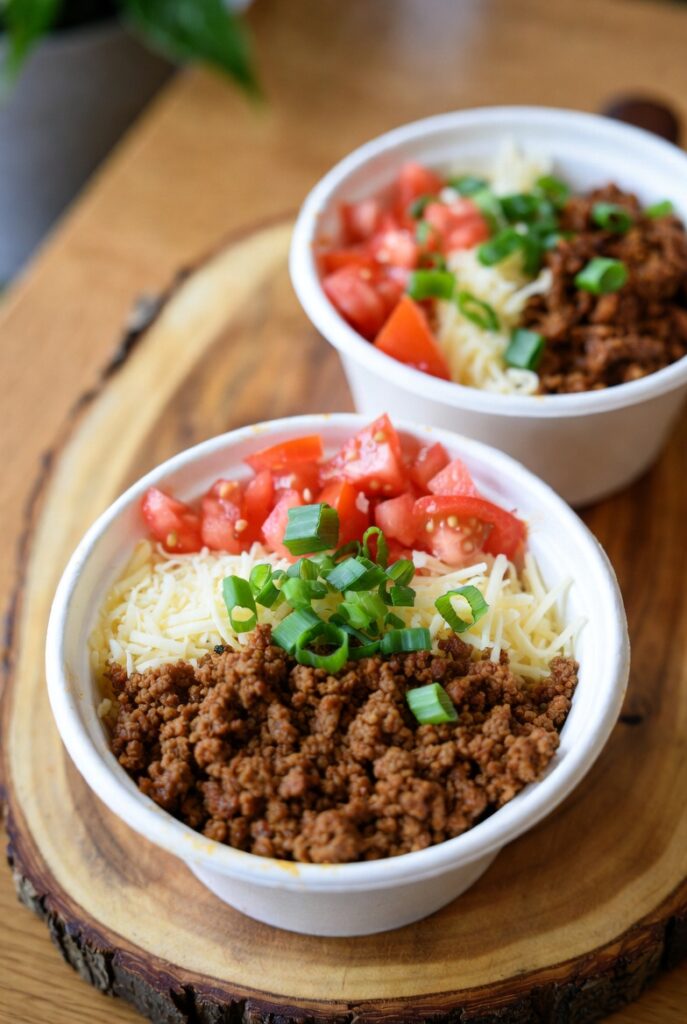
13. Nutritional Information
(Per bowl – approx. 2.5 cups of food)
| Nutrient | Amount |
| Calories | 540 kcal |
| Protein | 38g |
| Total Fat | 18g |
| Net Carbs | 44g |
| Fiber | 12g |
| Vitamin C | 120% DV |
14. Summary: The Master Draft of Performance Dining
The Deconstructed Burrito Bowl is more than just a meal; it is a “Nutritional Framework.” It proves that “Healthy Eating” does not have to be synonymous with “Bland Eating.” By mastering the “Sheet-Pan Sear” and the “Resistant Starch Buffer,” you are delivering a meal that is biologically optimized, sensory-rich, and industrially efficient. It is the ultimate fuel for a high-performance life.