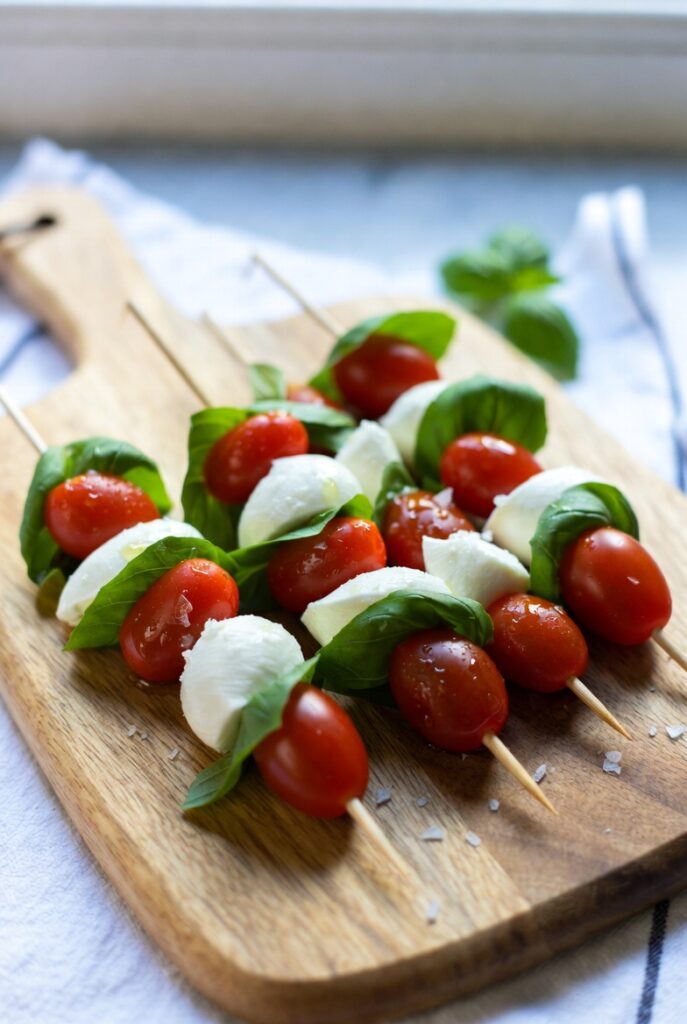
In the kitchen, we don’t just assemble food; we curate experiences. The Caprese Skewer is the ultimate exercise in restraint. With only three primary ingredients—tomato, mozzarella, and basil—there is nowhere for a cook to hide. Every placement must be intentional, and every element must sing in concert.
To prepare these the “Cooking Art” way is to honor the ingredient. We move away from the chaotic, messy appetizers of the past and toward a vision of elegance, balance, and pure, vibrant flavor.
1. The Palette: Selecting Your Materials
The art begins at the market. When your ingredient list is this short, quality isn’t just preferred—it’s the foundation of the dish.
- The Mozzarella: Seek out Bocconcini—the small, pearl-like mozzarella balls. For the true connoisseur, Mozzarella di Bufala is non-negotiable. Its texture is like silk, and it holds a subtle, sweet, milky depth.
- The Golden Rule: Never serve it cold. The fat in mozzarella firms up in the refrigerator, turning the cheese dense and rubbery. Let your pearls sit at room temperature for at least 20 to 30 minutes before you even pick up a skewer. This allows the protein and fat to relax, ensuring that every bite melts on the palate.
- The Tomato: Choose “heirloom cherry” varieties for their complexity. We aren’t looking for uniformity here; we are looking for a visual range—sun-golds for sweetness, deep purples for earthiness, and bright scarlets for that classic, sharp tomato tang.
- The Basil: The leaves must be tiny and firm. If you only have large leaves, do not tear them. Tearing breaks the cellular structure and invites oxidation, which turns your beautiful green leaf into a brown, bruised mess. We fold them. A neatly folded basil leaf is a work of art in itself.
2. Ingredients and Prep
The Components (Yields: 12 Skewers)
- 12 Bocconcini pearls (Fresh mozzarella, at room temperature).
- 12 Heirloom cherry tomatoes (Selected for firmness and color).
- 12–24 Small, tender fresh basil leaves (Young leaves are essential).
- 1/2 cup High-quality Balsamic vinegar (Avoid low-grade vinegars with added sugars).
- 2 tbsp Cold-pressed Extra virgin olive oil (Look for a “peppery” finish).
- 1 tsp Maldon or flaky sea salt (Crucial for the textural finish).
- Tools: 12 thin bamboo or wooden picks (pre-soaked if necessary), kitchen shears, a small copper or heavy-bottomed saucepan.
3. The Ritual: Step-by-Step Execution
Phase I: The Balsamic Lacquer
In a small saucepan over medium heat, bring your balsamic vinegar to a gentle simmer. As it begins to bubble, reduce the heat to low. You are looking for a transformation of state. Watch the surface bubbles—as they get smaller and slower, the liquid is losing its water content and concentrating its natural grape sugars. When it coats the back of a spoon with a glossy, translucent sheen, it is ready. Remove from heat immediately; it will continue to thicken as it cools.
Phase II: The Structural Prep
- The Tomatoes: Gently rinse your tomatoes and pat them dry. Moisture is the enemy of the perfect skewer. If the exterior is wet, the balsamic will slide right off.
- The Basil: Select leaves of similar size. Ensure they are dry. If you have any wilted or dark-spotted leaves, discard them immediately.
- The Skewers: If you are using long skewers, use your kitchen shears to trim them down. A skewer should be tailored to the ingredients. If your tomato, basil, and cheese take up two inches, you do not want three inches of empty wood poking out the end. A trimmed skewer signals a professional eye.
Phase III: The Architecture of the Bite
Take your basil leaf and fold it in half, then half again to create a dense, green packet. Thread your components in this specific order to maintain structural harmony:
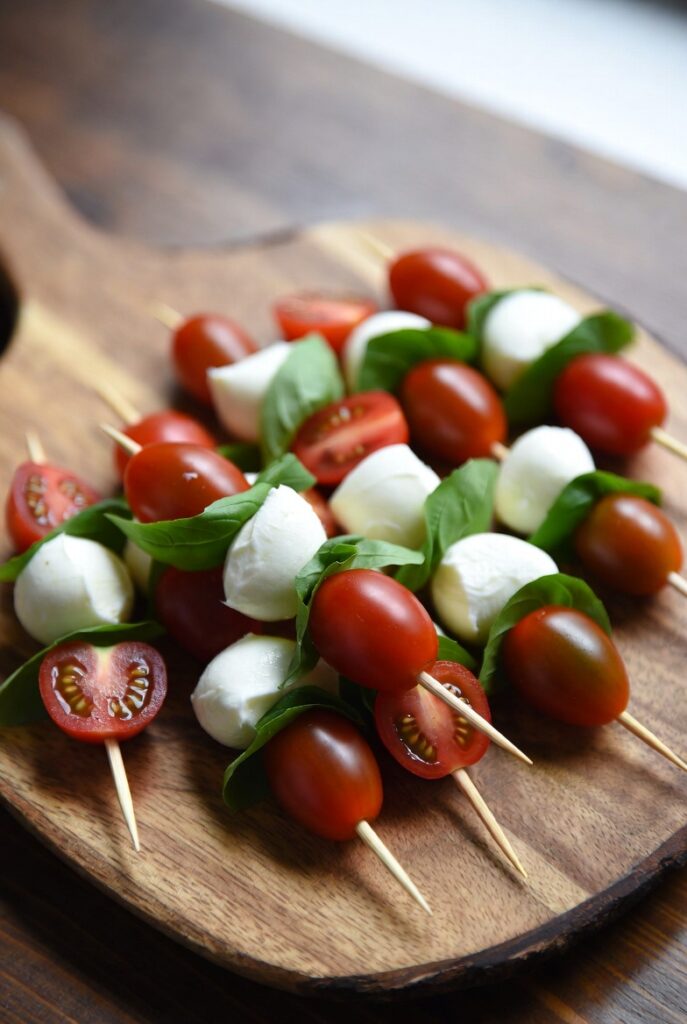
- The Anchor: Thread the cherry tomato through the stem end. This provides the firmest base for the skewer.
- The Ribbon: Thread the skewer through the center of your folded basil packet. It acts as a green “gasket” that separates the acidity of the tomato from the cream of the cheese.
- The Crown: Carefully thread the mozzarella pearl. Use a gentle, twisting motion to secure it. If the cheese is soft and room temperature, it will slide on without tearing.
4. The Finish: The Artist’s Final Stroke
Arrange your completed skewers on a slate or white ceramic platter. Using a squeeze bottle or the back of a spoon, drizzle your balsamic lacquer in a single, confident diagonal motion across the entire arrangement. Follow with a light, even brush of the extra virgin olive oil.
Finally, the most important step: the salt. Take a generous pinch of flaky sea salt and scatter it over the platter from a height of about six inches. This ensures an even distribution and adds that critical, crystalline crunch that prevents the bite from feeling too soft.
5. Troubleshooting the Artistry
- “The basil looks tired”: You are assembling too early. The basil leaf is the “living” part of the composition. Assemble these as close to serving time as possible—ideally, no more than 30 minutes before the first guest arrives.
- “The skewers are messy”: If your skewer is splintering the tomato or tearing the cheese, it is too dull. Use high-quality, pointed picks. The pierce should be effortless and clean.
- “The ingredients are sliding”: Your skewer might be too thick. Ensure you are using a standard appetizer-gauge skewer. If the ingredients slide, it is often because they were wet; dry ingredients have a better “grip” on the wooden pick.
6. The Presentation: The Gallery Effect
Do not just pile these in a bowl. Create a landscape. Arrange your skewers on your platter in a gentle, curving wave—mimicking the movement of a river or a mountain ridge. Nature is not a grid, and your appetizers shouldn’t be either.
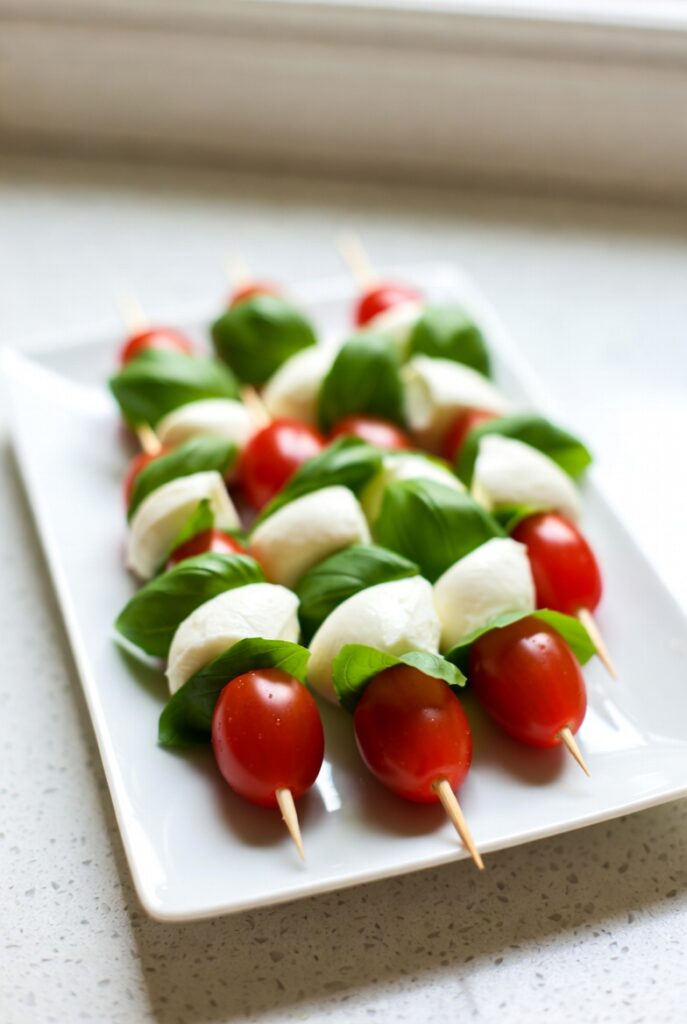
Drizzle your balsamic reduction across the entire board, letting it pool slightly in the negative spaces of the platter. When your guests reach for one, they shouldn’t just be taking a snack—they should be taking a bite of something you’ve carefully crafted. It is a dish that respects the ingredient, demands precision from the cook, and delivers a harmonious experience to the diner.