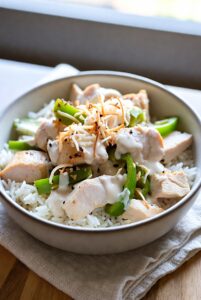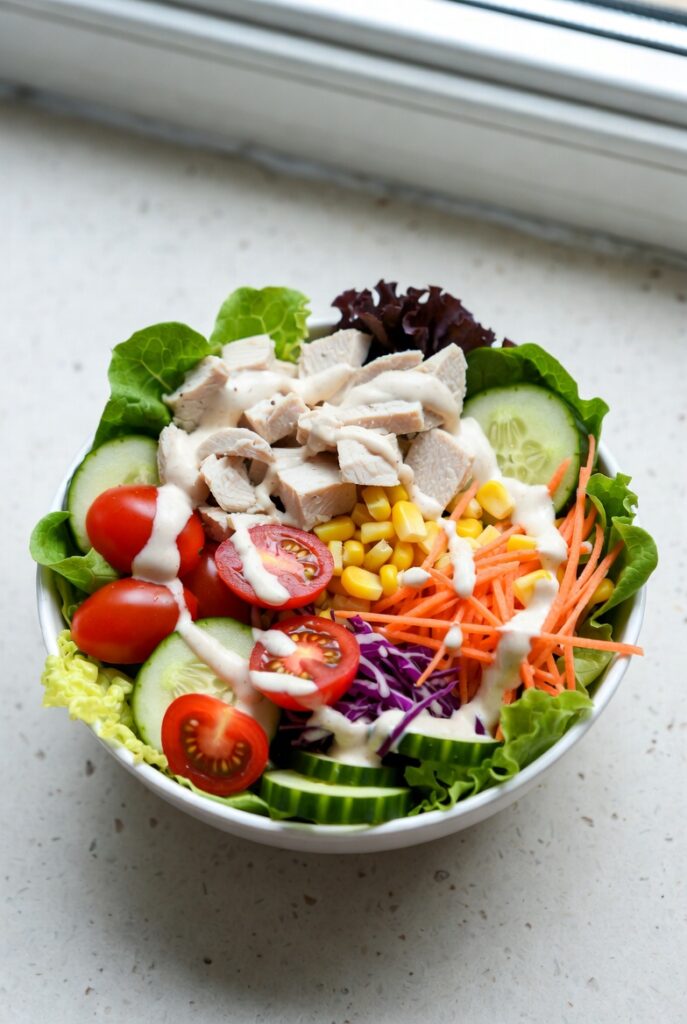
In the vast and storied catalog of comfort food, few dishes are as misunderstood and frequently mistreated as the Chicken Salad. To the casual observer, it is a utilitarian bowl of shredded meat and mayonnaise. To the culinary artist, however, the chicken salad is a profound study in textural equilibrium—a delicate dance between the savory richness of poultry, the creamy stability of an emulsion, and the sharp, bright counterpoints of aromatics.
A truly exceptional chicken salad transcends the mundane. It is not merely “lunch”; it is a composed dish that demands a careful selection of ingredients, a rigorous approach to temperature, and, most importantly, a commitment to the balance of crunch, tang, and cream. This guide explores the “Cooking Art” way—elevating the classic chicken salad from a cafeteria staple to a centerpiece of the gourmet table.
1. The Anatomy of the Protein: Sourcing and Searing
The flavor of your salad is anchored entirely by the chicken. If the chicken is dry or flavorless, no amount of mayonnaise can save the dish.
1.1 The Poach vs. The Roast
There are two schools of thought, and both have their place in the artist’s repertoire:
- The Poach: For a clean, delicate salad, poach chicken breasts in an aromatic broth (onion, carrot, celery, peppercorns, and bay leaves). This ensures the meat remains succulent and “pure” in its flavor.
- The Roast: For a more robust, savory salad, roast chicken thighs with skin-on, bone-in. The rendered fat adds a depth of flavor that poached breast simply cannot replicate.
1.2 The “Shred-Ratio”
Do not grind the chicken into a paste. The goal is a rustic, hand-shredded texture where the muscle fibers remain long enough to provide a “chew.” Use two forks to gently pull the meat, leaving larger, bite-sized “nuggets” that stand out against the dressing.
2. The Architecture of the Salad: The “Crunch-Anchor”
A chicken salad that is uniformly soft is a sensory disappointment. You must engineer “Acoustic Contrast” into every bite.
- The Celery Standard: Finely diced celery is the backbone of the crunch. For an elevated experience, use the inner, pale ribs of the celery, which are more tender and have a more delicate flavor than the fibrous outer stalks.
- The Aromatic Pivot: Red onion is traditional, but shallots are the artist’s choice. They provide a more refined, less aggressive bite. Soak them in cold water for 10 minutes to leach out the harsh sulfurous notes before folding them into the salad.
- The Sweet/Savory Counterpoint: Grapes, apple chunks, or toasted walnuts. These ingredients act as “flavor-bursts” that break up the richness of the poultry and mayo.
3. The Dressing: The Art of the Emulsion
The dressing is not just a binder; it is the flavor-carrier. The key is to achieve a “Velvet-Gloss” consistency.
- The Base: Use a high-quality mayonnaise. If you want to refine it, mix it with an equal part of Greek yogurt or crème fraîche. This adds a lactic tang that balances the heavy fat of the mayonnaise.
- The “Tang-Bridge”: Dijon mustard is essential. It provides the “friction” that allows the dressing to grip the shredded chicken.
- The Herbaceous Finish: Never underestimate the power of fresh herbs. While dried herbs are acceptable, a generous handful of fresh tarragon, chives, or flat-leaf parsley transforms the salad from “homestyle” to “bistro-quality.” Tarragon, in particular, has a subtle anise note that is chemically designed to pair with poultry.
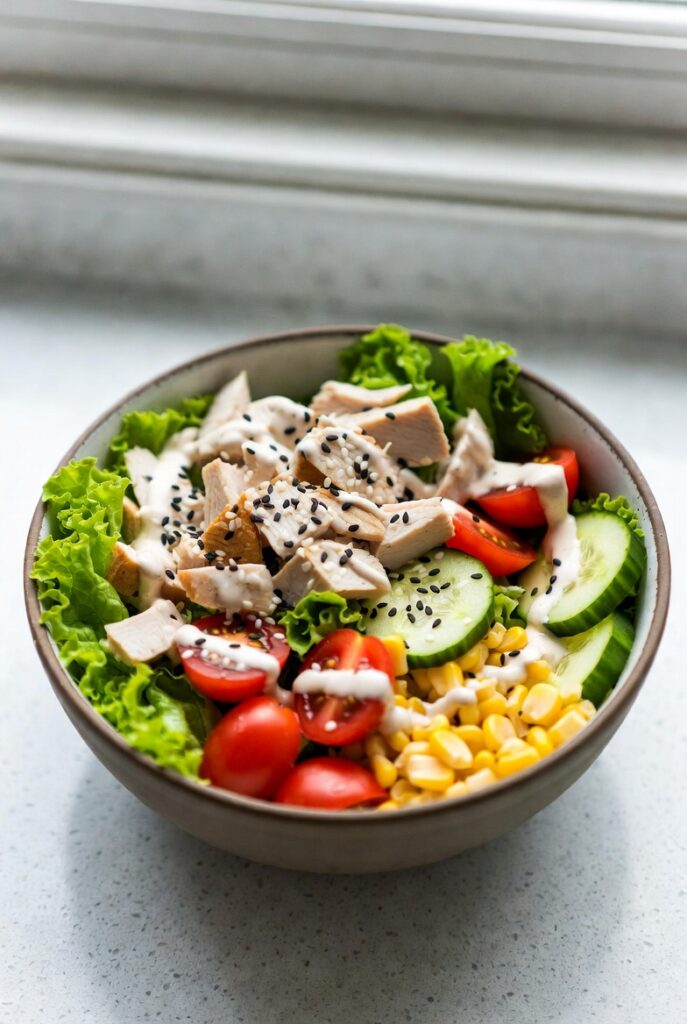
4. The Ritual of Assembly
Assembly is a meditative process. It is about patience and precision.
- The Cooling Phase: Never fold dressing into warm chicken. The heat will cause the fat in the mayonnaise to break, resulting in an oily, separated sauce. Ensure your chicken is fully chilled—ideally for at least an hour—before assembly.
- The Gentle Fold: Use a rubber spatula to fold the dressing into the chicken. Do not stir aggressively, or you will break the beautiful “nuggets” of chicken into a paste. Treat the salad like a delicate mousse.
- The Integration Time: A chicken salad is never at its best the moment it is made. It needs time for the aromatics (onion, herbs) to “bloom” within the fat of the dressing. Cover and refrigerate for at least two hours before serving.
5. Troubleshooting the Masterpiece
- “The salad is too heavy”: You likely used too much mayonnaise. The dressing should only coat the chicken, not drown it. Start with less than you think you need.
- “It lacks ‘Depth'”: You are missing acid. A squeeze of fresh lemon juice or a teaspoon of white wine vinegar can brighten a “flat” salad instantly.
- “The texture is mushy”: You are either over-processing your chicken or your grapes/apples are too ripe. Use crisp, firm fruits and stop shredding before the chicken fibers disintegrate.
6. The Art of Presentation
The final presentation is the artist’s signature.
- The Serving Vessel: Skip the plastic bowl. Serve on a bed of fresh, cold butter lettuce leaves. The contrast of the vivid green, tender leaves against the creamy, golden-hued chicken salad is visually striking.
- The Garnish: A light dusting of smoked paprika, a few toasted, sliced almonds, or a sprig of fresh tarragon turns a simple bowl into an elegant plate.
7. The Seasonal Pivot
The beauty of chicken salad is its adaptability:
- Spring: Use chopped chives, radishes, and lemon zest.
- Summer: Add fresh tarragon and halved green grapes.
- Autumn: Incorporate chopped roasted apples, toasted pecans, and a pinch of cinnamon or nutmeg.
- Winter: Add dried cranberries and walnuts for a warm, comforting profile.
8. Conclusion: The Elegance of the Everyday
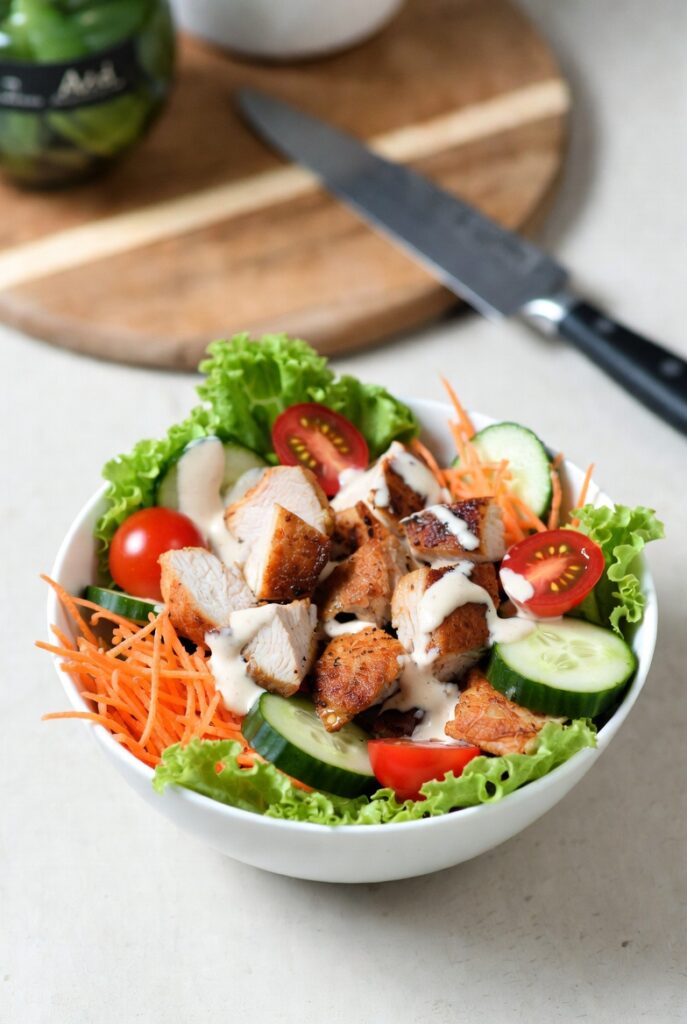
A well-made chicken salad is one of the most honest expressions of home cooking. It relies on the quality of your ingredients—the freshness of the herbs, the texture of the meat, the balance of the dressing—and the care with which you prepare them. It is a dish that proves that even the simplest concepts can be elevated to high art through deliberate, thoughtful practice.
The next time you prepare a chicken salad, take the extra moment to dice the celery with precision, to zest the lemon with care, and to let the flavors marry in the quiet of the refrigerator. You will find that you aren’t just making a sandwich filling—you are creating a meal that is elegant, comforting, and entirely your own.