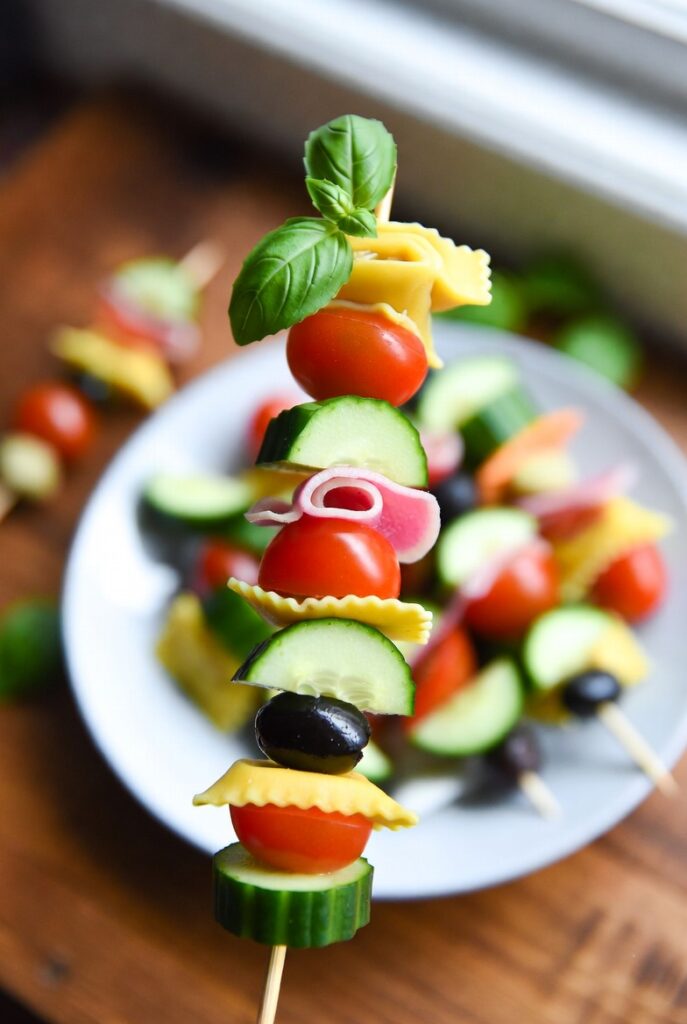
In the world of catering and home entertaining, the Tortellini Salad Kabob is a revelation. It takes the familiar, comforting components of a classic Mediterranean pasta salad—the chewy, pillowy pasta, the sun-kissed vegetables, the briny, sharp punch of olives—and elevates them into a portable, sculptural format.
As a chef, I view the transition from a “bowl salad” to a “kabob” as an exercise in culinary engineering. You are not just tossing ingredients together; you are designing a precise sequence of textures and flavors that hit the palate in a calculated, deliberate order. This is where the mundane becomes the extraordinary. A bowl of pasta salad is a meal; a Tortellini Salad Kabob is a conversation piece.
To create these with the “Cooking Art” way is to approach the kitchen with a sense of architectural intent. We are building flavor bridges, managing moisture levels, and curating an aesthetic that commands attention. Here is your definitive guide to constructing a Tortellini Salad Kabob that is as aesthetically striking as it is delicious.
1. The Components: The Palette of the Pasta
To succeed with a kabob, you must select ingredients that possess both structural integrity and a high-impact flavor profile. We are not interested in mush; we are interested in a resilient, satisfying “snap.”
The Pasta: Selecting the Vessel
Use high-quality, refrigerated cheese-filled tortellini. The dried pantry versions are often brittle, prone to cracking when skewered, and lack the supple texture of fresh pasta.
- The Chef’s Rule of Temperature: Never thread warm pasta. It will be gummy, unstable, and will likely fall apart under the pressure of the skewer. Boil your tortellini in heavily salted, rolling water—think of it as “seasoning the grain from within”—then immediately shock it in an ice bath. This stops the cooking, preserves the al dente bite, and tightens the exterior of the pasta. After the shock, toss it in a small amount of extra virgin olive oil to prevent sticking, and let it rest in the refrigerator until it is firm and cold.
The Structural Anchors
We look for items that hold their shape.
- Sun-dried tomatoes (oil-packed): These provide a concentrated, chewy depth that mimics a fruit-forward umami.
- Pitted Kalamata olives: These provide the briny, oily anchor—the essential “salt-burst” that keeps the dish from feeling too heavy.
- Bocconcini (Mozzarella pearls): These offer the creamy contrast to the dense, starchy pasta.
- Fresh Basil Leaves: These serve as the “structural gasket.” A folded basil leaf sits between the ingredients, providing a beautiful green contrast and a fresh, herbal aroma that greets the diner before the first bite.
2. Ingredients and Prep: The Artisan’s Mise-en-Place
The Components (Yields: 12–15 Kabobs)

- 30 Cooked and chilled cheese tortellini (Two per skewer).
- 15 Pitted Kalamata olives (Selected for size and firmness).
- 15 Sun-dried tomato halves (Oil-packed; drained well).
- 15 Bocconcini pearls (Fresh, room-temperature mozzarella).
- 30 Fresh, large basil leaves (Young leaves are preferred).
- 1/2 cup Basil-Pesto Vinaigrette (The “liquid gold”).
- Tools: 15 thin bamboo skewers (6-inch), high-quality kitchen shears, a small whisk, a silicone basting brush, and a chilled mixing bowl.
3. The Ritual: Step-by-Step Execution
Phase I: The Basil-Pesto Vinaigrette
A standard oil-and-vinegar dressing will simply slide off the surface of a smooth tortellini, leaving it bland. We need a dressing that acts as a sauce—something with “cling.”
- The Emulsion: Whisk together 3 tablespoons of high-quality basil pesto with 1 tablespoon of aged red wine vinegar and 2 tablespoons of extra virgin olive oil.
- The Texture Check: The pesto provides the thickness, the vinegar provides the necessary “brightening” acid, and the oil ensures the emulsion stays silky. This dressing is flavor-dense and specifically engineered to coat the ridges of the pasta.
Phase II: The Architecture of the Kabob
The sequence matters. We want to alternate between textures—”Hard-Soft-Hard-Soft”—to ensure the skewer is easy to eat and structurally sound.
- The Anchor: Start with a tortellini. Use a gentle, twisting motion to pierce the center of the pasta ring.
- The Ribbon: Fold a fresh basil leaf into a tight, dense packet—like an origami fold—and thread it onto the skewer. It sits flush against the pasta.
- The Brine & Sweet: Thread a pitted Kalamata olive, followed by a sun-dried tomato half. The tomato acts as a secondary “stopper.”
- The Cream: Thread a bocconcini pearl.
- The Finish: Complete the sequence with a second tortellini. The result is a color-balanced, structurally sound skewer that looks and tastes like a Mediterranean vacation.
Phase III: The Final Glaze
Once your kabobs are assembled, lay them on a chilled platter. Using a silicone basting brush, gently “paint” each kabob with the Basil-Pesto Vinaigrette. Do not dunk them, as over-saturation can make the pasta soggy. By brushing, you ensure a glossy, uniform coating that highlights the jewel-like colors of the tomatoes and olives.
4. Troubleshooting the Artistry: A Chef’s Notes
- “My tortellini is tearing while threading”: You are likely using a dull or overly thick skewer. The pasta shell is delicate; ensure you are using a sharp, thin bamboo pick. If the pasta is truly cold, it will be much more resilient to the puncture.
- “The pesto-vinaigrette is too thick to brush”: Pesto consistency can vary. If your emulsion is too thick, whisk in a teaspoon of warm water or an extra splash of olive oil until it reaches the consistency of heavy cream.
- “The ingredients are sliding off the stick”: This is a moisture problem. After draining your olives and sun-dried tomatoes, pat them dry with a lint-free paper towel. Oil on the outside of the ingredient makes for a “slippery” kabob. A dry ingredient is a “grippy” ingredient.
- “The basil is turning black”: Basil oxidizes instantly when it meets metal or heat. Assemble these no more than one hour before service, and keep your finished platter in a cool, dark room—not the refrigerator—covered with a slightly damp, lint-free cloth.
5. The Presentation: The Gallery Effect
Since the kabob is a vertical construction, present it with height and drama.
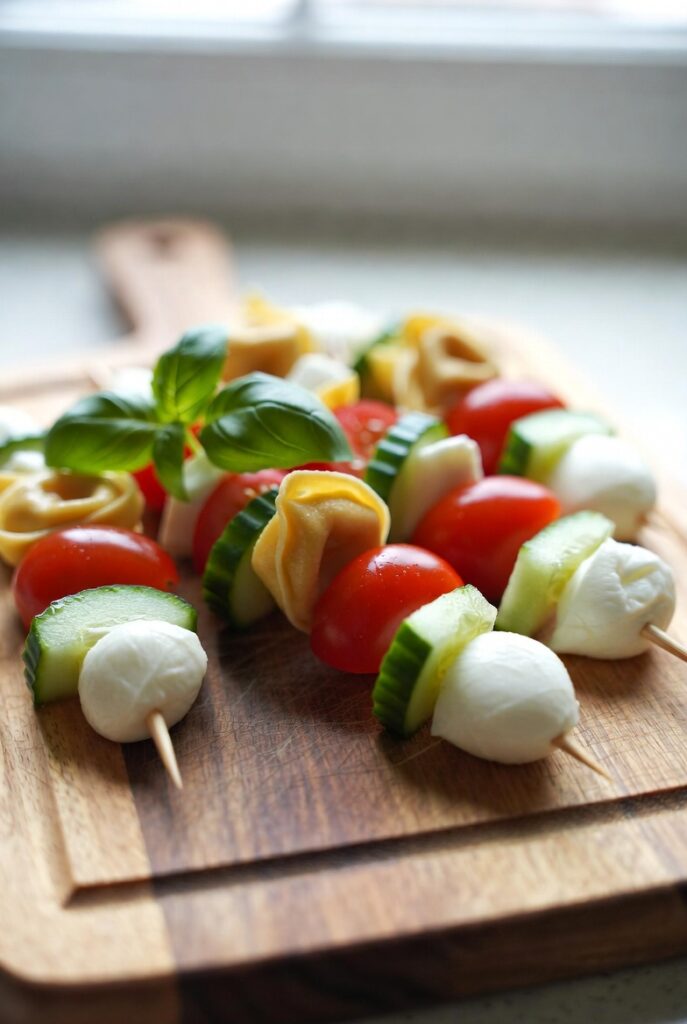
- The “Fan” Arrangement: Arrange the kabobs in a circular or fanned pattern on a heavy wooden board or a slate platter. This prevents them from looking cluttered.
- The Negative Space: Leave a deliberate gap between the kabobs. This allows the diner to pick them up easily without disturbing their neighbors. It shows you have thought about the experience of eating, not just the assembly.
- The Garnish: Scatter a few extra toasted pine nuts or a fine dusting of freshly grated Parmesan over the entire board. It adds a final layer of visual texture and signals the flavor profile to the diner before they even reach for their first skewer.
6. Culinary Art: Why This Matters
Cooking is the art of transformation. We take a box of dried or refrigerated pasta and turn it into a portable, elegant bite of food. We consider the physics of the skewer, the chemistry of the vinaigrette, and the visual geometry of the platter.
By treating the Tortellini Salad Kabob as a composition rather than a chore, you elevate the humble pasta salad into a centerpiece. You are showing your guests that you pay attention to the details. You are proving that simple ingredients, when treated with technical respect, can be as exciting as any high-end restaurant dish.