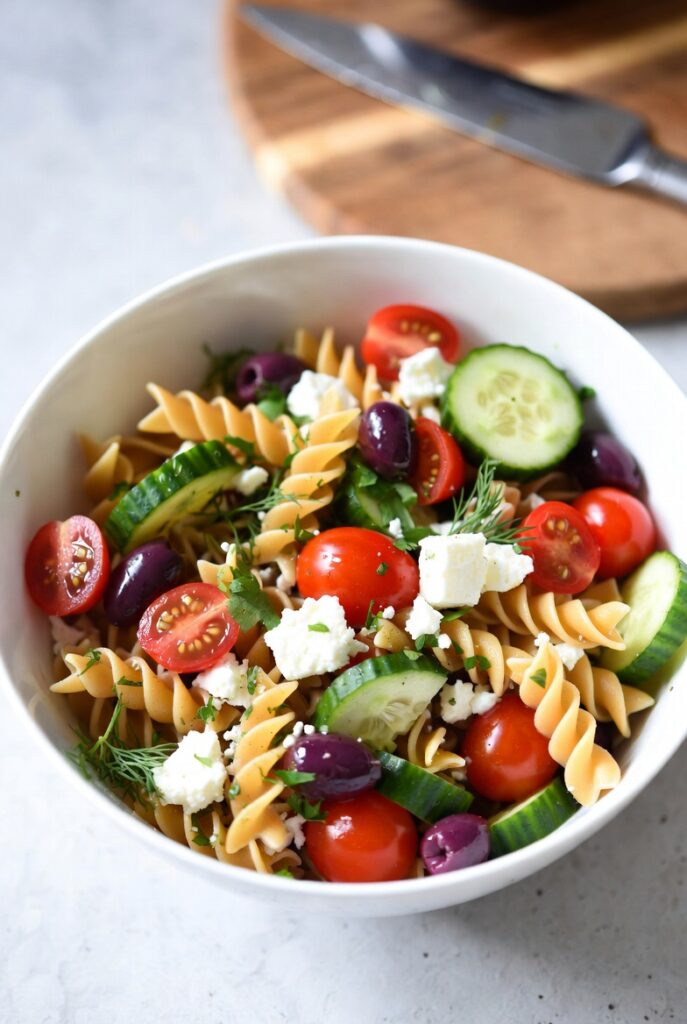
The Greek Pasta Salad is, at its heart, a celebration of the Mediterranean spirit—a dish that brings the warmth of a coastal afternoon directly to your table. Unlike heavier, cream-laden pasta salads, this version is a vibrant, sun-drenched mosaic of flavors. It relies on the marriage of sharp, briny ingredients with the simple, rustic comfort of al dente pasta.
Cooking this salad is an act of assembling a landscape. It is about balancing the bold, punchy brightness of feta and olives against the gentle sweetness of vine-ripened tomatoes and the cool, refreshing snap of cucumbers. It is a dish that rewards patience and quality, where every ingredient is given the space to shine while contributing to a collective, harmonious whole.
1. Choosing Your Ingredients: The Palette
To create a Greek pasta salad that feels like a trip to the islands, you must source ingredients that have a story to tell.
- The Pasta: Choose a shape with “architecture”—rotini, farfalle, or fusilli. These shapes are designed to act as little vessels, catching the vinaigrette, the crumbles of feta, and the fine herbs in their folds and twists.
- The Feta: Skip the pre-crumbled varieties in plastic tubs. Buy a block of authentic, barrel-aged sheep’s milk feta. It has a creamier texture and a deeper, tangier bite that cannot be replicated.
- The Vegetables: Use cherry tomatoes that are bursting with sweetness and English cucumbers for their thinner skin and fewer seeds. Red onion adds a necessary, sharp zing that wakes up the entire dish.
- The Brine: Kalamata olives are essential. Their dark, rich, and slightly fruity flavor is the salty heartbeat of a Greek salad.
2. The Vinaigrette: The Liquid Gold
The dressing is the soul of the salad. It should be a vivid, golden-hued emulsion that coats the pasta in a glossy, fragrant layer of flavor.
The Ingredients:
- The Acid: A mix of high-quality red wine vinegar and fresh lemon juice. The vinegar provides a sharp, traditional tang, while the lemon juice adds a floral, bright finish.
- The Fat: Use a premium, unfiltered extra virgin olive oil. Its color should be a deep, grassy green, and its flavor should have a slight, peppery finish at the back of your throat.
- The Aromatics: Dried oregano—rubbed between your palms before adding to the jar—releases its volatile oils. Add a clove of garlic, either finely grated or pressed, and a teaspoon of Dijon mustard to help stabilize the emulsion and give it a slight, velvety texture.
3. The Art of Assembly: A Step-by-Step Ritual
Step 1: The Pasta Foundation
Boil your pasta in generously salted water—it should taste like the sea. Cook it until al dente, meaning it still has a slight, resilient bite. Drain it, and here is the secret: rinse it under cool water for just a few seconds. This isn’t to make it cold, but to stop the cooking and rinse away excess surface starch, ensuring the pasta remains distinct and doesn’t turn into a gummy mass as it sits.
Step 2: The Marriage of Flavors
While the pasta is still slightly warm, toss it with a third of your vinaigrette. The heat opens the pasta’s pores, allowing the liquid gold to soak into the grain. Let it rest for ten minutes. This step is the difference between a salad where the flavor is just on the surface and one where the flavor is intrinsic to every bite.
Step 3: The Garden Harvest
Fold in your diced cucumbers, halved tomatoes, sliced olives, and thinly slivered red onions. The crispness of these raw vegetables against the softened, dressed pasta is where the magic of the salad happens.
Step 4: The Final Flourish
Just before you serve, add the crumbled feta and a handful of freshly chopped parsley and dill. Feta is delicate; if you add it too early and toss too hard, it will dissolve into a salty haze. By folding it in at the very end, you ensure those beautiful, snowy crumbles remain distinct and provide a creamy contrast in every forkful.
4. Troubleshooting the Balance
- If it feels flat: It needs acid. Add a squeeze of lemon juice or a splash more vinegar. Salt alone cannot fix a dish that lacks brightness.
- If the onions are too aggressive: Soak the sliced red onion in a small bowl of ice water for ten minutes before adding them to the salad. It mellows their bite while keeping them perfectly crisp.
- If the dressing is separating: You likely added the oil too quickly. Whisk your vinegar, mustard, and seasonings first, then slowly drizzle the oil while whisking constantly. Think of it as painting—slow, steady strokes.
5. The Art of Presentation
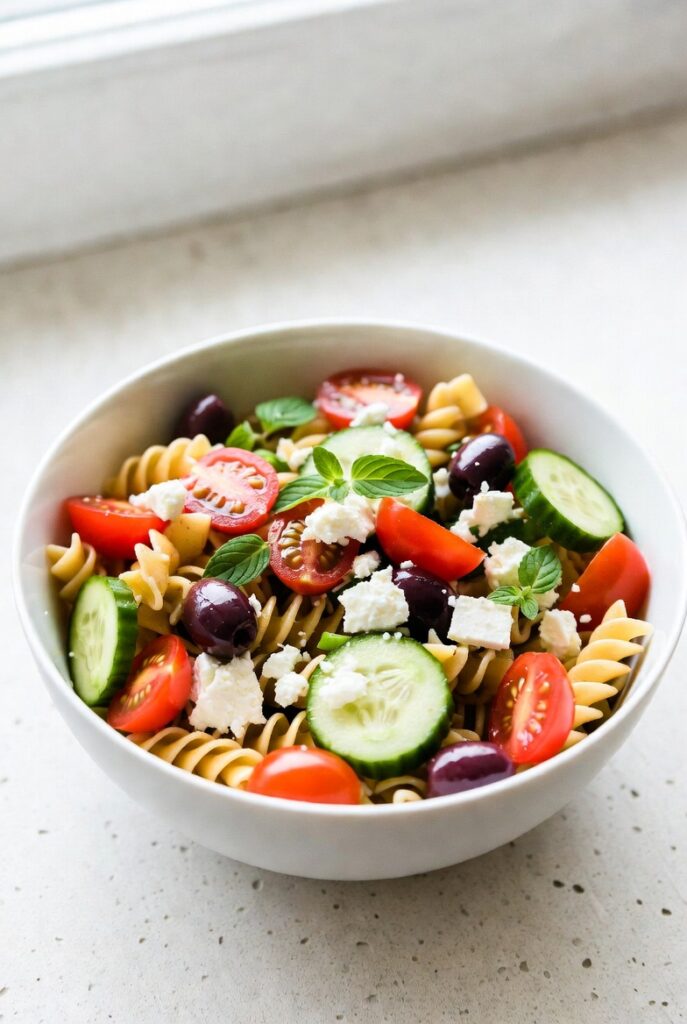
This salad is a visual feast. Because it is so colorful, it looks best served in a wide, shallow bowl. A scattering of fresh, whole kalamata olives on top and a few sprigs of fresh dill can transform a simple bowl of pasta into a sophisticated centerpiece.
Pair this with some grilled lemon-herb chicken or a piece of flaky, oven-roasted fish. The salad is robust enough to act as a meal on its own, but it is also the perfect companion to anything that has spent time on the grill.
6. The Joy of the “Next-Day” Salad
One of the great gifts of the Greek Pasta Salad is its longevity. Unlike leafy salads that wilt, this dish improves with time. As it rests in the refrigerator, the pasta continues to soak up the vinaigrette, and the vegetables release a bit of their juices, creating a deeper, more cohesive flavor profile. It is the perfect “make-ahead” dish for a busy week, offering a refreshing, vibrant meal that is ready the moment you open the fridge door.
7. Conclusion: The Mediterranean Canvas
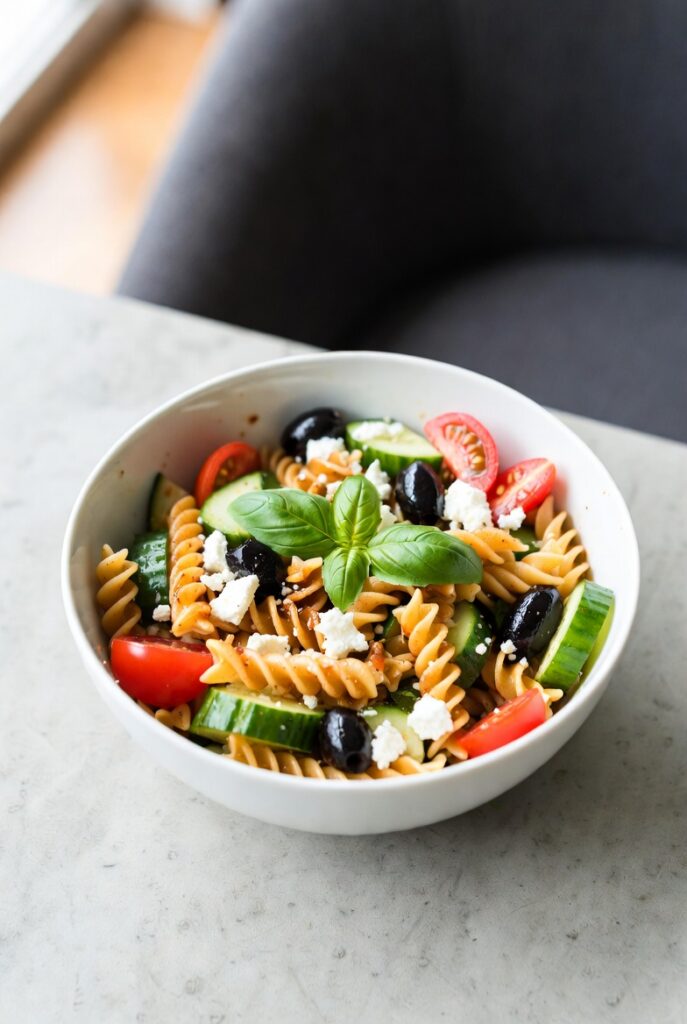
Preparing a Greek Pasta Salad is more than just following a recipe; it is about curating the fresh, simple flavors of the Mediterranean. It requires an appreciation for the snap of a cucumber, the brine of an olive, and the creamy tang of authentic feta. It is a dish that invites you to be present, to taste as you go, and to enjoy the simple, beautiful art of mixing fresh ingredients into something truly memorable.
Whether you are enjoying it on a warm porch or as a quick lunch at your desk, this salad serves as a reminder of the sun, the sea, and the simple beauty of a meal well-made.