1. Introduction: The Architecture of “Analog Comfort”
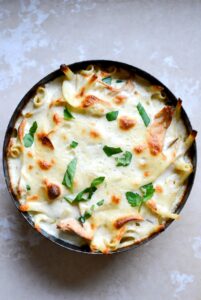
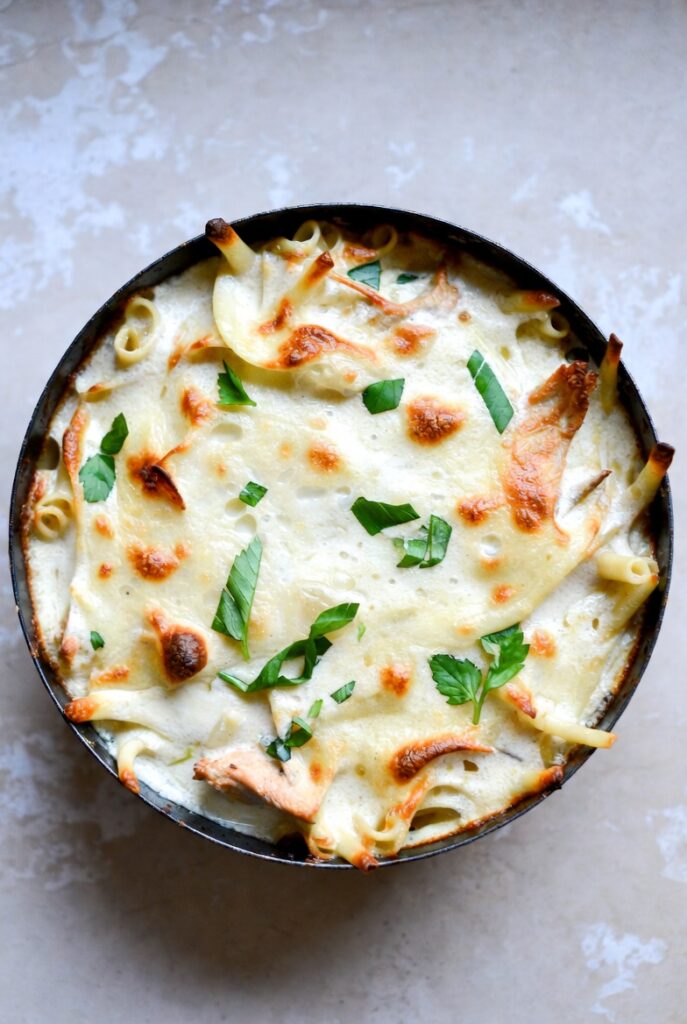
In the expansive taxonomy of domestic gastronomy, the Creamy Chicken Noodle Casserole stands as a landmark study in “Textural Layering and Moisture Retention.” Unlike a standard pasta bake, which often suffers from “Thermal Dehydration” (becoming dry in the oven), the Homestyle Casserole utilizes a “Suspended Emulsion” to maintain a velvet-smooth interior while achieving a high-frequency “Lipid-Crunch” on the surface.
This document serves as the “Master Draft” for the dish. We move beyond the rudimentary “can-of-soup” logic and enter the realm of “Bechamel-Based Stability.” By leveraging a scratch-made “Velouté” and “Par-Boiled Egg Noodles,” we create a result that is “Deeply Savory” and structurally resilient. For the high-performance parent, the meal-prep strategist, or the comfort-seeker, this is the “Platinum Standard” of culinary utility: it delivers a “High-Resolution” satiety profile that persists through reheating.
2. The Science of the “Starch-Buffer” and Al Dente Precision
To master the Chicken Noodle Casserole, one must understand the behavior of Starch Hydration during Secondary Thermal Exposure.
- The Carry-Over Cook: Egg noodles are porous. If cooked to completion in water, they will absorb the sauce during the baking phase, resulting in a “Mushy” texture and a dry casserole.
- The Solution: We utilize the “Partial Hydration Protocol,” boiling the noodles for exactly 2 minutes less than the package instructions.
- The Result: The noodles finish their hydration process inside the creamy sauce, drawing the chicken aromatics into their “Molecular Core” while maintaining “Al Dente” structural integrity.
3. The Blueprint Overview: Technical Specifications
- Cuisine Type: American Homestyle / Comfort Utility
- Difficulty Level: Easy (Focus on “Sauce Viscosity”)
- Total Preparation Time: 20 Minutes
- Total Cooking Time: 25 Minutes
- Total Time: 45 Minutes
- Dietary Classifications: High-Protein, Comfort-Heavy.
- Yield: Serves 6–8
4. Equipment and Tools: The Essentials of “Heat Retention”
- $9 \times 13$ inch Ceramic or Glass Baking Dish: To ensure even radiant heat distribution.
- Heavy-Bottomed Saucepan: For the “Velouté” synthesis.
- Large Colander: For the noodle “Snap-Cooling” phase.
5. Ingredients Section: Sourcing for “Velvet” Depth
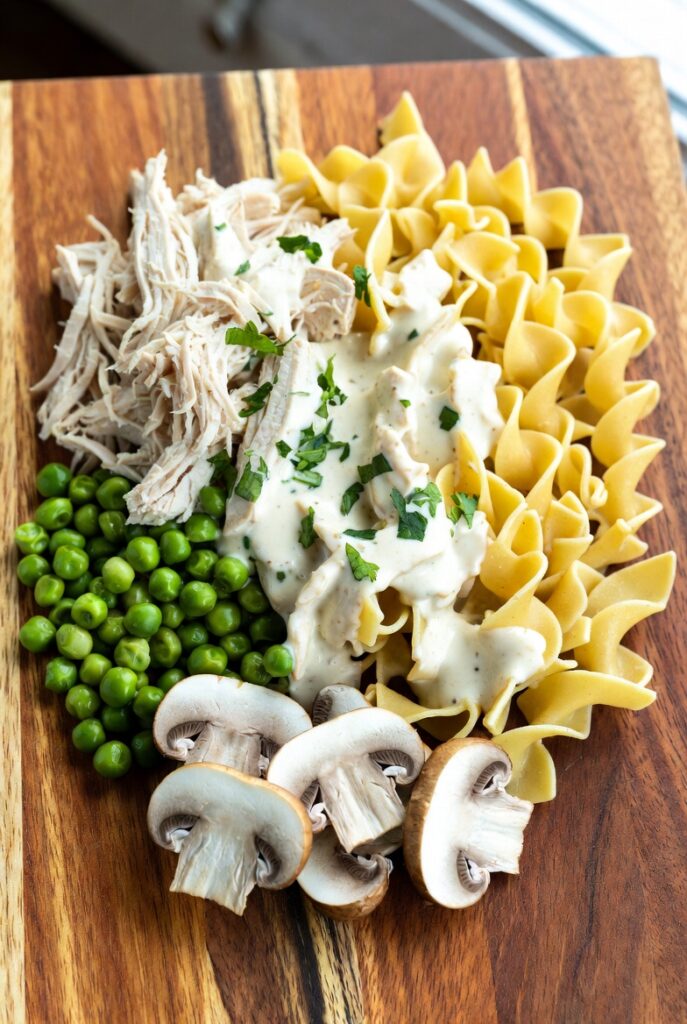
In a dish defined by its “Cream-to-Protein” ratio, the “Fat-Content” of the dairy and the “Purity” of the chicken broth dictate the final “Sensory Resolution.”
The Protein Anchor
- Cooked Chicken: 3 cups, shredded or cubed.
- The Master Hack: Use Rotisserie Chicken. The pre-existing “Maillard-Seasoning” on the skin and the tender, slow-roasted meat provide a flavor depth that home-boiled chicken cannot replicate.
The “Noodle Scaffold”
- Wide Egg Noodles: 12 oz. (Selected for their high “Surface-Area-to-Volume” ratio, which catches the maximum amount of sauce).
The “Velvet Matrix” (The Sauce)
- Butter & All-Purpose Flour: 4 tbsp each. (The “Roux Base”).
- Chicken Bone Broth: 2 cups. (For “Collagenic Depth”).
- Whole Milk or Heavy Cream: 1 cup. (The “Lipid Buffer”).
- Sour Cream: 1/2 cup. (The “Acidic Tang” that cuts the richness).
- Garlic & Onion Powder: 1 tsp each.
The “Aromatic inclusions”
- Frozen Peas & Carrots: 1.5 cups. (For “Visual Gradient” and fiber).
- Celery: 2 stalks, finely diced and sautéed.
The “Lipid-Crunch” Canopy (The Topping)
- Panko Breadcrumbs or Crushed Ritz Crackers: 1 cup.
- Melted Butter: 2 tbsp.
- Cheddar Cheese: 1.5 cups, shredded.
6. The “Velouté-Emulsion” Protocol
The most common failure in casseroles is “Oil Separation.” To achieve a professional-grade result, one must utilize the “Sequential Hydration Protocol.”
- The Roux: Cook the butter and flour until it smells “Nutty” (approx. 2 minutes).
- The Tempering: Add the broth one splash at a time, whisking constantly. This creates a “Stable Emulsion” that will not “Split” under the high radiant heat of the oven.
- The Dairy Finish: Add the milk and sour cream last to preserve their “Creamy Integrity” and prevent curdling.
7. Step-by-Step Instructions: The Master Execution
Step 1: The “Snap-Boil”
Preheat oven to $190^\circ C$ ($375^\circ F$). Boil the egg noodles in salted water for 2 minutes less than the “Al Dente” instruction. Drain and set aside.
Step 2: The “Aromatic Sauté”
In a large pan, sauté the diced celery in butter until soft. This creates the “Vegetal Baseline” for the casserole.
Step 3: The “Velvet Matrix” Synthesis
Follow the Velouté-Emulsion Protocol (Section 6) in the same pan. Once the sauce is thick enough to “Nappe” (coat) a spoon, stir in the garlic powder, onion powder, salt, and black pepper.
Step 4: The “Structural Integration”
In a large mixing bowl (or directly in the baking dish), combine the partially cooked noodles, shredded chicken, frozen vegetables, and the finished sauce. Fold gently to ensure “Uniform Saturation.”
Step 5: The “Canopy” Application
Spread the mixture evenly in the baking dish. Top with a “High-Density” layer of shredded cheddar cheese, followed by the buttered breadcrumbs.
Step 6: The “Thermal Finish”
Bake for 20–25 minutes.
- The Observation: You are looking for “Active Bubbling” around the edges and a “Deep-Gold” hue on the breadcrumbs.
8. Satiety and the “Glucose-Protein” Equilibrium
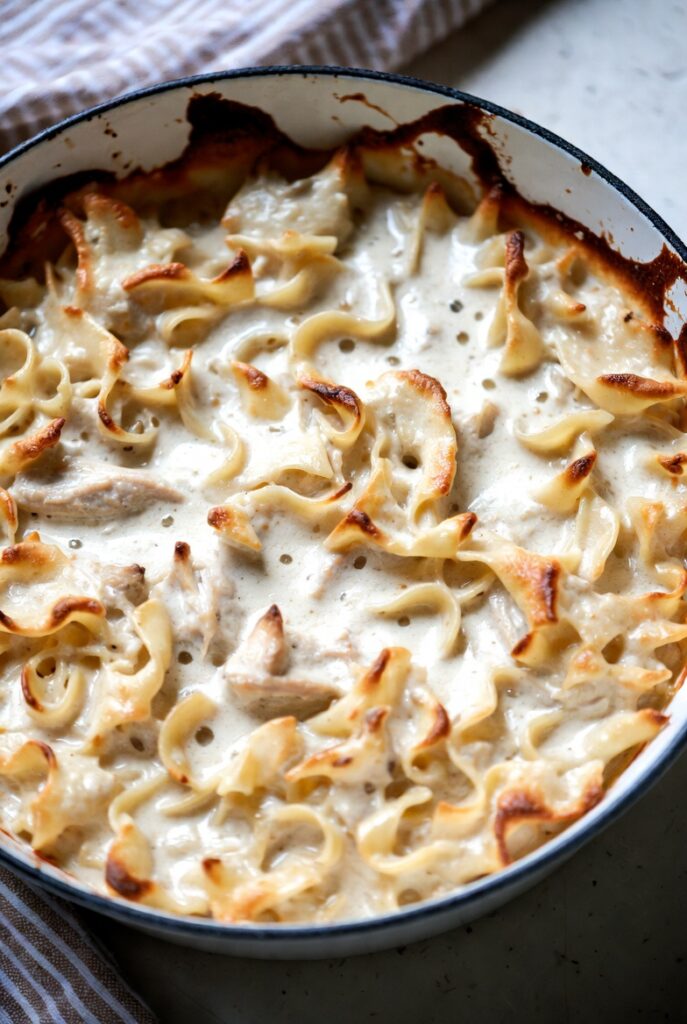
Homestyle Creamy Chicken Noodle Casserole provides a “High-Resolution Satiety” profile:
- The Immediate Comfort: The warm, creamy lipids trigger a “Sensory Calm.”
- The Amino Anchor: The high-density chicken protein provides the “Building Blocks” for satiety.
- The Slow-Release Carb: Egg noodles, when cooked “Al Dente,” have a lower glycemic velocity than overcooked pasta, providing “Stable-Energy” release.
9. Modular Customization: The “Flavor Pivots”
- The “Garden” Draft: Add 1 cup of sautéed mushrooms for an “Earthy-Umami” resolution.
- The “Inferno” Standard: Add 1 tsp of red pepper flakes and use “Pepper Jack” cheese for a “Capsaicin High-Note.”
- The “Herbal” Shift: Fold in 2 tbsp of fresh chopped parsley and thyme for a “Bright-Botanical” finish.
10. Storage and “Thermal Recovery”
- Refrigeration: Store in an airtight container for up to 4 days.
- The Recovery Method: Avoid the microwave for large portions. To restore the “Master Draft” texture, reheat in the oven at $175^\circ C$ ($350^\circ F$) with a small splash of milk to “Re-Hydrate” the sauce.