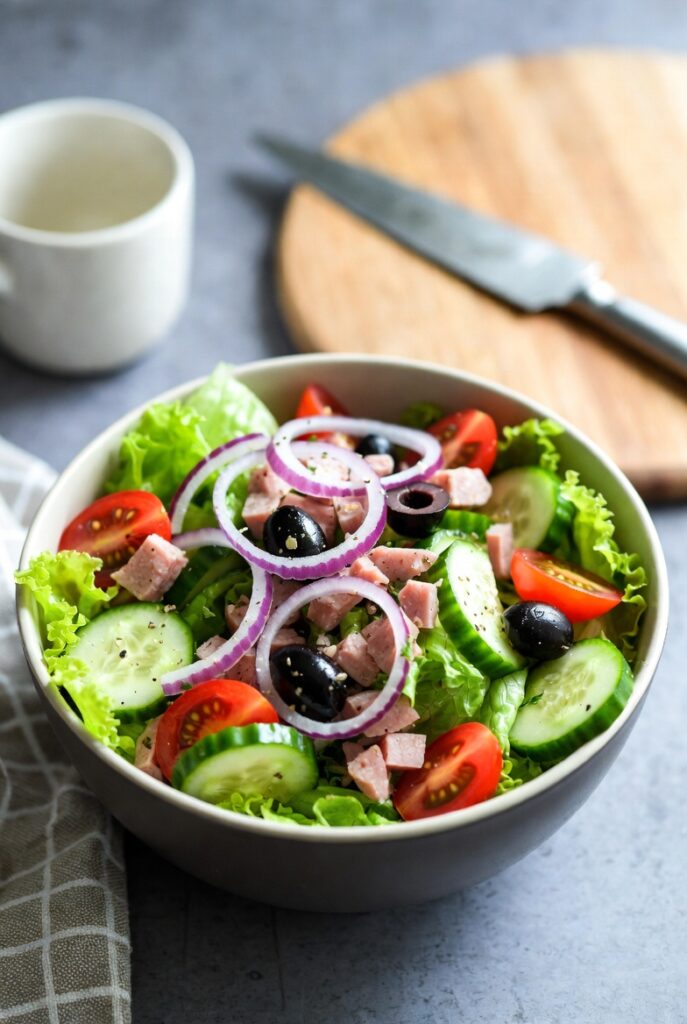
In the culinary world, a salad is often viewed as a simple tossed affair—a quick mix of greens and whatever dressing happens to be in the cupboard. However, the Italian Chopped Salad is something entirely different. It is a work of art, a mosaic of flavors where every bite is designed to be as vibrant and satisfying as the last. It’s not just about throwing ingredients into a bowl; it’s about the deliberate, thoughtful preparation of each component to create a perfectly harmonious dish.
When done right, an Italian Chopped Salad is a celebration of variety. It is the perfect balance of salty, creamy, crunchy, and sharp—a dish that invites you to slow down and savor the contrast of textures. Whether you are prepping for a summer picnic or a casual weeknight dinner, this salad transforms humble pantry staples into a true gourmet experience.
1. The Art of the “Uniform Bite”
The defining characteristic of an Italian Chopped Salad is the uniformity of the chop. Think of it as a mosaic: if the pieces are too large, you get a mouthful of one thing; if they are too small, they turn into mush.
The goal is to aim for pieces about the size of a pea or a small dice (roughly 1 centimeter). This size allows all the ingredients—the snap of the cucumber, the saltiness of the salami, the creaminess of the cheese—to mingle beautifully. When every forkful contains a perfect cross-section of the entire salad, you’ve achieved the hallmark of a true master.
2. Choosing Your Ingredients: The Palette
An Italian Chopped Salad is only as good as the ingredients you select. Since the salad is “chopped,” the flavors will bleed into one another, so quality is paramount.
- The Foundation: Use Romaine hearts for their reliable, refreshing crunch. They provide the necessary backbone for the salad and hold their structure beautifully even after being dressed.
- The Salty Notes: Cured meats like salami or pepperoni offer a depth of flavor that defines the “Italian” profile. You want a meat with a nice amount of fat, which will coat your palate and carry the flavor of the vinaigrette.
- The Creamy Contrast: Cubed Provolone is the traditional choice. Its slight sharpness pairs elegantly with the vinaigrette. For something lighter, fresh Mozzarella pearls, cut in half, add a delicate, milky richness.
- The Brightness: You need acidity to cut through the richness of the meats and cheese. Kalamata olives for an earthy, briny punch; pepperoncini for a bright, vinegary heat; and red onion for a crisp, zesty kick.
3. The Vinaigrette: Binding the Elements
A dressing for a chopped salad needs a bit more personality than a simple oil-and-vinegar mix. It needs to be bold, tangy, and emulsified so it clings to every tiny diced piece.
The Formula:
- The Acid: Red wine vinegar is the classic choice here, providing a sharp, clean tang that cuts through the fat of the salami.
- The Oil: A high-quality extra virgin olive oil provides the fruitiness that acts as a bridge for all the other flavors.
- The Emulsifier: A teaspoon of Dijon mustard is your secret weapon. It doesn’t just add flavor; it acts as the bridge that holds the vinegar and oil together, creating a thick, glossy dressing that won’t separate on the plate.
- The Aromatics: Dried oregano is the soul of this dressing. It’s warm, earthy, and classically Italian. Add a pinch of garlic powder for a smooth, consistent flavor that doesn’t have the bite of raw, minced garlic.
4. The Method: Step-by-Step Assembly
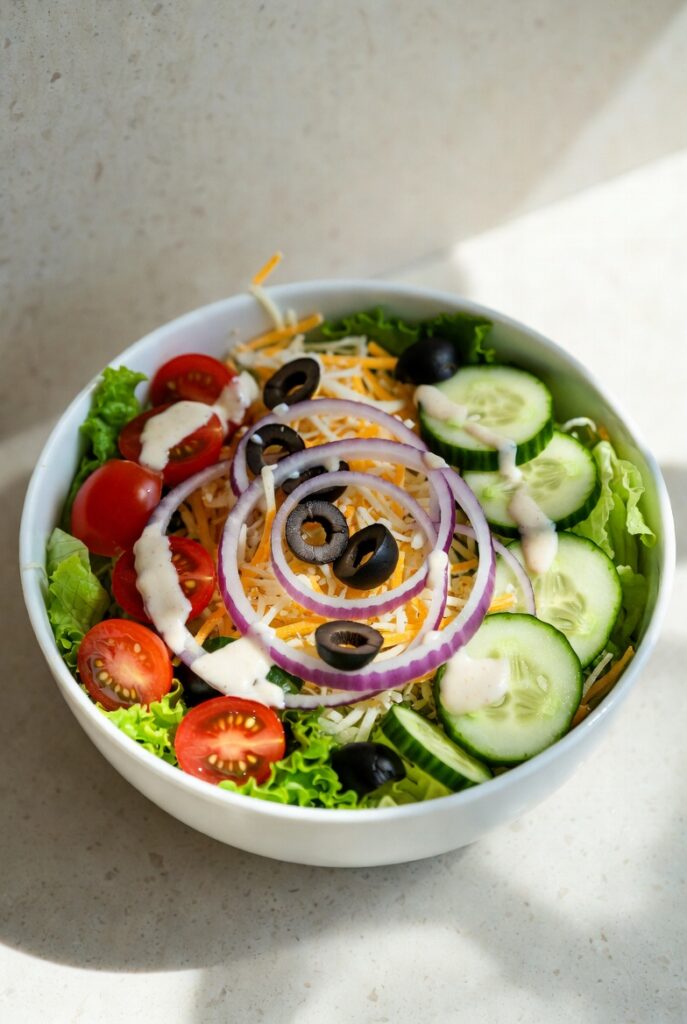
Building this salad is a ritual. Follow these steps to ensure the best results:
Step 1: The Prep
Prepare all your ingredients. Dice your salami, Provolone, cucumber, and celery into uniform cubes. Halve your olives and finely mince your red onion. For the Romaine, stack the leaves and slice them into thin ribbons, then turn the knife and slice across to create small squares.
Step 2: The Marination Flash
This is a professional secret: toss your meat, cheese, olives, and crisp vegetables in half of your vinaigrette before you add the lettuce. Let this mixture sit for 10 minutes. This allows the salt from the salami and the brine from the olives to soften the raw onions and lightly pickle the vegetables in their own juices.
Step 3: The Leafy Fold
Just before you are ready to serve, add the chopped Romaine and the rest of the dressing. Use your hands or a flat spatula to toss the salad gently, folding the dressed ingredients into the greens. You want the leaves to be coated in a shimmering, glossy layer of vinaigrette—never a puddle at the bottom of the bowl.
5. Troubleshooting: Perfecting the Balance
- If the salad feels too salty: Remember that the meat, olives, and cheese are all naturally salty. If it tastes too aggressive, add a squeeze of fresh lemon juice or a pinch of sugar to the vinaigrette to mellow the edges.
- If it gets soggy too fast: You likely didn’t dry your Romaine thoroughly after washing it. A salad spinner is your best friend here. If the leaves are wet, the oil won’t stick, and the vinaigrette will run right off.
- If it lacks “Pop”: Add a handful of toasted pine nuts or a sprinkle of toasted panko crumbs. That extra layer of crunch creates an addictive texture contrast that keeps people reaching for another forkful.
6. The Joy of Presentation
An Italian Chopped Salad is a visually stunning dish because of its variety of colors and textures. Serve it in a wide, shallow bowl rather than a deep one. This allows the colors to spread out, turning the bowl into a beautiful, edible mosaic. If you want to impress, finish with a light dusting of freshly grated Parmesan and a few extra rings of pepperoncini for a pop of color.
Pair this salad with a warm, crusty loaf of garlic bread—it’s the perfect vehicle to soak up any lingering dressing at the bottom of the bowl.
7. Conclusion: The Beauty of the Process
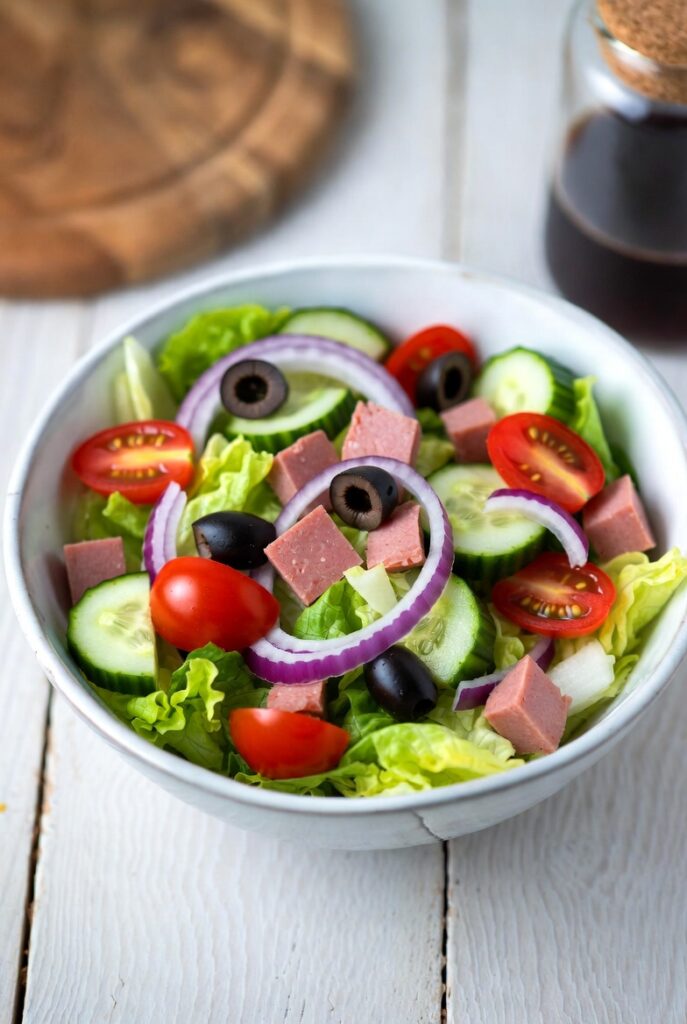
The Italian Chopped Salad is a testament to the fact that cooking is often as much about organization as it is about heat. By focusing on the prep, respecting the ratios, and taking the time to let your ingredients harmonize, you transform a simple lunch into a gourmet event. It’s a dish that feels abundant, colorful, and deeply satisfying—a true cornerstone of the modern, home-cooked repertoire.