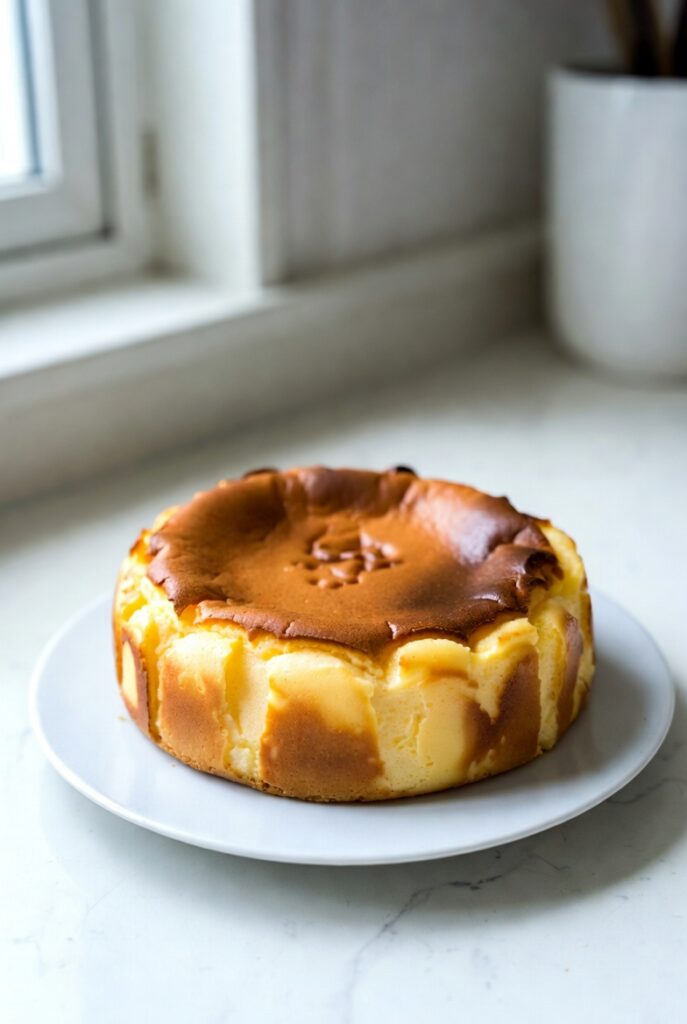
1. Introduction: The Architecture of “Structural Levity”
In the sophisticated taxonomy of global patisserie, the Japanese Cheesecake (also known as Soufflé Cheesecake) represents the ultimate achievement in “Atmospheric Gastronomy.” Unlike its Western counterpart—the New York-style cheesecake, which is a study in “Lipid-Density” and “Gram-for-Gram Saturation”—the Japanese variant is a structural masterpiece of “Aerated Emulsification.” It possesses a “Cloud-Like” crumb, a “Chiffon-Soft” finish, and a distinctive “Wobble-Factor” that signals a perfectly calibrated protein scaffold.
This document serves as the “Technical Manifesto” for the dish. We move beyond the rudimentary “cream-cheese-and-eggs” logic and examine the mechanics of “The Micro-Bubble Equilibrium.” By balancing the surface tension of a meringue with the heavy lipids of a cheese custard, we achieve a result that is “Vapor-Light” and sensorially ethereal. For the high-performance baker, this is the “Platinum Standard” of technical utility.
2. The Science of “Protein-Lattice Stability”
To master the Japanese Cheesecake, one must understand the behavior of Mechanical Aeration and Thermal Gradients.
2.1 The Meringue Scaffold: “Soft-Peak” Dynamics
The “Levity” of the cheesecake is entirely dependent on the quality of the egg white foam. We require a “Stable-Micro-Bubble” structure. If the egg whites are over-beaten to “Stiff-Peaks,” the air bubbles become too large and brittle; when the heat of the oven expands them, they will rupture, causing the cake to “Cracked-Surface” and subsequently collapse. We target a “Silky-Soft-Peak” that curls over like a wave, ensuring the bubbles have enough elasticity to expand without breaking.
2.2 The “Lipid-to-Air” Emulsion
Cream cheese and butter are heavy, hydrophobic substances. Introducing them to a light egg foam is a “Tactical-Challenge.” We utilize the “Bain-Marie Melting Phase” to create a warm, liquid-cheese base. This reduces the viscosity of the fats, allowing them to coat the air bubbles of the meringue without “Deflating-the-Matrix.”
2.3 The “Slow-Radiant” Thermal Cycle
Japanese cheesecake is highly sensitive to “Thermal-Shock.” If the oven temperature is too high, the exterior sets before the interior expands, leading to “Surface-Fracture.” We employ a Bain-Marie (Water Bath) to act as a “Thermal-Buffer,” ensuring the heat enters the cake at a constant $100^\circ\text{C}$ (the boiling point of water), preventing the bottom from overcooking while the top browns through radiant convection.
3. The Blueprint Overview: Technical Specifications
- Cuisine Type: Japanese Fusion / Advanced Patisserie
- Difficulty Level: High (Focus on “Bubble-Integrity”)
- Total Preparation Time: 40 Minutes
- Total Cooking Time: 80–90 Minutes (Low-and-Slow)
- Total Time: Approximately 3 Hours (Including cooling)
- Dietary Classifications: High-Protein, Vegetarian-Comfort.
- Yield: One 7-inch (18cm) Round High-Rise Cake
4. Equipment and Tools: The Essentials of “Precision Deployment”
- 7-inch (18cm) Solid-Bottom Round Pan: The Non-Negotiable Tool. Avoid springform pans as they often leak, even with foil. A solid pan ensures “Hydraulic-Stability.”
- Electric Hand Mixer: Necessary for the “Low-Speed-Stabilization” of the egg whites.
- Fine-Mesh Sieve: For the “Nano-Sifting” of the starch scaffold.
- Deep Baking Tray: To act as the “Bain-Marie Reservoir.”
- Parchment Paper: Must be cut to extend 2 inches above the rim of the pan to support the “High-Rise” expansion.
5. Ingredients Section: Sourcing for “Velvet-Grain” Resolution
The “Protein-to-Lipid” ratio dictates the final “Sensory Resolution.”
5.1 The “Cheese-Emulsion” (The Base)
- Full-Fat Cream Cheese: 250g (Approx. 1 cup). Must be a high-quality block (like Philadelphia) for consistent “Lipid-Density.”
- Unsalted Butter: 60g (Approx. 4 tbsp).
- Whole Milk: 100ml.
- Large Egg Yolks: 6 units (Room temperature).
- Vanilla Bean Paste: 1 tsp.
- Lemon Juice: 1 tbsp (Provides “Acidic-Brightness” and denatures yolk proteins for a smoother mix).
5.2 The “Starch Scaffold” (The Binder)
- Cake Flour: 60g (Sifted). Cake flour has lower gluten (approx. 7-8%), preventing a “Rubbery-Texture.”
- Cornstarch: 20g (The “Crisp-Set” agent).
5.3 The “Atmospheric-Engine” (The Meringue)
- Large Egg Whites: 6 units (Cold, for better bubble stability).
- Granulated Sugar: 140g.
- Cream of Tartar: 1/4 tsp (The “Scaffold-Stabilizer”).
6. The “Bubble-Integrity” Protocol: Mastering the Synthesis
The primary failure point of Japanese Cheesecake is “Layered-Separation” (where the cheese sinks to the bottom). To achieve a “Master-Tier” result, you must utilize the “Triple-Fold Integration.”
Phase 1: The “Bain-Marie” Melting
Combine cream cheese, butter, and milk in a bowl over a pot of simmering water. Whisk until “Liquid-Silk.” Remove from heat and let cool slightly before whisking in the yolks and lemon juice. This creates the “Lipid-Yolk-Matrix.”
Phase 2: The “Nano-Sifting”
Sift the cake flour and cornstarch into the cheese base. Whisk until just combined. Pass the entire mixture through a sieve into a clean bowl. This ensures “Zero-Lump” resolution.
Phase 3: The “Stabilized-Meringue”
Whip egg whites with cream of tartar on Low-to-Medium speed. Add sugar in three stages. Low speed creates “Micro-Bubbles” that are uniform in size, which are significantly more stable than the “Macro-Bubbles” created by high-speed whipping. Stop when the whites are glossy and form a “Bird’s-Beak” (Soft-Peak).
Phase 4: The Integration
Fold 1/3 of the meringue into the cheese base using a large whisk to “Lighten-the-Density.” Switch to a spatula and fold in the remaining whites using a “Cutting-and-Lifting” motion. Stop the moment the color is uniform to prevent “Bubble-Collapse.”
7. Step-by-Step Instructions: The Master Execution
Step 1: The “Pan-Architecture”
Line the bottom and sides of your pan with parchment paper. If using a solid-bottom pan, grease the sides so the paper sticks. The paper must rise above the pan rim like a chimney to guide the cake’s “Vertical-Trajectory.”
Step 2: The “Air-Bubble Purge”
Pour the batter into the pan. Lift the pan 1 inch from the counter and drop it twice. This “Mechanical-Shock” forces large air pockets to the surface, preventing “Internal-Voids.”
Step 3: The “Bain-Marie” Deployment
Place the pan into a larger baking tray. Fill the tray with hot water (approx. $80^\circ\text{C}$) until it reaches halfway up the side of the cake pan.
Step 4: The “Bimodal-Baking” Cycle
This two-stage temperature protocol is the secret to a “Crack-Free” top.
- Stage 1 (The Expansion): Bake at $160^\circ\text{C}$ ($320^\circ\text{F}$) for 20 minutes. This initiates the “High-Rise.”
- Stage 2 (The Setting): Reduce temperature to $110^\circ\text{C}$ ($230^\circ\text{F}$) and bake for another 60 minutes. This allows the internal protein lattice to “Set” without the exterior burning.
Step 5: The “Oven-Rest” (Critical)
Do not remove the cake immediately. Turn off the oven and prop the door open with a wooden spoon (approx. 1 inch). Let the cake cool inside for 15–20 minutes. This prevents the “Pressure-Shock” that causes a cake to deflate rapidly.
Step 6: The “Chill-Crystallization”
Once the cake reaches room temperature, refrigerate for at least 4 hours (ideally overnight). While the cake is delicious warm, the “True-Flavor-Resolution” and “Structural-Set” only occur once the fats have re-solidified in the fridge.
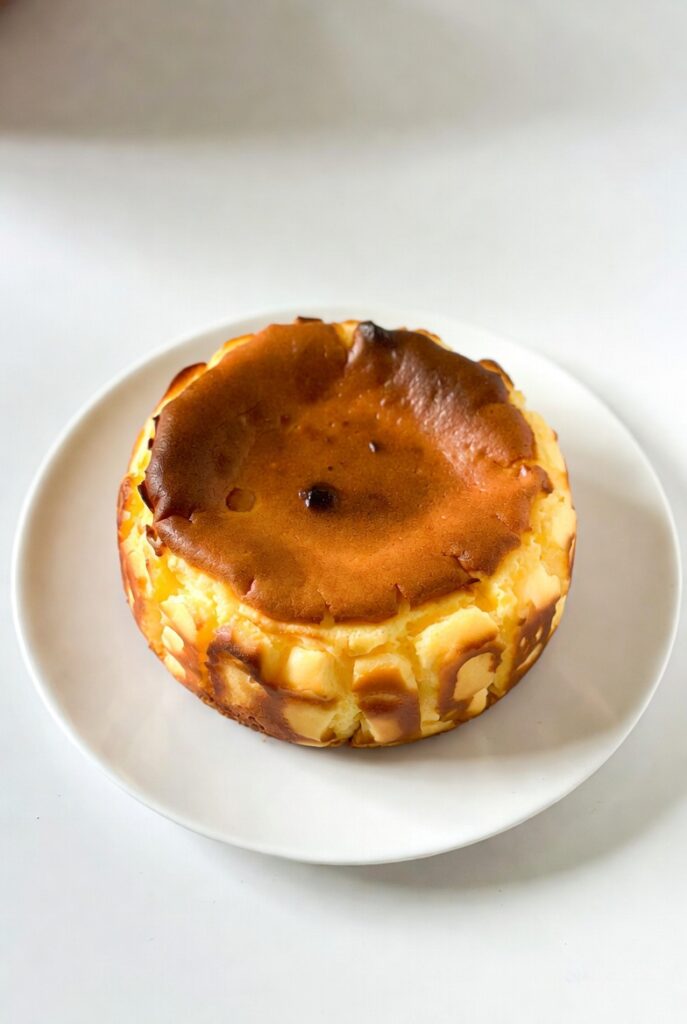
8. Satiety and the “Vapor-Weight” Arc
Japanese Cheesecake provides a unique “Sensory-Saturation” profile:
- The “Melt-Away” Experience: Because the cake is 70% air and 20% moisture, it requires almost zero “Mastication-Effort.” The lipids melt on the tongue, providing an instant flavor release.
- The “Light-Lipid” Balance: It offers the richness of cream cheese without the “Heavy-Palate” fatigue of New York styles.
- The Volumetric Illusion: A single slice looks substantial due to its height, yet its “Caloric-Density” is significantly lower than traditional cakes.
9. Modular Customization: The “Aromatic Pivots”
- The “Matcha-Resolution”: Replace 10g of cake flour with ceremonial grade Matcha powder. This introduces a “Vegetal-Bitterness” that balances the sugar.
- The “Yuzu-Zest” Shift: Replace lemon juice with Yuzu juice and add 1 tsp of Yuzu zest for a “Citrus-High-Note” common in Tokyo-tier patisseries.
- The “Burnt-Honey” Draft: Replace 30g of sugar with dark, manuka, or burnt honey to provide a “Floral-Amber” complexity.
10. Storage and “Thermal Recovery”
- Refrigeration: Store in an airtight container for up to 5 days.
- The Recovery Method: This cake is best served Chilled. However, if you prefer a “Soufflé-State,” microwave a slice for exactly 10 seconds to “Loosen-the-Lipids” without collapsing the structure.
11. Frequently Asked Questions (FAQ)
Q: Why did my cake crack on top?
A: “Thermal-Overload.” Either your oven temperature was too high, or you whipped the meringue to “Stiff-Peaks.” Stiff peaks create large bubbles that expand too aggressively, tearing the surface lattice.
Q: Why did my cake shrink/deflate?
A: “Incomplete-Setting.” The internal temperature didn’t reach the “Set-Point,” or you removed it from the oven too quickly. The Oven-Rest (Step 5) is mandatory to stabilize the pressure.
Q: Why is there a dense layer at the bottom?
A: “Emulsion-Failure.” You didn’t fold the meringue thoroughly into the cheese base, or you waited too long to bake after mixing, allowing the heavy cheese to settle.
12. Nutritional Information
(Per Slice – 1/8th of cake)
| Nutrient | Amount |
| Calories | 210 kcal |
| Protein | 6g |
| Total Fat | 14g |
| Net Carbs | 16g |
| Sodium | 120mg |
13. The “Visual Gravity” of Presentation
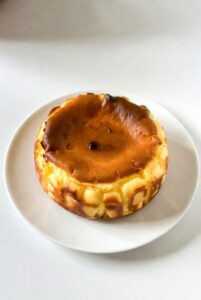
- The “Naked-Minimalist”: Serve the cake plain on a dark ceramic plate to emphasize the “Pristine-Gold” top.
- The “Stamping” Ritual: Many Japanese bakeries use a hot brand to sear a logo onto the top. You can mimic this with a dusting of powdered sugar through a stencil.
- The “Berry-Contrast”: A single, perfectly ripe strawberry on the side provides a “Red-High-Note” against the pale yellow crumb.
14. Conclusion: The Master Draft of Atmospheric Utility
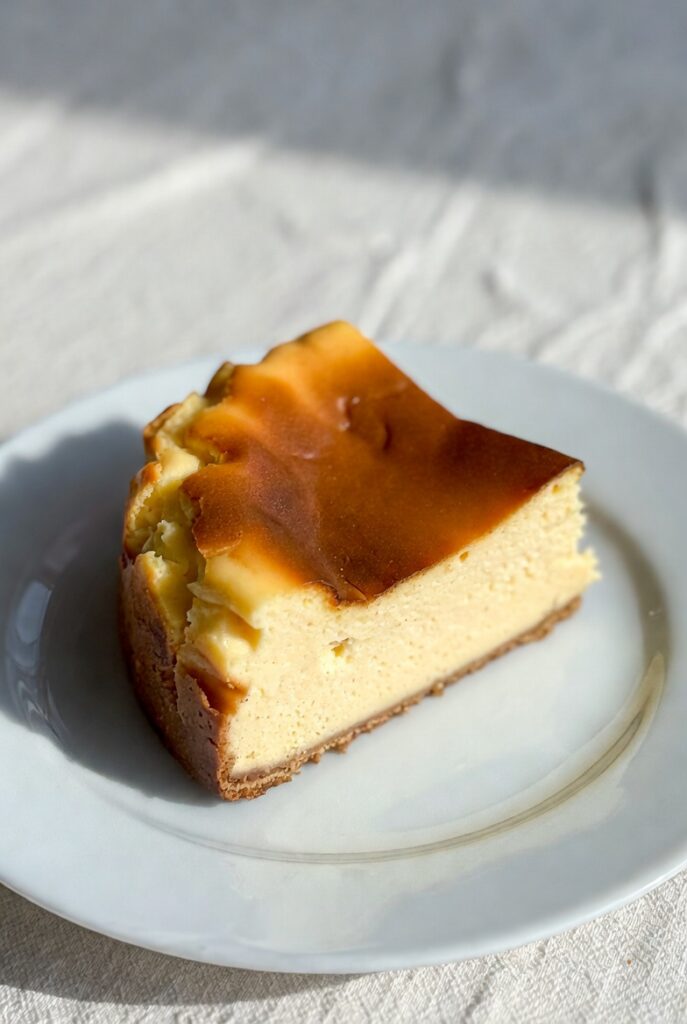
The Cloud-Matrix Protocol proves that the most impressive culinary results come from the mastery of “Invisible-Architecture.” By respecting the “Micro-Bubble Equilibrium” and the “Slow-Radiant” heat cycle, you are delivering a dessert that is visually “Stunning,” nutritionally lighter than expected, and sensorially perfect.
It is the ultimate “Ethereal-Anchor”—a “Wobbling-and-Weightless” testament to the power of precise protein engineering.