1. Introduction: The Architecture of “Mesoamerican Flavor Layers”
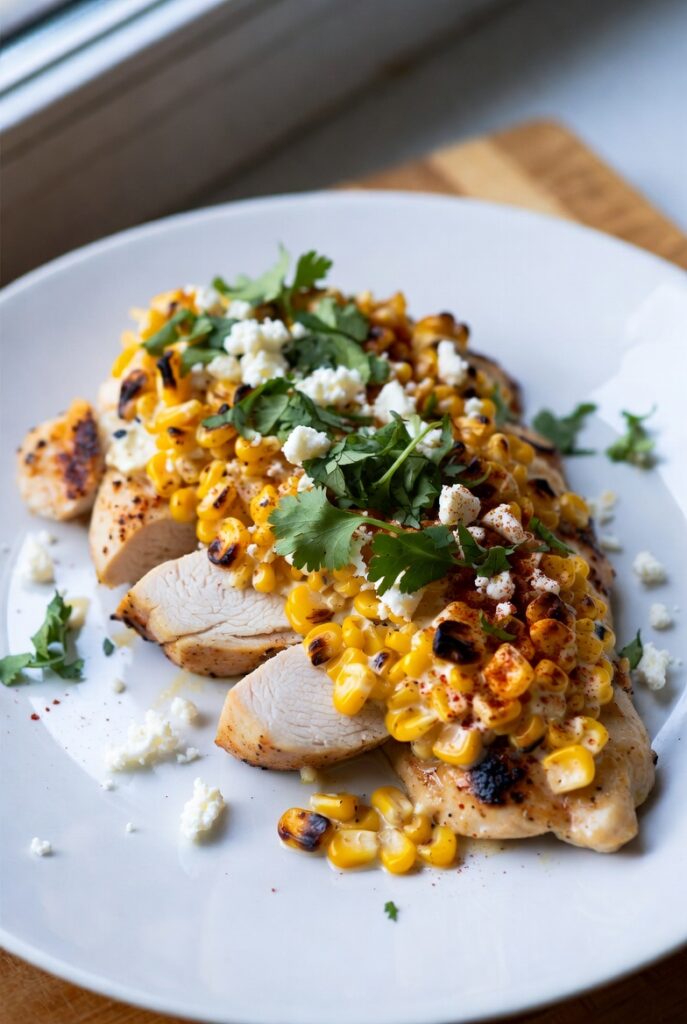
In the evolving taxonomy of modern fusion gastronomy, Zesty Mexican Street Corn Chicken represents a radical “Textural Pivot.” This dish is a sophisticated study in “Contrasting Sensory Payloads”—taking the “High-Frequency” acidity and “Creamy-Lipid” profile of traditional Elote (Mexican Street Corn) and grafting it onto a “Structural Protein Scaffold.”
A true “Master Draft” of this recipe moves beyond the simple “chicken with corn” logic. It is an exercise in “Layered Umami Extraction,” where the sweetness of charred corn kernels meets the saline punch of Cotija cheese, all unified by a “Zesty-Citrus” emulsion. For the high-performance host, the meal-prep strategist, or the culinary explorer, this is the “Platinum Standard” of flavor delivery: it provides a “Crystalline Brilliancy” on the palate while maintaining the “Deep-Tissue Satiety” of premium poultry.
2. The Science of the “Maillard-Starch” Equilibrium
To master this dish, one must understand the behavior of Endosperm Caramelization. Corn is unique because of its high natural sugar and starch content.
The secret to a “Master-Tier” result is the “Char-Level Optimization.”
- The Dry-Sear: When corn is subjected to high radiant heat without excess moisture, the sugars undergo the Maillard Reaction, creating “Complex Carbonized Aromatics.”
- The Protein Synergy: When this charred corn is paired with chicken seared in the same vessel, the chicken “Scavenges” the caramelized corn sugars left in the pan (the fond), creating a unified “Flavor Bond.”
- The Emulsion Stabilization: The addition of crema or Greek yogurt acts as a “Lipid Buffer,” preventing the zesty lime acids from tightening the chicken fibers, resulting in a “Velvet-Soft” finish.
3. The Blueprint Overview: Technical Specifications
- Cuisine Type: Modern Mexican Fusion / High-Yield Utility
- Difficulty Level: Easy (Focus on “Pan-Searing” and “Emulsification”)
- Total Preparation Time: 20 Minutes
- Total Cooking Time: 20 Minutes
- Total Time: 40 Minutes
- Dietary Classifications: Gluten-Free, High-Protein, Low-Carb (if corn is portion-controlled).
- Yield: Serves 4–6
4. Equipment and Tools: The Essentials of “Thermal Inertia”
- 12-inch Heavy-Gauge Cast Iron Skillet: Non-Negotiable. You need the consistent, high-radiant heat of cast iron to achieve the “Blackened Char” on the corn without overcooking the interior of the chicken.
- Microplane: For achieving a “Nano-Zest” of the limes and a “Micro-Grate” of the garlic.
- Large Stainless Steel Bowl: For the “Elote-Emulsion” mixing phase.
- Tongs: For the “Precision Rotation” of the chicken thighs.
5. Ingredients Section: Sourcing for “High-Contrast” Profiles
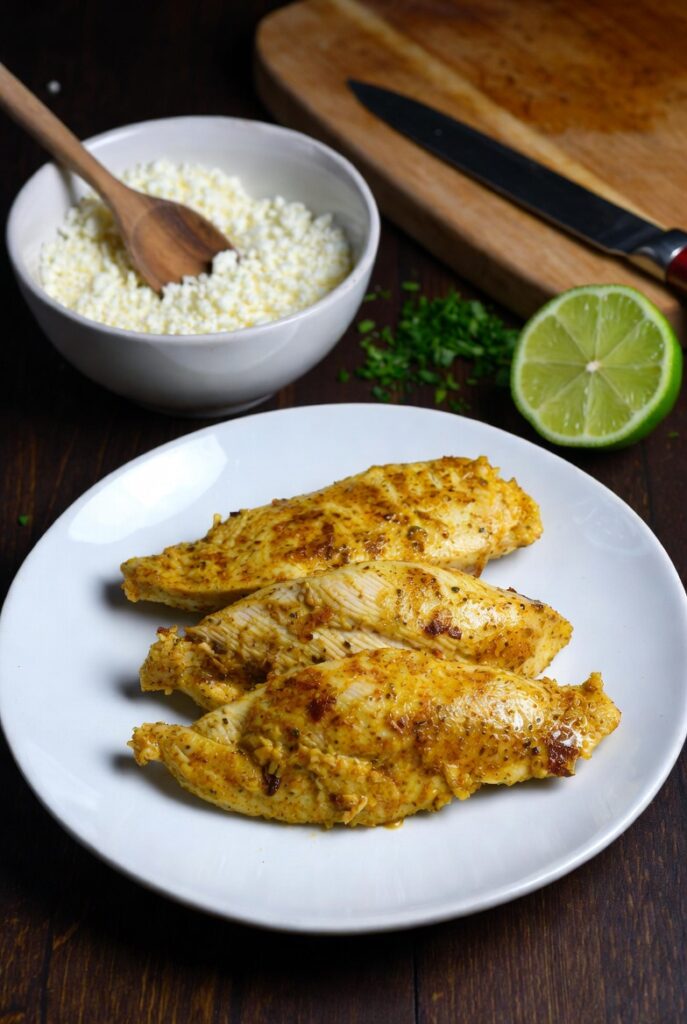
In a dish defined by its “Sweet-to-Acid” ratio, the “Starch-Density” of the corn and the “Brine-Integrity” of the cheese dictate the final “Sensory Resolution.”
The Protein Anchor
- Chicken Thighs: 1.5 lbs.
- The Logic: Use Boneless, Skinless Thighs. They possess the “Intramuscular Lipid” depth required to stand up to the heavy, creamy toppings without becoming “Stringy” or dry.
The “Starch Scaffold” (The Corn)
- Sweet Corn: 3 cups (Fresh off the cob is the “Gold Standard”; frozen/thawed is acceptable).
- Red Bell Pepper: 1 unit, finely diced. (For “Visual Gradient” and a “Fruity-Pepper” high-note).
The “Zesty Elote” Matrix (The Topping)
- Mexican Crema (or Full-Fat Greek Yogurt): 1/2 cup. (The “Creamy Neutralizer”).
- Mayonnaise: 2 tbsp. (The “Lipid Carrier” for the spices).
- Lime Juice & Zest: 2 units. (The “Acidic High-Note”).
- Cotija Cheese: 1/2 cup, crumbled. (The “Saline-Umami” driver).
- Chili Powder & Smoked Paprika: 1 tsp each. (The “Earth-Toned” aromatics).
- Fresh Cilantro: 1/2 cup, chopped. (The “Chlorophyll Finish”).
6. The “Carbon-Capture” Protocol: Mastering the Char
The most common failure in “Street Corn” dishes is “Anemic Corn.” To achieve a professional-grade result, one must utilize the “Carbon-Capture Protocol.”
Do not move the corn immediately after placing it in the hot skillet. It requires 3–4 minutes of “Undisturbed Thermal Contact” to develop the “Black-Gold” blisters that characterize authentic elote. This char provides a “Bittersweet Depth” that balances the extreme creaminess of the sauce. This is “Atmospheric Manipulation” applied to starch.
7. Deep Dive: The “Casein-Citrus” Bond
Why is the crema/lime combination so critical? It centers on “Protein Denaturation Management.” When lime juice (acid) is added directly to chicken, it can sometimes “cook” the outside too fast, making it tough. However, by folding the lime juice into the Crema (Casein/Fat), you “Buffer” the acid. The fat molecules encapsulate the acid, allowing it to “Brighten” the flavor of the dish on the tongue without “Tightening” the chicken fibers during the final integration. This is “Biochemical Buffering” at its finest.
8. Step-by-Step Instructions: The Master Execution
Step 1: The “Spice-Rub” Saturation
Pat the chicken thighs dry. Rub with salt, pepper, and 1/2 tsp of smoked paprika. This creates a “Primary-Maillard” surface for the sear.
Step 2: The “Protein-Sear” Phase
Heat 1 tbsp of avocado oil in the cast iron skillet over medium-high heat. Sear the chicken for 5–6 minutes per side until a “Mahogany Crust” forms. Remove chicken and let rest. (Internal temp should be $74^\circ C$).
Step 3: The “Carbon-Capture” Corn Char
In the same skillet (don’t clean it!), add the corn and red bell peppers. Spread into a flat layer. Do not stir for 4 minutes. Let the corn “Popping” sound be your guide. Once charred, stir once and cook for 2 more minutes.
Step 4: The “Elote-Emulsion” Synthesis
While the corn chars, whisk together the crema, mayo, lime juice, lime zest, and chili powder in a small bowl. This is your “Emulsified Sensation Matrix.”
Step 5: The “Thermal Integration”
Turn off the heat. Add the chicken back into the skillet with the charred corn. Pour the “Emulsion Matrix” over the top. Use tongs to “Toss-and-Coat” until the residual heat of the pan turns the sauce into a “Glistening, Velvet Glaze.”
Step 6: The “Saline-Crystalline” Capping
Sprinkle the crumbled Cotija cheese and extra chili powder over the entire skillet. The cheese should not melt entirely; it should remain as “Briny-Peaks” of texture.
Step 7: The “Jade” Finish
Garnish aggressively with fresh cilantro and extra lime wedges. The green contrast against the charred yellow and red provides the “Visual Gravity” required for a “Platinum-Tier” presentation.
9. Satiety and the “Fiber-Lipid-Protein” Triple-Threat
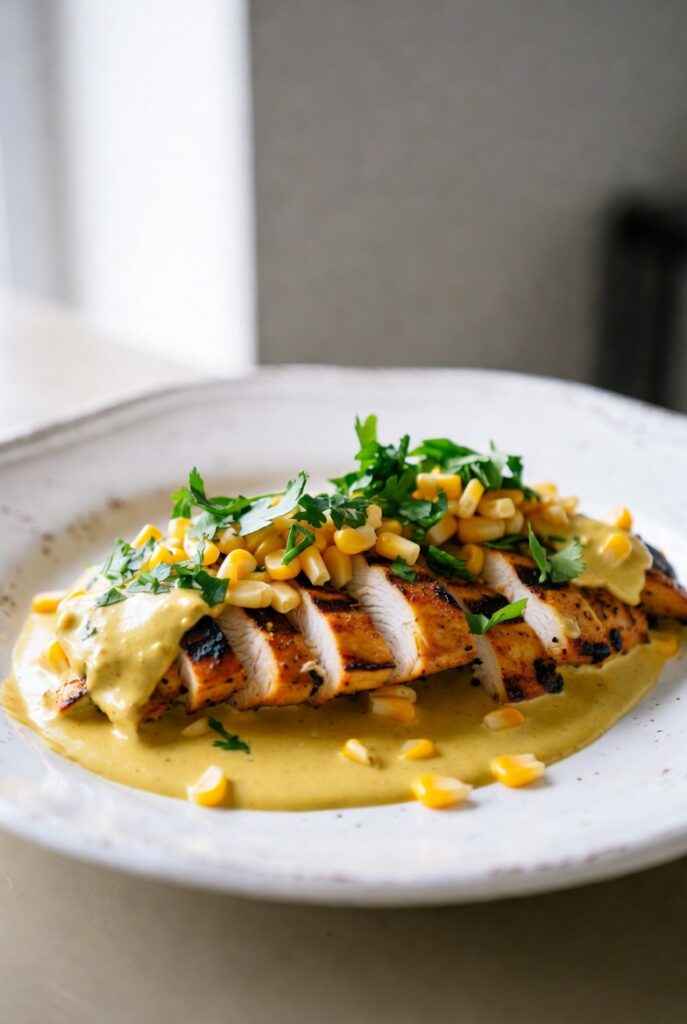
Zesty Mexican Street Corn Chicken provides a “High-Resolution Satiety” profile:
- The Immediate Satiety: The fats in the crema and cheese signal “Nutritional Density” to the brain.
- The “Slow-Burn” Energy: The fiber in the corn and bell peppers slows the absorption of natural sugars.
- The Thermogenic Factor: The chili powder and lime juice stimulate “Post-Prandial Thermogenesis,” helping the body process the meal efficiently.
10. Modular Customization: The “Flavor Pivots”
- The “Inferno” Draft: Add minced Chipotle in Adobo to the crema for a “Smoky-Capsaicin” resolution.
- The “Garden” Standard: Add diced Avocado to the finish for “Omega-3 Creaminess.”
- The “Low-Glycemic” Shift: Replace half the corn with Roasted Cauliflower Florets to maintain the “Bulk” while reducing the carbohydrate load.
11. Storage and “Thermal Recovery”
- Refrigeration: Store in an airtight container for up to 3 days.
- The “Separation” Reality: The crema may slightly thin out over time as the lime juice continues to interact with the dairy.
- The Recovery Method: Avoid the microwave. To restore the “Master Draft” texture, reheat in a skillet over medium-low heat with a splash of water to “Re-Emulsify” the sauce.
12. Frequently Asked Questions (FAQ)
Q: My corn didn’t char, it just got soft. Why?
A: You likely had too much moisture in the pan or stirred it too often. Ensure the corn is dry before it hits the pan and resist the urge to stir.
Q: Can I use Feta instead of Cotija?
A: Affirmative. While Cotija is traditional for its “Dry-Saline” texture, a firm Feta is a mathematically close substitute for the necessary salt-profile.
Q: Is the mayonnaise necessary?
A: It is the “Stabilizer.” Mayonnaise is a permanent emulsion of egg and oil; it prevents the crema from “Splitting” when it hits the high heat of the skillet.
13. Nutritional Information
(Per serving – 1.5 cups)
| Nutrient | Amount |
| Calories | 440 kcal |
| Protein | 32g |
| Total Fat | 22g |
| Net Carbs | 24g |
| Vitamin C | 45% DV |
14. The “Visual Gravity” of Presentation
In the 2026 culinary landscape, the “Aesthetic Payload” is a mandatory component.
- The Skillet Logic: Serve directly from the cast iron. The black iron makes the “Sunset-Hues” of the corn and peppers “Pop.”
- The “Dusting” Technique: Use a fine-mesh sieve to sprinkle the chili powder for a “Professional-Gradient” look.
- The Citrus Geometry: Cut lime wedges into “Perfect-Sixths” and arrange them in a “Radial-Symmetry” around the skillet.
15. Conclusion: The Master Draft of Mesoamerican Fusion
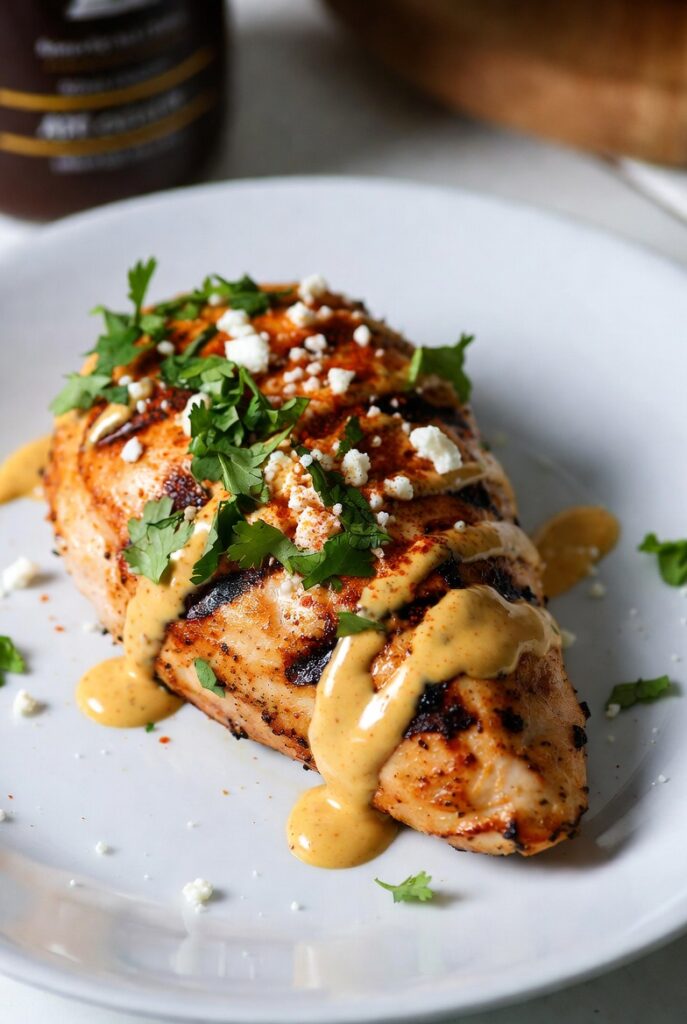
The Elote-Poultry Synthesis protocol is more than a recipe; it is a “Vessel for Intentional Synergy.” It proves that “Gourmet Results” can be achieved through the mastery of “Starch-Sugar Caramelization” and “Acid-Buffered Emulsions.” By respecting the “Undisturbed Char” of the corn and the “Velvet Integration” of the crema, you are delivering a dish that is visually “Jade-and-Gold,” nutritionally dense, and sensorially perfect.