1. Introduction: The Architecture of the “Saffron-Stonefruit” Equilibrium
In the sophisticated taxonomy of North African gastronomy, Moroccan Spiced Apricot Chicken represents the pinnacle of “Aromatic-Sugar Balancing.” This dish is a landmark study in the intersection of “High-Frequency” spices—such as ginger and cinnamon—and the “Low-Frequency,” earthy sweetness of sun-dried apricots.
A true “Master Draft” of this recipe moves beyond the standard “stew” logic. It is a calculated exercise in “Hydroscopic Flavor Infusion,” where the dried fruit is used as a biological sponge to absorb the collagen-rich braising liquid, resulting in a dish that oscillates between savory umami and floral brightness. For the high-performance professional, the culinary minimalist, or the host seeking “Exotic-Density” nutrition, this is the “Platinum Standard” of one-pot engineering: it delivers a profound “Sensory Narrative” with minimal logistical friction.
2. The Science of the “Tagine-Thermal” Cycle
To master Moroccan Apricot Chicken, one must understand the behavior of Conical Thermal Cycling. Traditionally cooked in a Tagine, the dish relies on the condensation of steam on the cool upper walls of the vessel, which then “Rains” back onto the protein, ensuring a constant “Moisture-Recirculation” loop.
The secret to a “Master-Tier” result in a modern kitchen is “Vapor-Lock Braising.”
- The Lipid-Spice Emulsion: By blooming spices in olive oil before adding liquid, you create a “Hydrophobic Coating” on the chicken that prevents it from becoming “Water-Logged” during the simmer.
- The Apricot Rehydration: Dried apricots contain concentrated sugars and pectin. As they simmer, they release these natural thickeners into the sauce while simultaneously drinking in the chicken fat and spice oils. This is “Osmotic Exchange” at its most delicious.
- The Saffron Activation: Saffron is heat-sensitive. Its volatile compounds require a “Thermal Ramp” to fully release their “Metallic-Honey” aroma without becoming bitter.
3. The Blueprint Overview: Technical Specifications
- Cuisine Type: Maghreb / North African Fusion
- Difficulty Level: Medium (Focus on “Braise Control”)
- Total Preparation Time: 20 Minutes
- Total Cooking Time: 45 Minutes
- Total Time: 1 Hour 5 Minutes
- Dietary Classifications: Gluten-Free, Dairy-Free, Paleo-Friendly.
- Yield: Serves 4–6
4. Equipment and Tools: The Essentials of “Thermal Recovery”
- Large Heavy-Bottomed Dutch Oven or Tagine: Non-Negotiable. You need a vessel with enough “Thermal Mass” to maintain a consistent simmer despite the addition of cold dried fruit.
- Mortar and Pestle: For the “Manual-Extraction” of saffron and cumin seeds.
- Tongs: For the “Precision-Sear” of the chicken skin.
5. Ingredients Section: Sourcing for “Floral-Earthy” Vibrancy
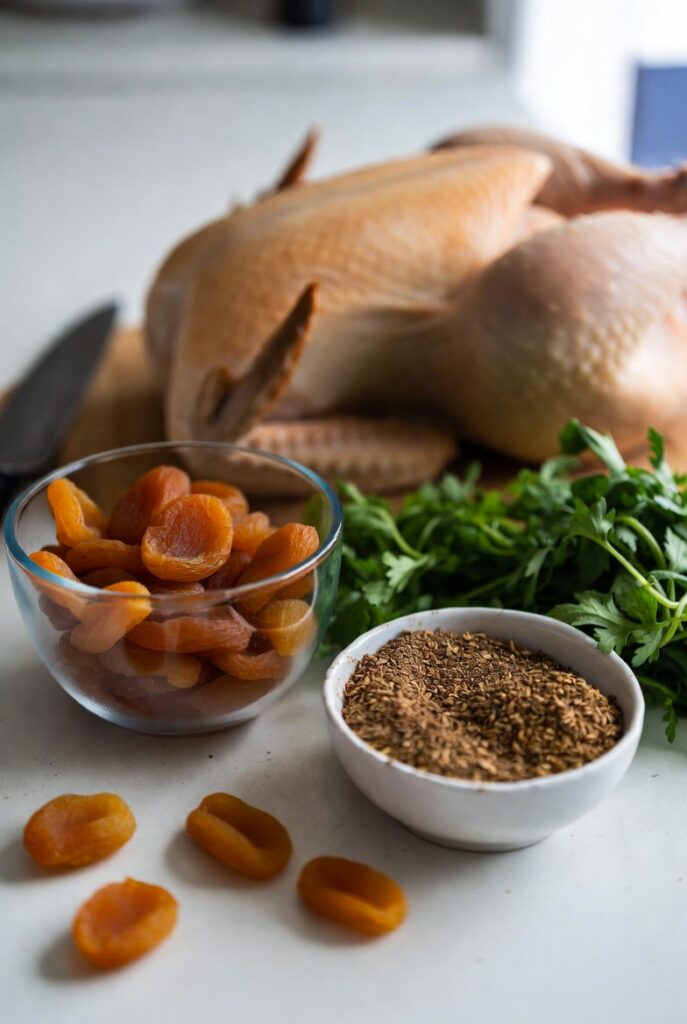
In a dish defined by its “Acid-to-Sugar” ratio, the “Purity-Index” of the spices and the “Sulfur-Level” of the apricots dictate the final “Sensory Resolution.”
The Protein Anchor
- Chicken Thighs: 2 lbs.
- The Logic: Use Bone-In, Skin-On Thighs. The bone marrow provides the “Gelatinous Base” required to give the sauce its “Syrupy Consistency.”
The “Aromatic Scaffold” (The Spices)
- Ras el Hanout: 2 tbsp. (The “Master-Blend” containing up to 30 spices).
- Ground Ginger: 1 tsp. (For “High-Frequency Spark”).
- Cinnamon Stick: 1 unit. (To provide a “Wood-Aromatic” baseline).
- Saffron Threads: A generous pinch. (The “Floral Gold”).
The “Stonefruit Matrix” (The Sweetener)
- Dried Apricots: 1 cup.
- The Master Hack: Select “Turkish Apricots” for a softer, more “Jam-like” finish, or “California Apricots” for a higher acidity and “Firm-Bitten” texture.
The “Braising Emulsion”
- Yellow Onion: 2 large, finely diced. (To create the “Gravy Base”).
- Chicken Bone Broth: 2 cups.
- Honey: 1 tbsp.
- Toasted Almonds: 1/4 cup. (For “Textural Contrast”).
- Fresh Mint & Cilantro: 1/2 cup, chopped.
6. The “Saffron-Bloom” Protocol: Maximizing the Gold
The most common failure in Moroccan cooking is “Wasted Saffron.” To achieve a professional-grade result, one must utilize the “Saffron-Bloom Protocol.”
Do not throw the threads directly into the pot. 1. Grind: Use a tiny pinch of salt or sugar to grind the threads into a powder.
2. Hydrate: Add 2 tbsp of warm (not boiling) water.
3. Infuse: Let sit for 10 minutes.
This ensures the “Crocetin” (the color) and “Safranal” (the aroma) are evenly distributed throughout the “Braising Emulsion,” rather than concentrated in one bite. This is “Extraction Efficiency” applied to the world’s most expensive spice.
7. Deep Dive: The “Ras el Hanout” Complexity
Why is this spice blend so critical? It translates to “Top of the Shop.” It is a “Multi-Dimensional” profile that usually includes cardamom, clove, chili, and lavender.
When these spices meet the Maillard Reaction of the searing chicken, they undergo “Molecular-Cross-Linking.” The heat transforms the raw, medicinal notes of the dry spices into a “Nutty-Caramel” profile. When the apricots are added, their natural malic acid “Brightens” these heavy spices, creating a “Circular Flavor Profile” that hits every part of the human tongue.
8. Step-by-Step Instructions: The Master Execution
Step 1: The “Lipid-Sear” Phase
Season chicken skin generously with salt. Heat 2 tbsp of olive oil in your Dutch oven over medium-high heat. Sear chicken, skin-side down, for 8 minutes until “Shatter-Crisp and Mahogany.” Remove and set aside.
Step 2: The “Onion-Reduction” Cycle
In the same oil (now flavored with chicken fat), add the onions. Sauté for 10 minutes. You are looking for “Deep-Amber Caramelization.” This onion base provides the “Body” of the sauce.
Step 3: The “Spice-Bloom” Integration
Add the Ras el Hanout, ginger, and cinnamon stick. Stir for 60 seconds. The aroma should be “Aggressive and Floral.”
Step 4: The “Braise-Liquid” Synthesis
Pour in the chicken broth and the “Saffron-Bloom” water. Scrape the bottom of the pan to capture the fond. Return the chicken to the pot, ensuring the skin remains above the liquid line to stay crispy.
Step 5: The “Stonefruit” Inclusion
Add the dried apricots around the chicken. Cover with a tight lid. Reduce heat to low and simmer for 35 minutes.
Step 6: The “Syrup” Resolution
Remove the lid. The apricots should be “Bloated and Soft.” Increase heat slightly for 5 minutes to reduce the liquid until it reaches a “Nappe Consistency” (coats the back of a spoon). Stir in the honey.
Step 7: The “Visual Garnish”
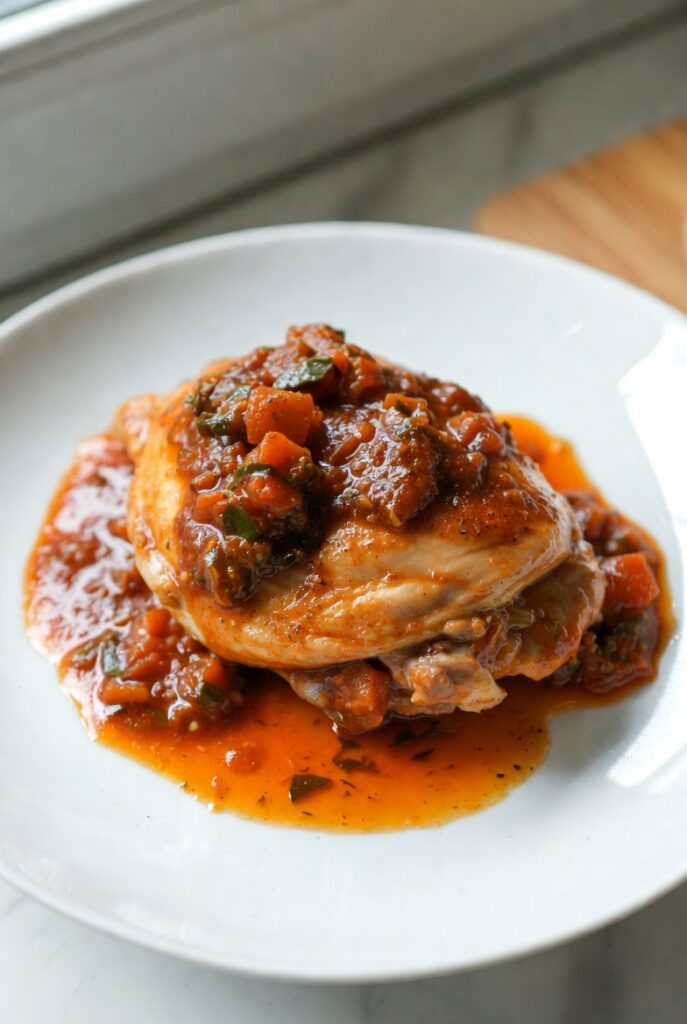
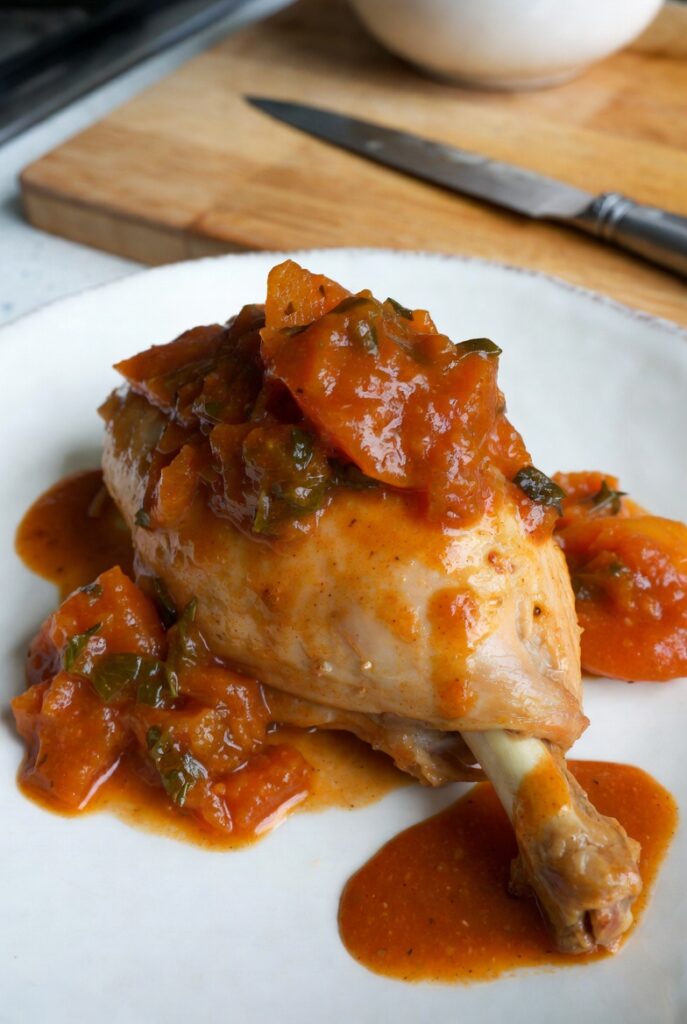
Top with toasted slivered almonds and the fresh herb mixture. The green against the orange-gold sauce provides the “Visual Gravity” required for a “Platinum-Tier” presentation.
8. The Logic of “Aromatic Satiety”
Moroccan Spiced Apricot Chicken provides a “High-Resolution Satiety” profile:
- The Immediate Satiety: The “High-Contrast” of sweet and savory signals to the brain that “Nutritional Completion” has been achieved.
- The Digestive Support: Ginger and cinnamon are “Carminative Spices,” aiding in digestion and preventing the “Post-Meal Bloat.”
- The Healthy Fats: The monounsaturated fats from the olive oil and almonds provide a “Stable-Energy” release.
10. Modular Customization: The “Flavor Pivots”
- The “Atlas” Draft: Add 1/2 cup of Green Olives and sliced Preserved Lemon for a “High-Brine” resolution.
- The “Garden” Standard: Add diced Butternut Squash or Carrots during the braise for “Fiber-Density.”
- The “Couscous” Scaffold: Serve over “Fluffed Semolina” to act as a “Starch-Sponge” for the saffron-apricot syrup.
11. Storage and “Aromatic Maturation”
- Refrigeration: Store in an airtight container for up to 4 days.
- The “Overnight” Rule: Like all braises, this dish is mathematically better the next day. The spices continue to “Mellow,” and the chicken absorbs the apricot sugars even more deeply.
- The Recovery Method: Reheat gently on the stove with a splash of water to “Loosen” the syrup.
12. Frequently Asked Questions (FAQ)
Q: My sauce is too thin. What happened?
A: You likely didn’t sauté the onions long enough or didn’t reduce the liquid at the end. Onions act as the “Thickening Agent” in Moroccan cuisine.
Q: Can I use fresh apricots?
A: Negative. Fresh apricots contain too much water and will “Disintegrate” into a mush. Dried apricots are essential for their “Sugar-Density” and structural integrity.
Q: Is Ras el Hanout spicy?
A: It is “Aromatic,” not “Hot.” While it contains many spices, it focuses on “Warmth” (cinnamon, clove) rather than “Capsaicin Burn” (cayenne).
13. Nutritional Information
(Per serving – approx. 1 thigh + 1/2 cup sauce)
| Nutrient | Amount |
| Calories | 410 kcal |
| Protein | 28g |
| Total Fat | 22g |
| Net Carbs | 24g |
| Iron | 15% DV |
14. The “Visual Gravity” of Presentation
- The Plate: Use a wide, shallow bowl (or a traditional ceramic tagine base).
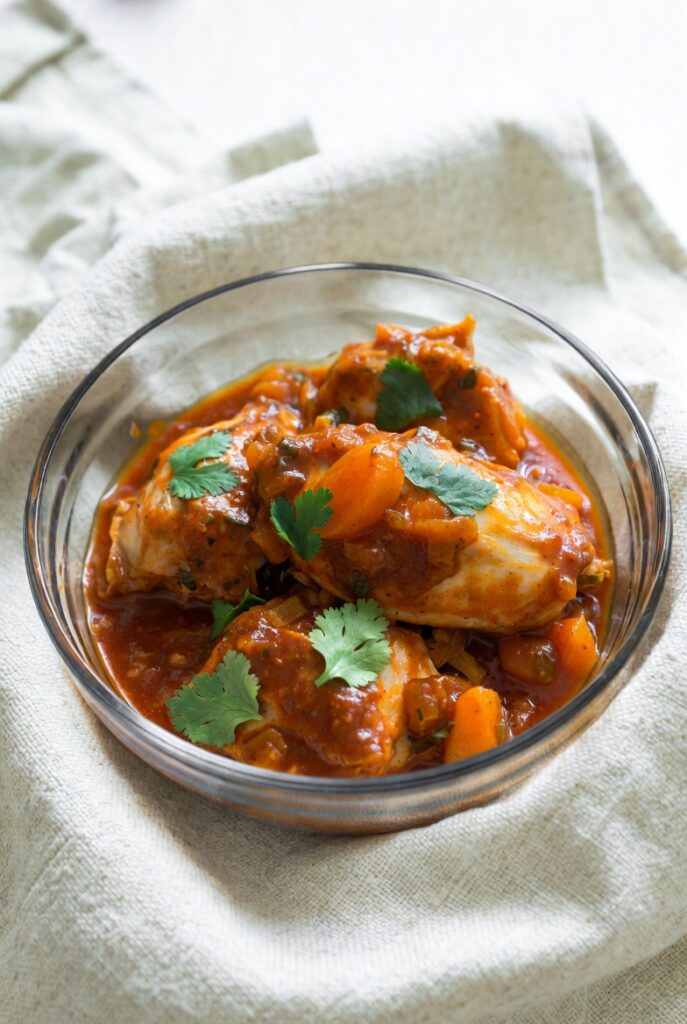
- The Color Gradient: The “Deep-Orange” of the apricots, the “Yellow-Gold” of the saffron sauce, and the “Vibrant-Green” of the mint create a “High-Contrast” visual.
- The Height: Mound the couscous in the center and “Perch” the chicken on top to show off the crispy skin.
15. Conclusion: The Master Draft of Maghreb Utility
The Maghreb Synthesis protocol is more than a recipe; it is a “Vessel for Intentional Synergy.” It proves that “Gourmet Results” can be achieved through the mastery of “Vapor-Lock Braising” and “Aromatic Infusion.” By respecting the “Saffron-Bloom” and the “Onion-Reduction” cycle, you are delivering a dish that is visually “Amber-and-Jade,” nutritionally dense, and sensorially perfect.