1. Introduction: The Architecture of the “Deconstructed-Comfort” Logic
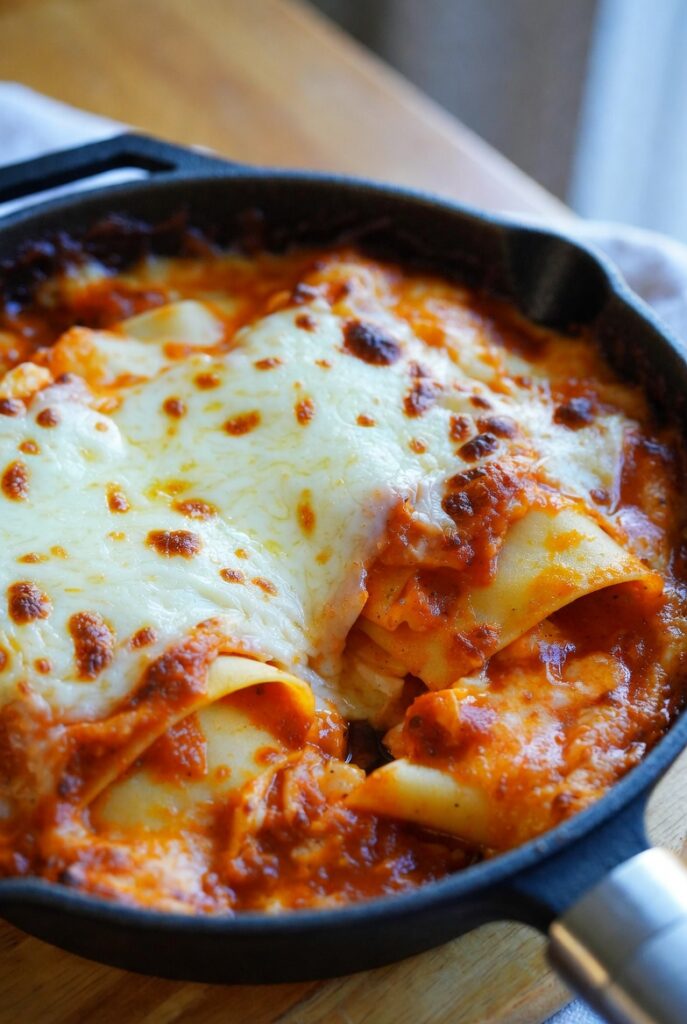
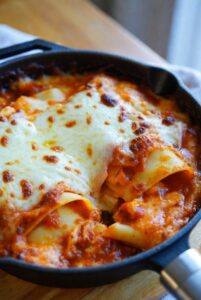
In the traditional culinary hierarchy, Lasagna is viewed as a “Multi-Stage Investment”—a dish that requires hours of ragù reduction, the assembly of delicate pasta sheets, and a high-intensity baking phase. However, the Speedy Skillet Lasagna represents a radical “Logistical Pivot.” It is a dish that utilizes “Deconstructed Conduction” to deliver the exact “Flavor Resolution” of a traditional bake in a fraction of the time.
The brilliance of this dish lies in its “Internal Emulsion.” By simmering broken pasta pieces directly within a vibrant tomato and protein matrix, we harness the pasta’s own starches to thicken the sauce into a “High-Gloss Lacquer.” This eliminates the need for a secondary “Binding Phase.” For the high-performance professional or the gourmet minimalist, this is the “Platinum Standard” of weeknight recovery fuel: it is high-yield, requires only one pan for cleanup, and provides a level of “Carbohydrate-Lipid Synergy” that triggers profound satiety. It is a dish that understands that “Gourmet” is not about the complexity of the assembly, but the precision of the “Starch-Sauce Bond.”
2. The Science of “Starch-Water” Integration
To master Skillet Lasagna, one must move beyond the “Boil and Drain” mentality and understand the behavior of Amylose and Amylopectin. In a traditional lasagna, the noodles are boiled separately, and their starches are washed away in the sink.
In the “Master Draft” skillet method, the pasta is simmered directly in the sauce. As the noodles hydrate, they release starch molecules into the tomato base. This creates a “Viscous Buffer”—a natural thickener that binds the water-based sauce to the fat-based cheeses. This results in a “Creamy Cohesion” that is impossible to achieve in a layered bake. This is “Molecular Engineering” disguised as a rustic Italian dinner, ensuring that every bite is a perfectly integrated “Flavor Matrix” rather than a series of disparate layers.
3. Recipe Overview: The Master Blueprint
- Cuisine Type: Modern Italian-Americana / High-Velocity Utility
- Difficulty Level: Very Easy (Order-of-operations focus)
- Total Preparation Time: 10 Minutes
- Total Cooking Time: 20 Minutes
- Total Time: 30 Minutes
- Dietary Classifications: High-Protein. (Can be made GF with brown rice pasta).
- Yield: Serves 4–6
4. Equipment and Tools: The Essentials of “Radiant Depth”
- 12-inch Deep Cast Iron or Stainless Steel Skillet: You need a vessel with high sides and a heavy bottom to maintain “Thermal Inertia.”
- Tight-Fitting Lid: Critical for the “Hydration Phase.” Without a lid, the sauce will evaporate before the pasta reaches Al Dente.
- Silicone Spatula: For the “Scrape-and-Fold” motions that prevent starch from bonding to the bottom of the pan.
5. Ingredients Section: Sourcing for “Umami-Density”
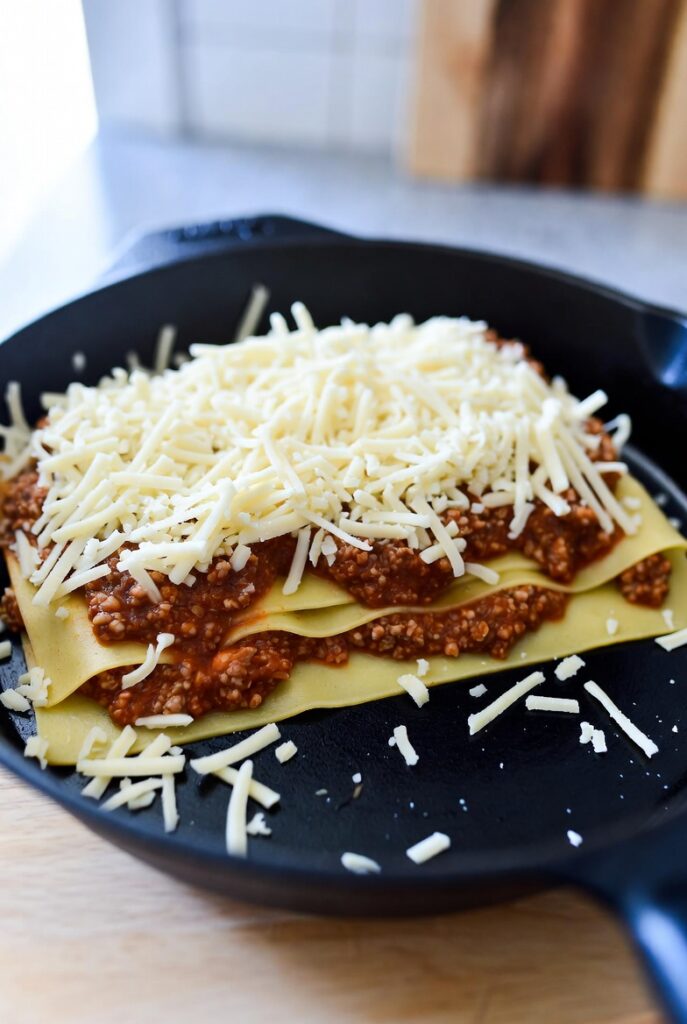
In a dish with zero “Oven-Aging,” the quality of the “Aromatic Base” determines the final “Sophistication.”
The Protein Anchor
- Italian Sausage (Sweet or Hot): 1 lb. (Removed from casings). Sausage provides built-in aromatics (fennel, paprika) that ground beef lacks.
- Alternative: Ground Beef (80/20) for a “Classic Ragù” profile.
The “Starch Scaffold”
- Traditional Lasagna Noodles: 8–10 sheets.
- The Master Hack: Use regular noodles, not “No-Boil.” Break them by hand into 2-inch “Ragged” pieces. These irregular shapes create “Surface-Area Variation” for the sauce to cling to.
The “Liquid Matrix” (The Sauce)
- Marinara Sauce: 24 oz (One high-quality jar).
- Water or Beef Broth: 1.5 cups. (Essential for pasta hydration).
- Tomato Paste: 1 tbsp. (To deepen the “Red-Fruit” profile).
The “Dairy Trinity”
- Ricotta Cheese: 1 cup. (The “Creamy Clouds”).
- Mozzarella: 1.5 cups, shredded. (The “Elastic Bind”).
- Parmigiano-Reggiano: 1/2 cup, freshly grated. (The “Saline Finish”).
The “Aromatic High-Notes”
- Garlic: 4 cloves, minced.
- Fresh Basil: 1/2 cup, chiffonade.
- Dried Oregano: 1 tsp.
6. The “Maillard-Sausage” Protocol
The most common failure in quick pastas is “Pale Meat.” To achieve a “Master Draft” finish, you must utilize the “Maillard-Sausage Protocol.”
Do not simply “cook” the sausage until it is gray. You must “Sear” it. Place the sausage in the skillet over high heat and let it develop a “Mahogany Crust” before breaking it apart. This caramelization creates “Complex Glutamates” that provide the savory “Bass Note” for the entire dish. Once the meat is browned, the rendered fat becomes the “Flavor Solvent” for the garlic and spices.
7. Deep Dive: The “Lycopene-Lipid” Synergy
Why is Skillet Lasagna a strategic nutritional choice? It centers on the Bioavailability of Lycopene. Tomatoes are one of the densest sources of lycopene, a powerful antioxidant. However, lycopene is tightly bound within the tomato’s cell walls.
The combination of the Acid in the sauce, the Heat of the skillet, and the Lipids in the sausage and cheese works as a “Triple-Threat Extraction System.” The heat breaks the cell walls, and the fats facilitate the absorption of the lycopene into your system. From a biological perspective, this dish is engineered for “Antioxidant Efficiency.”
8. Step-by-Step Instructions: The Master Blueprint
Step 1: The “High-Heat” Sear
Heat your skillet over medium-high heat. Add the sausage. Break it into “Fine Granules” and cook until deeply browned. Drain excess grease, but retain approximately 1 tablespoon for flavor.
Step 2: The Aromatic Bloom
Add the minced garlic and oregano. Stir-fry for 45 seconds until fragrant. Do not let the garlic brown; it should remain “Golden and Sweet.”
Step 3: The Sauce Foundation
Pour in the marinara sauce, tomato paste, and the 1.5 cups of water/broth. Stir to combine and bring to a “Rolling Simmer.”
Step 4: The “Starch Submersion”
Add the broken lasagna noodles. Use your spatula to submerge them into the liquid.
Crucial: Ensure the noodles are “Scattered” and not “Stacked” to prevent them from sticking together.
Step 5: The “Hydration Cycle”
Reduce heat to LOW, cover with a lid, and simmer for 12–15 minutes.
- The “Pro” Check: Stir every 4 minutes to redistribute the starches and ensure even hydration. The pasta is done when it is Al Dente (firm to the bite).
Step 6: The “Dairy Integration”
Once the pasta is cooked and the sauce has thickened, remove the lid. Dollop the ricotta over the surface in “Clouds.” Sprinkle the mozzarella and Parmesan over the top.
Step 7: The Final Polish (The Broil)
Optional: Place the skillet under the oven broiler for 2–3 minutes until the cheese is “Bubbling and Charred.” If you don’t have a broiler, simply replace the lid for 2 minutes until the cheese melts from residual heat. Garnish with fresh basil.
9. Satiety and the “Glucose-Protein” Plateau
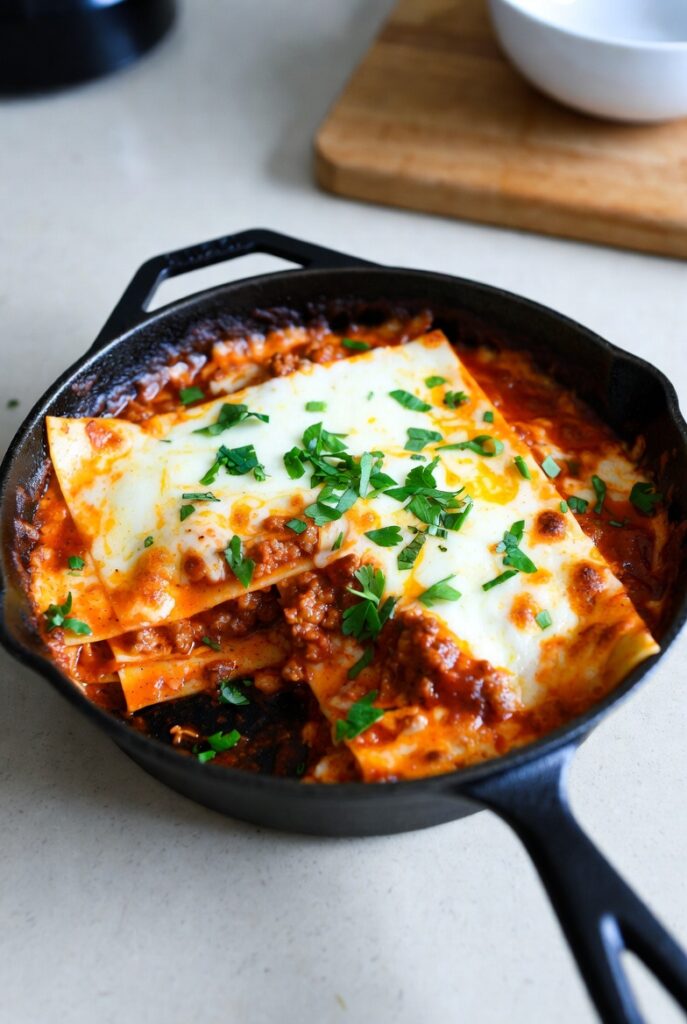
Speedy Skillet Lasagna provides “High-Resolution Satiety.”
- The Carbohydrate Fuel: The pasta provides “Rapid Glycogen Recovery” for the brain and muscles.
- The Protein Anchor: The sausage and ricotta provide “Long-Form Amino Acids.”
- The Lipid Buffer: The mozzarella slows down the digestion of the pasta, resulting in a “Flattened Glucose Curve.”
This creates a state of “Nutritional Completion”—you feel physically full and mentally “Relaxed,” making it the ultimate meal for high-stress recovery.
10. Modular Variations: The “Flavor Pivots”
- The “Garden” Draft: Add 2 cups of fresh spinach during Step 6. The heat will “Flash-Wilt” it into the cheese.
- The “White” Pivot: Omit the tomato sauce. Use a mix of heavy cream, chicken broth, and extra garlic for a “Lasagna Alfredo” profile.
- The “Inferno” Standard: Add 1 tsp of red pepper flakes and use “Hot” Italian sausage for a “Capsaicin High-Note.”
11. Storage and “Starch Maturation”
- Refrigeration: Store in an airtight container for up to 3 days.
- The “Stiff-Sauce” Problem: Pasta continues to absorb liquid as it sits.
- The Reheat Solution: When reheating in a skillet, add a splash of water or milk. This “re-hydrates” the starch emulsion, returning the sauce to its original “Velvet Standard.”
12. Frequently Asked Questions (FAQ)
Q: My noodles are sticking together. What happened?
A: This is caused by “Insufficient Agitation” during the first 5 minutes of simmering. You must stir the noodles to ensure the starch on the surface of the pasta doesn’t “glue” them together.
Q: Can I use “No-Boil” noodles?
A: You can, but they lack the starch content of traditional noodles. If you use them, reduce the water in Step 3 by 1/2 cup, as they absorb less liquid.
Q: Is the lid really necessary?
A: Affirmative. Without the lid, the water evaporates into the air rather than being absorbed by the pasta. You will end up with dry, crunchy noodles and a burnt sauce.
13. Nutritional Information
(Per serving – approx. 1.5 cups)
| Nutrient | Amount |
| Calories | 520 kcal |
| Protein | 28g |
| Total Fat | 24g |
| Net Carbs | 42g |
| Calcium | 20% DV |
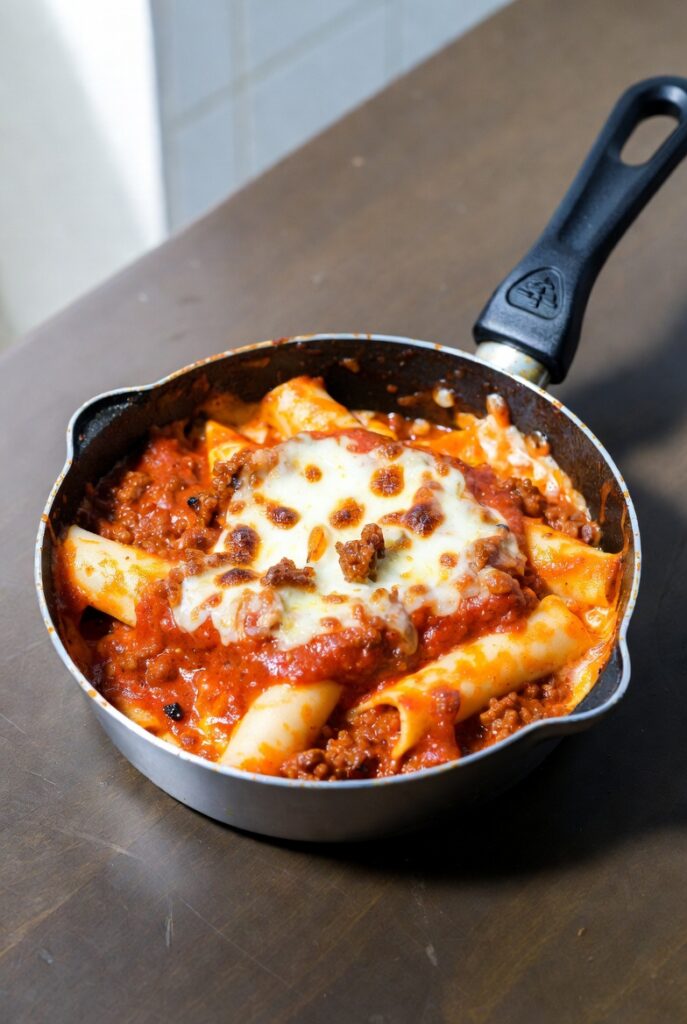
14. Summary: The Master Draft of Social Utility
The Speedy Skillet Lasagna is more than a recipe; it is a “Vessel for Intentional Comfort.” It proves that “Gourmet Results” can be achieved without the “Gourmet Timeframe” through the mastery of “Starch-Water Emulsification” and “Maillard Searing.” By respecting the hydration needs of the pasta and the aromatic potential of the sausage, you are delivering a dish that is visually “Glistening,” nutritionally dense, and sensorially perfect.
It is the ultimate “Social Anchor”—a “One-Pan, Cheese-Pull” testament to the power of efficient cooking.