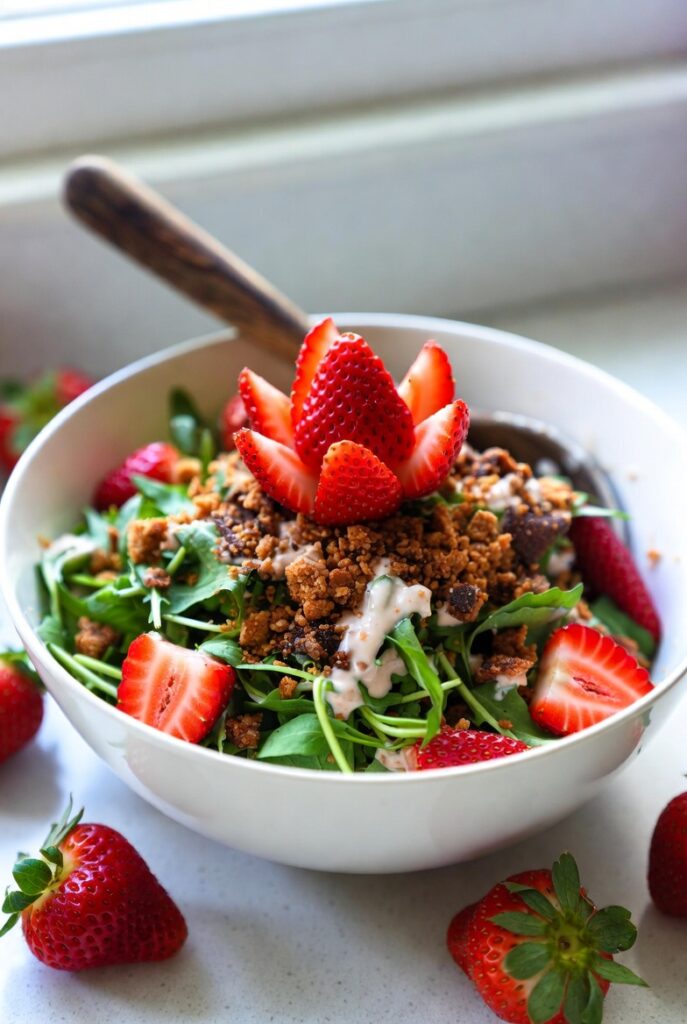
To the uninitiated, a fruit salad is a casual affair—a bowl of chopped produce tossed in a splash of honey and left to languish on a buffet table. But in the professional kitchen, the Strawberry Crunch Salad is something far more disciplined. It is a calculated exercise in textural acoustics and flavor volatility.
When we talk about “crunch” in a salad that features high-moisture berries, we are talking about a race against time. We are working with the ephemeral beauty of spring, balancing the high-sugar content of peak-season strawberries against the bitter-sharp snap of garden greens and the deep, toasted resonance of nuts. As a chef, my goal is to guide you through the process of building this dish so that every forkful retains its integrity. We aren’t just making a salad; we are building a structure that celebrates the very best of the season.
1. The Chef’s Philosophy: The Three Pillars of Crunch
To succeed, you must respect the physical properties of your ingredients. A salad that loses its “bite” is a salad that has failed its purpose. We build our structure on three pillars:
I. The Botanical Layer: The Strawberry
The strawberry is the prima donna of the dish. It is beautiful, sweet, and incredibly delicate. In a home kitchen, most cooks slice these too thin, causing them to weep juice the moment they touch salt.
- The Chef’s Cut: We do not slice strawberries into thin, flat discs. We quarter them. By keeping the quarters substantial, we preserve the structural integrity of the berry. The interior remains protected until the diner bites down, releasing a concentrated burst of juice that hits the dressing on the palate, rather than pooling at the bottom of the bowl.
II. The Structural Layer: The “Acoustic Snap”
We need ingredients that possess high turgor pressure. This is the “internal water pressure” that makes a vegetable crisp.
- The Radish: We shave these paper-thin on a mandoline. The radish provides a metallic, peppery heat that cuts through the strawberry’s sweetness.
- The Sugar Snap Pea: We trim the strings and slice them on a bias (at an angle). This gives us a beautiful, diamond-shaped slice that is perfectly suited for catching dressing in its concave curve.
- The Cucumber: We use English cucumbers. We peel them in strips to create a “pinstripe” effect, then dice them. The key? We remove the seeds. The seeds are where the water lives; removing them ensures the salad stays crisp for the duration of the meal.
III. The Toasted Layer: The Lipid-Bass
The “crunch” needs a rhythm section. We need a bass note—a deep, toasted, nutty fat.
- The Technique: Never add raw nuts to a salad. They are dull and lack complexity. We dry-toast our pecans or pistachios in a hot cast-iron skillet, tossing them constantly, until the air in the kitchen smells like roasted butter. Then—and only then—do we hit them with a tiny pinch of sea salt. This salt is vital; it is the “bridge” between the nut and the berry.
2. Selecting Your Palette: Ingredient Mastery
The Greens: The Supportive-Neutral
We avoid dark, tannic greens like kale or radicchio, which would create a “flavor-war” with the fruit. We seek out Little Gem or Butter Lettuce. These greens have a sweet, milky flavor and a rigid, cup-like shape that holds onto our dressing like a cradle. They are the perfect foundation for a salad that needs to feel light and airy.
The Creamy Counterpoint: Aged Feta
While goat cheese is the standard pairing for strawberries, I find it too soft, too “one-note.” I reach for Aged Feta from a block. It is firm, it is unapologetically salty, and it has a wonderful, crumbly texture that contrasts beautifully with the juicy strawberry. It provides the “savory-anchor” that prevents the salad from drifting into dessert territory.
The Herbaceous Finish
Fresh herbs are the “perfume” of the salad. While mint is traditional, I encourage you to experiment with fresh basil. The peppery, slightly spicy, clove-like notes of fresh basil are a revelation when paired with strawberries. It grounds the dish and makes it feel more like a culinary experience and less like a bowl of fruit.
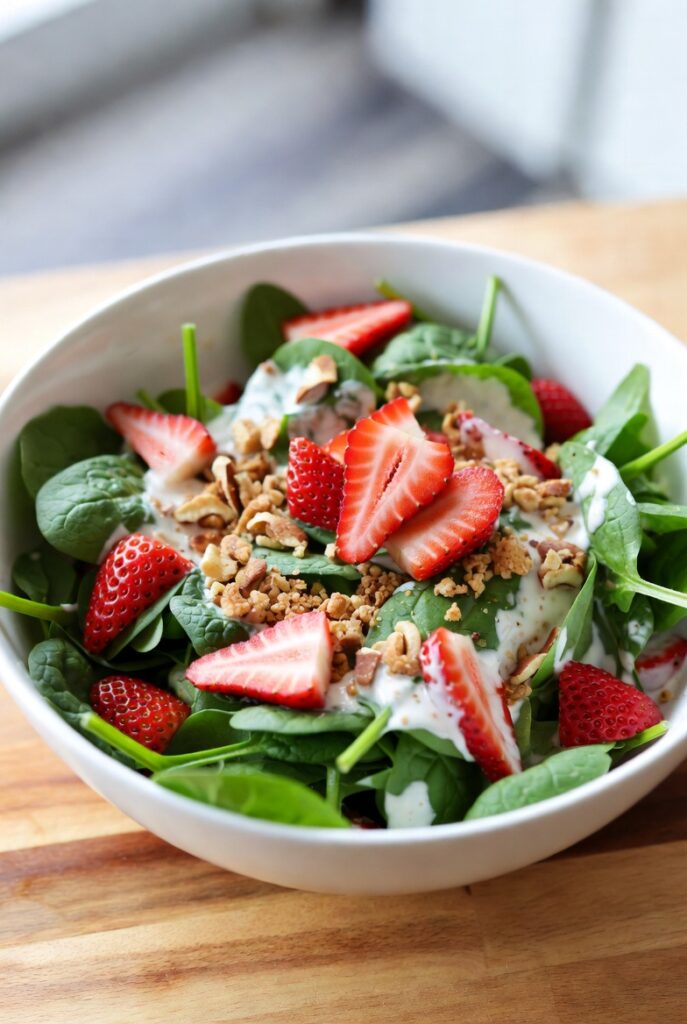
3. The Dressing: The “Balsamic-Reduction” Emulsion
A standard vinaigrette will slide right off the delicate leaves of a crunch salad. We need something with viscosity. We are going to build a Reduced-Balsamic Emulsion.
- The Reduction: Pour half a cup of your best balsamic vinegar into a small pan. Reduce it over medium heat until it coats the back of a spoon. You have just concentrated the grape sugars, turning a liquid into a syrup.
- The Emulsion: Whisk this reduction with a teaspoon of Dijon mustard. The mustard is our emulsifier—the protein in it forces the oil and the vinegar to become one.
- The Golden Stream: Slowly, drop by drop, drizzle in your best extra virgin olive oil while whisking like a madman. We are looking for a dressing that looks like liquid velvet—dark, glossy, and thick enough to cling to the lettuce ribbons.
- The Brightener: Zest a lime directly into the dressing. That lime oil is the secret. It’s the “high note” that makes the whole dressing pop.
4. The Ritual of Assembly: “The Cold-Integrate”
- The Chill: If the lettuce is warm, the salad is already dead. Wash your greens, spin them dry, and put them in the fridge in a sealed container with a paper towel. The goal is a temperature of about 4°C.
- The Seasoning-Layer: Combine your greens, your cucumbers, and your radishes in a bowl. Drizzle just enough dressing to make the leaves shine. This is called “seasoning the greens.”
- The Fold: Now, gently add your quartered strawberries and your feta crumbles. Use your hands—gently—to lift and fold the ingredients together. We are not “tossing” (which is violent); we are “folding” (which is careful).
- The Final Act: Sprinkle your toasted, salted pecans over the top right before it hits the table. If you add them too early, they soften. We want that “shatter” to occur on the diner’s first bite.
5. Troubleshooting: The Chef’s Adjustments
- “My dressing broke and looks like oil and vinegar”: You added the oil too fast. The mustard needs time to incorporate the oil. If it breaks, start a new small bowl with a teaspoon of mustard, and slowly whisk the broken dressing into the new mustard, drop by drop. It will come back together.
- “The salad is too sweet”: This is common if the berries are peak-season. Don’t add sugar. Add a pinch of sea salt and a squeeze of lime juice. Salt is a flavor-enhancer, not just a seasoning; it will amplify the savory elements and suppress the cloying sweetness.
- “The lettuce is wilting”: You likely salted your salad before serving. Never salt the salad directly; salt the dressing, and dress only at the very last second.
6. The Visual Mosaic: A Study in Color Theory
Presentation is the final signature of the cook. A Strawberry Crunch Salad should look alive.
- The Plate: Use a wide, shallow, white ceramic bowl. The white provides the “negative space” that allows the ruby reds and the deep forest greens to vibrate.
- Height: Do not smash the salad down. Let it build up in the center of the bowl.
- Garnish: Finish with a few tiny, un-torn basil leaves and a final crack of black pepper. The black pepper against the bright red of the strawberry is a stunning visual detail that signals to your guests that this is a professional-grade preparation.
7. The Art of the Ephemeral
Cooking is the art of capturing a moment in time. The Strawberry Crunch Salad is a dish that exists only for a season. It demands that you go to the market, find the berries that were picked this morning, and treat them with the respect that their fleeting presence deserves.
It teaches us that cooking is not about following a rigid path; it is about learning the properties of your materials. It is about understanding the “why” behind the “how.” When you have mastered this, you aren’t just making a side dish. You are making a statement. You are telling your guests that you understand balance, you understand texture, and you know how to build a plate that is as intellectually satisfying as it is delicious.
8. Conclusion: The Beauty of the Process
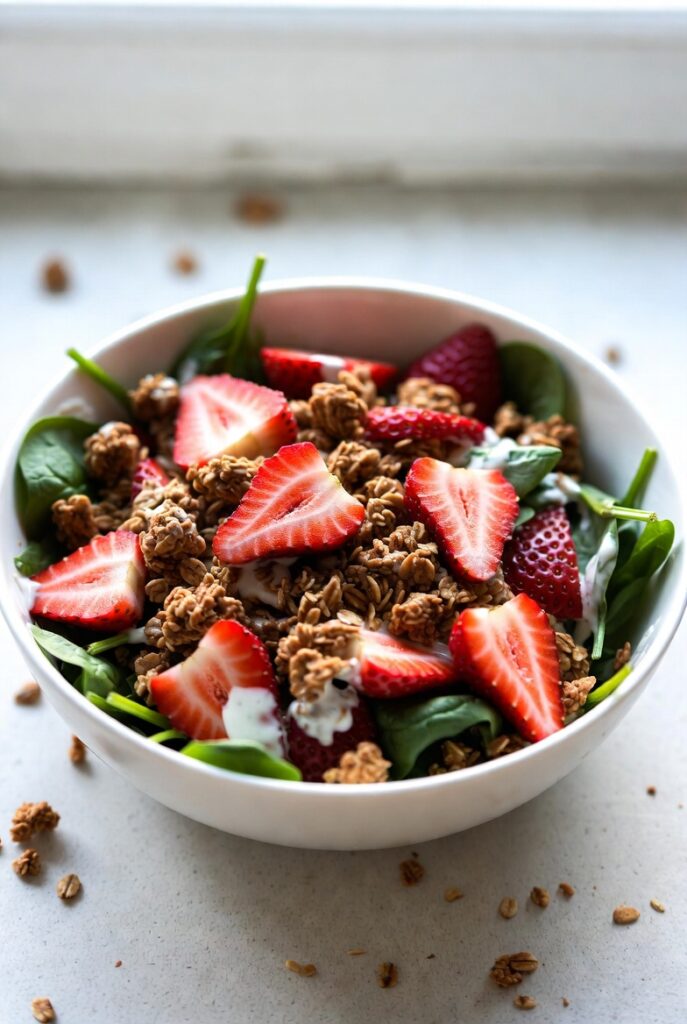
The Strawberry Crunch Salad is a reminder that we don’t need exotic ingredients to create a masterpiece. We need balance, we need texture, and we need the willingness to pay attention to the smallest details. By mastering the cut of the strawberry, the massage of the greens, and the emulsification of the balsamic, you have elevated a simple meal into something that lingers in the memory.
This is the beauty of the craft. It is the joy of standing in your kitchen, whisk in hand, making something that is perfect for a singular moment in time.