1. Introduction: The Architecture of “Lipid-Spice” Harmony
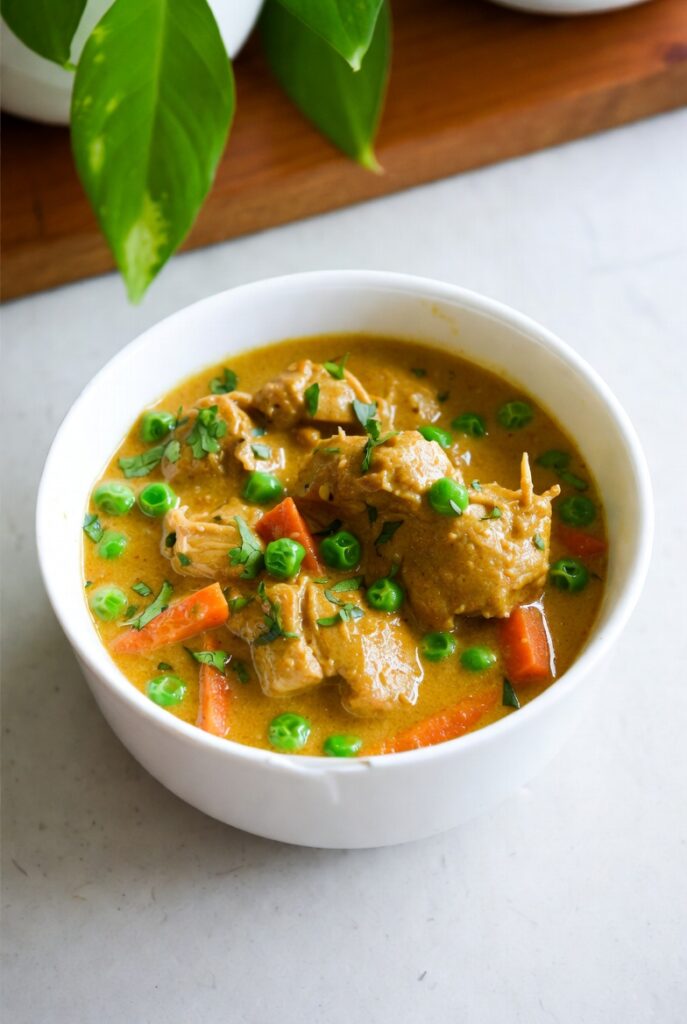
In the expansive taxonomy of global comfort food, the Creamy Coconut Curry stands as a landmark study in “Aromatic Depth and Emulsion Stability.” This is far removed from the thin, one-dimensional curries of industrial kitchens; rather, a true “Master Draft” of this recipe is a sophisticated exercise in “Layered Extraction.” It pits the high-frequency, volatile aromatics of fresh ginger and turmeric against the “Low-Frequency,” velvet-smooth matrix of high-fat coconut milk.
The brilliance of this dish lies in its “Thermal Bloom.” By utilizing the medium-chain triglycerides (MCTs) within coconut milk and the natural oils in the chicken, we create a “Flavor-Carrier System” that binds spice molecules to the palate with profound persistence. For the high-performance professional, the culinary minimalist, or the parent seeking “High-Density” nutrition, this is the “Platinum Standard” of the 30-minute dinner: it provides rapid systemic warmth through thermogenic spices while delivering a dense payload of healthy fats and proteins.
2. The Science of “Curcumin Solubility” and Bioavailability
To master this curry, one must look beyond the pot and understand the molecular biology of the spices. The primary active compound in curry—Curcumin (found in turmeric)—is hydrophobic, meaning it does not dissolve in water.
The secret to a “Master-Tier” result is “Lipid-Assisted Absorption.” Without a fat source, curcumin passes through the digestive tract with minimal impact. However, when simmered in coconut milk (rich in lauric acid), the curcumin becomes “Bioavailable.” Furthermore, the addition of Piperine (found in black pepper) increases curcumin absorption by up to 2,000%.
This isn’t just a meal; it’s a “Metabolic Optimization” disguised as a rustic stew.
3. Recipe Overview: The Technical Blueprint
- Cuisine Type: Southeast Asian Fusion / High-Velocity Utility
- Difficulty Level: Easy (Focus on “Spice Blooming” and Simmer Control)
- Total Preparation Time: 15 Minutes
- Total Cooking Time: 20 Minutes
- Total Time: 35 Minutes
- Dietary Classifications: Gluten-Free, Dairy-Free, Keto-Friendly.
- Yield: Serves 4–6
4. Equipment and Tools: The Essentials of “Thermal Retention”
- Large Heavy-Bottomed Skillet or Dutch Oven: To ensure even heat distribution and prevent the coconut milk from scorching.
- Microplane: For achieving a “Nano-Mince” of ginger and garlic, ensuring they melt into the sauce matrix.
- Wooden Spatula: For the “Scrape-and-Incorporate” motion that captures the fond (browned bits) from the chicken.
5. Ingredients Section: Sourcing for “Chromatographic” Vibrancy
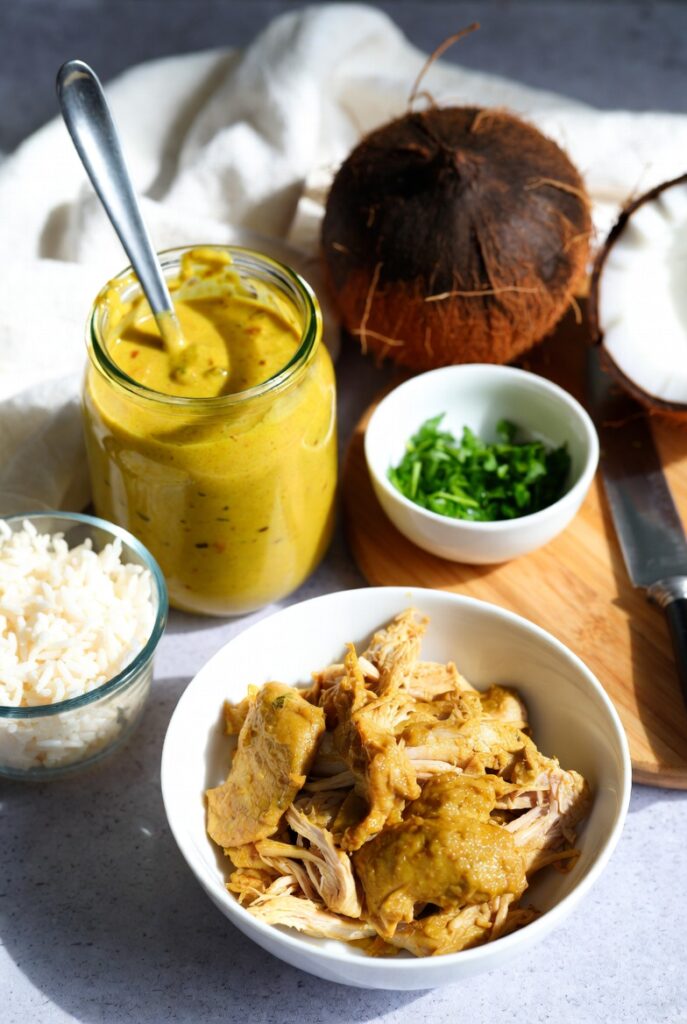
In a dish defined by its “Spice-to-Fat” ratio, the “Purity Index” of the coconut milk and the “Pungency” of the aromatics determine the final “Sensory Resolution.”
The Protein Anchor
- Chicken Thighs: 1.5 lbs.
- The Logic: Use Boneless, Skinless Thighs. Thighs contain more “Connective Tissue” than breasts, allowing them to remain succulent during the simmering phase without becoming fibrous.
The “Lipid Matrix” (The Sauce)
- Full-Fat Coconut Milk: 1 can (14 oz). (Avoid “Light” coconut milk; it lacks the emulsifying power required for a “High-Gloss” sauce).
- Chicken Bone Broth: 1/2 cup. (For “Collagenic Depth”).
- Tomato Paste: 1 tbsp. (To provide an “Umami Baseline”).
The “Aromatic Trinity”
- Yellow Onion: 1 medium, diced finely.
- Garlic: 4 cloves, microplaned.
- Fresh Ginger: 1-inch knob, grated.
The “Master Spice Draft”
- Yellow Curry Powder: 2 tbsp.
- Turmeric: 1 tsp.
- Cumin & Coriander: 1/2 tsp each.
- Black Pepper: 1/2 tsp (Mandatory for curcumin activation).
6. The “Spice Blooming” Protocol: Mastering the Aroma
The most common failure in home curries is “Raw Spice Grittiness.” To achieve a “Platinum-Tier” flavor, you must utilize the “Blooming Protocol.”
- The Toasting: After sautéing the onions, add the dry spices directly to the hot oil in the pan.
- The Science: Many aromatic compounds in spices are fat-soluble. By “Blooming” them in oil for 60 seconds before adding liquid, you release the essential oils and transform the raw, dusty flavor into a complex, “Pyrolytic” aroma.
7. Deep Dive: Lauric Acid and Immune Support
Why is coconut milk the “Hero Ingredient”? It centers on Lauric Acid. Coconut is one of the few plant sources of this medium-chain fatty acid, which the body converts into Monolaurin.
Monolaurin has been studied for its ability to support immune function by interacting with the lipid envelopes of pathogens. When you consume this curry, you aren’t just eating for satiety; you are providing your body with a “Lipid Shield” that supports systemic resilience. The combination of ginger (anti-inflammatory), turmeric (antioxidant), and coconut (antimicrobial) creates a “Triple-Threat” of nutritional utility.
8. Step-by-Step Instructions: The Master Execution
Step 1: The “Protein-Sear” Phase
Heat 2 tbsp of coconut oil in a large skillet over medium-high heat. Add chicken in a Single Layer. Sear for 3 minutes per side until a “Golden Crust” forms. Remove chicken ($70\%$ cooked).
Step 2: The “Aromatic Foundation”
Add the diced onion to the same pan. Sauté for 5 minutes. The moisture from the onion will “Deglaze” the pan, capturing the chicken’s flavorful brown bits.
Step 3: The “Nano-Aromatic” Bloom
Add the garlic and ginger. Stir for 30 seconds. Add the “Master Spice Draft.” Stir constantly for 60 seconds until the aroma is “Intoxicating.”
Step 4: The “Emulsion” Synthesis
Stir in the tomato paste, then slowly pour in the Full-Fat Coconut Milk and broth. Use your spatula to whisk the liquid until it becomes a “Homogenous, Saffron-Hued Emulsion.”
Step 5: The “Simmer-Extraction”
Return the chicken to the pan. Reduce heat to low. Simmer gently for 10–12 minutes.
- The Observation: You are looking for the sauce to thicken slightly and the oil to “bead” on the surface, indicating the flavors have fully married.
Step 6: The “Acidic Resolution”
Remove from heat. Stir in fresh lime juice. The acidity “Cuts” through the heavy coconut fat, brightening the entire flavor profile.
9. Satiety and the “MCT-Protein” Energy Curve
Creamy Coconut Curry Chicken provides “High-Resolution Satiety.”
- The MCT Component: Coconut fats are processed by the liver for “Immediate Energy,” similar to carbohydrates but without the insulin spike.
- The Protein Anchor: The chicken thighs provide “Long-Form Amino Acids.”
- The Thermogenic Spike: Spices like ginger and cumin increase “Post-Prandial Thermogenesis.”
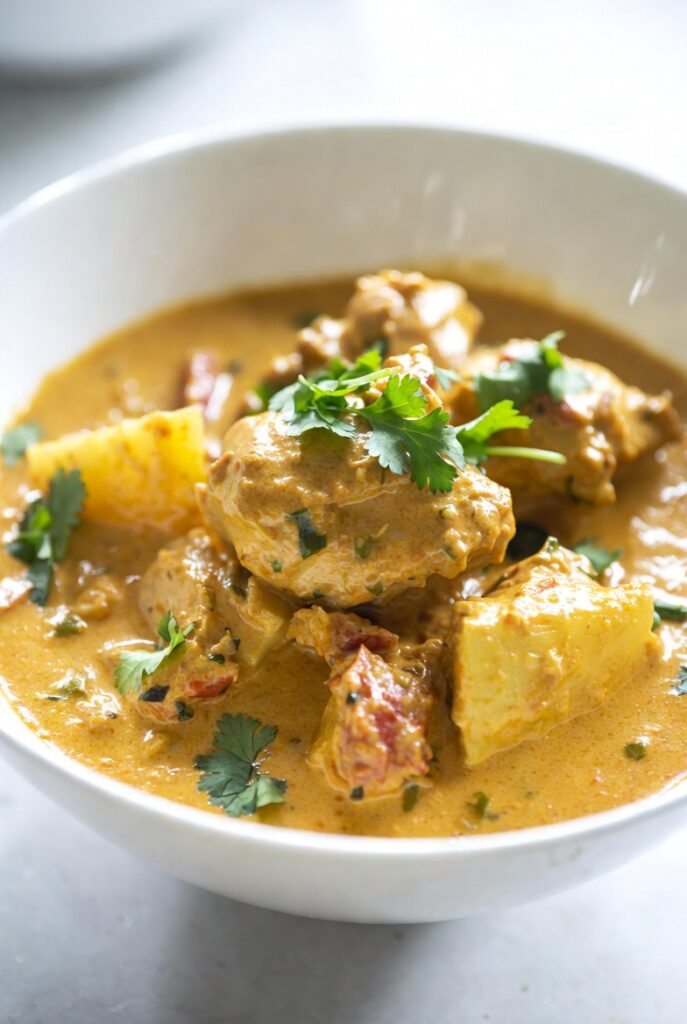
10. Modular Customization: The “Flavor Pivots”
- The “Inferno” Draft: Add 1 tbsp of Red Curry Paste for a “Capsaicin High-Note.”
- The “Garden” Draft: Fold in Baby Spinach or steamed Broccoli during the final 2 minutes.
- The “Vegan” Standard: Replace chicken with Extra-Firm Tofu or Chickpeas.
11. Storage and “Aromatic Maturation”
- Refrigeration: Store in an airtight container for up to 4 days.
- The “Overnight” Rule: Like most stews, this curry improves after 24 hours. The spices continue to “Infuse” the coconut fats.
- The Reheat: Reheat gently on the stove. If the sauce has thickened too much, add a splash of water to restore the “Velvet Texture.”
12. Frequently Asked Questions (FAQ)
Q: Why did my sauce “Split” or look oily?
A: This happens if the sauce is boiled too vigorously. Coconut milk is an emulsion; high heat can break the bond. Always maintain a Gentle Simmer.
Q: Can I use chicken breast?
A: Affirmative. However, shorten the simmering time to 5–7 minutes to prevent the meat from becoming “Dry.”
13. Nutritional Information
(Per serving – approx. 1.5 cups)
| Nutrient | Amount |
| Calories | 420 kcal |
| Protein | 28g |
| Total Fat | 32g |
| Net Carbs | 8g |
| Potassium | 15% DV |
14. Summary: The Master Draft of Global Utility
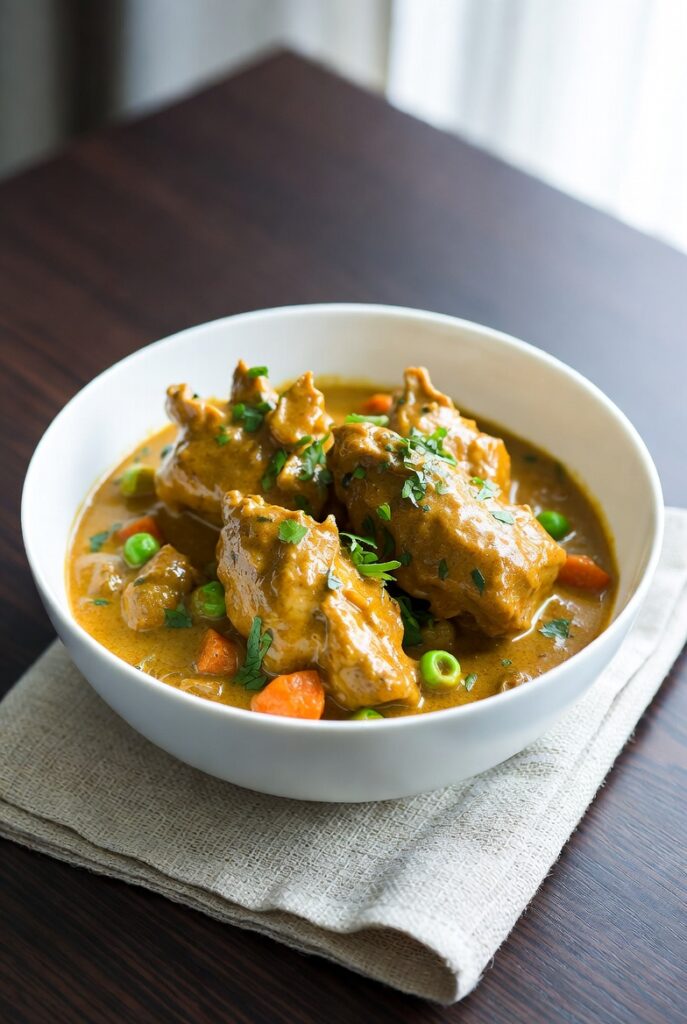
The Golden Emulsion is more than a recipe; it is a “Vessel for Intentional Synergy.” It proves that “Gourmet Results” can be achieved in the domestic kitchen through the mastery of “Lipid-Assisted Extraction” and “Spice Blooming.” By respecting the “Thermal Phase” of the aromatics and the “Emulsion Stability” of the coconut milk, you are delivering a dish that is visually “Gold-and-Green,” nutritionally dense, and sensorially perfect.