1. Introduction: The Architecture of “Triple-Stage” Crisp Dynamics
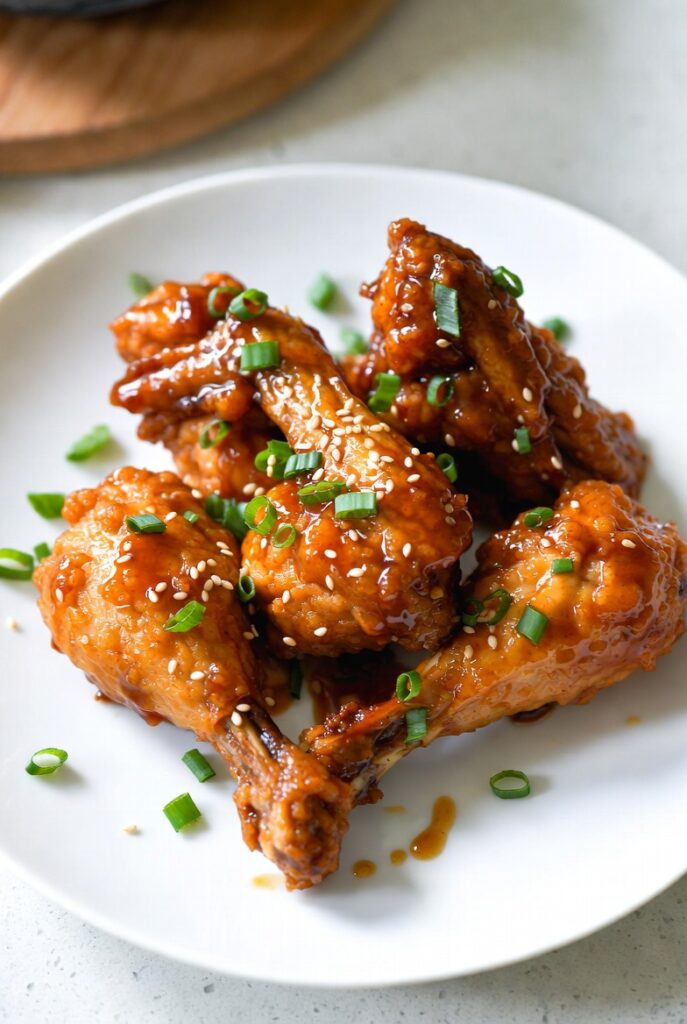
In the sophisticated taxonomy of global “Street-Food” gastronomy, Honey Garlic Korean Chicken represents a landmark study in “Structural Resiliency.” Unlike Western-style fried chicken, which relies on a thick, bready crust, the Korean “Master Draft” utilizes a specialized starch-based veneer designed to withstand the “Aqueous Load” of a heavy glaze without losing its “Shatter-Snap” integrity.
This document serves as the “Structural Manifesto” for the dish. We move beyond the simple “fry-and-sauce” logic and enter the realm of “Moisture-to-Starch Equilibrium.” By leveraging a “Double-Fry” technique and an “Aromatic-Lipid” glaze, we create a result that is “Glistening-Amber” on the exterior and “Silken-Soft” at its core. For the high-performance host or the culinary strategist, this is the “Platinum Standard” of flavor delivery—a high-density, “Salt-Sweet-Umami” payload that maintains its sensory resolution from the first bite to the last.
2. The Science of the “Double-Fry” Protocol
To master Korean Chicken, one must understand the behavior of Starch Retrogradation. Standard wheat flour is porous and absorbs moisture rapidly. In contrast, the Korean method utilizes Potato Starch or Cornstarch.
The secret to the “Master-Tier” result is the “Double-Fry Dynamics.”
- Phase 1 (The Par-Cook): The first fry at a lower temperature ($160^\circ C$) cooks the meat and sets the starch matrix.
- Phase 2 (The Moisture Evacuation): During the resting period between fries, internal moisture migrates to the surface.
- Phase 3 (The Shatter-Finish): The second fry at a higher temperature ($190^\circ C$) instantly vaporizes that surface moisture and “flash-renders” the crust into a thin, glass-like membrane. This ensures the chicken remains “Crisp-Stable” even when enrobed in a honey-garlic emulsion.
3. The Blueprint Overview: Technical Specifications
- Cuisine Type: Modern Korean Fusion / Performance Utility
- Difficulty Level: Medium (Focus on “Temperature Precision”)
- Total Preparation Time: 20 Minutes (plus optional 30-minute brine)
- Total Cooking Time: 20 Minutes
- Total Time: 45–60 Minutes
- Dietary Classifications: High-Protein. (Can be made Gluten-Free using Tamari).
- Yield: Serves 4–6
4. Equipment and Tools: The Essentials of “Thermal Recovery”
- Large Dutch Oven or Wok: For deep frying. The high walls prevent “Lipid Splatter.”
- Instant-Read Thermometer: Non-Negotiable. Success depends on the delta between the first and second fry temperatures.
- Wire Cooling Rack: To prevent “Steam-Trapping” at the base of the chicken.
- Large Stainless Steel Bowl: For the “Glaze-Toss” maneuver.
5. Ingredients Section: Sourcing for “Viscous” Adhesion
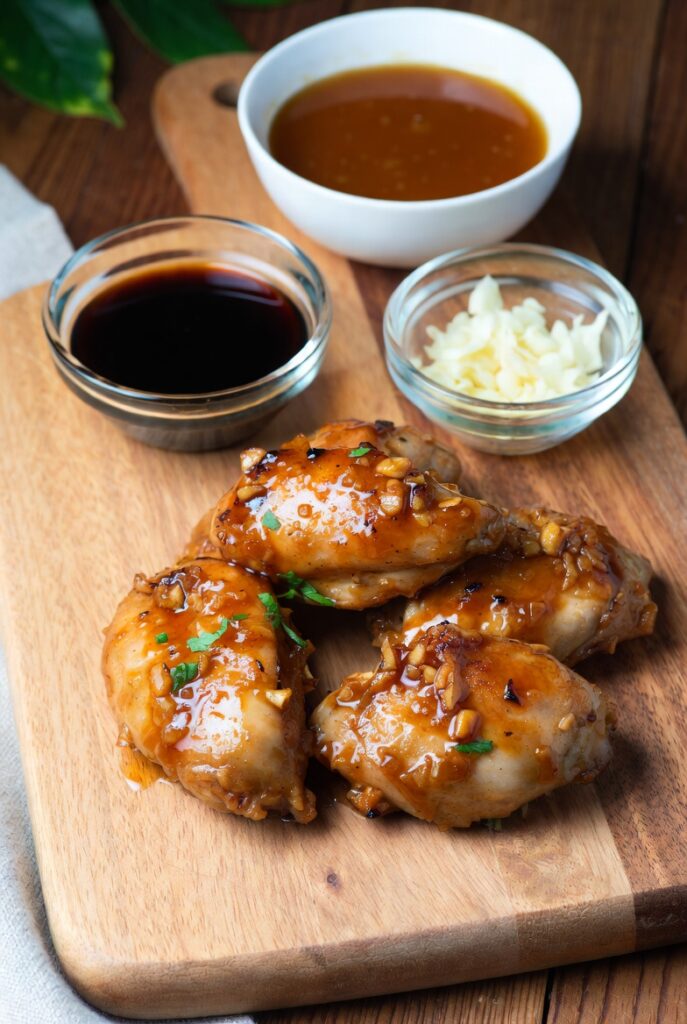
In a dish defined by its “Sticky-to-Crunch” ratio, the “Diastatic Power” of the honey and the “Allicin Density” of the garlic determine the final “Sensory Resolution.”
The Protein Anchor
- Chicken Wings or Boneless Thighs: 2 lbs.
- The Logic: Thighs provide more “Intermuscular Lipid” depth, while wings offer a higher “Skin-to-Meat Ratio,” which is optimal for maximizing the “Crunch Surface Area.”
The “Shatter-Veneer” (The Coating)
- Potato Starch: 1 cup. (Potato starch creates a “Crisper” finish than cornstarch due to its larger granule size).
- All-Purpose Flour: 2 tbsp. (To provide “Structural Bind”).
- Baking Powder: 1 tsp. (To create “Micro-Fissures” that catch the sauce).
The “Seoul-Glaze” Matrix (The Sauce)
- Honey: 1/2 cup. (The “Viscosity Driver”).
- Soy Sauce: 1/4 cup. (The “Saline-Umami” anchor).
- Fresh Garlic: 8–10 cloves, minced. (The “Aromatic Payload”).
- Ginger: 1 tsp, grated. (The “Pungency Clarifier”).
- Rice Vinegar: 1 tbsp. (To “Brighten” the heavy sugars).
- Gochugaru (Optional): 1 tsp. (For a “Subtle-Heat” finish).
6. The “Aromatic-Infusion” Protocol
The most common failure in “Honey Garlic” dishes is “Raw Garlic Sharpness.” To achieve a professional-grade result, one must utilize the “Infusion Protocol.”
Instead of adding raw garlic to the cold sauce, you must gently “Simmer” the minced garlic in a small amount of oil before adding the honey and soy. This denatures the aggressive enzymes and triggers the Maillard Reaction within the garlic itself, resulting in a “Mellow-Sweet” garlic profile that complements the honey rather than fighting it. This is “Molecular Softening” applied to aromatics.
7. Deep Dive: The “Starch-Sugar” Adhesion
Why does this sauce “Stick” without making the chicken soggy? It centers on “Aqueous Concentration.” By simmering the glaze until it reaches the “Soft-Ball Stage” (where the water content is minimized and the sugar concentration increases), the glaze becomes “Hydrophobic.”
When the “Shatter-Crisp” chicken is tossed in this high-viscosity glaze, the glaze “Lacquers” the surface without penetrating the starch barrier. This creates a “Dual-Phase Experience”: a warm, sticky, aromatic exterior followed by an immediate “Crunch-Response.”
8. Step-by-Step Instructions: The Master Execution
Step 1: The “Moisture-Management” Brine
Season the chicken with salt, pepper, and a splash of rice wine. Let sit for 20 minutes. This “Seasons the Core” and begins the protein-binding process.
Step 2: The “Veneer” Application
Dredge the chicken pieces in the potato starch mixture.
- The “Pro” Rule: Press the starch firmly into the meat. Let the coated chicken sit for 5 minutes until the starch looks “Damp”—this ensures the coating won’t “Flake Off” in the oil.
Step 3: The “Primary-Phase” Fry
Heat oil to $160^\circ C$ ($320^\circ F$). Fry the chicken in batches for 7–8 minutes. The chicken should look “Pale-Gold.” Remove and rest on a wire rack for 5 minutes.
Step 4: The “Seoul-Glaze” Synthesis
While the chicken rests, sauté the minced garlic in 1 tbsp of oil. Once fragrant, add the honey, soy sauce, ginger, and vinegar. Simmer for 3–5 minutes until the sauce “Bubbles” and thickens into a “Glistening Syrup.”
Step 5: The “Shatter-Finish” Fry
Increase oil temperature to $190^\circ C$ ($375^\circ F$). Fry the chicken again for 2–3 minutes until it reaches a “Deep-Amber” hue and a “Brittle” texture.
Step 6: The “Vortex” Toss
Immediately transfer the hot chicken into a large bowl. Pour the warm glaze over the chicken and “Toss” vigorously. The heat of the chicken will “Flash-Dry” the glaze, creating that signature “Lacquer.”
Step 7: The “Visual Garnish”
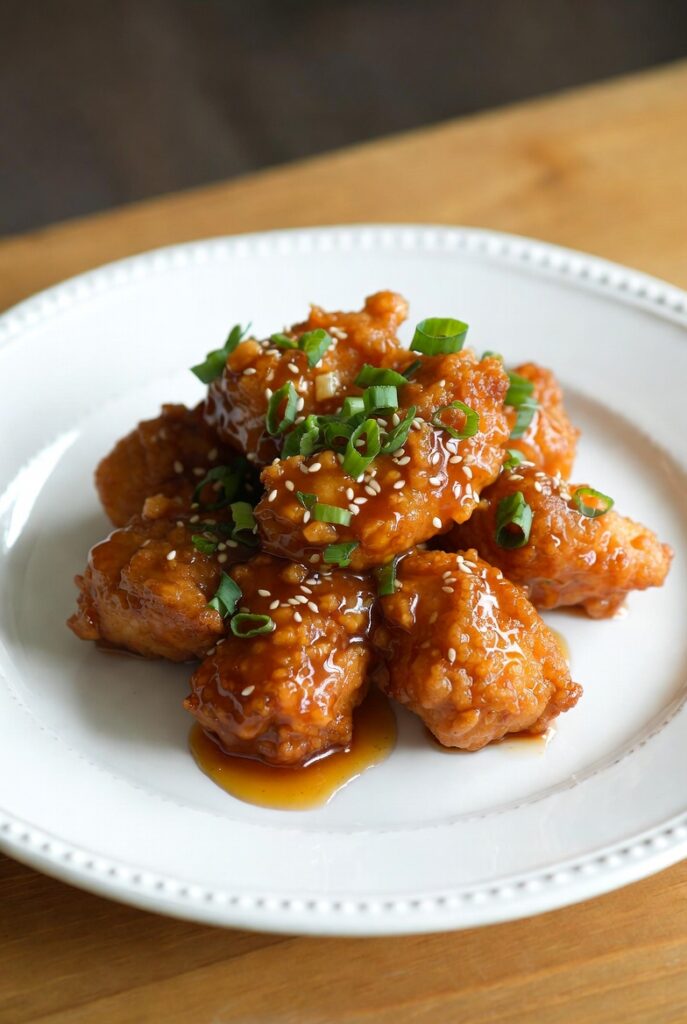
Garnish with toasted sesame seeds and sliced scallions for “Visual Gravity” and a “Nutty-Fresh” finish.
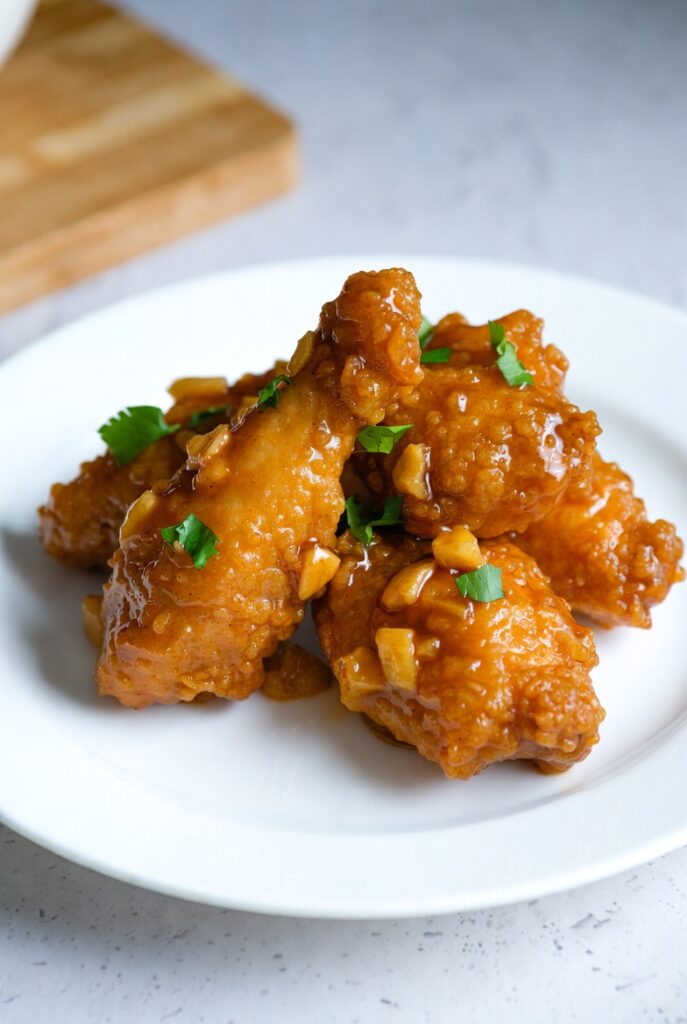
9. Satiety and the “Glucose-Lipid” Synergy
Honey Garlic Korean Chicken provides a “High-Resolution Satiety” profile:
- The Immediate Reward: The simple sugars in the honey provide an instant “Dopamine Spike.”
- The Lipid Buffer: The deep-fried starch and chicken fat slow the absorption of those sugars, preventing a “Glucose Crash.”
- The Savory Depth: The “Umami” from the soy sauce signals nutritional density to the brain, leading to a profound sense of “Completion.”
10. Modular Customization: The “Flavor Pivots”
- The “Inferno” Draft: Add 2 tbsp of Gochujang (Korean chili paste) to the glaze for a “Spicy-Sweet” resolution.
- The “Citrus” Shift: Add 2 tbsp of Yuzu or Orange juice to the glaze for a “Bright-Acidic” profile.
- The “Garlic-Bomb” Standard: Double the garlic and add a drizzle of Black Garlic Oil for an “Earth-Shattering” aromatic depth.
11. Storage and “Structural Recovery”
- Refrigeration: Store in an airtight container for up to 2 days.
- The “Aqueous” Reality: In the fridge, the honey will eventually draw moisture from the chicken, softening the crust.
- The Recovery Method: Never use a microwave. Reheat in an air fryer or oven at $200^\circ C$ ($400^\circ F$) for 5 minutes. This “Re-Caramelizes” the sugars and restores the “Crunch Geometry.”
12. Frequently Asked Questions (FAQ)
Q: Why is my chicken oily?
A: This usually happens because the oil temperature dropped too low. Ensure you fry in Small Batches to maintain the “Thermal Mass” of the oil.
Q: Can I use cornstarch instead of potato starch?
A: Affirmative. However, potato starch results in a “Thicker, Crunchier” shell that is more authentic to the Seoul street-food style.
Q: Why is the sauce too thin?
A: You didn’t simmer it long enough. The sauce needs to reach a “Syrup” consistency before it hits the chicken, or it will simply soak in and make the crust soggy.
13. Nutritional Information
(Per serving – approx. 6 wings or 1.5 cups thighs)
| Nutrient | Amount |
| Calories | 520 kcal |
| Protein | 24g |
| Total Fat | 28g |
| Net Carbs | 42g |
| Sodium | 850mg |
14. The “Visual Gravity” of Presentation
In the 2026 culinary landscape, the “Aesthetic Payload” is as critical as the flavor.
- The Pile: Stack the chicken in a “Pyramid” to emphasize volume and the “Glistening” quality of the glaze.
- The Contrast: Use a dark ceramic plate to make the “Amber-Gold” of the chicken and the “Jade-Green” of the scallions “Pop.”
- The “Lace”: Drizzle a few extra lines of honey over the finished pile for a “High-Gloss” professional finish.
15. Conclusion: The Master Draft of Seoul Fusion
The Seoul Glaze protocol is more than a recipe; it is a “Vessel for Intentional Synergy.” It proves that “Gourmet Results” can be achieved through the mastery of “Starch Dynamics” and “Aromatic Infusion.” By respecting the “Double-Fry” sequence and the “Viscous Adhesion” of the glaze, you are delivering a dish that is visually “Jade-and-Gold,” nutritionally dense, and sensorially perfect.
It is the ultimate “Social Anchor”—a “Shatter-Crisp” testament to the power of heat, starch, and sugar.