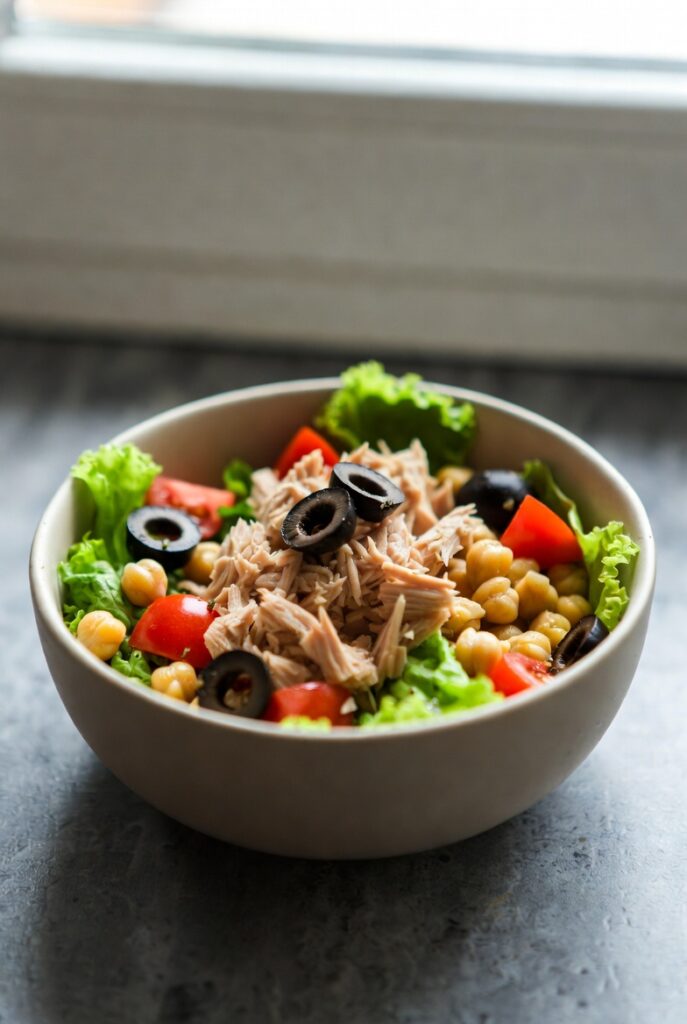
To view a Tuna Garbanzo Salad merely as a “high-protein lunch” is to miss the profound artistry inherent in the dish. In the realm of the culinary arts, this salad is not a collection of ingredients; it is a textural composition. It is a study in the juxtaposition of soft, creamy legumes against the silken, oceanic depth of preserved fish. When curated with the sensitivity of an artist, it becomes a dish of remarkable sophistication—a vibrant, rustic, yet deeply elegant arrangement of flavors that bridges the gap between the humble pantry and the refined palate.
The art of the Tuna Garbanzo Salad lies in the calibration of intensity. We are working with bold flavors—brine, salt, acid, and earth. The challenge for the cook is to ensure that no single element shouts over the other, but rather that they sing in a collective, harmonious chord.
1. The Curator’s Palette: Sourcing as Art
Before the knife touches the cutting board, the masterpiece is already half-created by the quality of the materials. We do not choose ingredients based on convenience; we choose them based on their contribution to the “flavor-canvas.”
The Oceanic Heart: Tuna
The tuna is the tenor in our quartet. Avoid the standard water-packed, shredded tuna that has been pulverized into a gray, flavorless fluff. You are looking for Tonno—tuna fillets packed in high-quality olive oil. This oil is not waste; it is an ingredient. It carries the essence of the fish and acts as the initial “binder” for your dressing. When you flake this tuna, you are looking for distinct, firm, meaty chunks that maintain their integrity even when folded into the salad.
The Earthy Anchor: The Garbanzo Bean
Chickpeas provide the structural weight of the salad. They offer a creamy, starchy resistance that anchors the lightness of the tuna. The “Cooking Art” way demands attention to their texture. While canned is acceptable, the artist chooses to briefly blanch them or, for the truly dedicated, peel them. Removing the thin, papery skin from a chickpea—a meditative task—transforms the bean from a “starchy pebble” into a “velvety pearl.” It changes the mouthfeel of the entire salad from rustic to refined.
2. The Architecture of “Snap”: Introducing Sensory Contrast
A salad composed only of flaked fish and legumes is a sensory flatline. To bring the dish to life, we must introduce the “Snap.” This is the deliberate inclusion of ingredients that provide acoustic and textural feedback.
- The Celery Rib: Dice this into a precise, tiny 0.5cm cube. This is not for flavor alone; it is for the “acoustic snap.” Every forkful should be punctuated by the crisp, refreshing sound of a celery dice.
- The Radish: Thinly sliced into rounds, then quartered. The radish introduces a sharp, metallic “zing” that acts as a visual and flavorful exclamation point. It cuts through the rich oils of the tuna like a blade.
- The Shallot/Red Onion: The aromatic foundation. The artist does not simply dump raw onion into the salad. We engage in the art of maceration. Finely minced shallots are tossed in the lemon juice and salt for ten minutes before the oil is added. This “tames” the onion, turning it from an aggressive, pungent intruder into a sweet, vibrant aromatic that perfumes the entire bowl.
3. The Dressing: The Alchemy of the Emulsion
The dressing for this salad is not a separate entity; it is the “medium” that binds the mosaic together. We seek an emulsion that is neither too thin nor too heavy.
The “Mediterranean Sunlight” Formula:

- The Acid-Brightener: Use a combination of fresh lemon juice and red wine vinegar. The vinegar provides a deep, traditional “bistro” tang, while the lemon juice offers the floral, sun-drenched brightness that feels alive on the tongue.
- The Liquid Gold: Use only the most fragrant, unfiltered extra virgin olive oil. Its color should be a deep, verdant green. This oil doesn’t just dress the salad; it flavors it.
- The Binding Agent: A touch of Dijon mustard is essential. It provides the “friction” that allows the oil and acid to bind, creating a glossy, velvet-like coating that clings to the chickpeas.
- The Herbal Resonance: Fresh flat-leaf parsley and fresh dill. Dill is the secret. Its slightly sweet, grassy, and almost anise-like note is the “signature” of the Mediterranean. Do not use dried herbs; they lack the volatile oils that provide that critical, intoxicating aroma.
4. The Ritual of Assembly: Composing the Mosaic
The assembly of this salad is a ceremony. It should be conducted with a sense of rhythm and intentionality.
Phase 1: The Maceration. Begin in your mixing bowl. Combine your acid (lemon and vinegar), your minced shallots, and your salt. Give this 10 minutes. Watch the shallots transform; they will become translucent and fragrant. This is the moment your dressing begins to live.
Phase 2: The Emulsion. Drizzle your olive oil into the acidic base in a thin, steady stream while whisking continuously. You are looking for a dressing that looks cloudy, rich, and cohesive. Stir in your Dijon mustard and your dried oregano—rubbed between your palms to release the scent.
Phase 3: The Fold. Add your flaked tuna (and the oil it was packed in), your chickpeas, and your “snap” vegetables. Now, take your silicone spatula and perform the “Art of the Fold.” Lift the ingredients from the bottom, bringing them over the top. We are aiming for a beautiful, chunky, rustic architecture. We are not smashing the beans or pulverizing the tuna; we are coating them in light.
Phase 4: The Finishing Touch. Fold in your fresh herbs last. They are the most delicate component and should retain their color and brightness until the moment they hit the plate.
5. The “Resting Phase”: A Lesson in Time
Art is not rushed. This salad is a “time-dependent” creation. After assembly, it must be allowed to rest. Place it in the refrigerator for at least 30 minutes, or up to two hours.
During this rest, a miracle of chemistry occurs: the chickpeas “drink” the vinaigrette, becoming seasoned from within; the tuna absorbs the lemon zest, becoming brighter; and the shallots diffuse their aroma throughout the mixture. A salad eaten immediately is “assembled”; a salad eaten after an hour of rest is “integrated.”
6. Troubleshooting: The Artisan’s Adjustments
Even the most seasoned artist must know how to adjust their canvas.
- “It feels heavy”: The dressing is likely too concentrated. Add a splash of fresh lemon juice or even a tablespoon of ice-cold water to the bowl. It will re-emulsify the dressing and lighten the “lipid-load” of the dish.
- “It feels ‘one-note'”: This is a call for more brine. A teaspoon of capers or a single, finely chopped Kalamata olive will add a burst of salt-cured depth that rebalances the palate.
- “The herbs have faded”: Never fold your herbs into the salad until five minutes before serving. Heat and acid are the enemies of fresh herb vibrancy.
7. The Visual Composition: Presentation as Final Act
The presentation of the Tuna Garbanzo Salad should evoke the spirit of a Mediterranean picnic. Use a shallow, wide-rimmed bowl that allows the ingredients to spread out, showcasing the contrast between the white fish, the tan chickpeas, the deep green herbs, and the vibrant red radishes.
- The Artistic Garnish: A final, light drizzle of your best olive oil over the top, a crack of fresh black pepper, and perhaps a few whole sprigs of dill placed precisely at the center.
- The Serving Vehicle: Do not serve this with a heavy, soft bread. Serve it with toasted, garlic-rubbed crostini. The bread should provide a hard, loud crunch that contrasts with the softness of the chickpeas, turning every bite into an experience of texture.
8. Conclusion: The Masterpiece of the Everyday
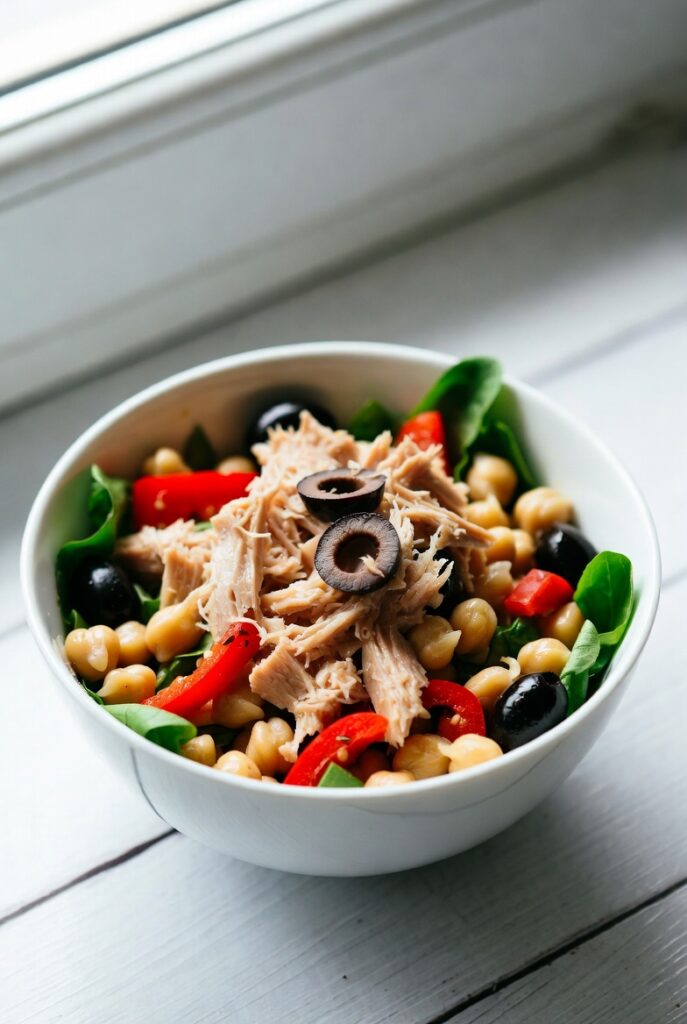
Cooking is the art of transformation. By taking two of the most common pantry items—a can of tuna and a can of garbanzos—we have engaged in a process that elevates them into a dish that is nutrient-dense, visually stunning, and artistically coherent.
This salad is a testament to the idea that “health” and “pleasure” are not two separate goals. They are the same. By focusing on the texture of the beans, the quality of the tuna, and the brightness of the vinaigrette, we have created a meal that nourishes the body and satisfies the soul. It is a dish that invites you to be a curator in your own kitchen, to taste, to adjust, and to take pride in the simple, beautiful art of making something truly good.