1. Introduction: The Symphony of the “Acid-Butter” Equilibrium
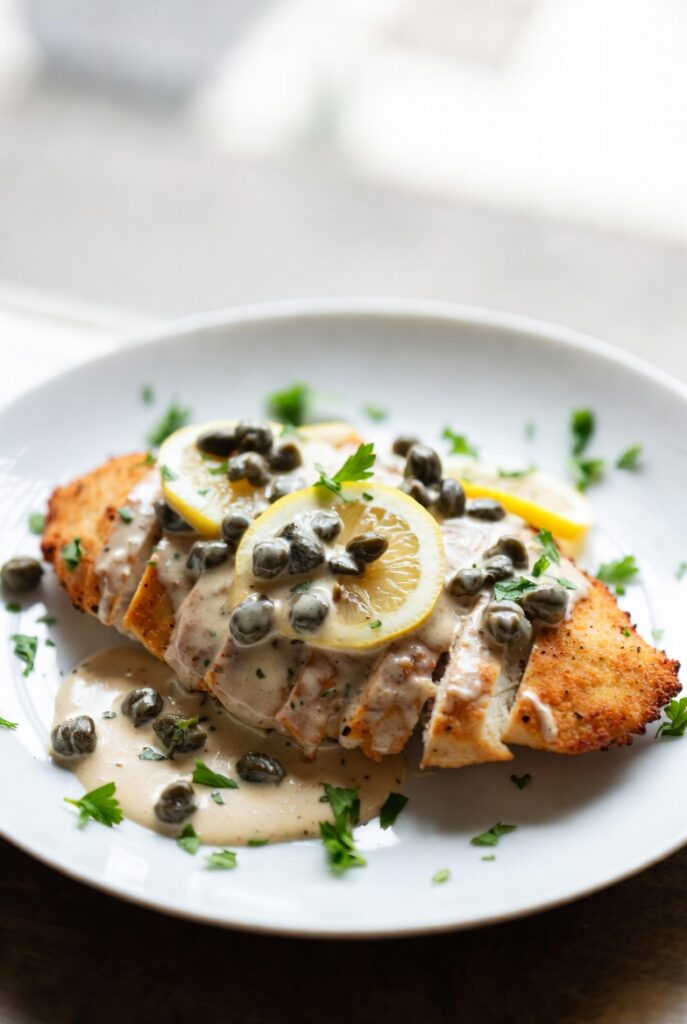
In the pantheon of classic Italian-American gastronomy, few dishes command the room with as much “Sensory Velocity” as Chicken Piccata. It is a dish that exists as a study in “Vibrancy and Contrast”—a masterful pairing of the high-acid notes of fresh lemon and the pungent, saline bite of capers against a rich, silken butter emulsion. While it is often relegated to the realm of a standard “weeknight meal,” a true “Master Draft” of Piccata is a sophisticated exercise in “Textural Tiering.”
The brilliance of this dish lies in its optimized “Surface-to-Volume Ratio.” By pounding the chicken breast into thin, uniform scaloppine, we maximize the area available for the Maillard Reaction (browning) while ensuring a cooking time so brief that the delicate muscle fibers never reach the point of “Proteinic Desiccation” (drying out). For the modern professional, the high-performance athlete, or the gourmet enthusiast, this is the “Platinum Standard” of the 20-minute dinner: it is sophisticated enough for a formal engagement yet efficient enough for a high-performance recovery meal. It is a dish that understands that “Gourmet” is not a measure of time, but a measure of chemical precision and “Aromatic Resolution.”
2. The Science of the “Monter au Beurre” Pan Sauce
To master Chicken Piccata, one must move beyond the recipe and understand the molecular behavior of Starch and Lipid Emulsions. The secret to a professional-grade Piccata—the kind that clings to the fork rather than running like water—is the “Starch-Bridge Mechanic.”
When the flour-dredged chicken hits the hot pan, a portion of that starch stays behind in the oil and rendered chicken fat, creating a “Preliminary Roux” directly on the surface of the skillet. When you later deglaze the pan with white wine and lemon juice, those starch molecules act as a “Molecular Scaffold.” When cold butter is whisked in at the very end—a classic French technique known as “Monter au Beurre”—the starch prevents the butter’s fats from breaking into a greasy film. Instead, it creates a “Micron-Thin, Opaque Coating” that ensures every molecule of the sauce is a balanced ratio of lipid and acid. This is the difference between a “Home-Style” chicken and a “Restaurant-Tier” masterpiece.
3. Recipe Overview: The Master Blueprint
- Cuisine Type: Classic Italian-American / High-Velocity Gourmet
- Difficulty Level: Easy (Focus on temperature control and timing)
- Total Preparation Time: 10 Minutes (Includes the “Uniform-Inertia” pounding)
- Total Cooking Time: 10 Minutes
- Total Time: 20 Minutes
- Dietary Classifications: High-Protein. (Can be made GF with almond flour or cornstarch).
- Yield: Serves 2–4
4. Equipment and Tools: The Essentials of “Thermal Transfer”
- 12-inch Stainless Steel Skillet: Essential for developing “Fond” (the savory, browned bits of protein). Non-stick pans are the enemy of Piccata; they prevent the savory crust from adhering to the pan, which weakens the depth of the final sauce.
- Meat Mallet or Heavy-Bottomed Saucepan: For achieving the “Uniform Thinness” required for rapid, even searing.
- Fine-Mesh Sieve: For rinsing the capers to control the “Sodium Spike.”
- Whisk: For the final “Emulsion Phase.”
5. Ingredients Section: Sourcing for Pungency and Richness
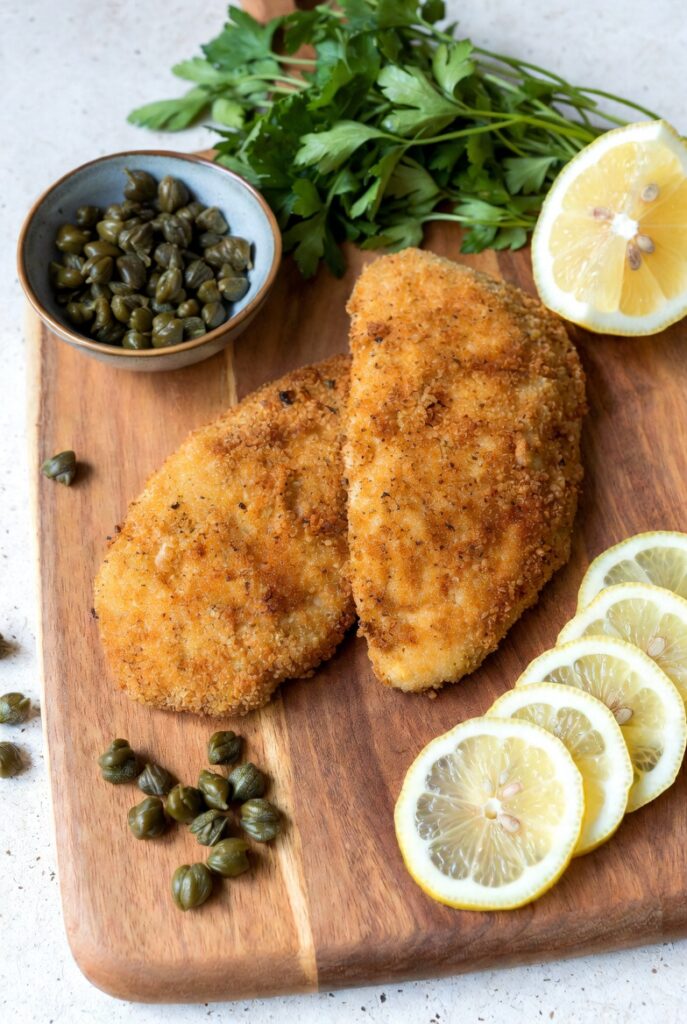
In a dish with such a minimal ingredient list, the “Vibrancy” of each component is the only variable that determines success.
The Protein Anchor
- Chicken Breasts: 1 lb. Sliced horizontally (butterflied) and pounded to exactly 1/4-inch thickness.
- All-Purpose Flour: 1/2 cup. This provides the “Starch Scaffold” for the sauce and a protective “Heat Shield” for the chicken.
The “Acidic Trinity” (The Sauce Base)
- Fresh Lemon Juice: 1/4 cup (approx. 2 large lemons). Warning: Avoid bottled juice; it lacks the volatile limonene oils needed for the “High-Note” aroma.
- Dry White Wine: 1/2 cup. (Pinot Grigio or Sauvignon Blanc). This provides the “Structural Tartness” and helps dissolve the Fond.
- Non-Pareil Capers: 2–3 tbsp. These are the “Saline Sparks” of the dish.
The “Lipid Buffer”
- Unsalted Butter: 4–5 tbsp. Crucial: Must be cold and cubed for the final emulsion.
- Extra Virgin Olive Oil: 2 tbsp. For the high-heat sear.
- Fresh Parsley: 1/4 cup, finely chopped. (The “Chlorophyll Brightener”).
6. The “Uniform-Inertia” Protocol: Pounding for Perfection
The most common failure in Chicken Piccata is uneven cooking—where the thin edges become dry and “stringy” before the thicker center is safely cooked. To achieve a “Master Draft” finish, you must utilize the “Uniform-Inertia Protocol.”
Place your butterflied chicken between two sheets of heavy-duty plastic wrap or inside a gallon-sized freezer bag. Using the flat side of a meat mallet, pound the chicken from the center outward. The goal is a “Perfect Plane” of protein exactly 1/4-inch thick. This ensures that the chicken cooks in exactly 90 to 120 seconds per side. If the geometry is consistent, the texture will be consistent. This step is not just about tenderness; it is about “Thermal Reliability.”
7. Step-by-Step Instructions: The Master Blueprint
Step 1: The “Dredge and Sear”
Season the pounded chicken generously with salt and black pepper. Dredge lightly in the flour, shaking off all excess. We want a “Dusting,” not a “Crust.” Heat the olive oil and 1 tbsp of the butter in the stainless steel skillet over medium-high heat. Once the oil “shimmers,” add the chicken (do not crowd the pan; cook in two batches if necessary). Sear for 2 minutes per side until a pale golden crust forms. Remove to a warm plate.
Step 2: The “Fond” Deglaze
With the pan still hot, pour in the white wine. Use a wooden spoon to vigorously scrape the bottom of the pan. This releases the Fond—the concentrated chicken essence—into the liquid. This is the “Soul” of the sauce.
Step 3: The “Acidic Reduction”
Add the lemon juice and the rinsed capers. Increase the heat slightly and simmer for 3–4 minutes. You are looking for the liquid to reduce by roughly $50\%$ until it achieves a “Syrupy” or “Nappe” consistency.
Step 4: The “Monter au Beurre” (The Magic Phase)
Reduce the heat to low. This is the most critical step. Add the cold, cubed butter one piece at a time, whisking constantly. The cold fat will hit the warm, starch-laden reduction and create a “Kinetic Emulsion.” The sauce will transform from a translucent yellow to an “Opaque, Creamy Gold.”
Step 5: The “Re-Hydration” Integration
Return the chicken scaloppine (and any juices that collected on the plate) back to the pan for 30–60 seconds. Use a spoon to “baste” the chicken with the sauce. This slightly softens the flour dredge, merging the meat and sauce into a singular “Flavor Profile.”
Step 6: The Final Polish
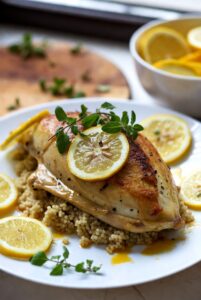
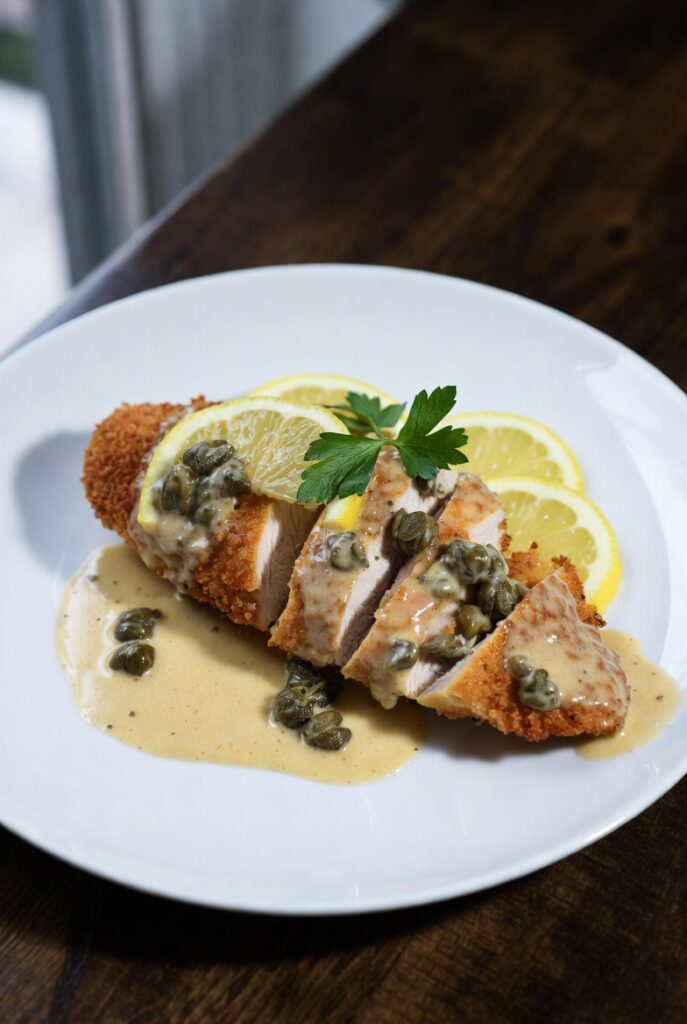
Remove from heat. Garnish with the fresh parsley and thin slices of lemon. The residual heat will “Bloom” the parsley’s aroma without wilting it into brown strands.
8. Satiety and the “Palate-Reset” Mechanic
Chicken Piccata is uniquely designed for “High-Resolution Satiety.” From a nutritional standpoint, the dish provides a massive dose of Bioavailable Protein and Vitamin C. However, the real power lies in the “Acidic Palate Reset.” Because the dish is high in “Sour” notes (lemon/wine) and “Saline” notes (capers), it constantly cleanses the tongue of the “Butter Lipids.” This prevents “Sensory-Specific Satiety”—the feeling of getting “bored” or “heavy” from a rich meal. This makes every bite feel as vibrant as the first, making it an “Elite-Tier” meal for those who struggle with “Appetite Fatigue.” It is a “Tactical Indulgence” that supports long-form cognitive performance by providing energy without the “Post-Meal Lethargy.”
9. Modular Variations: The “Flavor Pivots”
- The “Coastal” Pivot: Add 1/2 cup of chopped artichoke hearts to the reduction phase for an “Earthier, Mediterranean” profile.
- The “Garden” Draft: Add 1/2 cup of halved cherry tomatoes during the deglaze phase for a “Vibrant Color Shift.”
- The “Dairy-Free” Standard: Utilize high-quality vegan butter or “Cold-Pressed Avocado Oil” for the final emulsion, though you will lose the “Nutty” complexity of dairy.
10. The “Carrier” Infrastructure
To maintain the “Piccata Standard,” choose a carrier that respects the sauce:
- Angel Hair Pasta: The “Traditional Choice.” The thin strands have a massive surface area to catch the lemon-butter emulsion.
- Mashed Cauliflower: The “Keto-Pure” option. The neutrality of the cauliflower allows the capers to shine.
- Sautéed Haricots Verts: For a “Light and Crisp” pairing that emphasizes the lemon notes.
11. Frequently Asked Questions (FAQ)
Q: My sauce is too thin/watery. What happened?
A: This usually means the reduction in Step 3 wasn’t sufficient, or the butter was too warm when added. If the liquid hasn’t “syruped” before you add the butter, the emulsion won’t hold.
Q: Can I use chicken thighs?
A: You can, but it is a “Low-Tier” substitute for this specific dish. Thighs have a higher fat content and take longer to cook, which can “muddle” the bright, clean acidity that defines a true Piccata.
Q: Why are my capers so salty?
A: Always rinse your capers in a fine-mesh sieve. They are preserved in a “High-Saturation Brine,” and failing to rinse them can lead to an “Ionic Overload” in the sauce.
12. Nutritional Information
(Per serving – approx. 1 scaloppine with sauce)
| Nutrient | Amount |
| Calories | 340 kcal |
| Protein | 28g |
| Total Fat | 18g |
| Net Carbs | 8g |
| Vitamin C | 35% DV |
13. Summary: The Master Draft of Culinary Velocity
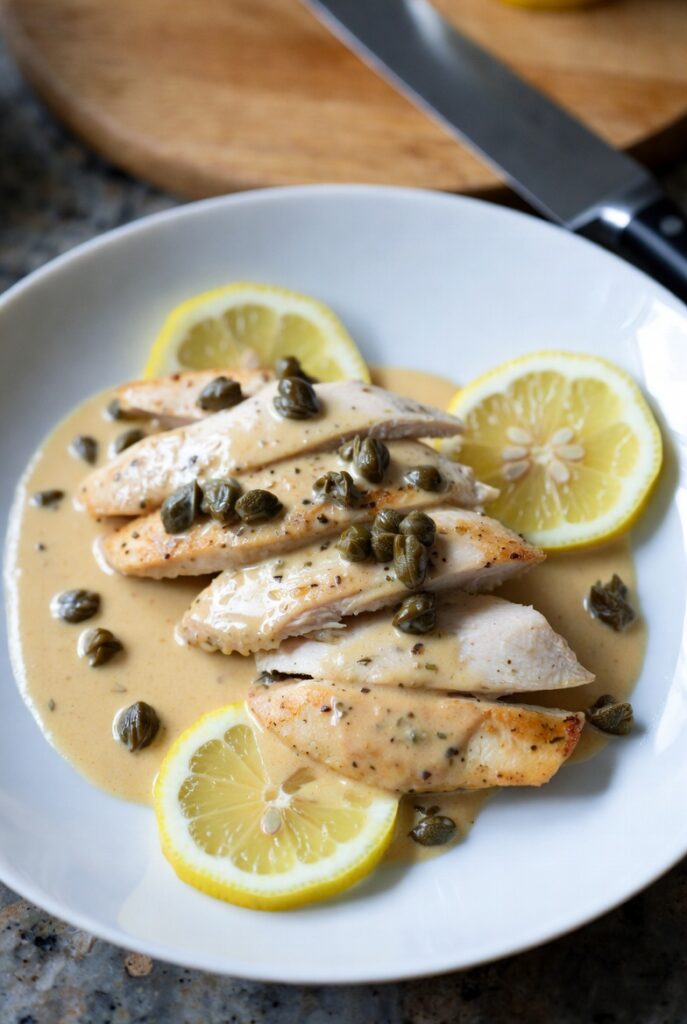
The Chicken Piccata with Capers and Lemon is more than a recipe; it is a “System of Precision.” It proves that the most “Sophisticated” flavors do not require hours of labor—they require an understanding of “Emulsion Mechanics” and “Acid-Lipid Balance.” By mastering the “Uniform-Inertia Protocol” and the “Monter au Beurre,” you are elevating a simple piece of poultry into a “Gourmet Event.”