1. Introduction: The Architecture of Absolute Simplicity
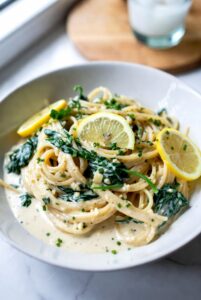
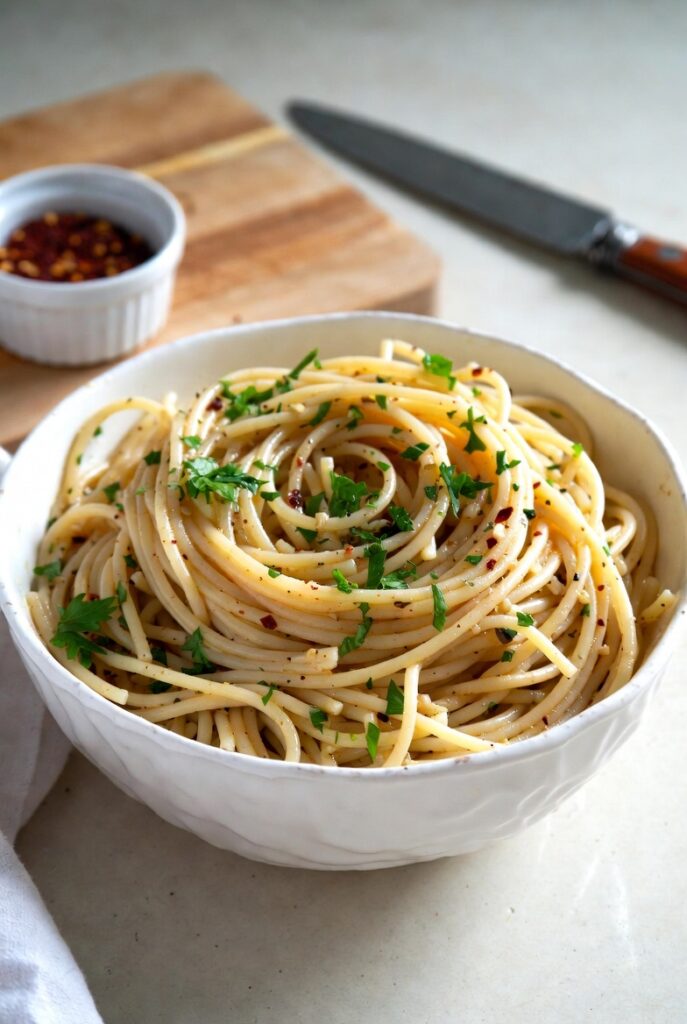
In the sprawling ecosystem of global gastronomy, where complexity is often mistaken for quality, Spaghetti Aglio e Olio (Garlic and Oil) stands as a defiant “Singularity of Flavor.” It is the ultimate “Pantry Pasta,” a dish defined not by the abundance of its ingredients, but by the “Precision of its Execution.” Originating from the Neapolitan tradition as a cornerstone of cucina povera (peasant cooking), it has evolved from a survival staple into a global benchmark for culinary efficiency and sensory impact.
The brilliance of this dish lies in the “Lipid-Starch Emulsion.” By utilizing only four primary staples—dry pasta, extra virgin olive oil, garlic, and red pepper flakes—we create a sauce that is both ethereal and incredibly potent. For the high-performance individual, this is the “Zero-Friction” meal: it can be assembled in the time it takes to boil water, utilizes shelf-stable components, and provides a “High-Satiety” profile through healthy monounsaturated fats. It is a dish that respects your time while honoring the essential chemistry of Mediterranean cooking. It is, quite literally, the “Master Draft” of Italian pasta.
2. The Science of “Allicin Control” and Emulsification
To master Aglio e Olio, one must understand the behavior of Allicin, the organosulfur compound responsible for garlic’s pungent aroma and sharp “bite.” Allicin does not exist in a whole clove; it is created through an enzymatic reaction when the garlic cell walls are ruptured by slicing or crushing.
To achieve a “Master Draft” flavor, we utilize a “Low-Temperature Infusion.” If garlic is subjected to high-intensity heat immediately, the sugars scorch and the Allicin transforms into a bitter, acrid substance. By heating the garlic in olive oil starting from a cold pan, we facilitate a “Gentle Extraction.” This allows the volatile oils to seep into the lipid base, creating a sweet, nutty foundation that supports the entire dish.
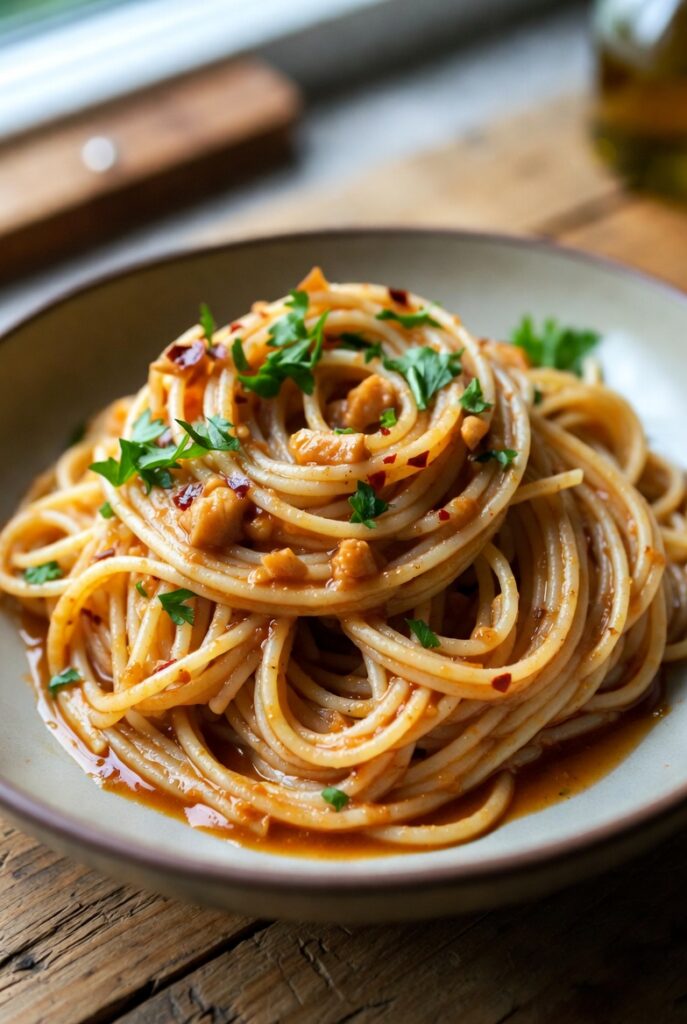
The second scientific pillar is the “Pasta Water Catalyst.” Pure olive oil is hydrophobic; it will not naturally adhere to the surface of a starch-based noodle. It will simply pool at the bottom of the bowl, leaving the pasta dry and the palate greasy. However, by introducing a small volume of Starchy Pasta Water (liquid gold) into the oil-garlic mixture, we facilitate a “Mechanical Emulsion.” The starch particles act as a bridge (an emulsifier) between the oil and the water, creating a creamy, “Vibrant Glaze” that coats every strand.
3. Recipe Overview: The Master Blueprint
- Cuisine Type: Traditional Italian / Minimalist Performance
- Difficulty Level: Very Easy (Technique-dependent)
- Total Preparation Time: 5 Minutes
- Total Cooking Time: 10 Minutes
- Total Time: 15 Minutes
- Dietary Classifications: Vegan, Dairy-Free, Low-Glycemic.
- Yield: Serves 2
4. Equipment and Tools: The Essentials of Surface Area
The success of Aglio e Olio is determined by the “Agitation Phase,” which requires specific tools for maximum efficiency.
- 12-inch Stainless Steel Skillet: A wide pan is essential. The large surface area allows for rapid evaporation of excess water, concentrating the flavor of the emulsion.
- Large Stock Pot: To boil the pasta. The volume of water should be just enough to cover the pasta, which increases the Starch Concentration of the water.
- Heavy-Duty Tongs: For the “Mechanical Transfer”—moving the pasta directly from the water to the pan is superior to using a colander, as it preserves the hot starch on the surface of the noodle.
- Mandoline or Sharp Chef’s Knife: For “Uniform Slicing” of the garlic. The goal is “Translucent Chips” that provide a consistent texture and flavor release.
5. Ingredients Section: Sourcing for Purity
In a dish with four ingredients, there is no “Flavor Noise” to hide mediocrity. The quality of your raw materials is the only variable.
The Starch Anchor
- Dried Spaghetti or Linguine: 250g. Look for “Bronze-Cut” (Pasta al Bronzo). Traditional Teflon-cut pasta is too smooth; bronze-cut pasta has a micro-rough surface area scientifically optimized for “Sauce Adhesion.”
The “Aromatic Lipid” Matrix
- Extra Virgin Olive Oil: 1/4 cup. This is the “Primary Solvent.” Use a “First Cold Press” oil with a “Peppery Finish,” which indicates high polyphenol content.
- Garlic: 6–8 cloves. More than you think you need. Thinly sliced into translucent “wafers.”
- Red Pepper Flakes (Peperoncino): 1/2 teaspoon. For the “Capsaicin Spark.”
The “Vibrant” Finish
- Fresh Italian Parsley: 1/2 cup, finely chopped. Adds the “Chlorophyll Balance” to the heavy fats.
- Pasta Water: 1/2 to 1 cup (Reserved from the boiling pot).
6. The “Cold-Start” Protocol
The most common failure in Aglio e Olio is “Acrid Garlic.” If you drop sliced garlic into a shimmering hot pan, the thin edges will carbonize in seconds.
To achieve a “Master Draft” finish, follow the “Cold-Start Protocol.” Place the olive oil and garlic chips in a cold skillet. Turn the heat to medium-low. As the pan slowly gains thermal energy, the garlic gently “blooms.” When the garlic reaches a “Pale Straw” color—not brown, but a gentle golden hue—the kitchen will smell like an authentic Neapolitan trattoria. At this exact moment, you introduce the red pepper flakes and a splash of pasta water. This effectively “shuts down” the cooking process, locking in the sweetness of the garlic.
7. Deep Dive: Polyphenols and Cardiovascular Defense
Why is this “Pantry Pasta” a strategic nutritional choice? It centers on the Oleocanthal found in high-quality extra virgin olive oil. This specific polyphenol possesses anti-inflammatory properties that mimic the effects of ibuprofen.
When paired with the Allicin and S-allyl cysteine in the garlic—which have potent antimicrobial and vasodilatory properties—this meal becomes a “Biological Shield.” It supports cardiovascular health by improving blood flow and reducing oxidative stress. By mastering this dish, you are effectively “Engineering” a high-impact meal from the simplest of molecules. It is “Functional Fuel” that supports heart health and cognitive function while delivering a high level of sensory satisfaction.
8. Step-by-Step Instructions: The Master Blueprint
Step 1: The “Low-Volume” Boil
Bring a pot of water to a boil. Use less water than usual to ensure a high starch-to-water ratio. Add a generous amount of sea salt. Add the spaghetti and cook for 2 minutes less than the package directions. We want the “True Al Dente” (to the tooth) stage, as the pasta will finish cooking in the skillet.
Step 2: The Lipid Infusion
While the pasta boils, add the olive oil and sliced garlic to a cold skillet. Turn the heat to medium-low. Sauté until the garlic is fragrant and turns a “Pale Straw Gold.”
Step 3: The Heat Activation
Add the red pepper flakes to the oil. Stir for 30 seconds. The capsaicin in the peppers is oil-soluble, meaning the oil becomes the delivery vehicle for the heat.
Step 4: The Mechanical Transfer
Using tongs, move the spaghetti directly from the boiling water into the skillet. Do not drain the pasta. The water clinging to the strands is essential for the chemical bond.
Step 5: The Emulsion Build
Add 1/2 cup of the starchy pasta water to the skillet. Increase the heat to medium-high. Use your tongs to toss and stir the pasta vigorously. This “Mechanical Agitation” forces the oil and water to bond. Within 60 to 90 seconds, you will see the liquid transform from watery to a “Creamy, Glistening Glaze.”
Step 6: The Chlorophyll Finish
Turn off the heat. Stir in the fresh parsley. The residual heat will wilt the parsley just enough to release its volatile oils without losing its “Vibrant Green” color or fresh “Chlorophyll” snap.
9. Satiety and the “Starch-Lipid” Synergy
Aglio e Olio provides a “Flattened Glucose Curve” compared to traditional tomato-based pastas. Because the pasta is cooked al dente, the starch remains in a more “crystalline” state, slowing down the enzymatic breakdown into sugar.
When coated in the healthy monounsaturated fats of the olive oil, the gastric emptying process is further delayed. This results in a “Steady-State Energy” release. Unlike “Fast-Carb” meals that lead to a lethargic post-meal slump, this “Lipid-Buffered” starch provides mental clarity and physical stamina for 3–4 hours post-consumption.
10. The “Empty Pan” Philosophy: A Lesson in Culinary Zen
There is a psychological benefit to mastering Aglio e Olio. It represents a “Culinary Zen”—the realization that you do not need a refrigerator full of produce to create an “Elite-Tier” meal. This dish empowers the individual to be “Self-Sustaining.” Whether you are in a remote cabin or a city apartment at midnight, the ability to turn three shelf-stable ingredients into a restaurant-quality dinner is a form of “Culinary Sovereignty.”
It encourages a focus on Technique over Inventory. Once you master the “Emulsion,” you realize that the same principles apply to more complex sauces (Carbonara, Cacio e Pepe). Aglio e Olio is the foundation upon which the entire Italian pasta tradition is built.
11. Customization: The “Modular” Add-ons
While the “Master Draft” is perfect in its simplicity, the Aglio e Olio format is highly modular:
- The “Coastal” Shift: Add 2–3 anchovy fillets to the garlic-oil mix. They will “melt” into the oil, providing a massive “Umami Depth” without a fishy taste.
- The “Textural” Standard: Top with toasted breadcrumbs (mollica) to add a crunch that mimics the presence of expensive cheese.
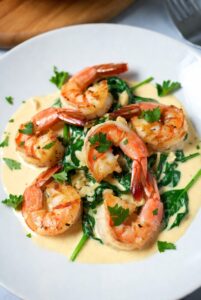
- The “Protein” Fortification: Toss in some sautéed shrimp or scallops during the final “Emulsion Phase” for a high-protein “Luxury Pivot.”
12. Storage and the “Evolution of Flavor”
- Refrigeration: Store in an airtight glass container for up to 2 days.
- The Reheat: To restore the “Emulsion,” do not use the microwave. Reheat in a skillet over medium heat with an extra 2 tablespoons of water and a drizzle of fresh olive oil to “re-bind” the sauce.
13. Frequently Asked Questions (FAQ)
Q: Can I use pre-minced garlic?
A: Negative. Pre-minced garlic is stored in citric acid, which alters the pH and destroys the delicate sugars needed for caramelization. It will result in a “Metallic” aftertaste.
Q: Why is my sauce watery?
A: You likely didn’t toss the pasta vigorously enough or didn’t use enough heat during the “Emulsion Phase.” The water and oil need “High-Energy Agitation” to bond.
Q: Is it supposed to be spicy?
A: The red pepper flakes should provide a “Background Hum,” not an overwhelming burn. Adjust according to your personal “Capsaicin Tolerance.”
14. Nutritional Information
(Per serving – approx. 125g dry pasta equivalent)
| Nutrient | Amount |
| Calories | 480 kcal |
| Protein | 12g |
| Total Fat | 24g |
| Net Carbs | 52g |
| Fiber | 3g |
| Polyphenols | High |
15. Summary: The Master Draft of Pantry Utility
The Aglio e Olio is more than a recipe; it is a system for “Sensory Maximization” through “Ingredient Minimization.” It proves that “Healthy” and “Gourmet” are not mutually exclusive with “Fast.” By mastering the “Cold-Start Protocol” and the “Starchy Emulsion,” you are unlocking a new dimension of kitchen efficiency. It is the ultimate fuel for a high-performance life, delivered through the timeless wisdom of the Italian coast.