1. Introduction: The Architecture of “Textural Polarization”
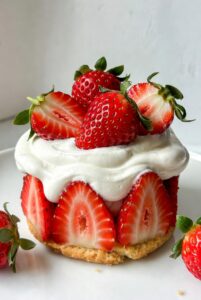
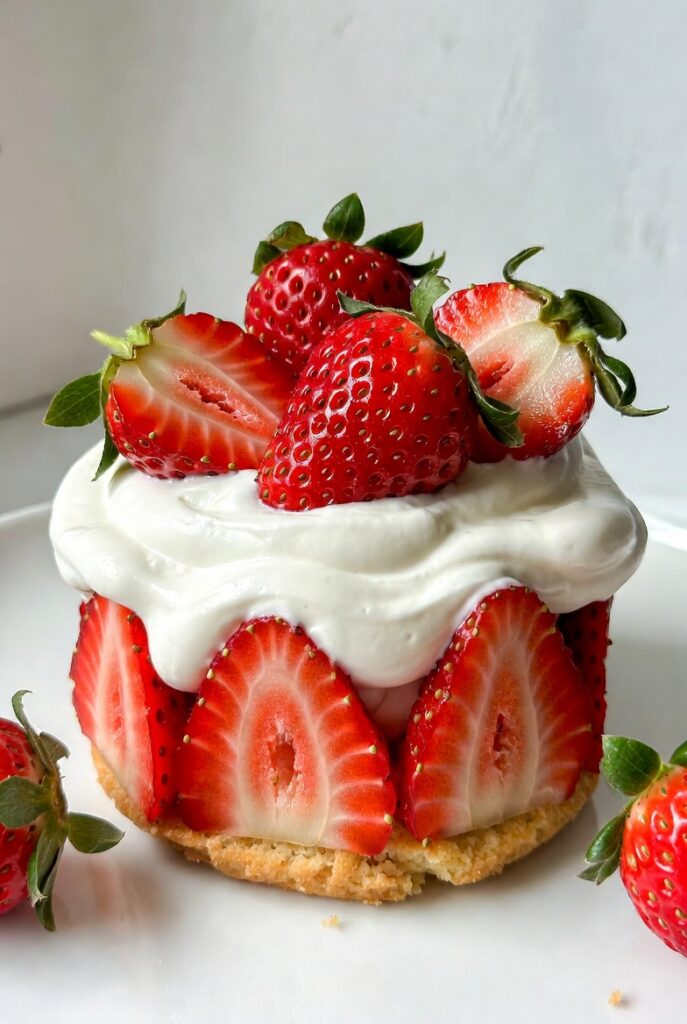
In the specialized taxonomy of seasonal gastronomy, the Strawberry Shortcake represents a landmark achievement in “The Triple-State Synthesis.” While often dismissed as a casual holiday staple, a technically perfected shortcake is a rigorous exercise in managing three distinct physical states: the “Crumb-Dense” (the biscuit), the “Macerated-Fluid” (the berries), and the “Aerosol-Stable” (the whipped cream).
This document serves as the “Technical Manifesto” for the dish. We move beyond the rudimentary “sponge-cake” logic—which is a structural failure for this application—and examine the mechanics of “The Short-Crust Scaffold.” By utilizing cold-lipid lamination, we achieve a biscuit that is “Shatter-Crisp” on the exterior and “Cloud-Soft” on the interior. For the culinary strategist, this is the “Platinum Standard” of fruit-forward utility.
2. The Science of “Hydroscopic Maceration”
To master the Strawberry Shortcake, one must understand the behavior of Osmotic Pressure and Gluten Suppression.
2.1 The “Syrup-Extraction” Phase
Strawberries are approximately 90% water. When granulated sugar is applied to sliced berries, it creates a solute imbalance. Through Osmosis, the sugar draws the internal juice out of the fruit cells, creating a natural, high-viscosity syrup without the need for supplemental heat.
This “Cold-Extraction” preserves the volatile aromatic compounds of the berry that are usually destroyed by boiling.
2.2 The “Shortening” of the Crumb
The term “Shortcake” refers to the culinary technique of “shortening” gluten strands. By cutting cold, solid fats (butter) into the flour, we coat the wheat proteins in a lipid barrier. This prevents the proteins from bonding when liquid is added, resulting in a “Short,” tender crumb rather than a “Long,” chewy bread-like texture.
2.3 The “Laminated-Rise” Cycle
Unlike a cake that relies on egg-white aeration, the shortcake biscuit utilizes “Steam-Expansion.” As the cold butter bits melt in the high heat of the oven, the water content in the butter evaporates, creating micro-pockets of steam that push the dough upward.
3. The Blueprint Overview: Technical Specifications
- Cuisine Type: Traditional American / Pastry Engineering
- Difficulty Level: Medium (Focus on “Lipid-Temperature Control”)
- Total Preparation Time: 30 Minutes
- Total Maceration Time: 60 Minutes (Minimum)
- Total Cooking Time: 15–18 Minutes
- Dietary Classifications: High-Carbohydrate, Vegetarian-Comfort.
- Yield: 8 Large “High-Rise” Shortcakes
4. Equipment and Tools: The Essentials of “Thermal Isolation”
- Pastry Cutter or Food Processor: To ensure the butter stays at Sub-Ambient Temperatures during the “Rub-In” phase.
- Large Stainless Steel Bowl: Metal conducts less heat from your hands than plastic, keeping the dough cold.
- 2-Inch Circular Biscuit Cutter: A sharp edge is mandatory; a dull cutter will “Seal” the edges of the dough, preventing the vertical rise.
- Wire Cooling Rack: To prevent “Base-Sogginess” from residual steam post-bake.
5. Ingredients Section: Sourcing for “Chromatographic” Brilliance
The “Solids-to-Acid” ratio dictates the final “Sensory Resolution.”
5.1 The “Starch Scaffold” (The Biscuits)
- All-Purpose Flour: 3 cups (Sifted).
- Unsalted European Butter: 3/4 cup (1.5 sticks). Must be frozen and grated.
- Granulated Sugar: 1/3 cup (Plus extra for “Crystal-Top” dusting).
- Baking Powder: 1 tbsp.
- Baking Soda: 1/2 tsp.
- Fine Sea Salt: 3/4 tsp.
- Cold Buttermilk: 1 cup (The “Acid-Activator”).
5.2 The “Fluid-Payload” (The Berries)
- Fresh Strawberries: 2 lbs (Hulled and quartered).
- Granulated Sugar: 1/4 cup.
- Lemon Zest: 1 tsp (Provides “Aromatic-Levity”).
5.3 The “Aerosol-Topping” (The Cream)
- Heavy Whipping Cream: 2 cups (Minimum 36% milkfat).
- Powdered Sugar: 3 tbsp.
- Vanilla Bean Paste: 1 tsp.
6. The “Cold-Chain” Protocol: Mastering the Synthesis
The primary failure point of a shortcake is “Fat-Melting-Prematurity.” To achieve a “Master-Tier” result, you must maintain the “Cold-Chain.”
Phase 1: The Lipid Integration
Whisk your dry ingredients. Grate the frozen butter directly into the flour. Use a pastry cutter to incorporate until the mixture resembles “Coarse-Sand” with some “Pea-Sized” chunks. These chunks are the engines of your rise.
Phase 2: The Hydration
Make a well and pour in the cold buttermilk. Stir with a fork until a “Shaggy-Mass” forms. Do not overwork.
Phase 3: The Fold-Lamination
Turn the dough onto a floured surface. Gently pat into a rectangle, then fold it over on itself three times (like a letter). This creates the internal layers that will “Shatter” once baked.
7. Step-by-Step Instructions: The Master Execution
Step 1: Maceration Deployment
Combine strawberries, sugar, and zest. Toss thoroughly and refrigerate for 60 minutes. This allows the syrup to reach “Maximum-Viscosity.”
Step 2: Thermal Calibration
Preheat your oven to 220°C (425°F). A high temperature is required for the “Flash-Evaporation” of the butter’s water content.
Step 3: Cutting and Deployment
Pat the dough to 1-inch thickness. Press the cutter straight down—Do Not Twist. Twisting pinches the layers shut. Place on a parchment-lined sheet, brush the tops with a little extra buttermilk, and sprinkle with coarse sugar.
Step 4: The Bake
Bake for 15–18 minutes until the tops are “Deep-Golden” and the height has doubled. Transfer to a wire rack immediately.
Step 5: The Aerosol Synthesis
Whip the heavy cream, powdered sugar, and vanilla until “Medium-Stiff Peaks” form.
If the peaks are too soft, the cream will run off the warm biscuit; if too stiff, it becomes buttery and loses its “Cloud-Resolution.”
Step 6: The “Assembly-Stack”
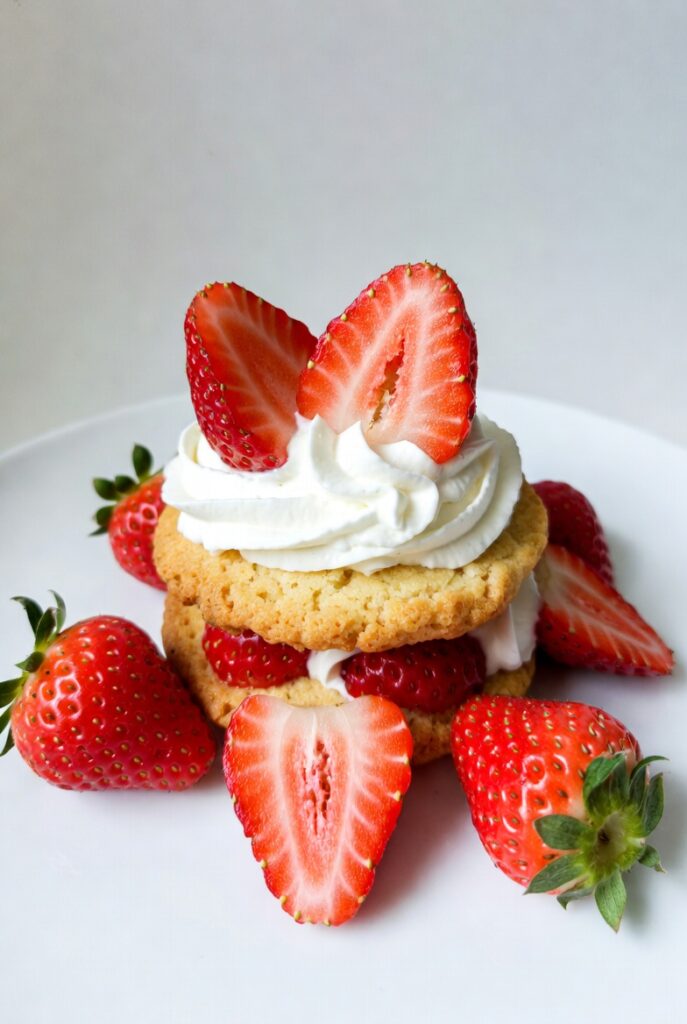
Split the warm biscuit horizontally. Place the bottom half in a bowl. Spoon a generous amount of berries AND the extracted syrup over it. Add a dollop of cream. Cap with the biscuit top and add a final “Visual-Anchor” of cream and a fresh berry.
8. Satiety and the “Contrast” Arc
The Alpine-Crumb Strawberry Shortcake provides a unique satiety profile:
- Thermal Contrast: The juxtaposition of the warm, buttery biscuit against the ice-cold cream and berries creates “Sensory-Arousal.”
- Textural Complexity: You move from the “Crunch” of the sugar-top to the “Flake” of the biscuit, the “Soft-Resistance” of the berry, and the “Vapor-Dissolve” of the cream.
- Acid-Base Balance: The acidity of the berries and buttermilk cuts through the heavy lipids of the butter and cream, preventing “Palate-Fatigue.”
9. Modular Customization: The “Flavor Pivots”
- The “Herbaceous-Shift”: Add 1 tbsp of finely minced fresh basil to the strawberries for a “Savory-Sweet” complexity.
- The “Stone-Fruit” Draft: Replace 50% of the strawberries with sliced peaches for a “High-Summer” resolution.
- The “Cocoa-Resolution”: Add 1/4 cup of cocoa powder to the dry biscuit mix for a “Black-Forest” utility.
10. Conclusion: The Master Draft of Seasonal Utility
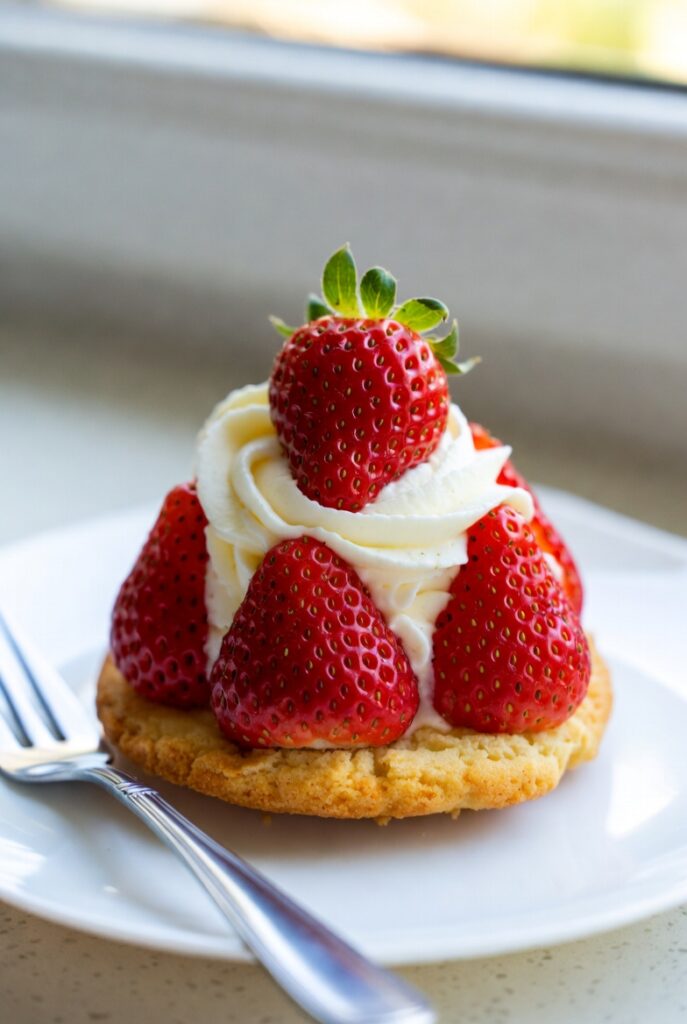
The Alpine-Crumb Protocol proves that “Simplicity” is often the result of complex engineering. By mastering the “Cold-Chain Protocol” and respecting the “Osmotic Extraction” of the berries, you are delivering a dessert that is visually “Stunning,” nutritionally vibrant, and sensorially perfect.
It is the ultimate “Summer-Anchor”—a “Crisp-and-Cloud” testament to the power of dairy fats and seasonal fruit.