1. Introduction: The Architecture of the “Tropical-Umami” Equilibrium
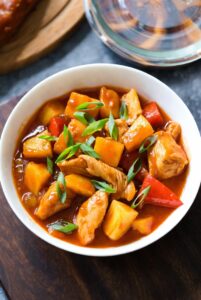
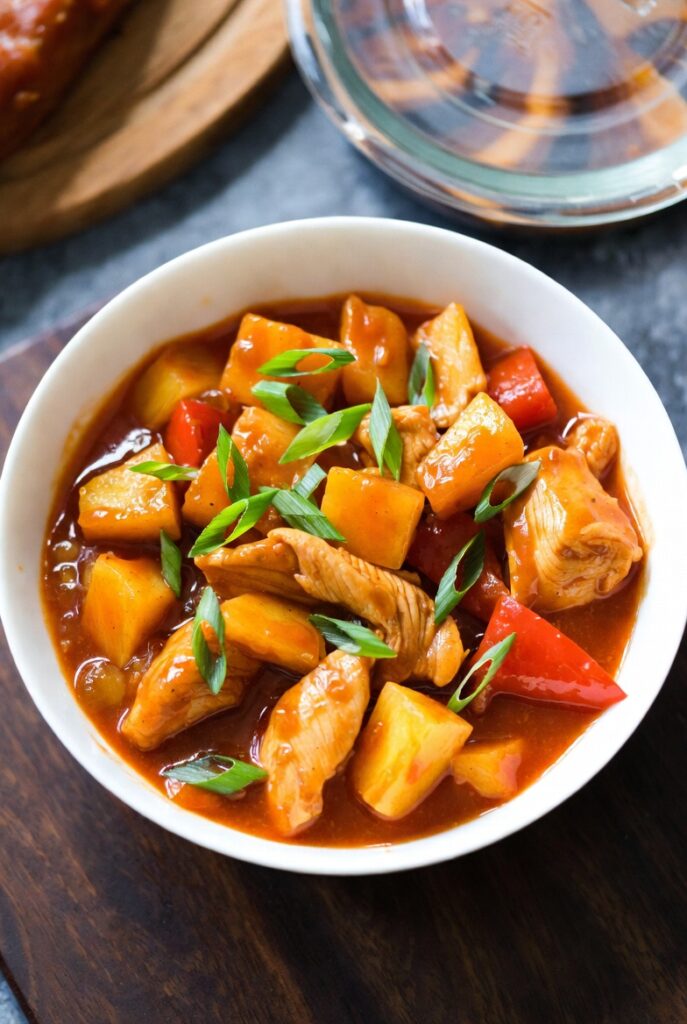
In the expansive taxonomy of the “Wok-Fired” tradition, the Sweet & Sour Pineapple Chicken Stir-Fry represents a landmark study in “Sensory Polarity.” This dish is far removed from the neon-colored, overly saccharine iterations found in lower-tier takeout; rather, a true “Master Draft” of this recipe is a sophisticated exercise in “Enzymatic Balance.” It pits the vibrant, high-frequency acidity of fresh pineapple against a “Low-Frequency” savory matrix of fermented soy and aromatic ginger.
The brilliance of this dish lies in its “Internal Caramelization.” By utilizing the natural sugars (fructose) within the pineapple and the glucose in the glaze, we create a “High-Gloss Lacquer” that binds to the chicken via the Maillard Reaction. For the high-performance professional, the culinary minimalist, or the parent seeking “High-Yield” nutrition, this is the “Platinum Standard” of the 20-minute dinner: it provides rapid glycogen recovery through fruit-based carbohydrates while delivering a dense payload of plant-and-animal proteins. It is a dish that understands that “Gourmet” is not a measure of time, but a measure of the precision between “Acidic Snap” and “Lipid Softness.”
2. The Science of “Bromelain” and Protein Modification
To master this stir-fry, one must look beyond the skillet and understand the molecular biology of the fruit. Pineapple contains a powerful enzyme called Bromelain. Bromelain is a protease, meaning it actively breaks down protein chains.
The secret to a “Master Draft” result is “Temporal Precision.” If the chicken and raw pineapple marinate together for too long, the bromelain will turn the chicken into a “Textural Slurry.” However, when subjected to the extreme heat of a wok, the bromelain is neutralized, and the sugars undergo “Pyrolysis,” transforming from simple sweetness into complex, nutty caramel notes. This “Thermal Transformation” is the key to achieving a chicken cube that is “Snap-Firm” on the outside but “Velvet-Tender” on the inside. This is “Molecular Gastronomy” disguised as a rustic stir-fry.
3. Recipe Overview: The Master Blueprint
- Cuisine Type: Modern Asian-Fusion / High-Velocity Utility
- Difficulty Level: Easy (Focus on “Mise en Place” and Heat Management)
- Total Preparation Time: 15 Minutes
- Total Cooking Time: 10 Minutes
- Total Time: 25 Minutes
- Dietary Classifications: High-Protein. (Can be made GF with Tamari).
- Yield: Serves 4
4. Equipment and Tools: The Essentials of “Kinetic Energy”
- 14-inch Carbon Steel Wok: The “Utility Standard.” Carbon steel allows for the development of “Wok Hei” (the breath of the wok), providing a smoky complexity that stainless steel cannot replicate.
- Wok Spatula (Chuan): For the “Lift-and-Fold” motion that ensures even thermal distribution.
- Large Prep Bowls: For “Mise en Place.” In a 10-minute cook, there is no time for mid-process chopping.
5. Ingredients Section: Sourcing for “Chromatographic” Vibrancy
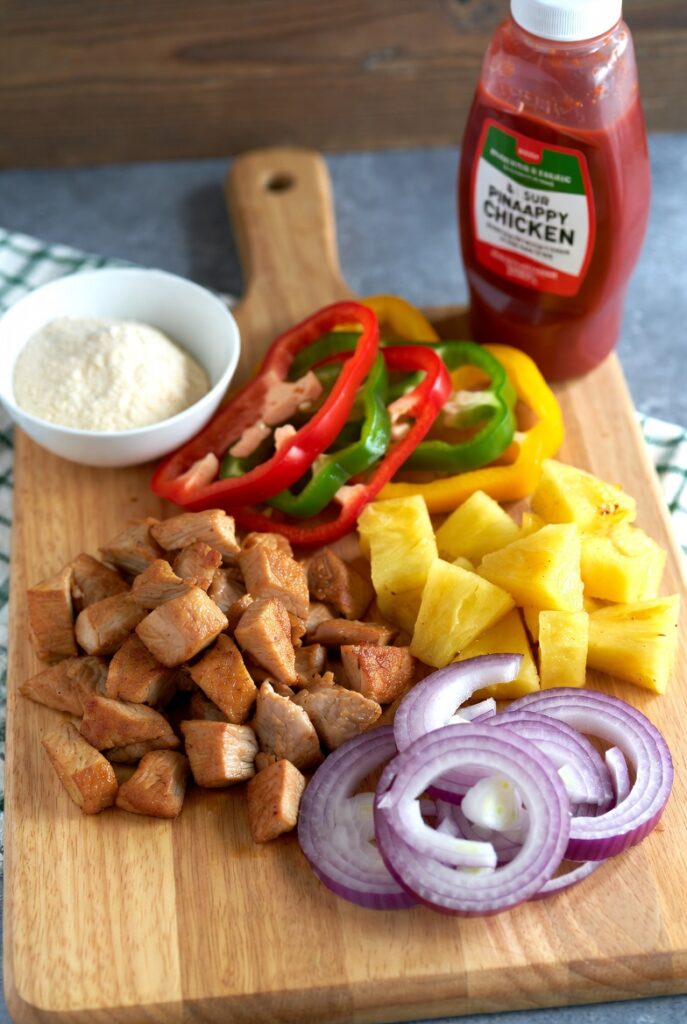
In a dish defined by its “Sweet-Acid” profile, the “Ripeness Index” of the fruit and the “Pungency” of the aromatics determine the final “Aromatic Resolution.”
The Protein Anchor
- Chicken Thighs: 1.5 lbs.
- The Master Hack: Use Boneless, Skinless Thighs cut into 1-inch cubes. Thighs contain more “Intramuscular Connective Tissue” than breasts, allowing them to remain succulent even under the “Aggressive Thermal Stress” of the wok.
The “Tropical-Acid” Base
- Fresh Pineapple: 2 cups, cubed. (Avoid canned pineapple if possible; canned fruit lacks the “Enzymatic Vitality” and textural snap of fresh).
- Bell Peppers (Red and Green): 2 large. (The “Textural Counterpoint”).
- Red Onion: 1 medium, cut into “Petals.”
The “Master Draft” Glaze (The Matrix)
- Pineapple Juice: 1/2 cup. (The “Flavor Bridge”).
- Rice Vinegar: 1/4 cup. (The “Acidic High-Note”).
- Soy Sauce: 3 tbsp. (The “Saline-Umami” driver).
- Honey or Brown Sugar: 2 tbsp. (To facilitate “Glaze Adhesion”).
- Tomato Paste: 1 tbsp. (For “Umami Depth” and “Color Stabilization”).
- Cornstarch: 1 tbsp. (The “Structural Thickener”).
The “Aromatic High-Notes”
- Garlic: 4 cloves, minced.
- Fresh Ginger: 1 tbsp, microplaned.
- Green Onions: Sliced on the bias for “Visual Resolution.”
6. The “Velveting” Protocol: Mastering the Texture
The most common failure in home stir-fries is “Tough Chicken.” To achieve a “Platinum-Tier” mouthfeel, you must utilize the “Velveting Protocol.” This is a traditional Chinese technique that creates a protective “Starch Shield” around the meat.
- The Coating: Toss the chicken cubes in 1 tsp of soy sauce, 1 tsp of rice wine, and 1 tbsp of cornstarch.
- The Science: The starch binds to the surface moisture of the chicken. When it hits the hot oil, it creates a “Micro-Thin Gel” that prevents the internal juices from escaping. This ensures that the chicken remains “Hydrated” even as the exterior undergoes rapid browning.
7. Deep Dive: Vitamin C and the “Antioxidant Shield”
Why is this dish a “Nutritional Powerhouse”? It centers on the Synergy of Vitamin C and Phytonutrients. Pineapple and bell peppers are among the densest sources of Vitamin C (Ascorbic Acid).
When you flash-sear these ingredients, you are preserving the majority of their “Nutritional Integrity.” Vitamin C is essential for collagen synthesis and immune function, but it is also “Heat-Labile.” By utilizing the “Wok-Velocity” method (cooking for less than 3 minutes), you minimize the thermal degradation of these nutrients. You are delivering a meal that is “Biologically Active”—providing an “Antioxidant Shield” that supports systemic recovery.
8. Step-by-Step Instructions: The Master Blueprint
Step 1: The “Mise en Place” Execution
Prepare all vegetables and chicken. Whisk the juice, vinegar, soy sauce, sugar, tomato paste, and cornstarch in a small bowl until they form a “Homogenous Emulsion.” ### Step 2: The “High-Heat” Initiation
Heat the wok over maximum heat until a “Wisp of Smoke” appears. Add 2 tablespoons of high-smoke-point oil (Avocado or Peanut). Swirl to coat.
Step 3: The “Protein-Sear” Phase
Add the chicken in a Single Layer. Let it sit undisturbed for 60 seconds to develop a “Mahogany Crust.” Toss and stir-fry for 2 more minutes until $80\%$ cooked. Remove chicken from the wok.
Step 4: The “Aromatic-Vegetable” Bloom
Add more oil if necessary. Toss in the onions and bell peppers. Stir-fry for 2 minutes. Add the garlic and ginger during the final 30 seconds to prevent “Bitterness Oxidation.”
Step 5: The “Pineapple Pyrolysis”
Add the pineapple cubes. Stir-fry for 60 seconds. You want the edges of the pineapple to “Singes” slightly, which releases the sugars into the pan.
Step 6: The “Glaze-Integration” Emulsion
Return the chicken to the wok. Give the sauce mixture a final stir (cornstarch settles at the bottom) and pour it over the ingredients.
Step 7: The “Gloss” Finish
The liquid will sizzle and thicken almost instantly. Use the “Lift-and-Fold” motion to ensure every cube of chicken and pineapple is “Encapsulated” in the lacquer. Once the sauce is “Glistening and Clear,” remove from heat immediately.
9. Satiety and the “Fructose-Protein” Energy Curve
Sweet & Sour Pineapple Chicken provides “Balanced Glycemic Utility.”
- The Fructose Component: The pineapple provides “Immediate Energy” for the brain.
- The Complex Fiber: The bell peppers and onions slow down the absorption of sugars, preventing a “Glucose Spike.”
- The Protein Anchor: The chicken thighs provide “Long-Form Amino Acids” for muscle repair.
This creates a state of “Stable Satiety”—you feel energized and physically “Finished” without the “Lethargic Slump” associated with heavy, starch-laden takeout sauces. It is “High-Octane Fuel” for an active life.
10. Modular Customization: The “Flavor Pivots”
- The “Inferno” Standard: Add 1 tbsp of Sambal Oelek or Sriracha to the sauce for a “Capsaicin High-Note.”
- The “Nutty” Finish: Top with toasted Cashews or Sesame Seeds for “Textural Resolution.”
- The “Vegan” Standard: Replace chicken with Extra-Firm Tofu or “Seitan.” Ensure the tofu is pressed and seared until “Crisp-Gold” before adding the sauce.
11. Storage and “Enzymatic Stability”
- Refrigeration: Store in an airtight container for up to 2 days.
- The “Texture” Warning: Because of the pineapple’s acidity, the chicken will continue to soften over time.
- The Reheat: Reheat in a skillet over medium-high heat. Avoid the microwave if possible, as it will “Steam” the vegetables, causing them to lose their “Vibrant Snap.”
12. Frequently Asked Questions (FAQ)
Q: My sauce is too thin. What happened?
A: This is usually caused by “Insufficient Heat.” The cornstarch must reach a simmering point to “Gelatinize.” If the sauce is runny, let it bubble for another 30 seconds.
Q: Can I use chicken breast?
A: Affirmative. However, you must be extremely careful not to overcook it. Breast meat has a “Thermal Window” of only about 60 seconds before it becomes dry.
Q: Is the tomato paste necessary?
A: It is the “Master Hack.” Tomato paste provides the deep red color and a savory “Glutamate Baseline” that balances the high-acid pineapple juice.
13. Nutritional Information
(Per serving – approx. 1.5 cups)
| Nutrient | Amount |
| Calories | 380 kcal |
| Protein | 32g |
| Total Fat | 14g |
| Net Carbs | 22g |
| Vitamin C | 120% DV |
14. Summary: The Master Draft of High-Velocity Satisfaction
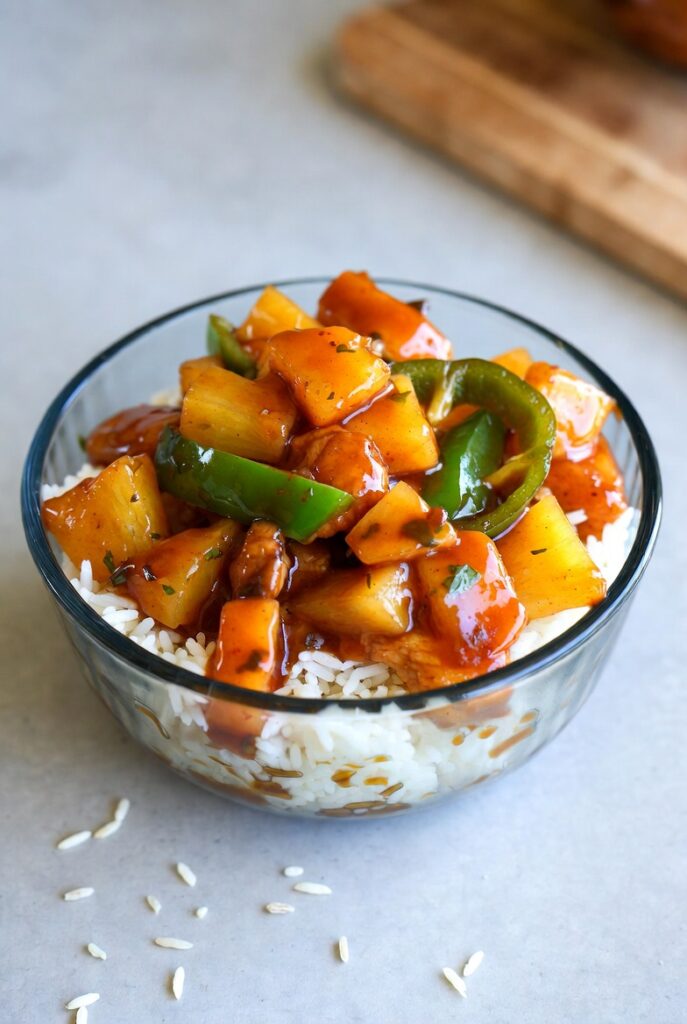
The Sweet & Sour Pineapple Chicken Stir-Fry is more than a recipe; it is a “Vessel for Intentional Contrast.” It proves that “Gourmet Results” can be achieved in the domestic kitchen through the mastery of “Enzymatic Timing” and “Wok-Fired Caramelization.” By respecting the “Velveting Protocol” and the “Maillard Loop,” you are delivering a dish that is visually “Jade-and-Gold,” nutritionally dense, and sensorially perfect.